INTRODUCTION
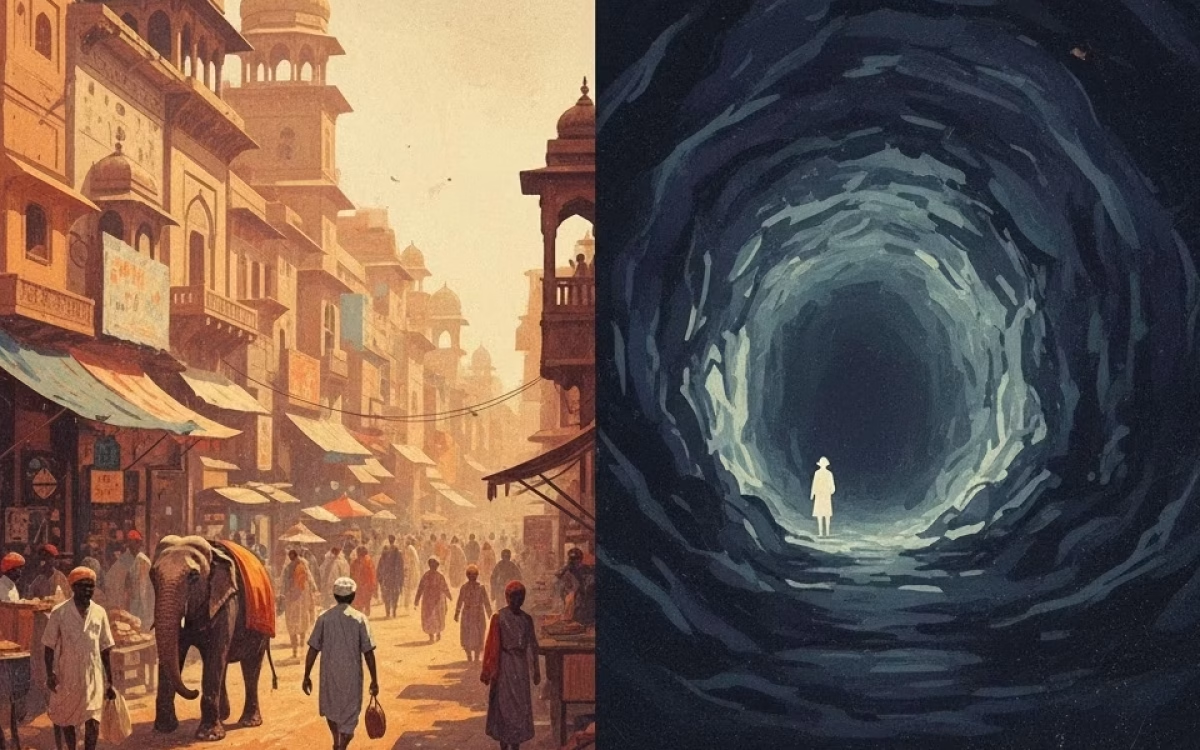
EM Forster’s A Passage to India stands as one of the most compelling and enduring novels of the 20th century. It offers a profound exploration of colonial India, cultural divides, and the fragile possibility of friendship across boundaries. Published in 1924, the novel is set in the fictional town of Chandrapore. This place mirrors the complexities and contradictions of British India during the Raj. Forster’s own experiences in India—his visits in 1912 and 1921, and his time as private secretary to the Maharaja of Dewas—infuse the narrative with authenticity and depth. The story is more than just fiction. It reflects real social and political tensions.
At its heart, A Passage to India is a story about the clash between East and West. It examines the British colonizers and the Indian population. The novel delves into the intricacies of colonialism. It exposes the arrogance, prejudice, and misunderstandings that characterized British rule. Through the lives of its central characters—Dr. Aziz, a young Muslim doctor; Adela Quested, a British woman seeking the “real India”; Mrs. Moore, Adela’s companion; and Cyril Fielding, the principal of the government college—Forster paints a vivid picture of a society divided by race, religion, and culture. The novel’s central event, the accusation that Aziz assaulted Adela in the Marabar Caves, becomes a flashpoint for the tensions between the British and Indian communities. It exposes deep-seated prejudices and the limits of cross-cultural understanding.
Moreover, A Passage to India is not just a novel about colonialism. It is also a meditation on friendship, identity, and the enduring mystery of India itself. Forster’s portrayal of the Marabar Caves as a place of “muddle and mystery” captures the essence of India. This land defies easy explanation and resists simple categorization. The novel asks whether people can form real friendships in a world shaped by colonialism and cultural division. Can the barriers between East and West ever fall?
Forster challenges readers to consider if genuine connection is possible when power imbalances and prejudice stand in the way. Through its richly drawn characters, its nuanced portrayal of colonial India, and its exploration of universal themes, A Passage to India remains a timeless work of literature. Its insights are as relevant today as they were a century ago. In fact, Forster’s message endures because it speaks to the ongoing struggle for understanding across cultural divides. As a result, the novel continues to inspire reflection on the possibilities and limits of friendship in a divided world.
EM Forster’s A Passage to India: Plot Overview
EM Forster’s A Passage to India begins with two Englishwomen, Adela Quested and Mrs. Moore, arriving in Chandrapore. Adela plans to marry Mrs. Moore’s son, Ronny Heaslop, a British official. The women want to see the “real India,” not just the colonial world. Mrs. Moore meets Dr. Aziz, a young Muslim doctor, at a mosque. They connect instantly, sharing a moment of mutual respect.
Next, Aziz is eager to prove that Indians and English can be friends. He invites Mrs. Moore and Adela to a tea party. Fielding, the college principal, joins them. The gathering is pleasant, but Ronny’s rudeness hints at deeper tensions. Adela starts to doubt her engagement. She decides not to marry Ronny, breaking things off amicably.
Later, Aziz arranges a trip to the Marabar Caves, hoping to impress his guests. Fielding and Professor Godbole miss the train. Aziz goes with Adela and Mrs. Moore. The caves are ancient, eerie, and unsettling. Mrs. Moore feels claustrophobic and disturbed by the echo. She stays behind. Aziz, Adela, and a guide continue.
Inside the caves, something strange happens. Adela realizes she doesn’t love Ronny. She asks Aziz about his personal life. He is offended and ducks into a cave. When he comes out, Adela is gone. He finds her broken field-glasses and sees her at the bottom of the hill. Adela rushes back to Chandrapore alone.
Back in town, Aziz is arrested. Adela claims Aziz assaulted her in the caves. The accusation shocks everyone. The British community rallies against Aziz. Fielding believes Aziz is innocent. He defends him, angering his own people. Mrs. Moore is haunted by the cave’s echo. She grows withdrawn and leaves India early. She dies on the journey home.
The trial is chaotic. Adela is questioned. She admits she was mistaken. Aziz is released. The Indians celebrate. Fielding escorts Adela to safety. Adela stays for weeks. Fielding respects her honesty. Ronny breaks off the engagement. Adela returns to England. FULL TEXT
E.M. Forster’s A Passage to India: Themes
Colonialism: The Weight of Empire
Colonialism is the novel’s most powerful theme. The British come to India to rule, not to make friends. They live in separate clubs and colonies, keeping Indians at a distance. Mr. Turton, the Collector, gives parties where Indians are only invited for show. Rony Heaslop, the magistrate, always acts superior. He insults Indians like Aziz and Godbole. The novel shows how colonialism creates hatred and breaks trust between English and Indians. Even when Aziz and Fielding try to be friends, the system pushes them apart. Forster makes it clear that real understanding cannot grow under colonial rule. In fact, the colonial system itself fosters division and prejudice. As a result, friendships are rare and fragile. Ultimately, Forster demonstrates that colonialism harms both the British and the Indians, making genuine connection nearly impossible.
Friendship: The Fragile Bond
Friendship is central to the novel. Forster asks: Can an Englishman and an Indian be true friends? The answer is both yes and no. Aziz is warm and emotional. Fielding is open-minded and honest. When they meet at Fielding’s tea party, they like each other. Aziz takes Fielding to the Marabar trip. Their bond seems strong. Aziz also connects with Mrs. Moore. She respects Indian religion and shows kindness. These moments give hope that friendship is possible.
Later, when the truth comes out, Aziz and Fielding forgive each other. They call each other friends again. Yet, nature itself seems to say “Not yet.” The novel shows that while personal friendship is possible, colonial politics keeps real unity away. Friendship is powerful but fragile under empire. In fact, Forster suggests that genuine connection can exist, but only if the barriers of colonialism are removed. As a result, the novel ends with a sense of hope, yet also realism. Ultimately, friendship is possible, but not yet in the world of British India.
Muddle and Mystery: The Essence of India
Forster uses the terms “muddle” and “mystery” to describe India. The “muddle” refers to the chaos and confusion of Indian society. The “mystery,” on the other hand, suggests something deeper, something that cannot be easily understood or explained. The Marabar Caves are the novel’s central symbol. They are described as “muddle and mystery.” The echo in the caves, which translates every sound into the noise “boum,” is a powerful symbol of the novel’s themes. It represents the confusion and misunderstanding that characterize the novel’s central conflict. India itself is portrayed as a land that defies easy explanation and resists simple categorization. In fact, the caves embody the deeper, often unsettling, truths about India and human nature.
As a result, the echo and the caves together highlight the novel’s exploration of chaos, unity, and the limits of understanding. In fact, Forster uses these concepts to show that India is both chaotic and profound, a place where clarity and confusion exist side by side.
Division vs. Unity: The Challenge of India
The novel explores the themes of division and unity, both within India and between the British and Indian communities. India appears as a land of “a hundred Indias,” where Hindus and Muslims divide themselves from each other and even among their own communities. Forster challenges readers to consider whether unity can exist in such a divided society. The friendship between Aziz and Fielding faces intense tests throughout the story. In the end, they reconcile, but the landscape itself seems to whisper, “not yet.” The novel suggests that unity is possible, but not yet in the colonial system.
Forster believed the world is a globe of men who are trying to reach one another. However, in Chandrapore, such ideals are hard to achieve. In fact, the novel implies that true unity remains elusive, even as characters strive for connection and understanding. As a result, Forster’s portrayal highlights both the hope and the difficulty of overcoming deep-seated divisions.
Race and Culture: The Barriers to Connection
Race and culture are major barriers to connection in the novel. The English view the Indians as inferior, while the Indians see the English as both cruel oppressors and foolish foreigners. Forster shows all the obstacles—race, culture, class, religion, and language—that stand in the way of meaningful friendships between Indians and the English. No matter an individual’s best intentions, these barriers are hard to overcome. In fact, the novel suggests that true connection is possible only when these barriers are removed. Until then, friendship remains fragile and uncertain. As a result, the story highlights the deep divisions created by colonial attitudes and cultural misunderstandings.
EM Forster’s A Passage to India: Character Analysis
Dr. Aziz: The Heart of India
Dr. Aziz is a young Muslim doctor living in Chandrapore. He is warm, emotional, and eager to please. Aziz wants to be friends with the British. He admires their culture and tries to fit in. Yet, he is also proud of his Indian identity. Aziz is generous and loving toward his friends, especially Mrs. Moore and Fielding. After the Marabar incident, his life changes. He is accused of assaulting Adela. The trial humiliates him. Aziz becomes bitter and anti-British. His friendship with Fielding breaks. Aziz’s journey shows how colonialism can turn hope into anger. He is a man of contradictions—kind yet vengeful, proud yet vulnerable. In fact, Aziz embodies the complexities and emotional struggles of Indians under colonial rule. As a result, his character offers a powerful lens through which to view the novel’s central themes.
Cyril Fielding: The Bridge Between Worlds
Cyril Fielding is the principal of the government college. He is an independent thinker, unlike most British in India. Fielding believes in treating Indians as equals. He is honest and open-minded. Fielding becomes Aziz’s closest friend. When Aziz is accused, Fielding defends him. He stands alone against the British community. Fielding’s actions show courage and integrity. Yet, his friendship with Aziz is tested. After the trial, Fielding sails to England. He returns married to Mrs. Moore’s daughter. Fielding’s character represents the possibility of cross-cultural friendship. But even he cannot escape the limits of colonial society. In fact, his journey reveals both the potential and the challenges of genuine connection in a divided world. As a result, Fielding’s story adds depth and nuance to the novel’s exploration of friendship and identity.
Adela Quested: The Seeker of Truth
Adela Quested is a young Englishwoman. She comes to India to marry Ronny Heaslop. Adela wants to see the “real India.” She is intelligent and curious. Adela is also repressed and unsure of herself. At the Marabar Caves, she has a strange experience. She falsely accuses Aziz of assault. The trial exposes her confusion and fear. Adela shows courage by retracting her accusation. She faces isolation and shame. Adela’s journey is one of self-discovery. She learns about the limits of her own understanding. Adela is a complex character—brave yet flawed, honest yet mistaken. In fact, her actions reveal the challenges of navigating a foreign culture with limited emotional insight. As a result, Adela’s story highlights the difficulties of cross-cultural understanding and personal growth.
Mrs. Moore: The Voice of Humanity
Mrs. Moore is an elderly Englishwoman. She is sensitive and kind. Mrs. Moore wants to see India beyond the colonial world. She befriends Aziz, showing respect for Indian culture. At the Marabar Caves, she has a disturbing experience. The echo makes her feel dread. Mrs. Moore’s faith in human connection is shaken. She returns to England and dies on the journey. Mrs. Moore’s character represents hope and disillusionment. She is a symbol of humanity in a divided world. Her presence lingers in the novel, reminding readers of the power of kindness. In fact, her journey reflects both the possibilities and limitations of cross-cultural understanding. As a result, Mrs. Moore’s story adds emotional depth and complexity to the novel.
Ronny Heaslop: The Face of Colonialism
Ronny Heaslop is Mrs. Moore’s son and the local magistrate. He is a typical British official. Ronny is condescending and cruel toward Indians. He believes in ruling, not in friendship. Ronny’s attitude reflects the arrogance of the Raj. He is manipulative and callous. When Mrs. Moore defends Aziz, Ronny sends her away. Ronny’s character shows the worst side of colonialism. He is a man who values power over people. In fact, his actions reveal how the colonial system shapes individuals, often at the cost of empathy and humanity.
Each character in A Passage to India reveals a different facet of colonial India. Their stories show the challenges of friendship, identity, and understanding in a divided world. As a result, Ronny’s portrayal helps readers grasp the complexities and contradictions of British rule.
EM Forster’s A Passage to India: Narrative Technique
Omniscient Narrator: Seeing All Sides
Forster uses an omniscient narrator in A Passage to India. This narrator can enter the minds of different characters. We see Aziz’s thoughts, Adela’s doubts, Fielding’s ideals, and even Ronny’s arrogance. The narrator shapes the story’s tone and progress. He comments from any angle. This technique allows readers to understand multiple perspectives. In fact, the omniscient narrator provides a balanced and nuanced view of the novel’s events and characters. As a result, the narrative feels both realistic and insightful. Moreover, it also highlights the divisions in colonial society. As a result, the omniscient narrator makes the novel feel realistic and balanced.
Mystery and Suspense: The Story’s Pulse
The novel is structured like a mystery story. Forster builds suspense from the start. The accusation against Aziz keeps readers guessing. Was he guilty? What really happened in the Marabar Caves? Forster manipulates events so that twists feel both unexpected and inevitable. This technique keeps the story moving. Moreover, it also reflects the confusion and uncertainty of colonial India. As a result, the mystery at the heart of the novel draws readers in and holds their attention until the very end.
Irony and Comedy: The Undercurrents
Forster uses irony and comedy throughout the novel. He shows the absurdity of colonial life. British officials act superior, yet they misunderstand India. The social comedy of manners is sharp and witty. Forster’s irony is unbiased. It allows him to keep a distance from the conflict. The humor is never forced. In fact, Forster’s satirical touch highlights the ridiculousness of colonial attitudes and social divisions. As a result, the novel’s comedy and irony work together to reveal deeper truths about human nature and society. Instead, it blends seamlessly with deeper themes. Comedy and irony help Forster explore serious issues without losing the reader’s interest. As a result, the novel remains both entertaining and thought-provoking.
EM Forster’s A Passage to India: Symbolism
Symbolism is central to Forster’s technique. The Marabar Caves, the echo, and the sky are all symbols. They represent mystery, confusion, and unity. Forster uses rhythm to connect the real and the mystical. The rhythm helps resolve the tension between life and pattern. In fact, these symbols deepen the novel’s exploration of India’s complexities. As a result, Forster’s use of symbolism adds layers of meaning and invites readers to look beyond the surface of the story. It also unites the novel’s different worlds. Symbolism and rhythm give the story a poetic quality. They add depth to the narrative. In fact, these elements allow Forster to explore complex ideas in a subtle, layered way. As a result, the novel feels both imaginative and profound.
EM Forster’s A Passage to India Contrasting Characters
Forster uses counterpointing to create tension. He contrasts Aziz with Fielding, setting Indians against the British, and Muslims against Hindus. Additionally, he balances emotions with intellect throughout the novel, highlighting the tensions and complexities between different groups and perspectives. This technique keeps the reader engaged. Moreover, it also highlights the novel’s central conflicts. As a result, counterpointing makes the story richer and more complex.
Forster’s narrative technique in A Passage to India is a blend of realism, mystery, irony, and symbolism. His use of the omniscient narrator, suspense, and counterpointing makes the novel both engaging and profound. EXPLORE MORE
EM Forster’s A Passage to India: Conclusion
In conclusion, A Passage to India leaves readers with a sense of both hope and realism. Forster’s novel does not offer easy answers. Instead, it invites us to reflect on the complexities of friendship, colonialism, and cultural understanding. The story ends with Aziz and Fielding riding through the forest. They are friends again, but the world around them seems to say, “Not yet.” Their reconciliation is bittersweet. It is clear that true unity is still out of reach.
Moreover, the novel’s ending is not about closure. It is about possibility. Forster suggests that friendship across cultures is possible, but it is fragile. Colonialism, prejudice, and misunderstanding create deep divides. These barriers are hard to overcome. Yet, the novel also shows that personal connections can endure, even in the face of adversity. In fact, the characters’ growth is evident, but the world itself remains unchanged.
Finally, the conclusion reminds us that change takes time. The characters grow, but the world does not. Aziz and Fielding’s friendship is renewed, but it is different. They are more loyal to their own people. The novel ends with a sense of longing. It asks us to imagine a world where friendship is possible, even if it is not yet real. In this way, A Passage to India remains a powerful and timeless work of literature, challenging readers to consider the enduring struggle for connection in a divided world. In fact, the ending leaves us with a bittersweet feeling, as the characters have grown apart, yet still hold onto the hope of future understanding. As a result, Forster’s message lingers, urging us to reflect on the complexities of friendship and the slow, uncertain path toward unity.
EM Forster’s A Passage to India: FAQS
What is the main theme of A Passage to India?
The main theme is the possibility of friendship between Indians and the British under colonial rule. The novel explores how colonialism, prejudice, and cultural differences affect relationships. It also examines the deeper mysteries of India and the limits of human understanding.
Who does Aziz allegedly assault in the Marabar Caves?
Aziz stands accused of assaulting Adela Quested in the Marabar Caves. Later, Adela admits she was mistaken. This incident becomes a turning point in the novel, exposing the deep divisions between the British and Indian communities.
Why does Aziz get acquitted during his trial?
Aziz is acquitted because Adela withdraws her accusation. She realizes she was confused and frightened in the caves. The trial reveals the injustice and prejudice Indians face under British rule.
What does the echo in the Marabar Caves symbolize?
The echo, which repeats every sound as “boum,” symbolizes the confusion, mystery, and emptiness of India. It reflects the novel’s themes of misunderstanding and the limits of communication between cultures.
What is the significance of the novel’s three-part structure?
The novel is divided into “Mosque,” “Caves,” and “Temple.” These sections mirror the progression of events and the changing relationships between characters. They also reflect the three seasons of India—cold, hot, and rainy—adding symbolic depth to the story.