Introduction
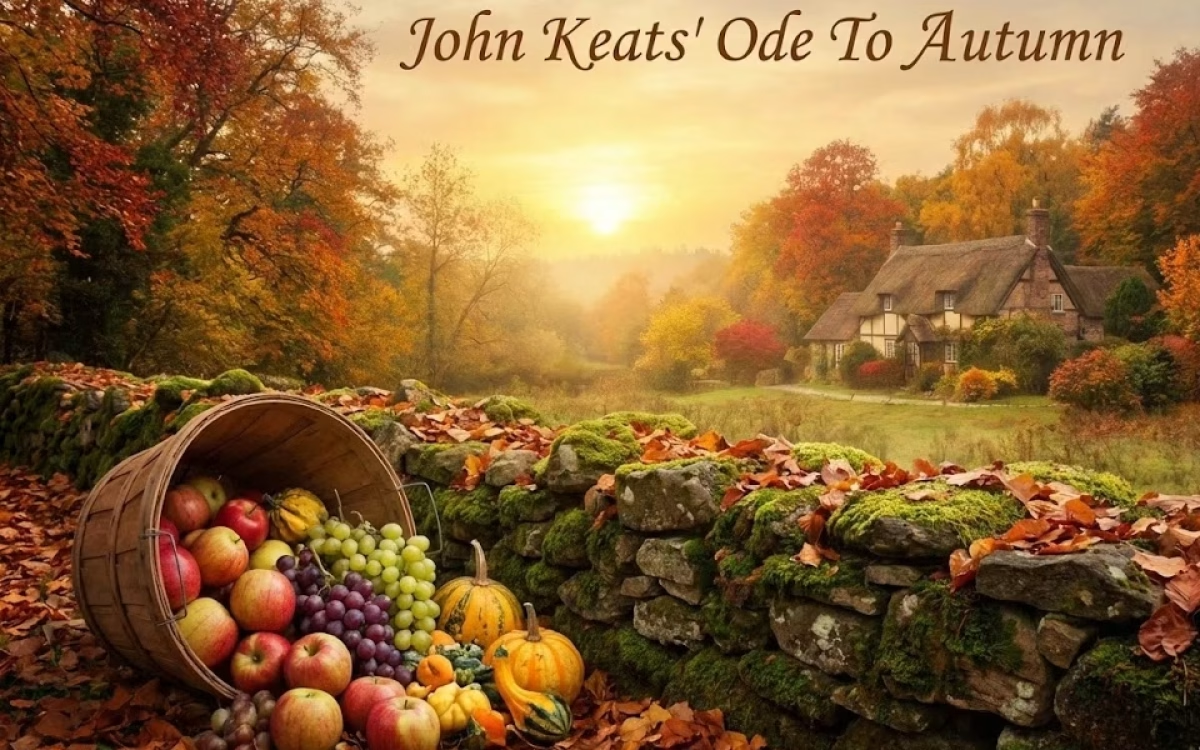
“Season of mists and mellow fruitfulness.” This iconic opening line from John Keats’ Ode to Autumn instantly evokes the rich, hazy beauty of the harvest season. Written in September 1819 after an inspiring walk near Winchester, England, it became Keats’ final major poem before his tragic death in 1821 at age 25.
Unlike other Romantic poets like Shelley or Wordsworth, who often viewed autumn as a melancholic symbol of decay and impending winter, Keats celebrates it as a season bursting with power, sensual beauty, and “mellow” perfection. In this Ode to Autumn analysis, we’ll explore how Keats transforms ripeness into rippling vitality.
Quick Summary
Written in September 1819, “To Autumn” is the last of John Keats’ “Great Odes.” Unlike his other poems that focus on sadness or longing, this ode is a peaceful celebration of the autumn season. Keats personifies Autumn as a woman working in the fields—first ripening the fruit, then resting during the harvest, and finally watching the season fade into winter. It is a masterpiece of sensory imagery, exploring the theme that beauty exists even in dying moments.
Stanza 1 – The Season of Ripeness (Morning)
In John Keats’ Ode to Autumn stanza 1, the poet paints autumn as a vibrant partner to summer, emphasising growth, fullness, and overflowing abundance. This opening stanza sets a tone of celebration, personifying Autumn as an active force “conspiring” with the sun to ripen the earth.
Key imagery bursts with life:
The “maturing sun” fosters vines “close bosom’d to the sun”, symbolising intimate, nurturing warmth.
Cottage trees “bend so over-ripe / With apples,” evoking heavy, joyful bounty.
Swelling gourds “like a squirrel” store up plumpness by a hive, while hazelnuts “swell” and “plump the hazel shells”.
Meanwhile, bees fill their “clammy cells” and imagine “warm days will never cease.” This optimism captures autumn’s peak vitality—far from decay, it’s the height of life’s health and sensory richness. Keats invites us to savour this mellow perfection before the season shifts.
“Keats’ imagery is so vivid it has inspired countless artists. We recommend this beautiful [Illustrated Edition of Keats’ Poems on Amazon]—a perfect gift for literature lovers.”
Stanza 2 – The Harvester (Afternoon)
Shifting gears from stanza 1’s exuberant growth, John Keats’ Ode to Autumn stanza 2 focuses on labour, rest, and quiet fulfillment. Here, Keats masterfully personifies Autumn as a serene woman, embodying the satisfying pause after harvest toil.
Vivid personifications bring her to life:
Sitting carelessly on a granary floor, hair “soft-lifted by the winnowing wind,” surrounded by winnowed chaff.
Sleeping soundly on a half-reaped furrow, “drows’d with the fume of poppies” while her sickle spares a few stalks.
Watching steadily the “last oozings” from the cider-press, as cider drops “music to the ear.”
Ultimately, this stanza slows time to a dreamy hush. It celebrates enjoying the fruits of hard work—resting amid abundance, not rushing toward winter’s chill. Keats’ imagery underscores autumn’s mellow contentment.
Stanza 3 – The Music of Death (Evening)
Culminating his masterpiece, John Keats’ Ode to Autumn stanza 3 confronts decline and acceptance, transforming melancholy into quiet beauty. No longer focused on ripeness or rest, Keats addresses Autumn directly, pondering mortality’s hush.
The pivotal question challenges nostalgia: “Where are the songs of Spring? Ay, where are they?”—questioning our bias toward youth’s vibrancy.
Yet Keats answers firmly: “Think not of them, thou hast thy music too.” Autumn’s symphony unfolds in poignant sounds:
The “wailful choir” of gnats humming in twilight hedges.
Hedges alive with “full-grown lambs” bleating softly.
Swallows twittering in “husky clusters” before southward flight.
This critical insight reveals sounds of ending and mourning, but Keats deems them beautiful. Written months before his death from tuberculosis in 1821, the stanza reflects his serene acceptance of life’s close—autumn’s music as profound as spring’s.
Literary Devices in Ode to Autumn
Mastering literary devices in John Keats’ Ode to Autumn unlocks deeper analysis—perfect for exams, essays, or appreciating Romantic poetry. Keats employs vivid techniques to make autumn pulse with life.
Personification: Autumn becomes a living character, the sun’s “close bosom-friend” conspiring to ripen vines (Stanza 1). Later, she’s a “gleaner” crossing a brook in steady poise (Stanza 2), humanising the season’s labour and rest.
Synesthesia: Keats blends senses for immersive effect; bees fill “clammy cells” (touch evoking sticky sight and sound), merging tactile dampness with visual hives.
Imagery: Sensory details dominate, like the vines’ “rosy hue” glowing under the sun, or the “soft-dying day” fading gently—painting autumn’s mellow beauty in sight, sound, and touch.
These devices elevate the ode, blending emotion and precision for timeless appeal.
“Keats finds beauty in the dying year. For a different Romantic view on nature’s power, read [Wordsworth’s Lyrical Ballads].”
Key Themes in Ode to Autumn
John Keats’ Ode to Autumn weaves profound themes that resonate in literary analysis. These ideas challenge Romantic stereotypes, celebrating life’s cycles.
Transience: Keats embraces impermanence as beautiful, not tragic. The “soft-dying day” and swallows’ departure affirm “nothing lasts forever—and that’s okay,” mirroring his own looming death.
Ripeness: Maturity rivals youth’s bloom; over-ripe apples and “mellow fruitfulness” glorify autumn’s peak as sensual perfection, not decay.
Man vs. Nature (Harmony): No conflict here—Autumn “conspires” with the sun, fostering unity. Humans blend into nature’s rhythm, harvesting in peaceful partnership.
These themes make the ode a cornerstone of British Romanticism, urging acceptance of change.
Conclusion: Embracing Autumn’s Peace
Ultimately, John Keats’ Ode to Autumn is a poem of profound peace. It urges us to stop fighting time’s flow and savor the “now”—from ripeness to rest, to twilight’s music.
In today’s fast world, this ode remains timelessly relevant. Feeling anxious about aging, change, or endings? Let Keats remind you: every season has its beauty. What’s your favourite line from the poem?