Browsing Category: Indian Writings in English

  • All Post
  • American Literature
  • Blog
  • English Literature
  • Indian Writings in English
  • Literary Trivia
  • World Literature
    •   Back
    • UGC NET ENGLISH
A split-panel photographic feature image with the title Anita Desai's Fasting Feasting centered in large, off-white font. The left panel shows a woman in a sari in a modest, dimly lit Indian kitchen, holding a metal plate with a small portion of food, symbolizing 'Fasting'. The right panel shows a multi-generational family gathered around a large dining table laden with a lavish, brightly lit feast, symbolizing 'Feasting'.

January 29, 2026/

Introduction Anita Desai’s Fasting Feasting opens with the haunting contrast, “One creates a hunger where there is plenty; the other starves where there is famine.” This statement perfectly captures the emotional and psychological landscapes that define Desai’s world. Known for her deep exploration of the psychology of the outsider, Desai uses silence, repression, and longing to expose the invisible struggles within ordinary domestic spaces. In Fasting Feasting, food becomes more than a cultural symbol—it transforms into...

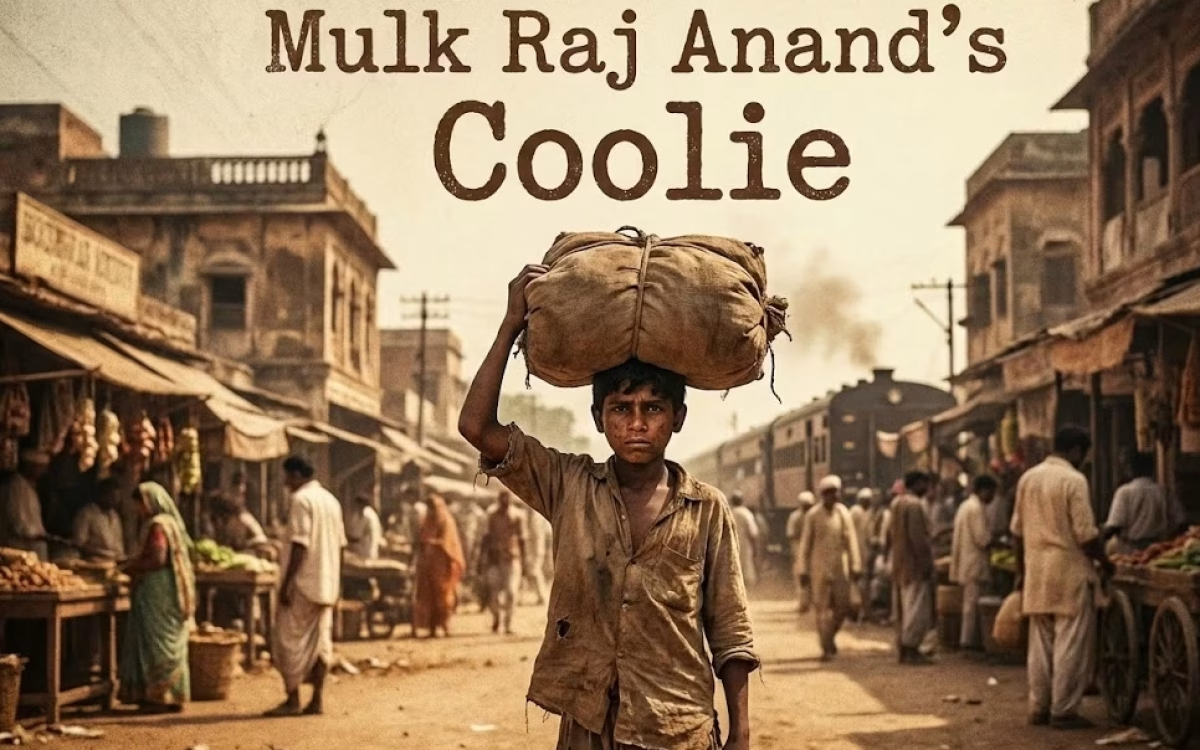
A vintage-style, sepia-toned photograph serving as a blog post feature image, with the title Mulk Raj Anand’s Coolie at the top in a rustic font. Below the text, a young Indian boy in tattered clothing and a large, heavy bundle on his head walks through a bustling, crowded marketplace in colonial-era India, with old buildings and a train visible in the background.

January 28, 2026/

Introduction Mulk Raj Anand’s Coolie captures the tragic pulse of colonial India with a piercing honesty rarely seen in early Indian English fiction. In the West, the ‘picaresque’ hero usually survives. In Anand’s India, he dies. This reversal sets the tone for a narrative that refuses romantic escape and instead confronts the crushing realities of poverty and exploitation. Anand, one of the “Big Three” of Indian English literature alongside R. K. Narayan and Raja Rao,...

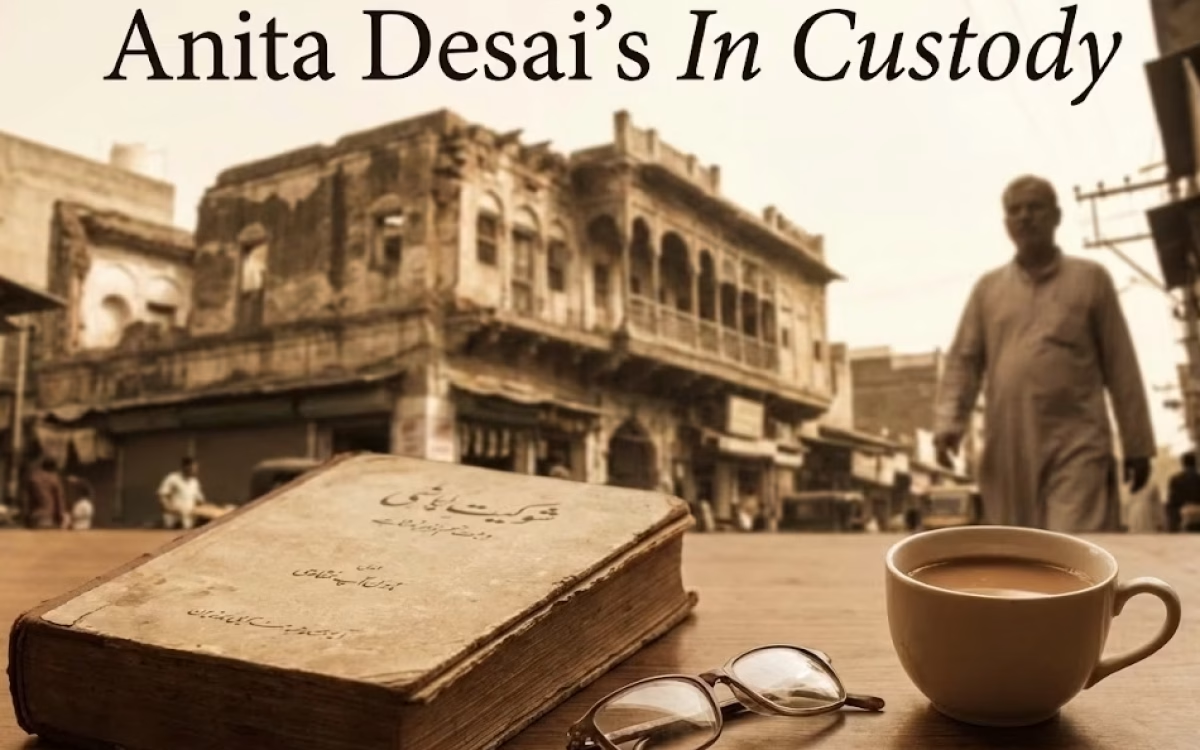
A sepia-toned feature image for a blog post titled Anita Desai's In Custody in a dark, elegant font at the top. The foreground shows a worn, old book with Urdu script on its cover, a pair of spectacles, and a cup of milk tea on a wooden table. The blurred background is a bustling street scene in Old Delhi with ancient buildings and a man walking, evoking a sense of nostalgia and the setting of the novel.

January 21, 2026/

Introduction Can you love a language that is dying? This haunting question forms the emotional core of Anita Desai’s In Custody. Set in post-partition India, the novel explores a world where Hindi has become the language of authority, employment, and progress, while Urdu lingers as the fading language of art, memory, and poetry. Through the lens of one man’s dream and disappointment, Desai paints a poignant picture of cultural decay and personal disillusionment. At the heart...

A feature image for a blog post with the title Ruskin Bond’s The Blue Umbrella displayed prominently. The artwork features a bright blue umbrella standing out against a scenic backdrop of Himalayan mountains, pine trees, and a rustic village setting.

January 5, 2026/

Introduction Ruskin Bond’s The Blue Umbrella captures the charm of the quiet Garhwal hills—where life moves slowly, and every sound echoes through the misty silence. Yet, this serene landscape is suddenly brightened by a flash of blue, a simple umbrella that transforms the lives of those who behold it. Through his deceptively simple storytelling, Bond blends innocence with moral reflection, turning an everyday object into the heart of a profound fable. In his signature...

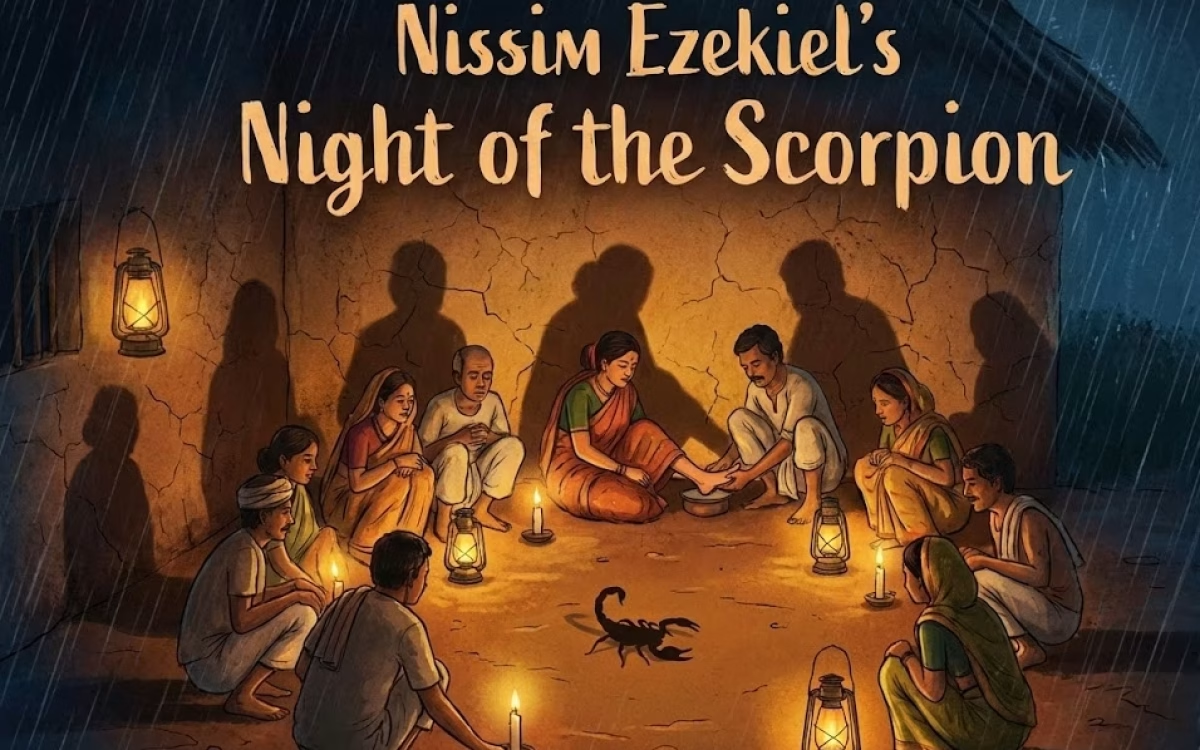
A feature image for a blog post titled Nissim Ezekiel’s Night of the Scorpion. The illustration depicts a rainy night in a rural Indian setting, highlighting a scorpion crawling near a mud wall or floor. The background suggests a tense atmosphere with the glow of lanterns and candles held by villagers, casting shadows. The title text is prominently displayed in a font that evokes a literary and narrative feel.

December 25, 2025/

Introduction Nissim Ezekiel’s Night of the Scorpion plunges us into a vivid rural Indian night. The scent of wet earth and the flicker of lanterns set the stage for an intimate drama. This drama feels at once personal and universal. The iconic poem captures the essence of Indian sensibility and collective village anxiety. It shows the weight of tradition as well as the quiet resilience of family. Ezekiel, known as the “Father...

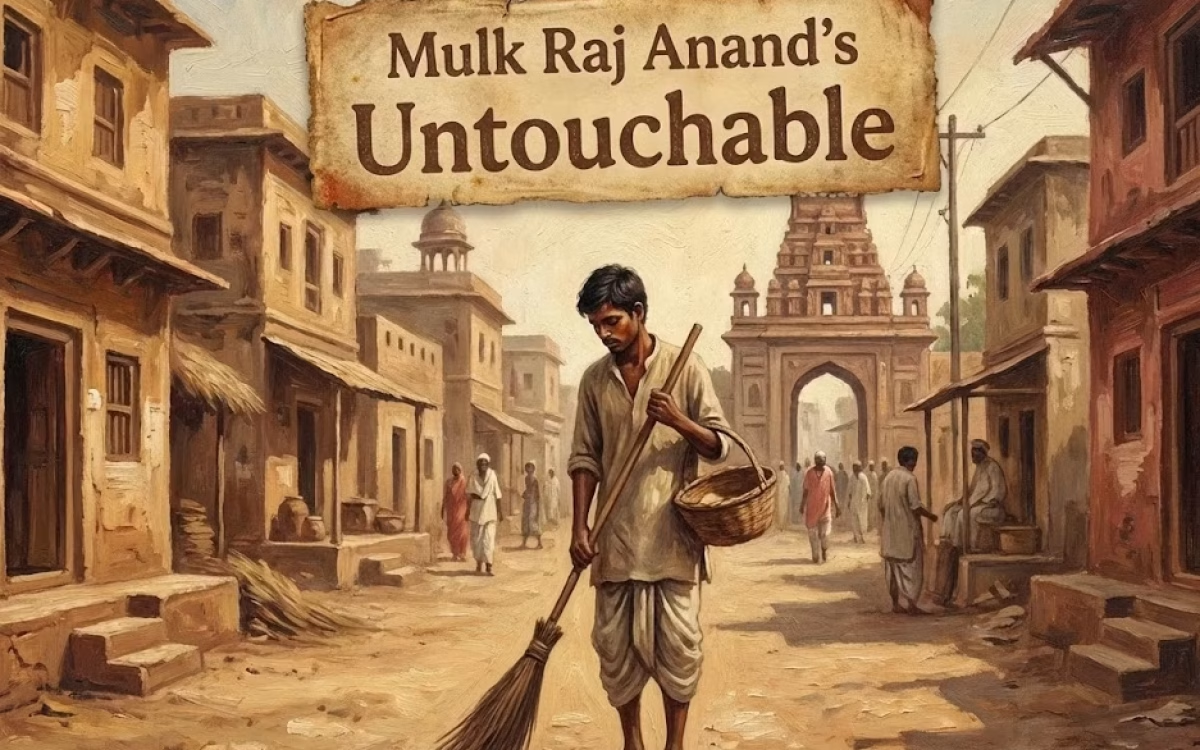
A poignant feature image for a blog post titled Mulk Raj Anand's Untouchable. The illustration depicts a solitary figure, likely the protagonist Bakha, holding a broom in a dusty, early 20th-century Indian village setting. The composition uses earthy tones to reflect the themes of social realism and the caste system. The title text is displayed prominently, integrated into the scene with a font that suits the serious, historical context

December 24, 2025/

Introduction Mulk Raj Anand’s Untouchable stands as a groundbreaking novel in Indian writing in English. It places Anand alongside R.K. Narayan and Raja Rao as one of the “big three” pioneers of the genre. Yet, unlike the gentle humour of Malgudi or the mythic scope of Kanthapura, Untouchable takes the novel form in a bold new direction. Anand compresses the entire narrative into a single day in the life of Bakha, a young sweeper in a North Indian town....

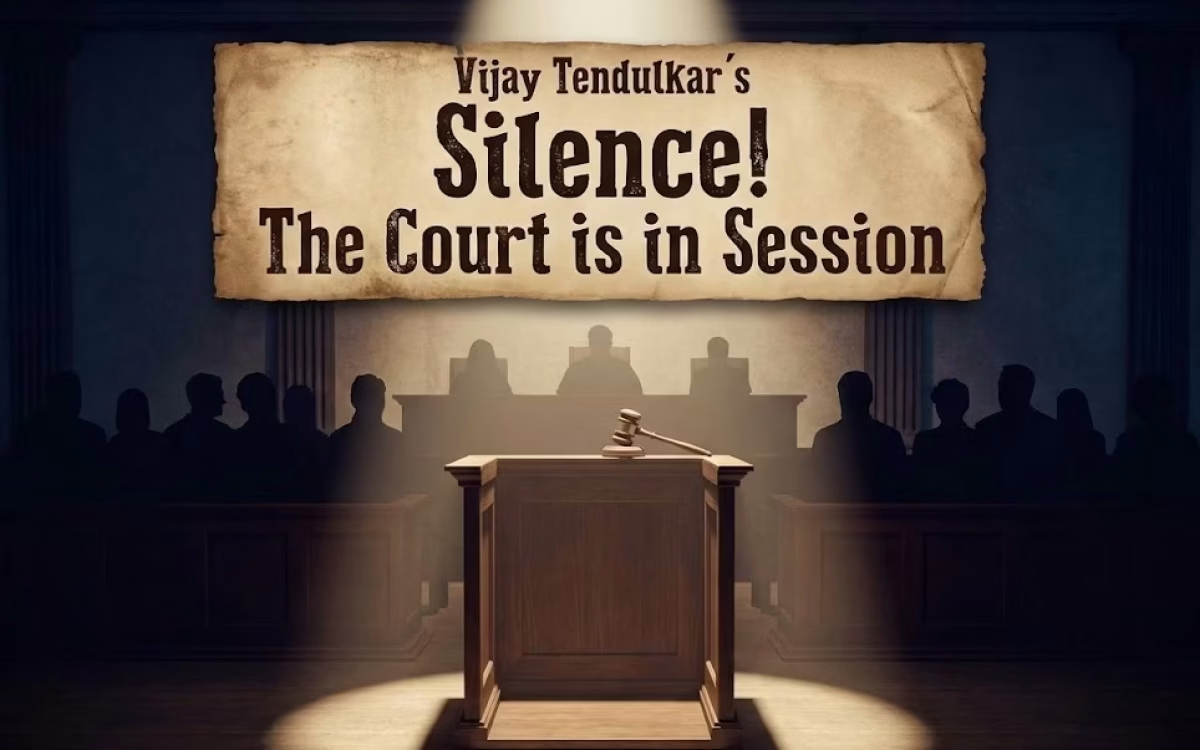
A dramatic feature image for a blog post titled Vijay Tendulkar's Silence! The Court is in Session. The illustration depicts a tense courtroom atmosphere, focusing on a heavy wooden gavel resting on a sound block in the foreground, symbolizing authority and judgment. Behind it, a spotlight shines on an empty witness stand, evoking themes of isolation and social scrutiny. The title text is displayed in bold, authoritative typography against a dark, theatrical background.

December 22, 2025/

Introduction Silence The Court is in Session is Vijay Tendulkar’s most celebrated play, offering a brutal critique of middle-class societal norms. It was first performed in 1967 and later translated from Marathi for a wider Indian and global audience. At first glance, it seems like a simple and playful drama. A small travelling theatre group arrives in a town to rehearse a mock court case as part of their social‑awareness programme. The...

Cover of the book titled Anna Bhau Sathe’s Fakira, featuring a vintage Indian aesthetic with textured, worn background, old manuscripts, quills, and bookshelves. The title is prominently displayed in elegant font centered on the cover. The design evokes a scholarly and historical feel appropriate for literary analysis.

November 24, 2025/

Introduction In the canon of Indian literature, few novels smell as strongly of blood, soil, and gunpowder as Anna Bhau Sathe’s Fakira (1959). To the uninitiated, it is an adventure story—a historical romance about a daring outlaw who roams the Sahyadri mountains, looting the British treasury to feed the starving. But to read Fakira merely as an action novel is to ignore the fire that forged it. This text is a manifesto. It is a...

A dark and suspenseful book cover for SUJATA RAJPAL'S THE OTHER SIDE OF THE CORRIDOR. The image depicts a long, eerie corridor with peeling paint on the walls and multiple closed doors on either side, receding into the distance. At the far end, a solitary figure stands silhouetted against a bright, glowing window, suggesting mystery and a journey towards light or the unknown. The title is displayed prominently at the top in a white, classic font.

November 20, 2025/

Introduction Have you ever wondered what it feels like to walk the other side of the corridor? Where dreams meet reality, and hope battles despair. Sujata Rajpal’s The Other Side of the Corridor is more than just a novel. It’s a journey into the heart of Indian womanhood. Every page echoes the silent struggles and quiet triumphs of countless women. If you’re searching for a story that captures resilience, self-discovery, and the courage to...

A warm and serene book cover illustration for RK NARAYAN'S THE GUIDE. In the foreground, a bearded guru in an orange robe sits on a stone platform, addressing a group of villagers who are seated on the ground around him. In the background, a train station with a red train and a temple spire are visible. The scene is set in an Indian rural landscape at sunset, with mountains in the distance. The title is prominently displayed at the top.

November 18, 2025/

RK Narayan’s The Guide: Introduction RK Narayan’s The Guide stands as a landmark in Indian English literature. Its captivating narrative draws readers in, but it’s the novel’s profound exploration of identity, transformation, and the human condition that truly sets it apart. Published in 1958, the story unfolds in Narayan’s fictional South Indian town of Malgudi—a place now synonymous with his storytelling. At its heart, The Guide tells the story of Raju. His life takes...

Previous Page
123

About Me

Hello, I'm Bangera Rupinder Kaur

It is a space where readers can find insightful articles, thoughtful analyses, and engaging discussions on various literary topics.

Popular Posts

  • All Post
  • American Literature
  • Blog
  • English Literature
  • Indian Writings in English
  • Literary Trivia
  • World Literature
    •   Back
    • UGC NET ENGLISH

Featured Posts

  • All Post
  • American Literature
  • Blog
  • English Literature
  • Indian Writings in English
  • Literary Trivia
  • World Literature
    •   Back
    • UGC NET ENGLISH

Categories

Tags

Edit Template

© 2025 a2zliterature.com | All Rights Reserved