
Introduction
“We are not of Alice, nor of thee, nor are we children at all.”
This devastating line from Charles Lamb’s Dream Children: A Reverie shatters the fragile illusion of family bliss. However, it captures the essay’s haunting core. Charles Lamb, a lifelong bachelor, never married or fathered children. Instead, he devoted his life to caring for his mentally ill sister, Mary Lamb, after she tragically killed their mother in a 1796 breakdown. This essay becomes his poignant “what if” moment—a reverie imagining the family life he sacrificed.
Ultimately, Dream Children is not just a story. It is an elegy for the unlived life. Lamb masterfully explores the thin line between memory and imagination, blending joy with inevitable sorrow.
Quick Summary
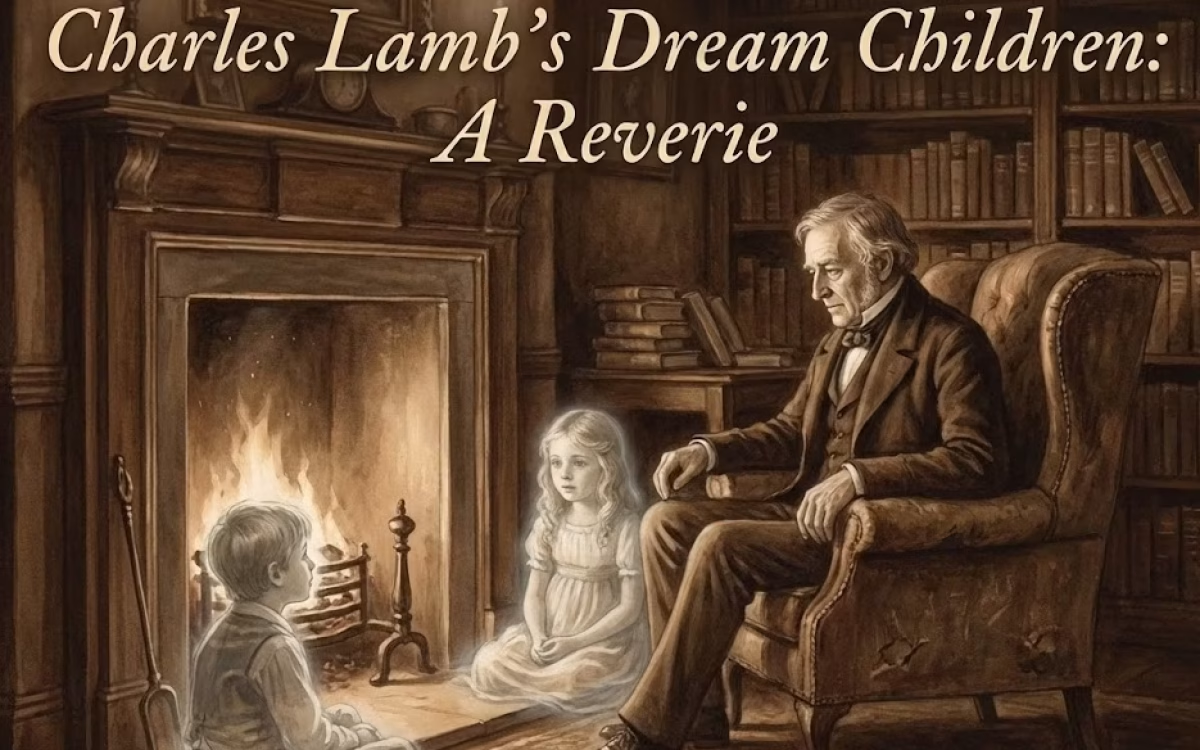
Published in 1822 in the London Magazine, “Dream Children: A Reverie” is a deeply personal essay by Charles Lamb (writing as Elia). In a dream-like state, Elia tells stories of his childhood to his two children, Alice and John. He describes their Great-Grandmother Field and his beloved late brother, John L. The essay ends with a heartbreaking twist: the children fade away, revealing they are merely figments of his imagination, and Elia wakes up alone in his bachelor armchair, reminding the reader of the family life he never had.
The Narrative Framework (The Storytelling)
Charles Lamb crafts a deceptively simple narrative framework in Dream Children: A Reverie. As the narrator Elia settles into his “arm-chair” on a cosy, quiet evening, he weaves tales for his imagined children, Alice and John. This intimate setting draws readers into a fireside reverie. Snow falls softly outside, heightening the warmth within. Elia recounts childhood memories, from his grandmother Field’s grand house to his brother John’s playful antics.
The children’s reactions make this dream vivid—and heartbreakingly real. Little John, named after Lamb’s late brother, tries to look brave as tears well up during the grandmother’s story. He clenches his fists, mimicking adult resolve, yet whispers, “I am a big boy now.” Meanwhile, Alice, the ethereal daughter, gazes at Elia with eyes “full of pity and love”. Lamb notes her striking resemblance to her imagined mother—Ann Simmons, his unrequited love—her dimples and “sweet solemnity” blurring dream and memory. These details heighten the illusion. Thus, when the revelation strikes, the pain cuts deeper.
This storytelling mastery showcases Lamb’s genius. He builds empathy, only to dissolve it.
“Dream Children is just one gem in Charles Lamb’s masterpiece collection. To read this alongside other classics like ‘Old China’ and ‘The Superannuated Man’,
[Get your copy of The Essays of Elia on Amazon].”
Great-Grandmother Field (The Ideal Past)
Great-Grandmother Field anchors the reverie in Charles Lamb’s Dream Children: A Reverie. She embodies quiet dignity, presiding over the “Grand Old House” in Norfolk. Widowed early, she tends the estate with stern benevolence. Elia recalls her Bible-reading rituals and unyielding morals. For instance, she refuses to sleep in the “Judas-coloured” crimson room, haunted by superstition.
The house itself pulses with enchantment—and subtle foreshadowing. Its chimney-piece bears the “Story of the Wood Children”, carved oak figures from the ballad Babes in the Wood. These innocent siblings, abandoned and lost, hint at looming loss. Meanwhile, the gardens bloom with nostalgia: ripe nectarines tempt young Elia, ancient statues of heroes whisper forgotten glories, and peacocks strut amid yew trees. Lamb paints this as a “Golden Age” of childhood—untouched by time’s decay.
Ultimately, Great-Grandmother Field symbolises an idealised past. Lamb’s nostalgia reveals his ache for innocence lost, blending joy with melancholy.
Uncle John L. (The Beloved Brother)
Uncle John L. bursts into Charles Lamb’s Dream Children: A Reverie as a figure of pure affection. Based on Lamb’s real brother, John Lamb, who died just before the essay’s writing, he contrasts sharply with the revered Great-Grandmother Field. She commanded respect through dignity. Uncle John, however, won hearts with love. Handsome and spirited, he dances through Elia’s memories, outshining grander homes with simple charm.
For instance, lame young Charles clings to his back as John races across fields, laughing wildly. He charms beauties at country fairs, juggles knives in playful feats, and fills the house with vitality. Unlike the stern grandmother, Uncle John embodies joy. Yet Elia confesses deep regret: “I missed him all day long… but I did not grieve when he was gone.” This guilt underscores Lamb’s theme of belated appreciation.
Uncle John L. humanises the reverie. He transforms nostalgia into tender remorse.
The Twist Ending (The Climax)
The twist ending of Charles Lamb’s Dream Children: A Reverie delivers a gut-wrenching climax. As Elia describes the children’s mother—his lost love, Alice W–n, with her “sweet solemnity” and dimples—the illusion cracks. Suddenly, Alice and John begin to fade. Their eyes lose luster; forms grow insubstantial.
The revelation unfolds with mythic grace. They drift away, murmuring, “We are not of Alice, nor of thee, nor are we children at all.” Instead, they wait “on the shores of Lethe,” the river of forgetfulness from Greek myth. This echoes the essay’s opening hook, sealing the dream’s dissolution.
Elia awakens to stark reality. The armchair sits empty; the children vanish. Beside him remains only “my faithful and loving Bridget”—code for his sister Mary Lamb. Ultimately, this return shatters the reverie. It confronts the cold truth of Lamb’s bachelorhood, sister-bound life, and unlived dreams.
Key Themes & Symbols
Charles Lamb weaves profound themes and symbols in Dream Children: A Reverie. Nostalgia for an unlived life dominates, blurring memory, imagination, and loss. Reality intrudes on fantasy, mourning what could have been. Beyond this, vivid symbols deepen the elegy.
The River Lethe: Draws from Greek myth as the underworld river causing forgetfulness. The dream-children wait on its shores, symbolising death-like oblivion before birth. It evokes erasure of potential lives, amplifying Lamb’s grief.
Alice W–n: Veiled reference to Ann Simmons, Lamb’s real unrequited love. As the children’s mother, she embodies romantic possibility denied—marriage, family—thwarted by duty to sister Mary.
The Arm-Chair: Represents Elia’s solitary domesticity. Nestled by the fire, it cradles the reverie yet frames his bachelor isolation. Meanwhile, it contrasts the vibrant fatherhood he imagines.
Together, these elements transform the essay into a masterclass in personal symbolism. Lamb invites readers to ponder their own “what ifs.”
“While Dream Children explores personal loss, Lamb also had deep empathy for the loss of childhood in others. Read his tribute to the working-class children of London in [The Praise of Chimney-Sweepers].”
“Lamb explores the ‘internal’ other—the ghost of the life he never lived. For a look at how literature constructs the ‘external’ other, check out-
Autobiographical Elements (Crucial for Exams)
Autobiographical elements make Charles Lamb’s Dream Children: A Reverie a goldmine for exams. Lamb masks real pain as fiction, blending personal tragedy with fantasy. Drawing from his life, Elia’s reverie exposes sacrifice and loss. Crucially, understanding these “masks” unlocks essay questions on Lamb’s confessional style.
| Fictional Name | Real Person | Connection to Lamb |
|---|---|---|
| Elia | Charles Lamb | The essayist himself; lifelong bachelor caring for his sister. |
| Bridget | Mary Lamb (Sister) | Mentally ill; killed their mother in 1796. Lamb’s “faithful” companion in reality. |
| John L. | John Lamb (Brother) | Died shortly before the essay; spirited figure Lamb regretted not cherishing. |
| Alice W–n | Ann Simmons (Lost Love) | Childhood sweetheart Lamb loved but never married; idealised as the dream-mother. |
Conclusion
In essence, Charles Lamb’s Dream Children: A Reverie stands as a masterpiece of pathos—pure, piercing emotion. It compels us to sympathise with Lamb’s profound loneliness, a bachelor forever bound by familial duty. The fading dream-children echo his unlived joys, leaving readers haunted.
Today, the essay’s relevance endures. It reveals the human mind’s power to cope with grief through imagination. Lamb transforms personal sorrow into universal art, inviting us to cherish our own reveries amid reality’s chill.
FAQS
Who is the Faithful Bridget mentioned at the end?
Faithful Bridget is a pseudonym for Mary Lamb, Charles's sister. She suffered mental illness and killed their mother in 1796. Lamb cared for her lifelong, symbolizing his sacrificed family dreams.
What does the River Lethe symbolise?
From Greek myth, Lethe is the river of forgetfulness in the underworld. The dream-children wait on its shores, representing death, oblivion, and unborn lives—Lamb's grief for what never was.
