Introduction
Charles Lamb’s The Praise of Chimney Sweepers opens with an affectionate paradox—Lamb calls the sweepers “dim specks” and “poor blots,” yet he treats them like royalty. In an age when society looked down upon these sooty little figures, Lamb saw something luminous in them. The essay reflects on the lives of climbing boys—young children forced to crawl up narrow, scorching chimneys to clean them. It was one of the most brutal jobs in early nineteenth-century England. Yet, rather than dwelling solely on their suffering, Lamb finds grace, innocence, and unexpected beauty in their existence. Through this tender portrayal, he urges readers to challenge the Victorian disgust for poverty and to recognise the quiet dignity hidden within society’s most overlooked corners.
Quick Summary
Published in the London Magazine in 1822 and later in the Essays of Elia, this essay is a compassionate tribute to the young chimney sweepers of London. Charles Lamb (writing as Elia) urges readers to look past the soot and dirt to see the “clergymanship” and nobility in these poor children. He describes their hardships with humour and pathos, celebrates their joy for a cup of “sassafras tea”, and famously recounts a feast held for them by his friend, Jem White.
The “Clergy” of the Chimney
Charles Lamb humorously elevates the status of chimney sweepers by comparing them to clergymen. In The Praise of Chimney Sweepers, he calls them a kind of “black-robed clergy”, preaching unknown sermons from the tops of smoky chimneys. This extended metaphor turns what society saw as filth into a symbol of sacred labour and purity. As Lamb writes, “I have a kindly yearning toward these dim specks—poor blots—innocent blacknesses.” The phrase “innocent blackness” captures the heart of his vision. It is an oxymoron that transforms the sweepers’ blackened faces into emblems of moral purity. Though darkened by soot, their souls remain unstained. Through this striking image, Lamb redefines social perception, inviting readers to see divinity in the very people society has condemned to darkness.
“Charles Lamb’s essays are best enjoyed in a collection. [Buy The Essays of Elia on Amazon] to read this alongside ‘Dream Children’ and ‘Old China’.”
The Saloop Shop (The Sassafras Tea)
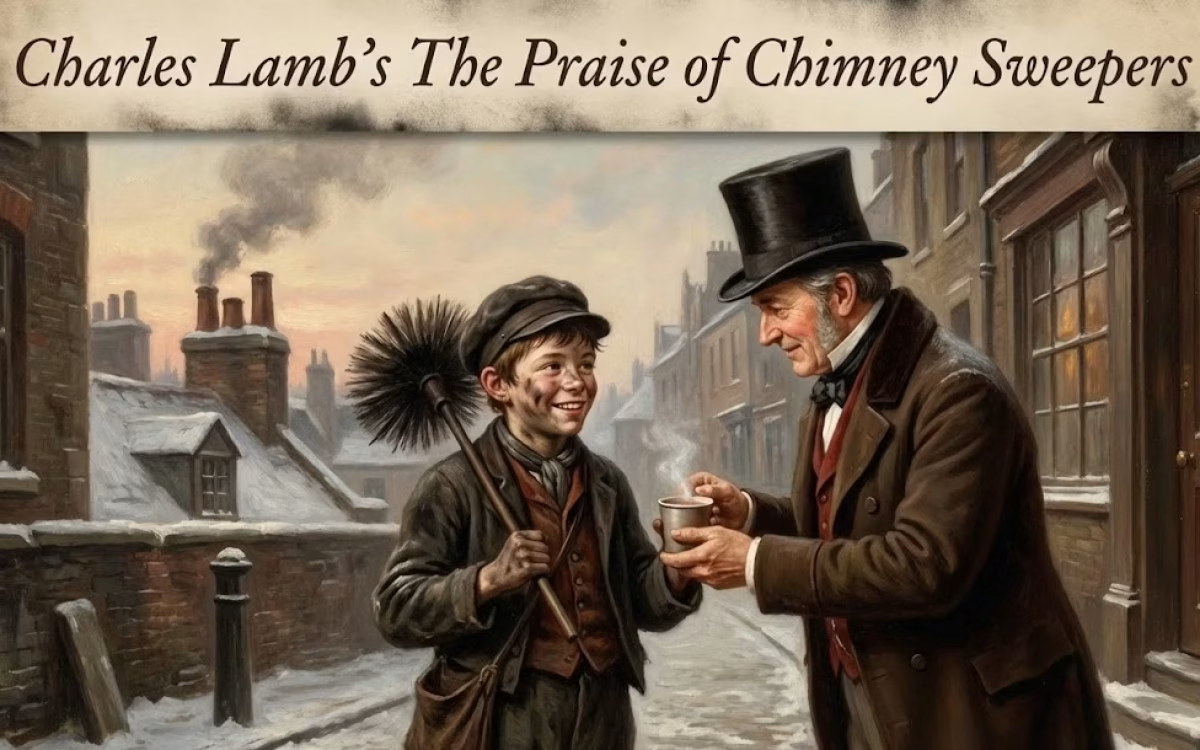
In The Praise of Chimney Sweepers, Charles Lamb paints a warm and lively picture of the early morning “Saloop Shop,” where young chimney sweepers gather before starting their day’s labour. The scene is full of life and tenderness. Saloop, a hot drink made from powdered sassafras roots, served as a humble substitute for tea among the poor. Moreover, Lamb delights in describing the boys huddled around the steaming bowls, their soot-streaked faces glowing softly in the dawn light. With gentle humour and deep compassion, he urges readers to share in this simple pleasure. “Give it to him,” Lamb insists, encouraging even the smallest acts of kindness toward the sweepers. Therefore, this moment of generosity reflects Lamb’s larger moral vision. Humanity, he suggests, rises through empathy. Even the smallest gifts, when offered with warmth and love, hold the power to dignify lives that the world often overlooks.
The Fall of the Young Sweeper (The Arundel Castle Story)
In The Praise of Chimney Sweepers, Charles Lamb recalls a touching anecdote known as the “Arundel Castle Story.” In this tale, a young chimney sweeper, exhausted from his labour, accidentally wanders into the luxurious halls of Arundel Castle. There, he falls asleep in a Duke’s grand bed. The image is both tender and profound. It shows a tiny figure of poverty resting, for a moment, in the lap of nobility. Furthermore, Lamb whimsically muses that perhaps the boy is a misplaced prince or a nobleman by birth, lost to the world through some strange twist of fate. Beneath this gentle humour lies a deeper truth. The child’s innocence and dignity are as natural and precious as any aristocrat’s title. Ultimately, through this quiet reverie, Lamb reminds readers that class distinctions are superficial, while the real measure of nobility lies in the purity of the soul.
Jem White’s Annual Feast (The Sausage Supper)
One of the most heartwarming moments in The Praise of Chimney Sweepers is Charles Lamb’s recollection of his friend Jem White’s annual feast for the little sweeps. Every year, during the Smithfield St. Bartholomew’s Fair, Jem White gathered the chimney boys for a special supper. The star dish was sausages—hot, fragrant, and delightfully humble. Moreover, Lamb’s sensory description brings the scene vividly to life. Readers can almost smell the savoury aroma, hear the laughter, and see the children’s shining faces as they dined like royalty.
At the height of the evening, Jem White would raise a toast “to the King,” and the boys would cheer with unrestrained joy. For that one night, class boundaries dissolved, and the poorest boys in London were treated with the dignity of kings. However, Lamb ends this memory with quiet sorrow. “James White is extinct, and with him these suppers have long ceased.” Therefore, the shift in tone from jubilation to loss highlights the essay’s delicate humanity—a reminder that generosity, once gone, leaves behind a tender ache of remembrance.
If you found this analysis helpful, you might enjoy these related posts:
Literary Theory: [Understanding Edward Said’s Orientalism] – Dive deeper into how we view the “Other.”
Indian Writing: [Fasting, Feasting by Anita Desai] – A study of hunger and family dynamics.
Student Guide: [How to Analyse R.K. Narayan’s The Guide] – From book to movie.
Stylistic Features
The Praise of Chimney Sweepers is a perfect example of Charles Lamb’s unique literary style—one that blends tenderness, wit, and nostalgia. Lamb’s signature mixture of pathos and humour gives the essay its emotional depth. He does not write a moral protest against child labour; instead, he composes a “love letter” to the chimney sweeps, finding warmth and humanity where others saw only soot and suffering. This balance between melancholy and mirth makes his social message more enduring than mere complaint.
Lamb’s use of archaic language—words like “yclept” and “hath”—creates a soft, timeless charm, reminding readers of the gentle rhythms of an older English style. It slows the pace and evokes affection, not agitation.
Finally, literature students should remember that “Elia” is not simply Lamb himself but a carefully crafted persona. Elia is the tender observer, the kind-hearted bachelor whose sympathy humanises the world’s neglected corners. Through Elia’s eyes, even the smallest figures—the sweepers, the shopboys, the beggars—become luminous symbols of shared humanity.
Conclusion
Charles Lamb’s The Praise of Chimney Sweepers remains deeply relevant even today. Beneath its whimsical tone lies a timeless moral about empathy and human dignity. Moreover, in an era when society often overlooks the homeless, the poor, and the invisible labourers who keep the world running, Lamb’s essay encourages us to pause and truly see them. He reminds us to look beyond the “blackness” and discover the gentlemen within. In doing so, we learn to recognise purity, worth, and grace in those whom the world too easily dismisses. Furthermore, Lamb’s writing—tender yet humorous—transforms compassion into an art form. For modern readers, his message still endures as both a moral lesson and a gentle call to recover our shared humanity through acts of kindness.
FAQS
Who is Elia in the essay?
Elia is the pen name or persona of Charles Lamb. Through Elia, Lamb speaks in a gentle, observant, and deeply humane voice. This persona allows him to express personal reflection and sentiment with warmth and humour. Elia is not just Lamb—it’s his literary mask through which he contemplates the beauty and dignity found in everyday life.
Why does Lamb compare sweepers to clergymen?
Lamb humorously likens the chimney sweepers to clergymen because they wear black and “preach” from the tops of chimneys. This metaphor elevates their social status, suggesting that their humble labour holds a kind of spiritual purity. By turning them into “black-robed clergy,” Lamb challenges readers to see innocence and holiness in those society tends to overlook.