Introduction
Nissim Ezekiel’s Night of the Scorpion plunges us into a vivid rural Indian night. The scent of wet earth and the flicker of lanterns set the stage for an intimate drama. This drama feels at once personal and universal. The iconic poem captures the essence of Indian sensibility and collective village anxiety. It shows the weight of tradition as well as the quiet resilience of family. Ezekiel, known as the “Father of Modern Indian English Poetry,” recreates the sights, sounds, and beliefs of rural India. His words make the scene familiar to anyone who has faced a monsoon night in the countryside.
Quick Summary: Night of the Scorpion
Night of the Scorpion (1965) is a famous poem by Nissim Ezekiel that depicts a rural Indian village scene where the poet’s **Mother** is stung by a scorpion during a rainy night. The poem vividly contrasts the superstitious reactions of the Villagers (who chant prayers to paralyse the “Evil One”) with the rational, scientific efforts of the Father. It concludes with a powerful testament to maternal love, as the mother, after enduring 20 hours of pain, simply thanks God that the scorpion stung her and spared her children.
The “Indian” Voice
Nissim Ezekiel’s work stands out for its ability to capture the true Indian sensibility. He evokes the sound of villagers chanting and the scent of rain-soaked earth. His lines reflect the weight of age-old beliefs passed down through generations. In *Night of the Scorpion*, Ezekiel does more than describe an event. He recreates the atmosphere and the collective anxiety of rural life. The poem also highlights the quiet heroism that defines everyday existence in India. Whether it’s the buzz of neighbours gathering with lanterns or the mother’s selfless words, every detail feels deeply rooted in Indian soil.
The Conflict
At the heart of *Night of the Scorpion* lies a powerful tension. It reveals a clash between old superstition and modern rationality. The villagers, steeped in tradition, believe the mother’s suffering will cleanse her of sins. They see it as balancing the scales of karma. They chant and pray, awaiting divine intervention in the dim light of lanterns. To them, the scorpion’s sting means more than physical pain. It becomes a form of spiritual purification.
On the other side stands the father, a man of science and reason. He tries every modern remedy he knows—powders, herbs, and even paraffin to burn the sting. He stands apart from the crowd, doubtful of their faith and sure of logic. His struggle shows the rise of reason in a world still bound by belief. Quietly, there is also the mother. She is neither with the villagers nor against her husband. She endures the pain in silence. When it ends, she simply says her children were spared. In that one moment, she embodies love beyond superstition and rationality.
“This is the standard edition used in most Indian universities. It covers his major works from 1952–1988. [Buy Collected Poems by Nissim Ezekiel].”
The Narrative (Stanza-by-Stanza Summary)
The Incident
Nissim Ezekiel’s Night of the Scorpion opens with a heavy downpour in rural India. The rain forces a scorpion, seeking shelter, to crawl beneath a sack of rice. In a sudden movement, it stings the mother and then, braving the rain once more, escapes into the darkness. This moment sets the stage for the unfolding drama, grounding the poem in the natural world and the unpredictability of life in the village.
The Swarm
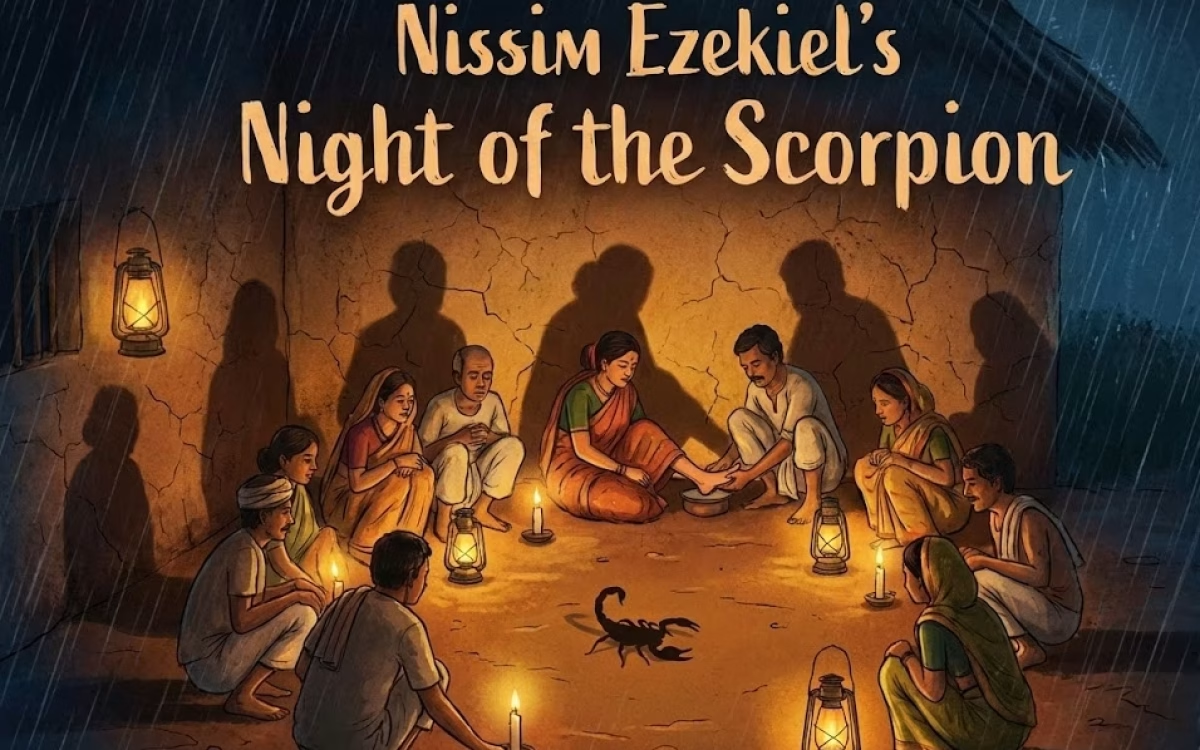
As news spreads, villagers arrive like “swarms of flies,” filling the house with noise and movement. They chant the name of God, hoping to paralyze the scorpion and prevent it from moving again, believing this will stop the poison from spreading through the mother’s body. Their collective energy and anxiety are palpable, capturing the communal response to crisis in rural India.
The Rituals
The villagers search for the scorpion with candles and lanterns, their bodies casting “giant scorpion shadows” on the mud walls. They believe that every movement of the scorpion will cause the poison to move within the mother’s blood, prolonging her agony. This ritualistic search reflects the deep-seated superstitions and the villagers’ desperate attempts to control the uncontrollable.
The Antidotes
While the villagers rely on chants and prayers, the father, embodying rationality, tries every remedy he knows—herbs, powders, mixtures, and even pouring paraffin on the mother’s toe and lighting a match. His actions highlight the tension between traditional beliefs and modern science, as both approaches are employed in the hope of healing.
The Climax
A holy man arrives and performs his rites, adding another layer of ritual to the scene. After about twenty hours, the pain finally subsides, and the mother’s condition improves. The climax underscores the passage of time and the persistence of hope, even in the face of uncertainty.
The Resolution (The Twist)
In the final twist, the mother speaks the defining lines: “Thank God the scorpion picked on me / And spared my children.” Her words shift the focus from the battle between superstition and rationality to the quiet, selfless love of a mother, offering a resolution that transcends the earlier conflict.
Critical Analysis: The Three Perspectives
The Villagers: Tradition and Superstition
Nissim Ezekiel’s *Night of the Scorpion* presents the villagers not as foolish but as deeply concerned neighbours. They react in the only way they know—through tradition and superstition. As they arrive with candles and lanterns, the light casts giant scorpion shadows on the mud walls. This scene creates a vivid and almost eerie atmosphere. Moreover, it immerses the reader in the superstitious mindset of rural India. The imagery builds a strong sense of collective anxiety and spiritual urgency. In this moment, the scorpion’s movements seem directly linked to the mother’s pain.
The villagers believe the sting is more than a physical event. Rather, it is a cosmic act meant to burn away sins from a past life. Their effort to explain suffering through faith reflects their moral and spiritual worldview. Additionally, they see pain and misfortune as part of a divine balance. Ezekiel’s portrayal is not mocking or dismissive. Instead, it highlights the emotional comfort and communal support these beliefs provide, even without scientific proof.
The Father: Rationality and Scepticism
The father in the poem stands as a symbol of the modern Indian. He represents a sceptic and rationalist who rejects superstition. Instead, he turns to empirical solutions and scientific reasoning. However, despite his logical outlook, his desperation soon becomes clear. He tries every curse, blessing, powder, mixture, herb, and hybrid to heal his wife. The irony grows stronger as his reason gives way to urgency. Finally, he burns her toe with paraffin and a match, showing the limits of control.
This act contrasts sharply with the villagers’ calm chanting and prayer. Moreover, it highlights the divide between science and faith in moments of crisis. The father’s actions reveal the boundaries of human rationality. They suggest that even modern methods can become as desperate as old rituals. Ultimately, Ezekiel shows that reason and faith both fail to fully explain human suffering. EXPLORE OTHER WRITERS
The Mother: Selfless Love
While the men debate science and faith, the mother endures her pain in silence. She embodies quiet strength and selfless love, traits often linked to Indian motherhood. Her final words, “Thank God the scorpion picked on me and spared my children,” mark a turning point. They shift the poem’s focus from science and superstition to the higher power of maternal love.
As a result, the resolution lifts the poem beyond a clash of ideas. It becomes a moving tribute to a mother’s selfless devotion. Moreover, her gratitude is not for her own safety but for her children’s protection. This moment emphasises that true heroism lies in silent sacrifice rather than in grand gestures.
Literary Devices
Simile
One of the most striking similes in Nissim Ezekiel’s *Night of the Scorpion* is “The peasants came like swarms of flies.” This comparison vividly shows the sudden and noisy arrival of the villagers. It also emphasises their shared anxiety and the chaotic atmosphere of the night. Moreover, the simile paints a clear and memorable picture of rural life. In addition, it hints at the villagers’ persistence and the overwhelming nature of their presence. Therefore, this simple image becomes a powerful symbol of collective emotion and human reaction in crisis.
Metaphor
The poem uses the metaphor of the “Diabolic Tail” to describe the scorpion’s sting. This image associates the creature with the Devil and evil forces. As a result, the metaphor deepens the feeling of dread and fear within the poem. It also suggests that the scorpion’s attack is more than a physical act. Instead, it becomes a powerful symbol of malevolence and human suffering. Moreover, the image strengthens the villagers’ superstitious beliefs and highlights the conflict between good and evil.
Irony
A key example of irony in the poem appears in the rationalist father’s desperate use of fire and curses. Although he values science, his actions reveal his fear and helplessness. He tries every possible remedy to save his wife. This includes burning her toe with paraffin and a match. As a result, the boundary between science and ritual becomes blurred. Moreover, this irony exposes the limits of rational thinking during moments of pain. It also emphasises the poem’s central tension between science and superstition.
Free Verse
Nissim Ezekiel’s Night of the Scorpion is written in free verse, with no rhyme scheme. This form mirrors the natural flow of storytelling and the chaotic, unpredictable nature of the night described in the poem. The lack of a strict structure allows the poem to unfold organically, capturing the urgency and emotional intensity of the events as they happen.
Conclusion
Nissim Ezekiel’s Night of the Scorpion stands out for its neutral and observational tone. He never mocks the villagers for their beliefs. At the same time, he does not glorify the father’s rational thinking. Instead, he presents both perspectives with empathy and clarity. Through this balance, readers can understand the complexity of Indian life. Moreover, Ezekiel’s tone remains calm and non-judgmental. It invites readers to observe the scene as it unfolds and to appreciate the blend of tradition and modernity.
Ultimately, the poem becomes a vivid snapshot of Indian life. Here, ancient rituals and modern science exist side by side. In fact, many Indian families turn to both prayer and medicine during moments of crisis. This coexistence shows the deep balance between faith and reason. *Night of the Scorpion* captures this duality with beauty and precision. Therefore, it stands as both a literary masterpiece and a timeless reflection of the Indian experience.
FAQ
What is the central theme of Night of the Scorpion?
The central theme of Night of the Scorpion is the clash between superstition and rationality, set against the backdrop of rural Indian life. The poem also explores the power of maternal love, showing how the mother’s selfless act transcends both traditional beliefs and modern science.
How does the father react to the scorpion sting?
The father, portrayed as a rationalist and sceptic, reacts by trying every possible remedy—herbs, powders, mixtures, and even burning the mother’s toe with paraffin. Despite his scientific approach, his desperation leads him to blur the line between rationality and ritual, highlighting the limits of science in times of crisis.
What do the peasants believe about the scorpion?
The peasants believe that the scorpion sting is a cosmic event, meant to burn away the mother’s sins from her present and previous births. They chant prayers and try to paralyse the scorpion, convinced that its movements will influence the flow of poison in the mother’s blood, reflecting their deep-rooted superstitions.