Introduction
August Wilson’s The Piano Lesson is part of his famous “Pittsburgh Cycle.” This ten-play series explores African American life in each decade of the twentieth century. In this play, Wilson focuses on the 1930s, showing how the legacy of slavery and Jim Crow still shapes ordinary families. The story reveals that, even far from the plantation, freedom often remains incomplete.
The action takes place in 1936 in Pittsburgh’s Hill District. It unfolds during the Great Depression, a time when jobs were scarce and Southern migration to northern cities was rising. Black families struggled daily to balance survival, dignity, and hope in small, crowded homes. The setting becomes a pressure cooker where economic hardship collides with the unresolved history of racial violence.
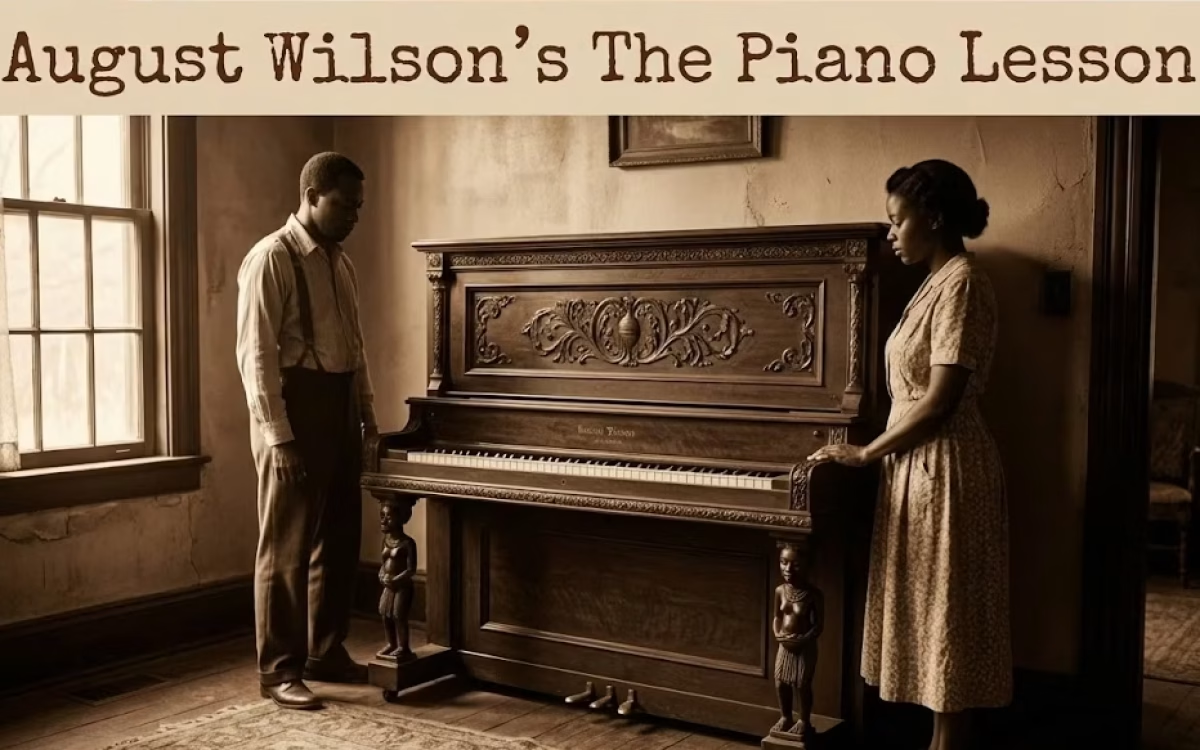
At the center of this home stands a remarkable piano. Around it unfolds the play’s central conflict—a tense battle between brother and sister. Boy Willie wants to sell the piano to buy back the Mississippi land their ancestors once worked as slaves. Berniece refuses to part with it, guarding the carved faces and painful memories it holds. The instrument becomes more than furniture—it turns into a symbol of memory, legacy, and the clash between ambition and remembrance.
Quick Summary: The Piano Lesson
The Piano Lesson (1987) is a Pulitzer Prize-winning play by August Wilson set in 1936 Pittsburgh. It centres on the conflict between two siblings: Boy Willie, who wants to sell the family’s heirloom piano to buy land, and Berniece, who refuses to sell it because it holds the carvings of their enslaved ancestors. The play explores themes of legacy, the supernatural (Sutter’s Ghost), and how to honour the past.
August Wilson’s The Piano Lesson: Plot Summary
Act 1 begins with Boy Willie roaring into Doaker’s Pittsburgh home in 1936. He arrives on a truck loaded with watermelons and unstoppable ambition. His easygoing friend Lymon rides with him. Soon after, Boy Willie brings startling news—he wants to sell the family’s heirloom piano to buy the Mississippi land once owned by the white Sutter family. Even now, the name “Sutter” still lingers over the Charles family history like a dark cloud.
Before long, the house’s tense atmosphere thickens as talk turns to “Sutter’s ghost.” This ghostly presence has haunted the property since Sutter’s mysterious death. Through careful detail, Wilson lets the spirit appear through strange noises and eerie disturbances. As a result, the characters sense that the past refuses to stay buried.
Meanwhile, the piano carries the emotional and historical heart of the story. Berniece’s great-grandfather, Willie Boy, had to trade his wife and son for this very instrument. Later on, he carved their family’s story into its wooden surface—faces, names, births, and losses. In turn, Berniece’s mother polished the piano with “blood and tears,” transforming it into a sacred record of their lineage rather than a mere decoration.
As the play moves into Act 2, the tension around the piano rises steadily. Boy Willie grows restless and more determined to sell it. He even tries to move the piano himself, believing that effort alone can end the argument. However, as he pushes forward, the haunting becomes stronger. Sutter’s ghost now reveals itself more violently, shaking the house and forcing the family to confront the painful truth behind their inheritance.
Finally, the play reaches its climax when Boy Willie appears to wrestle with the ghost. The struggle feels part fight, part exorcism. At this breaking point, Berniece finally sits down to play the piano she has long avoided. Through this act, she calls on her ancestors with music, turning the instrument into a weapon of faith and resistance. In the end, her song drives the ghost away and saves her brother’s spirit.
“Need to cite quotes for your essay? [Get the full script of The Piano Lesson on Amazon] to follow along.”
August Wilson’s The Piano Lesson: Character Analysis
Boy Willie
Boy Willie appears impulsive, loud, and endlessly ambitious. He is the kind of man who believes the future can be seized with both hands if one is bold enough. To him, the piano is not a sacred relic but “a heavy piece of wood” that could bring land, profit, and long‑denied economic freedom. He wants to use the past rather than simply honor it. His central question—why cling to an inherited object when selling it could buy a stake in the very soil that once enslaved his family—makes him the play’s strongest voice for progress and self‑determination.
Berniece
Berniece is protective, deeply traumatized, and quietly strong. She carries the memory of her father’s death over the piano and the loss of her husband. Through her character, Wilson shows reverence for the past and the fear of turning history into profit. Berniece believes that trying to “use” the piano would mean selling her ancestors’ pain again. Her refusal to play it—because she fears “waking the spirits”—acts as both a defense and a devotion. The piano becomes an untouchable shrine to her family’s suffering and love.
Doaker
Doaker, the uncle and head of the household, serves as the calm historian and storyteller. He knows the full backstory of the piano and the family’s struggles. Throughout the play, he stays mostly neutral in the conflict between Boy Willie and Berniece. Instead of judging, he chooses to narrate. In doing so, Doaker becomes the play’s living archive—the character who links present tensions to past wounds.
Lymon
Lymon acts as a gentler contrast to Boy Willie. He is less driven, more relaxed, and more focused on finding companionship and stability than on grand plans of land ownership. His simple and open nature highlights Boy Willie’s restless ambition. Lymon’s attraction to the North and to a new way of life offers a softer, more hopeful version of male aspiration in the play.
August Wilson’s The Piano Lesson: Critical Themes
Historical Legacy: Honor vs. Utilization
One of the most powerful tensions in The Piano Lesson is the question of what it truly means to honor one’s ancestors. For Berniece, real respect comes from keeping the piano safe and untouched. The instrument is literally carved with her family’s history, so she treats it as a sacred shrine that must never be exchanged for money. In contrast, Boy Willie believes that the best way to honor the dead is to use what they left behind. He argues that selling the piano would bring the economic freedom their ancestors never had. Thus, the piano becomes a symbol of clashing visions—one rooted in preservation, the other in progress.
“Much like the hidden secret in Sam Shepard’s Buried Child, the characters in The Piano Lesson are haunted by a past they cannot escape. In both plays, the family history is a physical presence in the living room.”
This clash turns the piano into a moral test: is memory more authentic when it is preserved, or when it is transformed into land, ownership and new possibilities? The play refuses an easy answer, suggesting that both stasis and reckless change can betray the past in different ways.
The Supernatural as History
The supernatural in The Piano Lesson is not a tool of horror. It represents history demanding to be recognized. Sutter’s ghost is more than a simple spirit—it embodies the unresolved trauma of slavery and racial violence. The haunting reminds us that what was done to Black bodies and families cannot be easily buried.
Each time the ghost disturbs the house, it signals that the family’s story remains unfinished. The piano and the land Boy Willie desires both carry that legacy. Through the haunting, Wilson exposes what polite ideas of progress try to hide—the dead cannot rest while their suffering remains unacknowledged.
The Power of Music
Music in The Piano Lesson acts as a living bridge between the human world and the ancestral realm. Berniece’s long refusal to play shows how frightening that bridge can feel. Touching the keys means reopening memories, voices, and losses she has struggled to silence.
When she finally plays at the climax, the moment becomes more than a performance. It turns into a spiritual exorcism and a prayer combined. Through music, Berniece calls on her ancestors, drives away Sutter’s ghost, and accepts her role as guardian of family history. Wilson suggests that art can achieve healing and power where force and formal religion cannot.
August Wilson’s The Piano Lesson: Symbolism
The Piano: Coffin, Totem and Archive
The piano in The Piano Lesson is not just a musical instrument. It stands as a powerful symbol filled with history’s weight. It is part coffin for the family’s dead, part totem marking their identity, and part living archive carved with their story. Berniece’s great-grandfather, Willie Boy, engraved portraits of their enslaved ancestors into its wood—faces of mothers sold away, children lost to separation, and moments of birth and grief turned into lasting reliefs that cannot fade.
For students studying the play, the piano becomes an act of resistance. It transforms an object once tied to white ownership into a record of Black endurance and memory. Anyone who looks at it must confront the human cost of slavery. Boy Willie’s desire to sell the piano collides with its meaning, raising a haunting question: Can you give up a monument to your survival without losing part of yourself?
The Yellow Dog Ghosts: Vengeful Ancestral Spirits
References to the “Yellow Dog ghosts” appear throughout the family’s stories. They represent the spirits of vengeful ancestors—souls who faced violent deaths under slavery and now watch over the living. These ghosts are not random hauntings. They are targeted forces tied to specific betrayals, such as the train that supposedly killed Sutter, echoing the unnatural deaths suffered by the Charles family.
This motif shows how Wilson blurs the line between folklore and history. The ghosts express a shared rage that survives across generations. They pressure the living to confront the past or face supernatural consequences. Wilson’s message is clear: ignored ancestors never disappear—they grow stronger until their stories are finally heard.
Watermelons: Stereotype into Economic Weapon
Boy Willie drives into Pittsburgh with a truck full of watermelons. This instantly turns a loaded racial stereotype—often used to mock Black poverty and simplicity—into a tool for survival and power. He sells them door to door, bargaining fiercely. Each sale feels like one more link broken from the chains of sharecropping in Mississippi.
Moreover, this symbolism cleverly flips the script. What white society once caricatured as backward becomes Boy Willie’s ladder to economic independence. It helps fund his dream of land ownership and shows how determination can transform mockery into empowerment. Also, for readers, this becomes a striking reminder that oppressed communities often reclaim and reshape symbols of ridicule. In doing so, they turn insult into pride and survival into art.
Conclusion
In the end, the piano stays in the house—unsold and unbroken. This moment becomes a quiet victory for memory over material gain. Boy Willie returns to Mississippi without his prize. His ambition remains, but his plan is stopped by forces stronger than his will. Meanwhile, Berniece stands transformed. She no longer hides from the instrument but is finally ready to let it speak through her hands.
Ultimately, August Wilson offers a powerful lesson about liberation and heritage. True freedom comes when we embrace the past and use it with purpose. We must neither worship history as an untouchable relic, as Berniece once did, nor turn it into a commodity, as Boy Willie tried. Moreover, when Berniece plays the piano during the climactic exorcism, she transforms memory into strength. Through art, story, and ritual, she turns ghosts into guardians and pain into purpose. In this balance, the past fuels the future—a message that continues to resonate from Pittsburgh’s Hill District to classrooms across India studying trauma, identity, and resilience in literature.
August Wilson’s The Piano Lesson: FAQS
Who is Sutter’s Ghost?
Sutter’s Ghost is the spirit of the white landowner whose family once enslaved Berniece’s ancestors. He begins haunting the piano after his mysterious death, symbolizing how the trauma and injustice of slavery continue to disturb the living. His ghost reminds the Charles family that unresolved racial history cannot stay buried until it is confronted.
What is the significance of the carvings on the piano?
The carvings on the piano tell the story of the Charles family’s enslaved past. Berniece’s great-grandfather, Willie Boy, carved faces and scenes representing generations of love, loss, and resilience. These engravings turn the piano into a family monument—a symbol of memory, identity, and survival in the face of historical erasure.