Browsing Category: English Literature

  • All Post
  • American Literature
  • Blog
  • English Literature
  • Indian Writings in English
  • Literary Trivia
  • World Literature
    •   Back
    • UGC NET ENGLISH
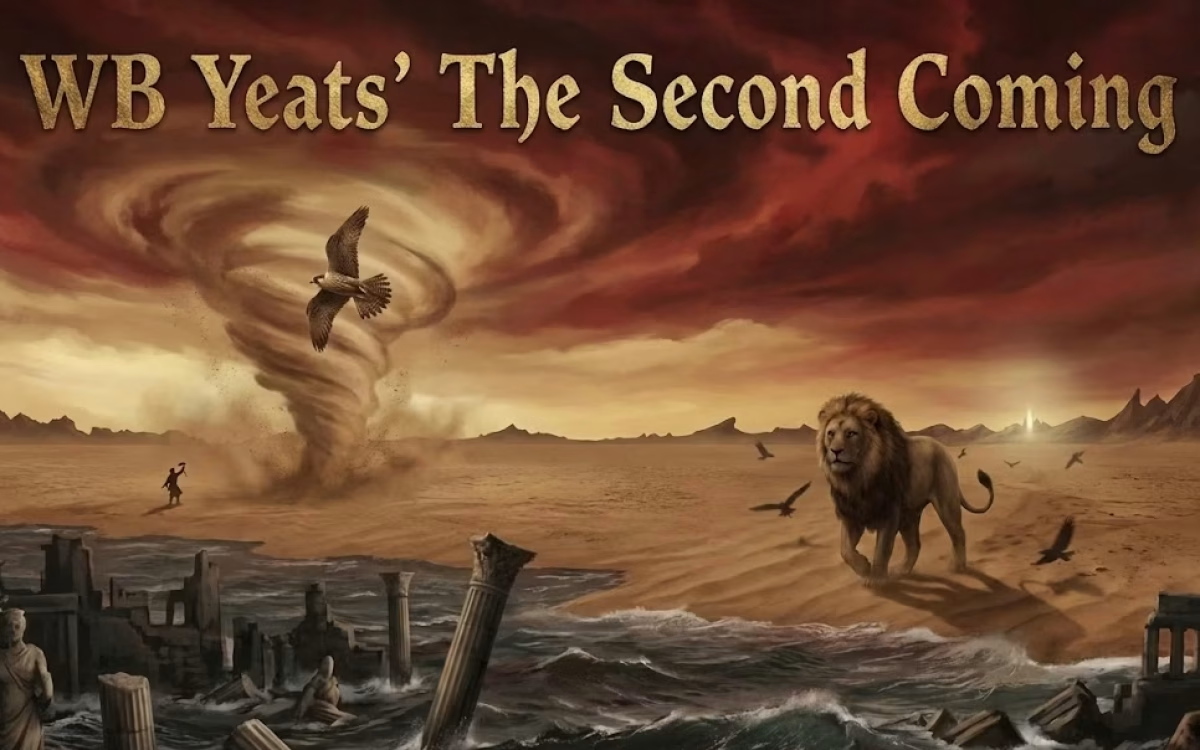
An illustration titled WB Yeats' The Second Coming in gold text across a red, turbulent sky. A male lion walks across a sandy shore towards the viewer, with a large dust devil and a falcon flying above it in the desert landscape. In the distance, a figure stands near the tornado. The foreground features ancient, flooded ruins under a dark, stormy sea.

February 26, 2026/

Introduction WB Yeats’ The Second Coming: A Prophecy of Chaos and Rebirth “Things fall apart; the centre cannot hold.” Why does every writer quote this haunting line from WB Yeats ‘The Second Coming’ whenever the world plunges into crisis? Published in 1920, the poem captured the nightmare of 1919—a world reeling from the carnage of World War I, the deadly Spanish Flu pandemic that killed millions, and violent political revolutions from Russia...
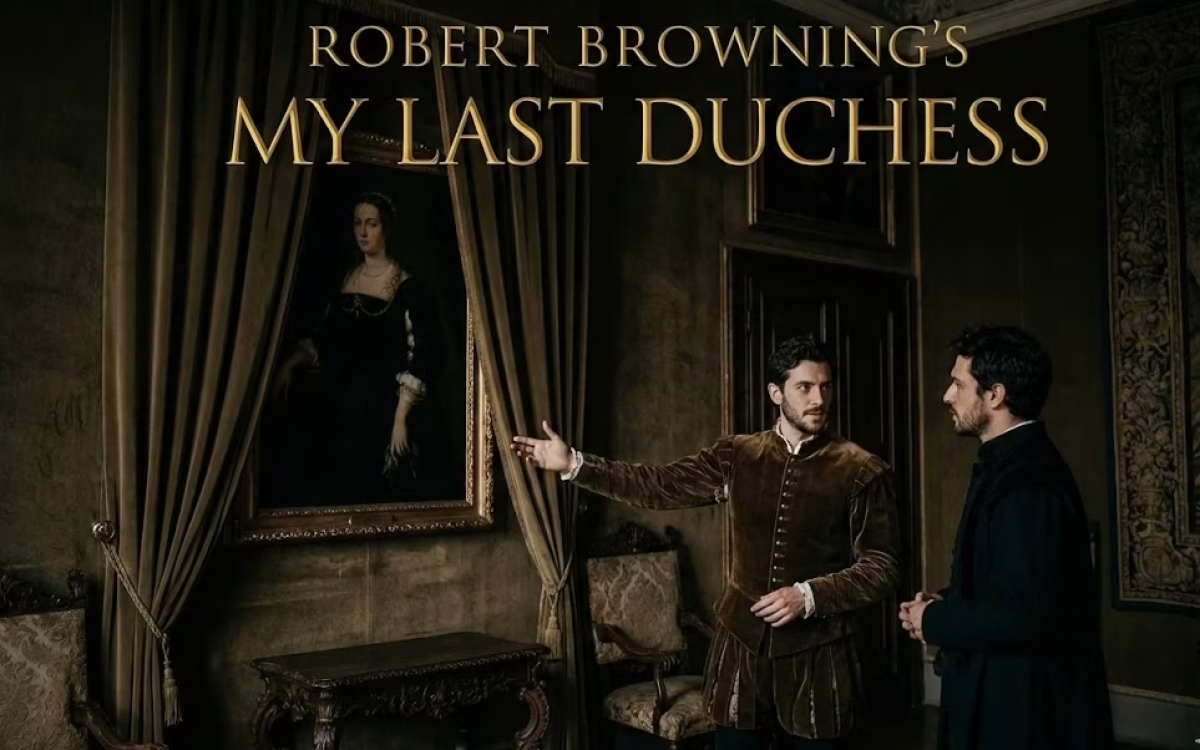
A feature image for a blog post titled ROBERT BROWNING'S MY LAST DUCHESS in gold text at the top. The photo shows two men in Renaissance period clothing standing in a dimly lit, opulent room with tapestries. The man in the foreground, wearing a brown velvet doublet, gestures towards a large framed portrait of a woman covered by a heavy velvet curtain, while the second man in black looks on.

February 9, 2026/

Introduction “That’s my last Duchess painted on the wall, / Looking as if she were alive.” These haunting opening lines from Robert Browning’s My Last Duchess immediately pull you into a world of aristocratic menace, where a Renaissance duke casually reveals his dark secrets behind a masterpiece portrait. Robert Browning, master of the dramatic monologue, loved crafting poems around “mad” characters—like this possessive Duke of Ferrara—who speak directly to us, unveiling their twisted psyches....

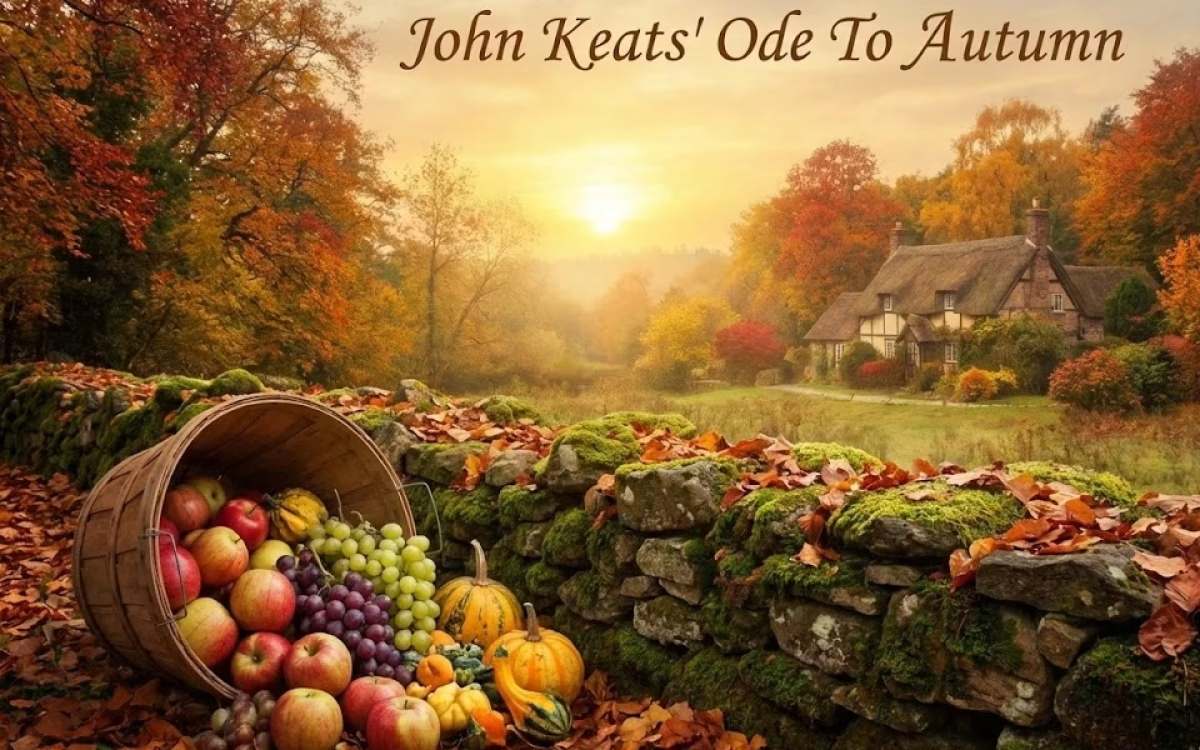
A romantic, painterly feature image for a blog post titled John Keats' Ode To Autumn. The image depicts a bountiful autumn scene with an overflowing basket of apples, grapes, and gourds resting on a moss-covered stone wall. Fallen orange and brown leaves are scattered around the basket. In the background, a cottage with a thatched roof is nestled among trees with vibrant red, gold, and orange foliage, under a warm, hazy sunset sky. The blog title text is displayed in an elegant serif font at the top.

February 8, 2026/

Introduction “Season of mists and mellow fruitfulness.” This iconic opening line from John Keats’ Ode to Autumn instantly evokes the rich, hazy beauty of the harvest season. Written in September 1819 after an inspiring walk near Winchester, England, it became Keats’ final major poem before his tragic death in 1821 at age 25. Unlike other Romantic poets like Shelley or Wordsworth, who often viewed autumn as a melancholic symbol of decay and impending...

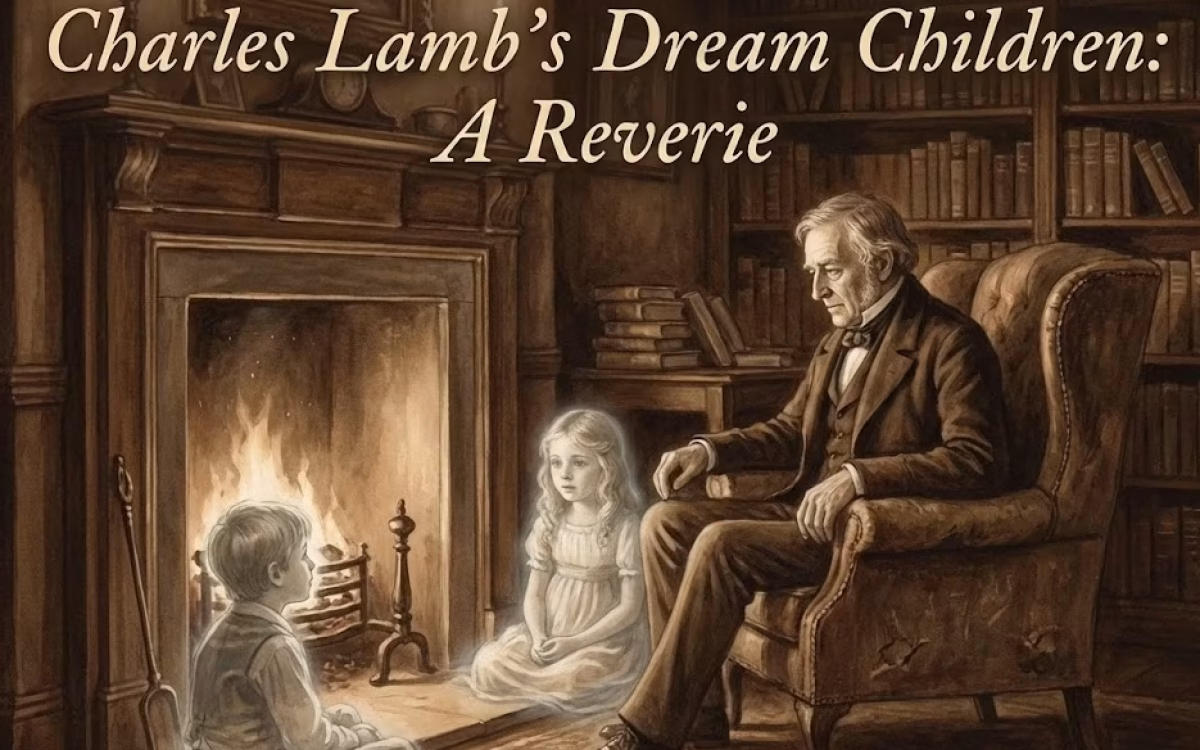
A sepia-toned, illustrative feature image for a blog post titled Charles Lamb’s Dream Children: A Reverie. The image depicts an older man sitting somberly in an armchair by a glowing fireplace in a book-filled study. At his feet sit two translucent, ghostly figures of young children, a boy and a girl, looking up at him. The title text is displayed in an elegant font at the top. The atmosphere is melancholic and nostalgic.

February 4, 2026/

Introduction “We are not of Alice, nor of thee, nor are we children at all.” This devastating line from Charles Lamb’s Dream Children: A Reverie shatters the fragile illusion of family bliss. However, it captures the essay’s haunting core. Charles Lamb, a lifelong bachelor, never married or fathered children. Instead, he devoted his life to caring for his mentally ill sister, Mary Lamb, after she tragically killed their mother in a 1796 breakdown. This...

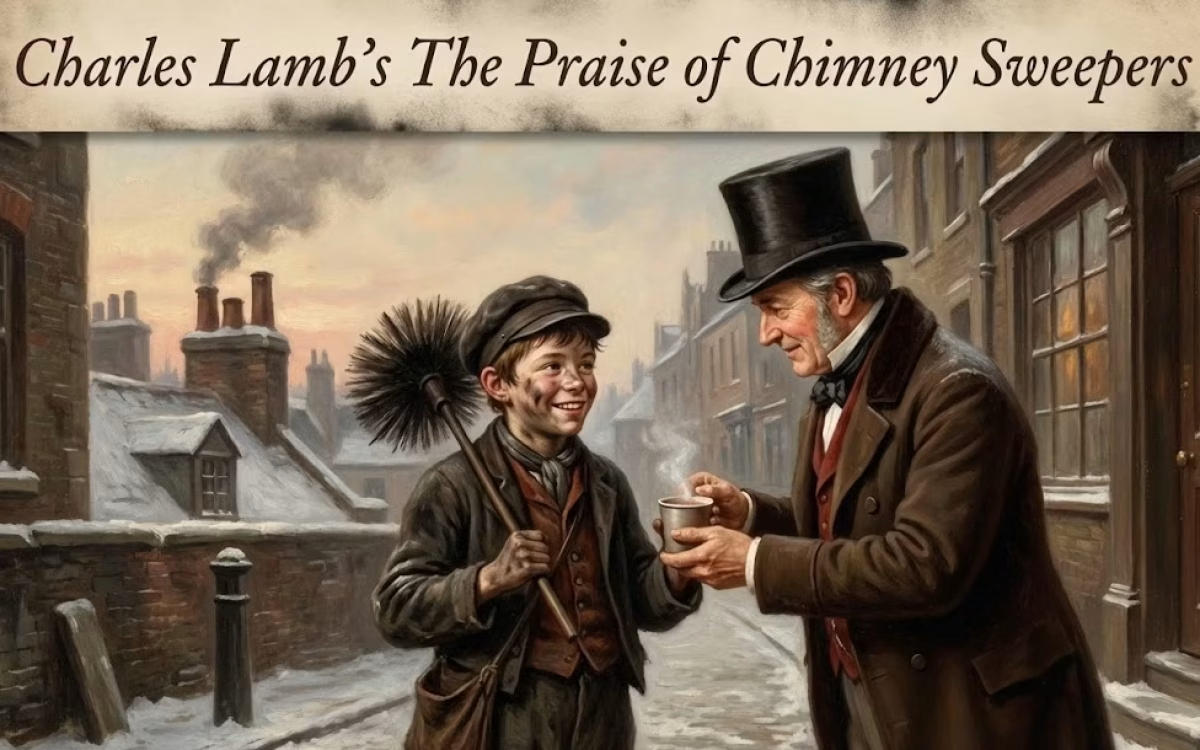
A nostalgic, Victorian-style illustration for the blog post Charles Lamb’s The Praise of Chimney Sweepers. The image depicts a young, soot-covered chimney sweep boy holding his brush and smiling as a kindly gentleman in a top hat offers him a steaming cup of tea. They stand on a snowy London street at dawn, surrounded by brick buildings with smoking chimneys. The blog title is displayed on a textured banner across the top.

February 2, 2026/

Introduction Charles Lamb’s The Praise of Chimney Sweepers opens with an affectionate paradox—Lamb calls the sweepers “dim specks” and “poor blots,” yet he treats them like royalty. In an age when society looked down upon these sooty little figures, Lamb saw something luminous in them. The essay reflects on the lives of climbing boys—young children forced to crawl up narrow, scorching chimneys to clean them. It was one of the most brutal jobs...

"A cozy wooden desk scene featuring a stack of five antique books, reading glasses, and a coffee mug. In the background, seen through a window, a young boy walks down a leaf-strewn street carrying a backpack, symbolizing the coming-of-age journey. The title Top 5 Bildungsroman Novels appears at the top."

January 26, 2026/

Introduction Top 5 Bildungsroman Novels: Everyone remembers the pain of growing up—the confusion, the discoveries, and the bittersweet lessons that shape who we become. Literature captures this universal struggle through the Bildungsroman, a genre devoted to exploring personal growth and self-discovery. Derived from the German words “bildung” (education) and “roman” (novel), a Bildungsroman traces a character’s journey from innocence to experience, from youth’s idealism to adulthood’s realism. The following Top 5 Bildungsroman novels aren’t just compelling stories; they’re considered the...

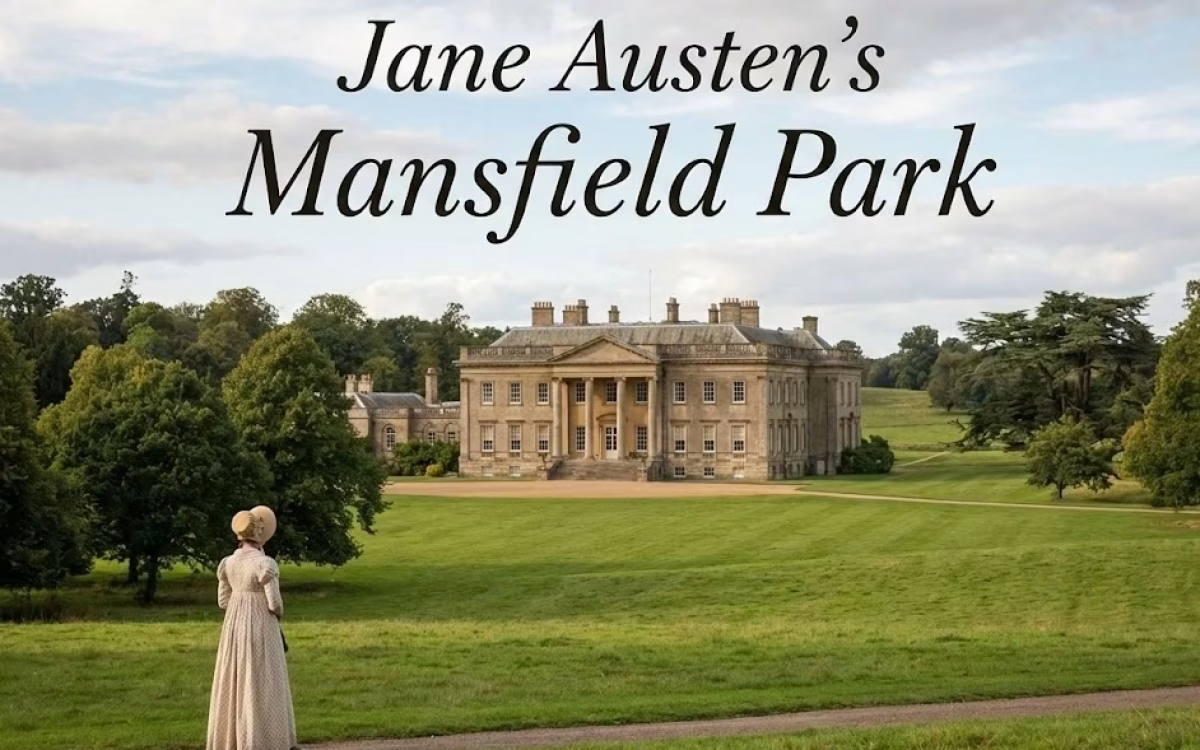
A blog post feature image with the title Jane Austen’s Mansfield Park in a dark, elegant font at the top. The background is a wide landscape photograph showing a woman in a long, light-colored Regency-era dress and a bonnet, standing on a dirt path in the foreground. She is looking towards a large, classical English country mansion situated in the distance, surrounded by extensive green lawns and mature trees under a cloudy sky.

January 19, 2026/

Introduction Jane Austen’s Mansfield Park divides readers like no other of her novels. Most people adore Pride and Prejudice for its sparkling wit and confident heroine, yet they struggle with Mansfield Park because Fanny Price seems the very opposite—a quiet, morally rigid observer rather than a charming rebel. This stark contrast is no accident. Austen crafted Fanny as an “anti‑Elizabeth”, a moral compass in a world that prizes charisma over conscience. Written during a period of deep moral anxiety...

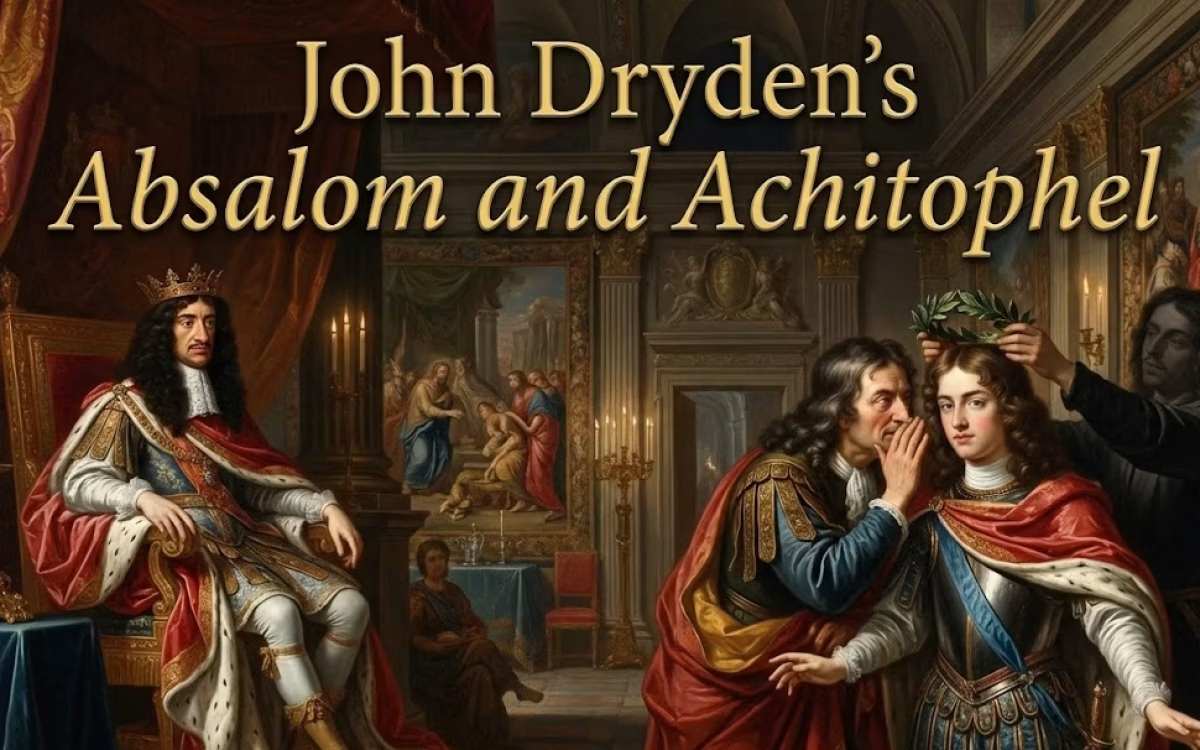
A painting serving as a blog post feature image with the title John Dryden's Absalom and Achitophel in gold text at the top. Below the text, a scene shows King Charles II seated on a throne on the left. On the right, the figure of Achitophel whispers into the ear of Absalom, while another figure places a laurel wreath on Absalom's head. The setting is a grand, candlelit hall with tapestries and other figures in the background, rendered in a classical oil painting style.

January 15, 2026/

Introduction John Dryden’s Absalom and Achitophel proves that politics never really changes. Ambition, betrayal, and even fake news—Dryden wrote about them in 1681, yet his themes still feel modern today. The poem was composed during the Exclusion Crisis, a time when Parliament sought to exclude James, the Catholic brother of King Charles II, from inheriting the throne. Many politicians and citizens instead backed the king’s illegitimate Protestant son, the Duke of Monmouth, hoping he would...

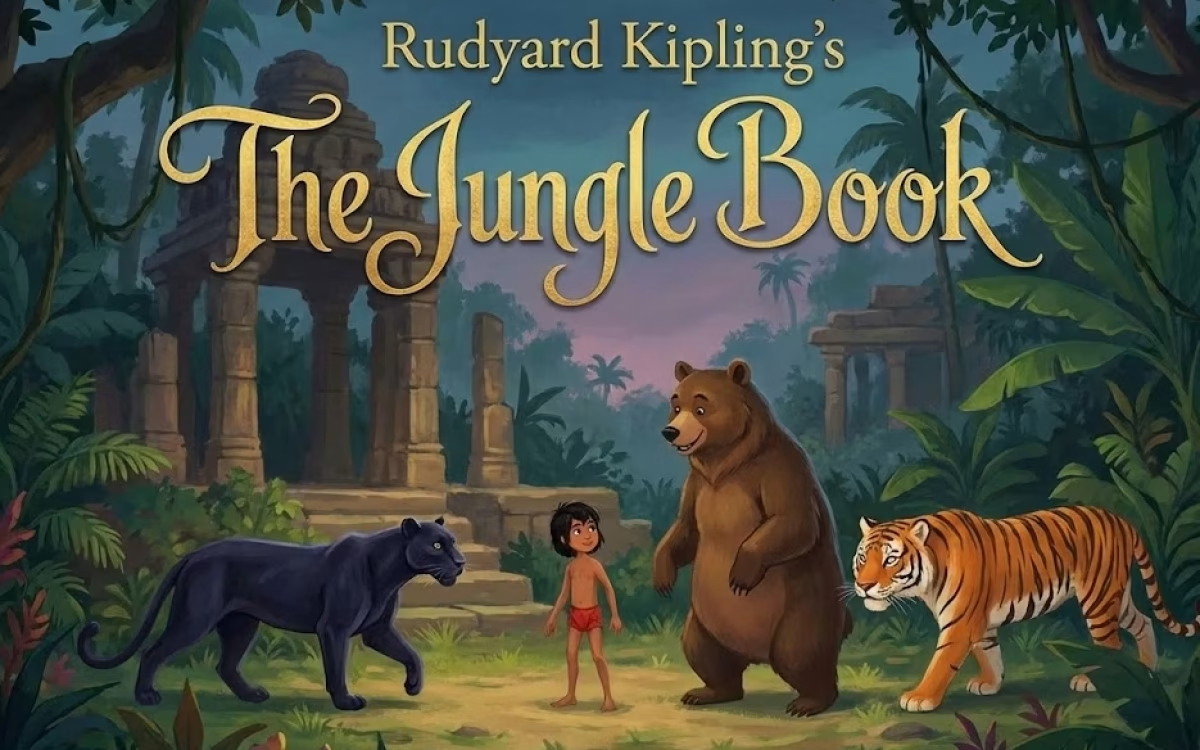
A vibrant feature image for a blog post depicting a lush, deep green Indian jungle scene. The title text Rudyard Kipling’s The Jungle Book is prominently displayed in a classic font, set against a backdrop of dense tropical foliage and wildlife elements.

January 6, 2026/

Introduction Most readers know The Jungle Book from the famous Disney movie. However, Rudyard Kipling’s The Jungle Book is far darker, deeper, and more thought-provoking than its animated version. Kipling wrote it in the 1890s while living in Vermont, USA. Still, the stories draw heavily from his childhood experiences in India. The book beautifully captures the tension between civilisation and the wild. Through the story of Mowgli—the boy raised by wolves—Kipling explores timeless themes of belonging,...

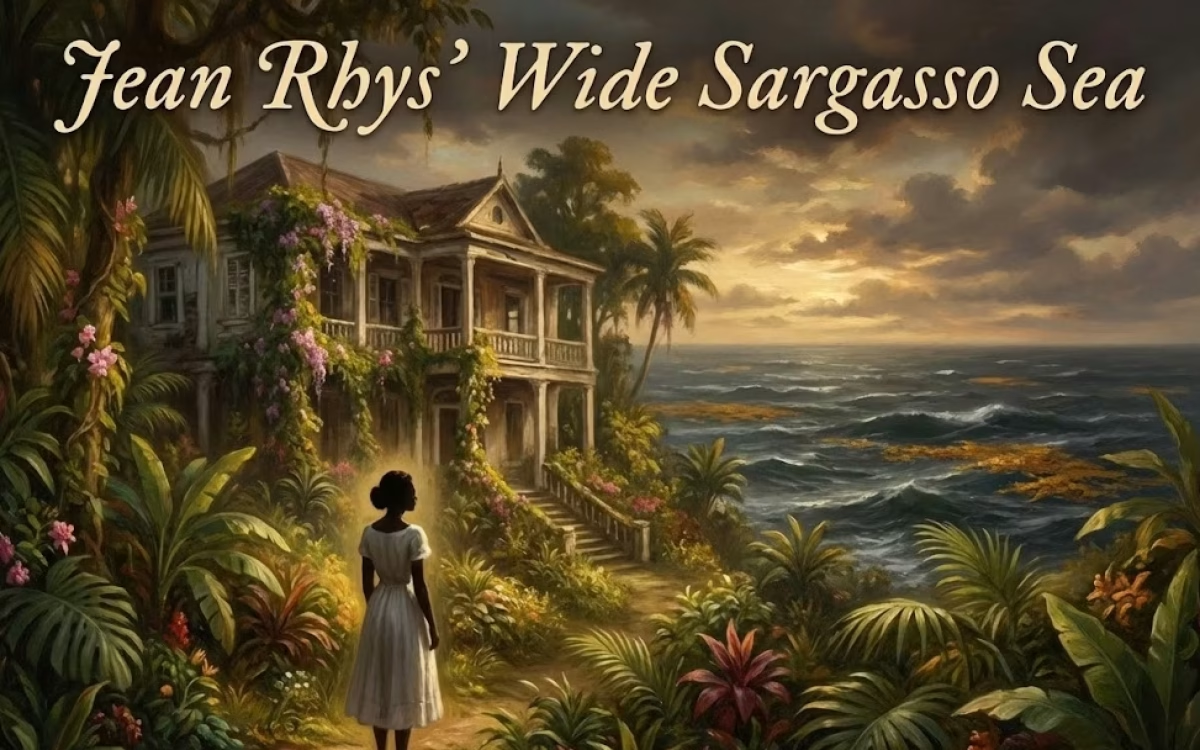
A lush, atmospheric feature image for a blog post titled Jean Rhys’ Wide Sargasso Sea. The illustration depicts a dense Caribbean landscape filled with vibrant tropical vegetation and wild flowers, evoking the novel's setting of Jamaica and Dominica. In the background, a colonial estate house stands, hinting at the themes of isolation and history. The title text is displayed in an elegant serif font that complements the mysterious and haunting mood of the scene.

December 31, 2025/

Introduction When most readers finish Jane Eyre, they remember the terrifying “madwoman in the attic” who burns down Thornfield Hall. However, very few stop to ask for her side of the story. This is exactly what Jean Rhys explores in her modern masterpiece, Wide Sargasso Sea. Published in 1966, this novel serves as a post-colonial prequel to Charlotte Brontë’s Victorian classic. Jean Rhys, who was herself a Creole woman from the Caribbean,...

Previous Page
123

About Me

Hello, I'm Bangera Rupinder Kaur

It is a space where readers can find insightful articles, thoughtful analyses, and engaging discussions on various literary topics.

Popular Posts

  • All Post
  • American Literature
  • Blog
  • English Literature
  • Indian Writings in English
  • Literary Trivia
  • World Literature
    •   Back
    • UGC NET ENGLISH

Featured Posts

  • All Post
  • American Literature
  • Blog
  • English Literature
  • Indian Writings in English
  • Literary Trivia
  • World Literature
    •   Back
    • UGC NET ENGLISH

Categories

Tags

Edit Template

© 2025 a2zliterature.com | All Rights Reserved