Browsing Category: English Literature

  • All Post
  • American Literature
  • Blog
  • English Literature
  • Indian Writings in English
  • Literary Trivia
  • World Literature
    •   Back
    • UGC NET ENGLISH
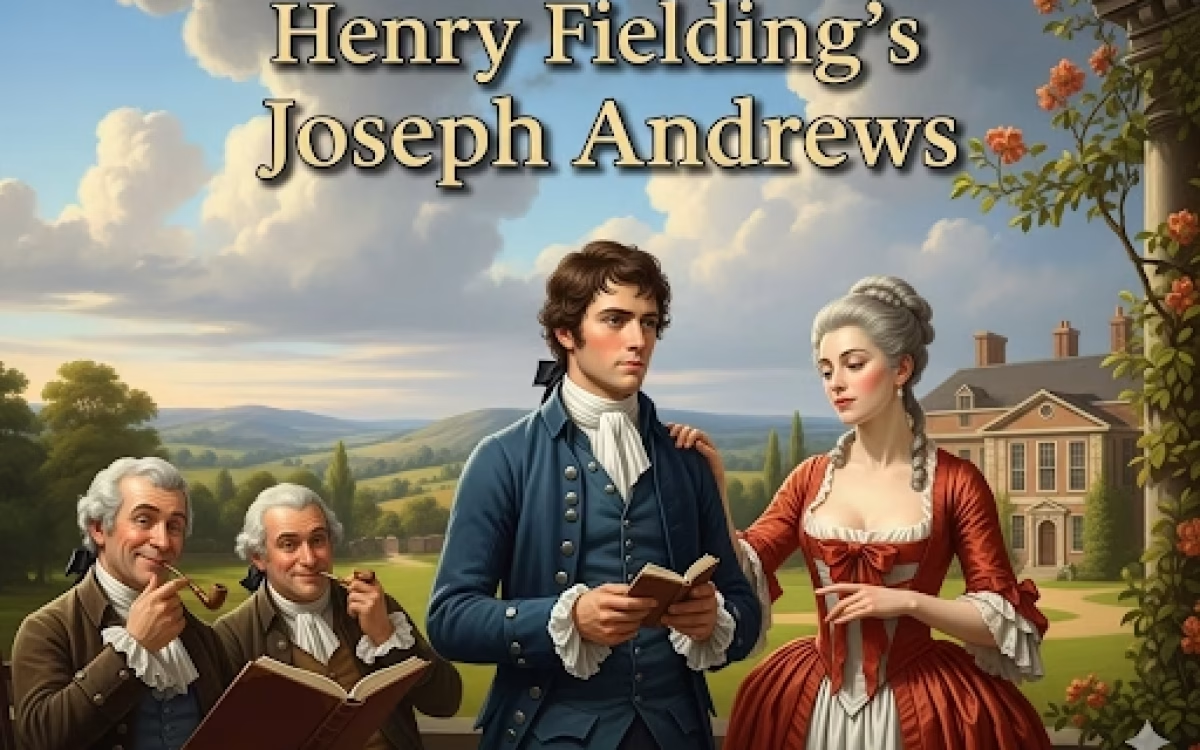
A vibrant, 18th-century scene inspired by Henry Fielding's novel Joseph Andrews. In the foreground, Joseph Andrews stands with Lady Booby, while Parson Adams looks on. The setting is a detailed country estate with a grand house in the background. The title "Henry Fielding's Joseph Andrews" is at the top of the image.

August 27, 2025/

INTRODUCTION Henry Fielding’s Joseph Andrews stands as a seminal work in eighteenth-century English literature, combining elements of humor, social critique, and moral inquiry. The narrative follows Joseph, a footman characterized by unwavering virtue, who, after resisting the inappropriate advances of Lady Booby, is dismissed from her service. In pursuit of his beloved Fanny Goodwill, Joseph embarks on a journey through rural England, accompanied by the well-intentioned but often imprudent Parson Adams. Their travels expose...
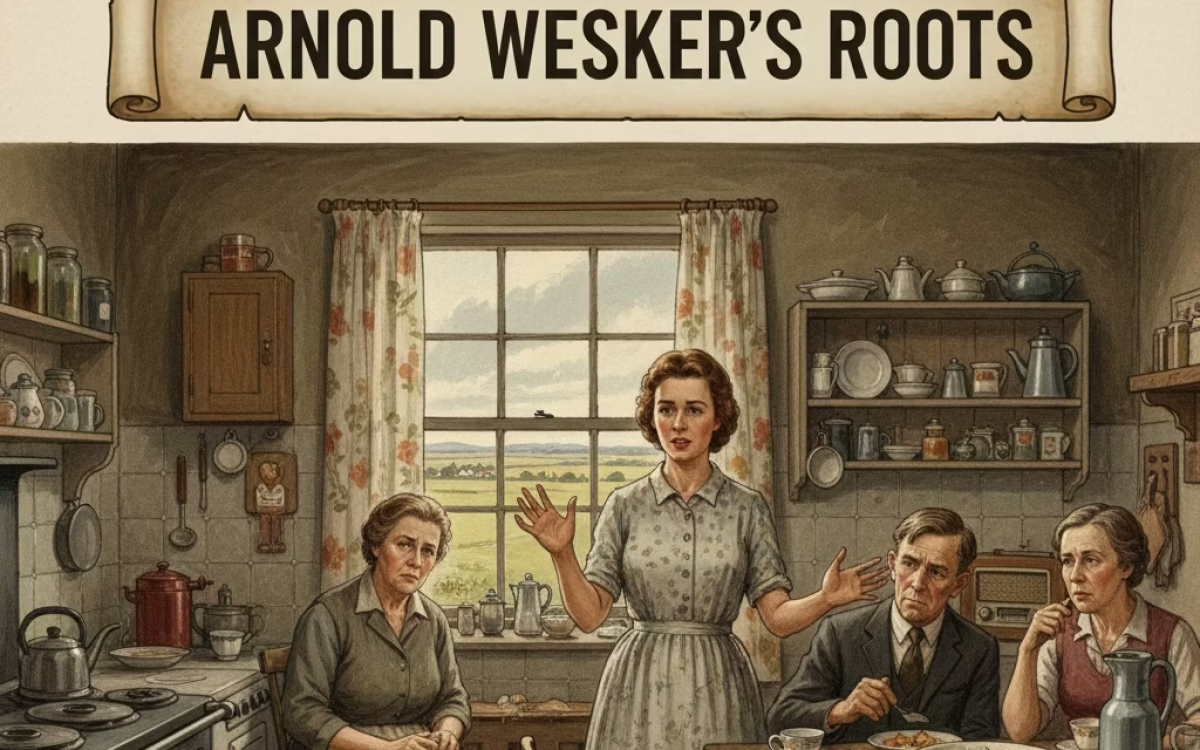
A detailed, naturalistic illustration depicting a scene from Arnold Wesker's play "Roots," with the title "Arnold Wesker's Roots" displayed on a scroll banner at the top. The image portrays a humble, somewhat cluttered kitchen in a rural setting. A young woman, likely Beatie Bryant, stands centrally and animatedly, gesturing with her hands as she speaks. Around a wooden table, two older women and an older man are seated, listening with varying expressions of concern and skepticism. The kitchen is filled with everyday items, from a traditional stove to crockery on shelves, and through the window, a glimpse of the countryside is visible. The scene captures the essence of the play's themes of class, culture, and intellectual awakening within a family context.

August 26, 2025/

Introduction Some plays land like a raindrop; others rumble in the landscape. Roots, the powerful heart of Arnold Wesker’s celebrated Wesker Trilogy, rolled onto the British stage in 1959 and has echoed in literary circles ever since. Born to a working-class Jewish family in London, Wesker’s pen never wandered far from the daily grind and emotional tumult he experienced firsthand: arguments at the dinner table, the scraping together of change, the relentless push...

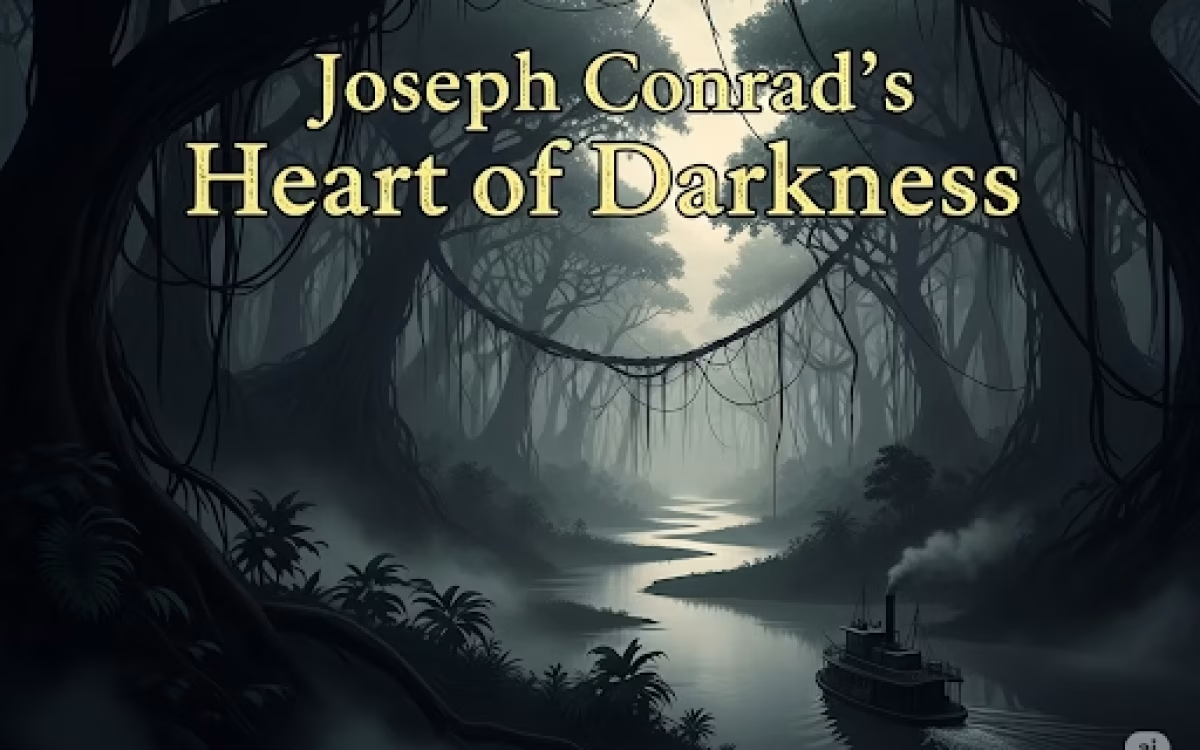
A dark and atmospheric image for a blog post about Joseph Conrad's Heart of Darkness. A small steamboat navigates a winding river through a dense, foreboding jungle with thick, tangled vines and ancient trees. The title "Joseph Conrad’s Heart of Darkness" is overlaid in a slightly distressed, yellow font.

August 25, 2025/

Introduction Joseph Conrad’s Heart of Darkness remains an essential subject for literary scholarship and critical thought more than a century after its publication in 1899. This novella, situated at the intersection of modernist literature and postcolonial critique, artfully dissects the complexities of imperialism and the human condition. Its enduring relevance stems from its multifaceted narrative—a work that interrogates the veneer of civilisation, the insidious nature of colonial power, and the psychological depths of...

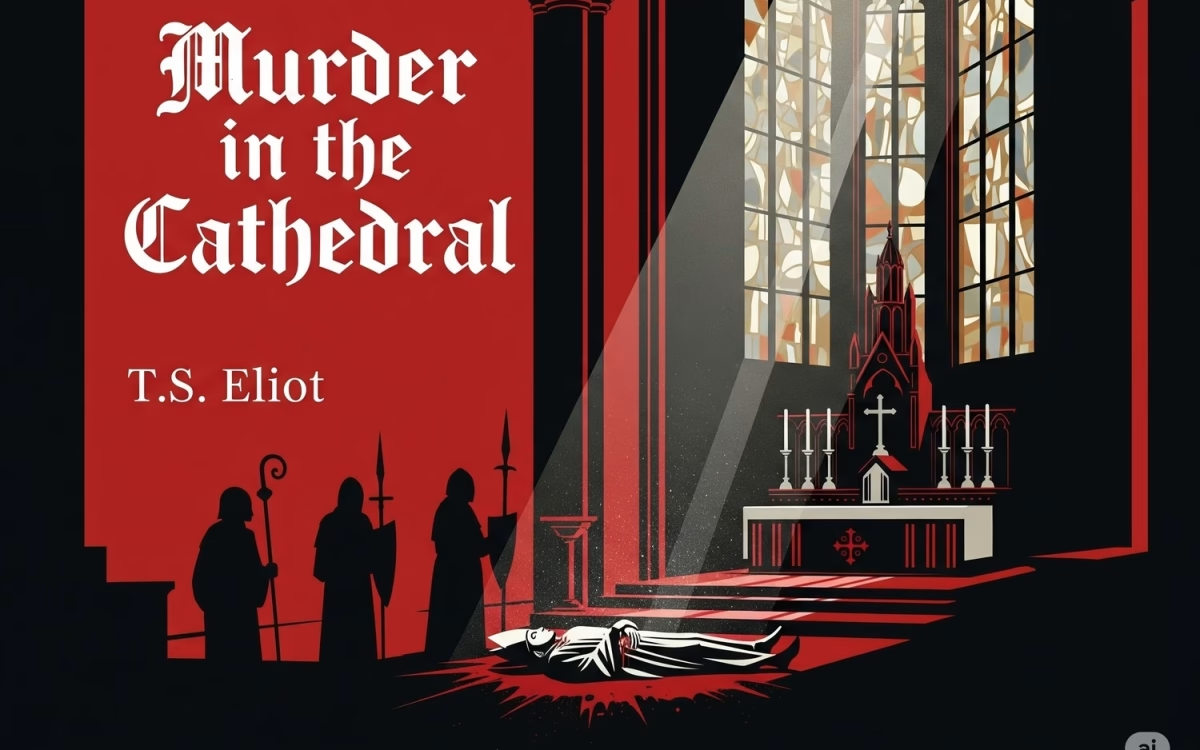
A stylized book cover for T.S. Eliot's "Murder in the Cathedral." The title is in a large, white, gothic font on a red background. Below the title is a graphic illustration of the inside of a cathedral. A bishop lies on the ground in front of the altar as three silhouetted figures look on. A beam of light shines down from a high window.

August 18, 2025/

Introduction TS Eliot’s Murder in the Cathedral is a timeless poetic drama that explores the clash between spiritual conviction and political power. On the cold flagstones of Canterbury Cathedral, history and poetry collide. The murder of Archbishop Thomas Becket on December 29, 1170—brutally executed by four knights—was more than the end of a man; it was the birth of a legend, the creation of a saga that would echo far beyond its...

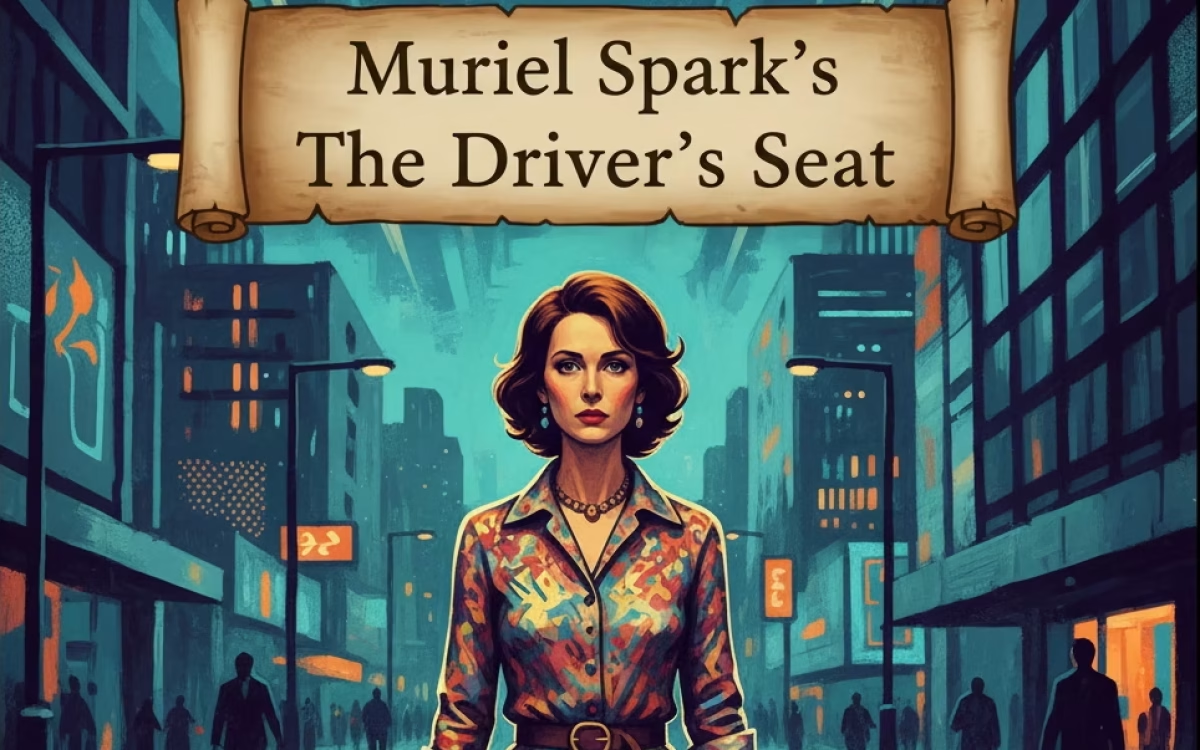
A stylish, somewhat unsettling illustration for Muriel Spark's novel "The Driver's Seat," featuring the title "Muriel Spark's The Driver's Seat" on a scroll at the top. The image depicts a woman, likely Lise, in the center of a bustling yet stark city street, rendered with a slightly distorted perspective. She wears a distinctive, brightly patterned blouse and skirt, holding two shopping bags. Her expression is intense and determined, looking directly forward. The street is lined with modern buildings, and blurred figures of other pedestrians can be seen in the background, creating a sense of urban anonymity and the protagonist's isolation. The color palette is cool and somewhat artificial, reflecting the novel's themes of alienation and control.

August 14, 2025/

Introduction Have you ever read a novel that left you feeling both impressed and a little disturbed, as though you’d peered into a place where fiction and real life start to blur? Muriel Spark’s The Driver’s Seat does just that—a slim novella, but one whose philosophical impact lingers long after you’ve closed the final page. I read it first as a graduate student tucked in a tiny campus flat, sandwiched between investigations of George...

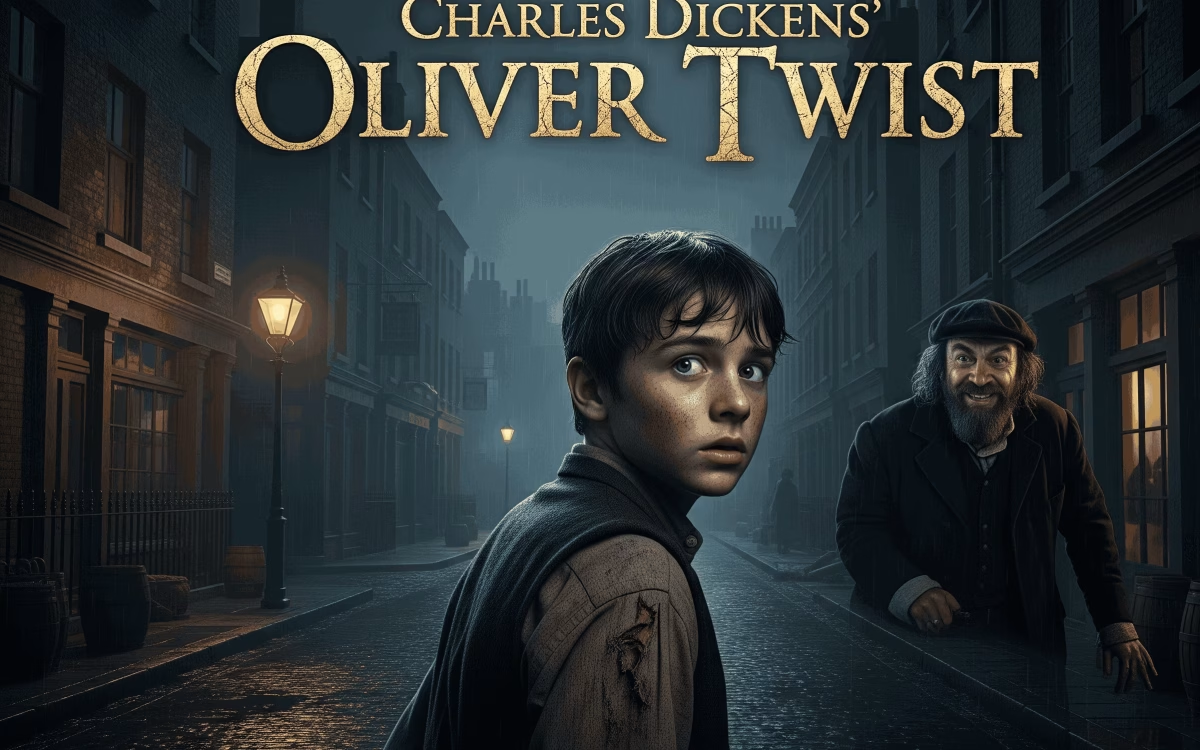
A cinematic image from Charles Dickens' Oliver Twist showing a young, worried Oliver in the foreground looking over his shoulder. In the background, a sinister-looking Fagin lurks in a dark alley. The title "CHARLES DICKENS' OLIVER TWIST" is displayed in a gothic font at the top. The scene is a dark, wet, cobblestone street in Victorian London, lit by a single gas lamp.A cinematic image from Charles Dickens' Oliver Twist showing a young, worried Oliver in the foreground looking over his shoulder. In the background, a sinister-looking Fagin lurks in a dark alley. The title "CHARLES DICKENS' OLIVER TWIST" is displayed in a gothic font at the top. The scene is a dark, wet, cobblestone street in Victorian London, lit by a single gas lamp.

August 13, 2025/

INTRODUCTION Oliver Twist stands as Charles Dickens’ most compelling attack on Victorian social inequality. Published between 1837-1839, this groundbreaking novel transformed literature into a weapon of social reform. The story follows an orphaned boy’s journey through the brutal realities of 19th-century England, exposing institutional corruption and class-based oppression that defined the era. Dickens crafted more than entertainment—he created a moral manifesto that challenged Victorian society’s comfortable assumptions about poverty, morality, and human dignity....

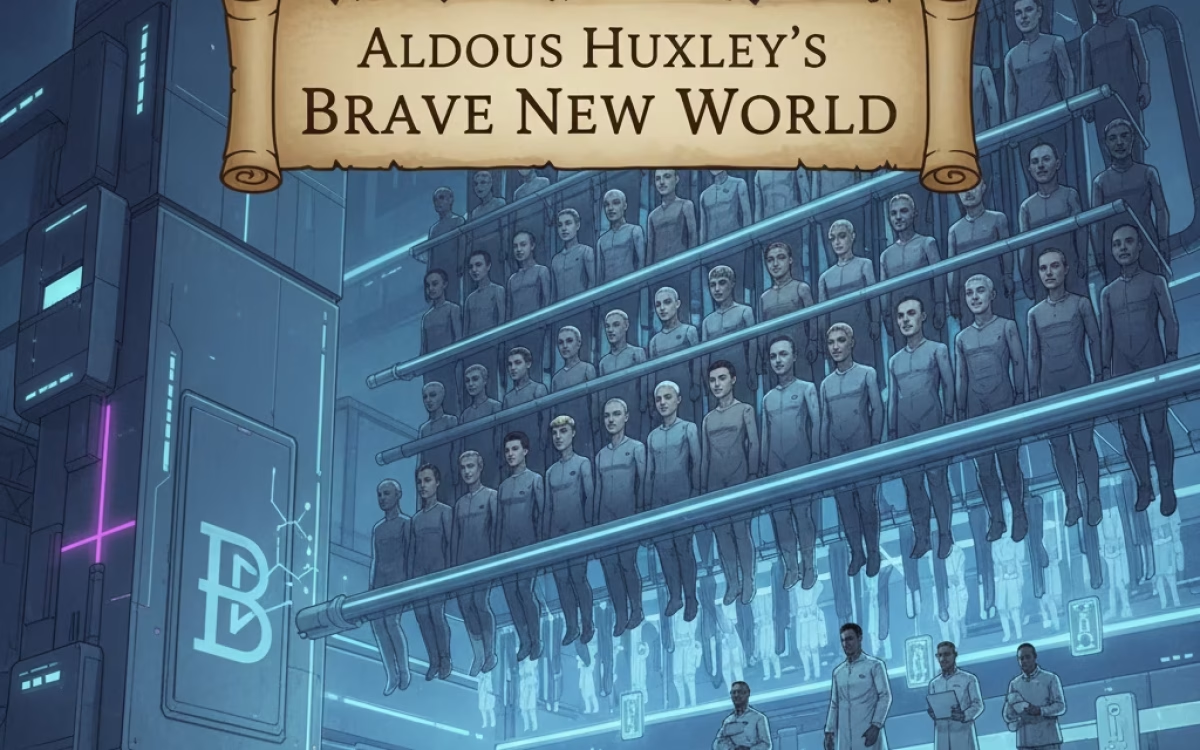
A chilling, futuristic illustration representing Aldous Huxley's "Brave New World," with the title "Aldous Huxley's Brave New World" displayed on a prominent scroll at the top. The image portrays a vast, sterile, and highly organized laboratory-like environment, dominated by rows upon rows of identical human figures, appearing to be in various stages of development or conditioning, suspended on automated conveyer belts.

August 8, 2025/

Introduction Aldous Huxley’s Brave New World (1932) stands as a formidable beacon in dystopian literature. It vividly paints a future. Science and rationality have overrun human values. Society now prioritises collective stability and superficial happiness. This comes at a cost: freedom, individuality, and genuine emotion are lost. Set in a thoroughly engineered World State, Huxley exposes the perils of technological control intertwined with consumerism and psychological manipulation. The novel remains a powerful mirror...

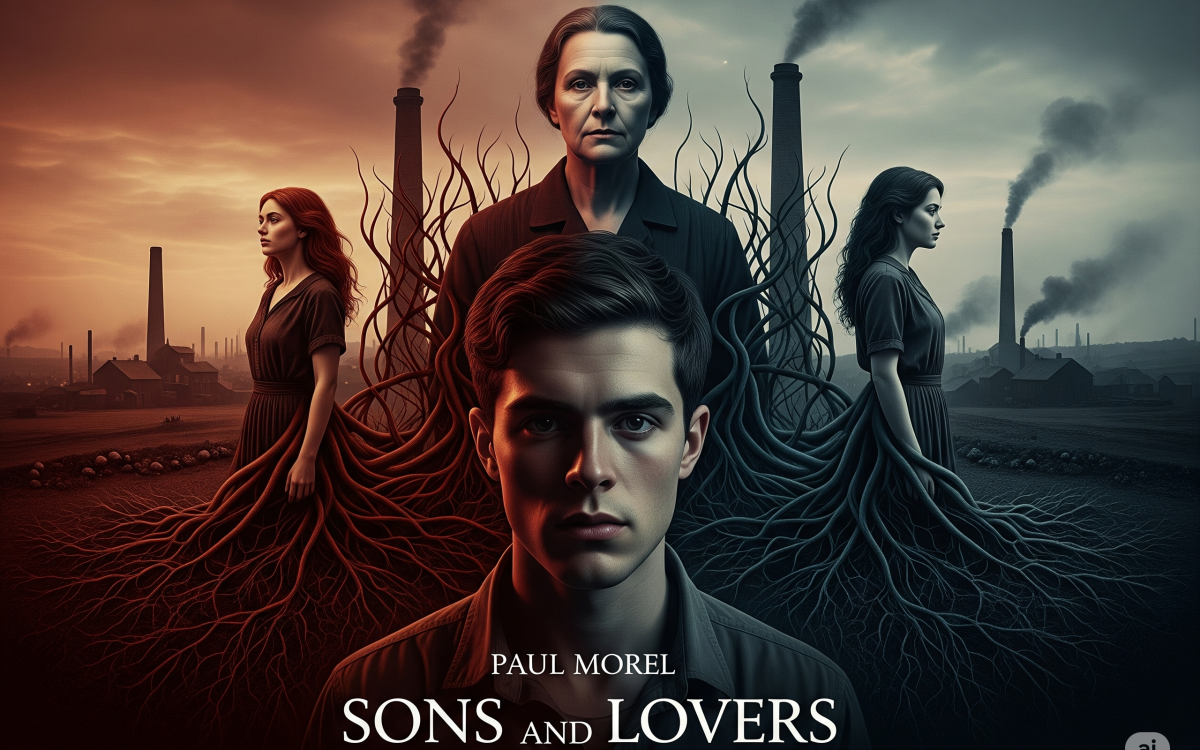
A conceptual and dramatic digital painting inspired by D.H. Lawrence's "Sons and Lovers." The foreground shows a young man, Paul Morel, looking forward with a conflicted expression. Behind him stands his stern-faced mother, and on either side are two women representing his lovers.

August 6, 2025/

Introduction There’s a peculiar ache that hovers over every page of Sons and Lovers. D.H. Lawrence isn’t just telling a story. He’s wrenching the most intimate parts of his own biography and transforming them into art. For readers old and new, there’s a magnetic draw: a sense that buried under the surface, universal pains and yearnings hum, waiting to be understood all over again. In this post, I want to trace the psychic...

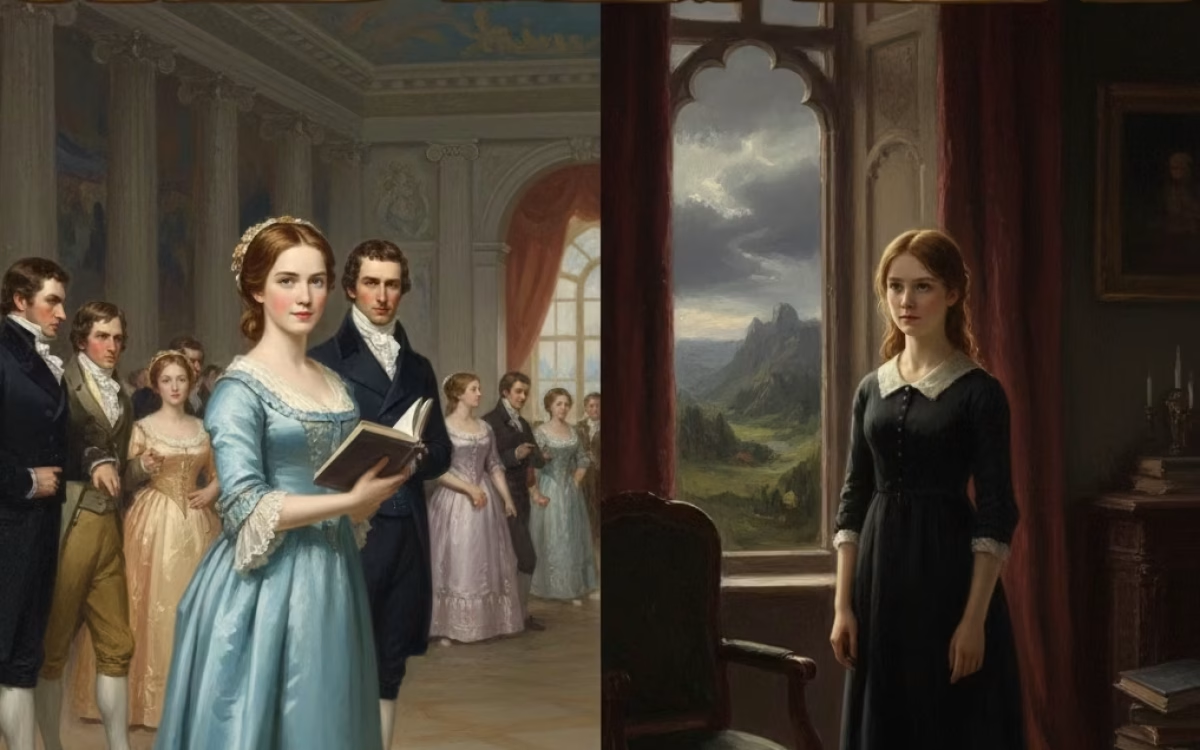
A split, classical illustration comparing "Gender Roles in Pride and Prejudice and Jane Eyre," with the title clearly visible on a scroll at the top. The left side of the image depicts a lively ballroom scene, reminiscent of "Pride and Prejudice," with elegantly dressed men and women from the Regency era interacting. A woman in a beautiful blue gown, possibly Elizabeth Bennet, stands prominently with a book, engaging with a man who could be Mr. Darcy, while other couples socialize in the background. The right side of the image portrays a more somber and introspective scene, characteristic of "Jane Eyre."

August 5, 2025/

Introduction Gender Roles gains specific significance in every writing we come across or read. When you crack open classics like Pride and Prejudice or Jane Eyre, you’re not just stepping into ballrooms and gothic manors. You enter battlegrounds where ideas about gender, agency, and equality are constantly on trial. The question of how women and men were “supposed” to behave didn’t just animate drawing room conversation—it molded destinies and heartbreaks. What’s more, their skirmishes...

An Igbo man stands in a traditional village of mud huts, looking towards missionaries and a distant church under a stormy sky. The text "Chinua Achebe's Things Fall Apart" is written at the top.

July 22, 2025/

Few novels have managed to so compellingly capture the heart of an entire culture—and the storm clouds that gather on its horizon—as Chinua Achebe’s Things Fall Apart. If you’ve ever read Achebe’s work with the original intent to just “get through it,” let me reassure you: this book bites deeper and resonates longer than you might expect. It’s more than just an African novel; it’s a landmark of world literature, one that...

About Me

Hello, I'm Bangera Rupinder Kaur

It is a space where readers can find insightful articles, thoughtful analyses, and engaging discussions on various literary topics.

Popular Posts

  • All Post
  • American Literature
  • Blog
  • English Literature
  • Indian Writings in English
  • Literary Trivia
  • World Literature
    •   Back
    • UGC NET ENGLISH

Featured Posts

  • All Post
  • American Literature
  • Blog
  • English Literature
  • Indian Writings in English
  • Literary Trivia
  • World Literature
    •   Back
    • UGC NET ENGLISH

Categories

Tags

Edit Template

© 2025 a2zliterature.com | All Rights Reserved