
Browsing Category: Indian Writings in English

  • All Post
  • American Literature
  • Blog
  • English Literature
  • Indian Writings in English
  • Literary Trivia
  • World Literature
    •   Back
    • UGC NET ENGLISH
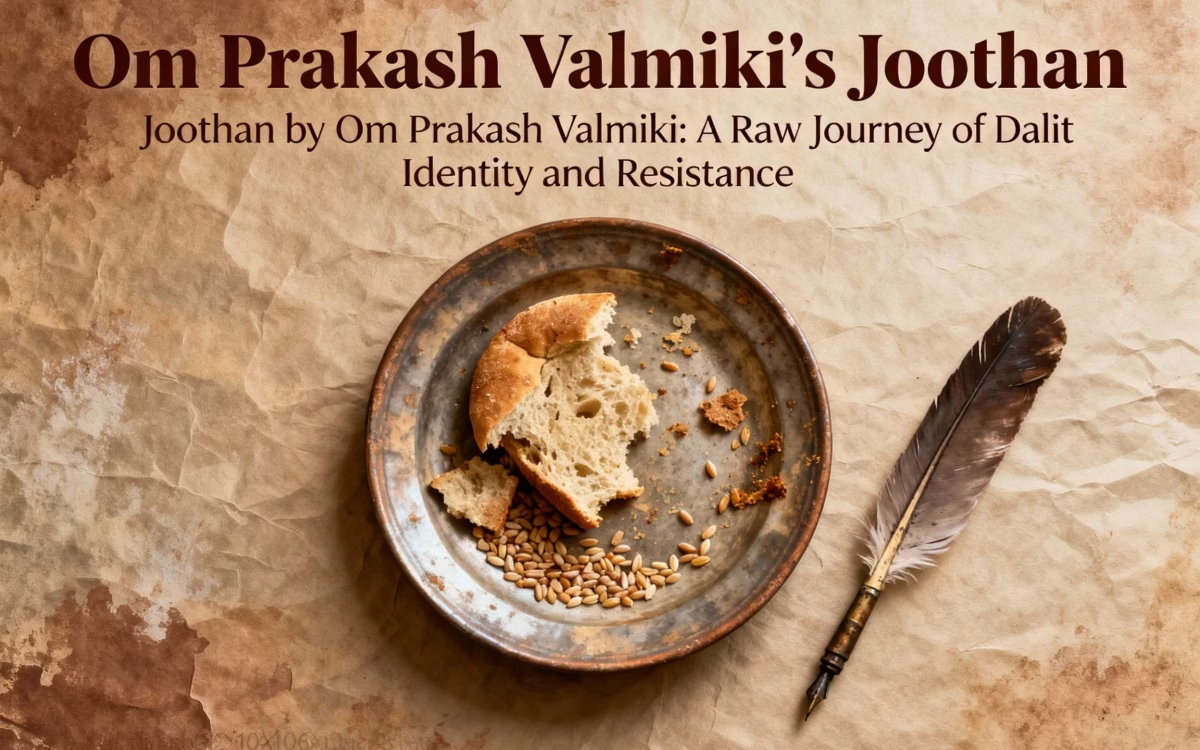
Cover of Om Prakash Valmiki's Joothan, featuring the blog title Joothan by Om Prakash Valmiki: A Raw Journey of Dalit Identity and Resistance. The cover shows a rustic plate of food (leftovers) and a quill pen, symbolizing themes of caste, dignity, and writing.

November 17, 2025/

INTRODUCTION Om Prakash Valmiki’s Joothan is not just a book—it’s a raw, unflinching journey into the heart of caste discrimination and the relentless pursuit of dignity in India. Through his powerful autobiography, Valmiki pulls back the curtain on the everyday realities faced by Dalits, exposing the deep-rooted social exclusion and humiliation that shaped his life. Moreover, from being denied access to water and education to enduring the pain of untouchability, Joothan lays bare the...

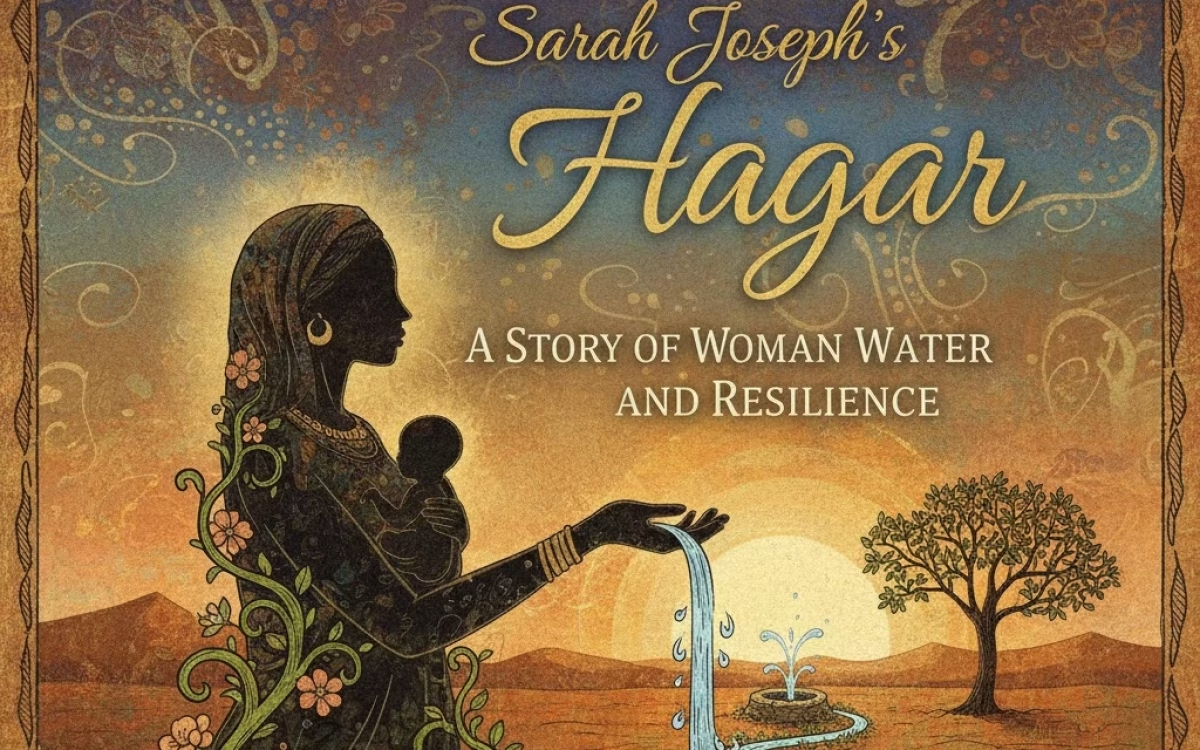
A richly illustrated book cover for Sarah Joseph's Hagar: A Story of Woman, Water and Resilience. The central figure is a silhouette of a woman in traditional attire, holding a child, from whose hands water flows to form a winding river. The river leads towards a blossoming tree and a small fountain under a setting sun in a desert landscape. The woman is adorned with vines and flowers, symbolizing growth and resilience. The title is elegantly scripted at the top, and the image is framed with an ornate, earthy border.

November 14, 2025/

INTRODUCTION Sarah Joseph’s Hagar: A Story of Woman and Water is more than just a retelling of an ancient tale. It is a powerful exploration of resilience, identity, and the sacred bond between women and nature. At its heart, the story follows Hagar—a woman abandoned in the wilderness, facing thirst, loss, and isolation. Yet, her journey is not merely about survival. It is about transformation, empowerment, and the forging of a covenant with...

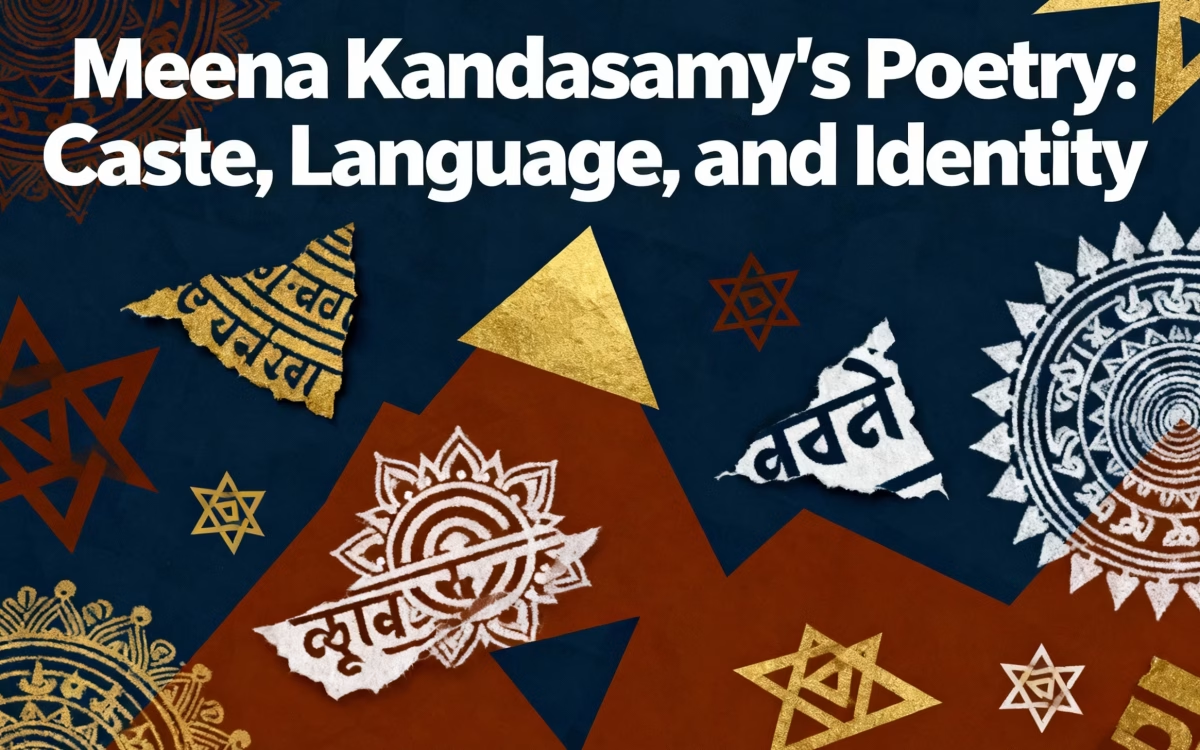
Book cover for Meena Kandasamy's Poetry: Caste, Language, and Identity, featuring bold title text, abstract Indian cultural motifs, and a modern, artistic design.

November 13, 2025/

INTRODUCTION Meena Kandasamy’s poetry is raw, powerful, and unapologetically honest. She writes about caste, language, and identity with a fierce sense of purpose. Her words are not just poems—they are acts of resistance. Kandasamy uses poetry to challenge oppressive systems and give voice to the marginalized. In fact, she once said, “My poetry is naked, my poetry is in tears, my poetry screams in anger, my poetry writhes in pain.” These lines...

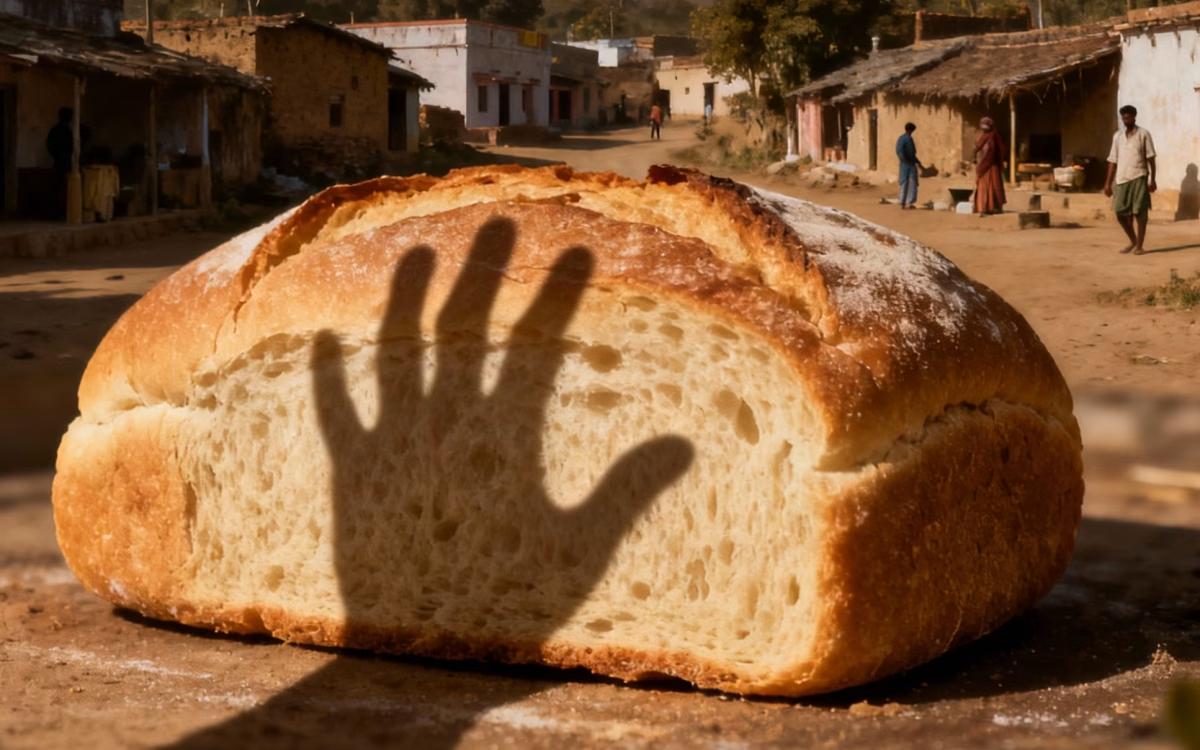
Cover of Bandhu Madhav's The Poisoned Bread, showing a close-up of a loaf of bread with a faint shadow of a hand reaching for it, set against a rural Indian village backdrop. The title "Bandhu Madhav's The Poisoned Bread" is prominently displayed in bold, readable font. The mood is somber and reflective, with earthy tones and subtle lighting.

November 12, 2025/

INTRODUCTION Few stories in Indian literature have captured the suffocating reality of caste oppression as vividly as Bandhu Madhav’s The Poisoned Bread. Bandhu Madhav wrote this Marathi short story in the mid-20th century, and it is not just a narrative—it holds up a mirror to the deep-seated injustices faced by Dalits in rural Maharashtra. The story’s title, The Poisoned Bread, is more than a metaphor; it’s a haunting symbol of how the caste...

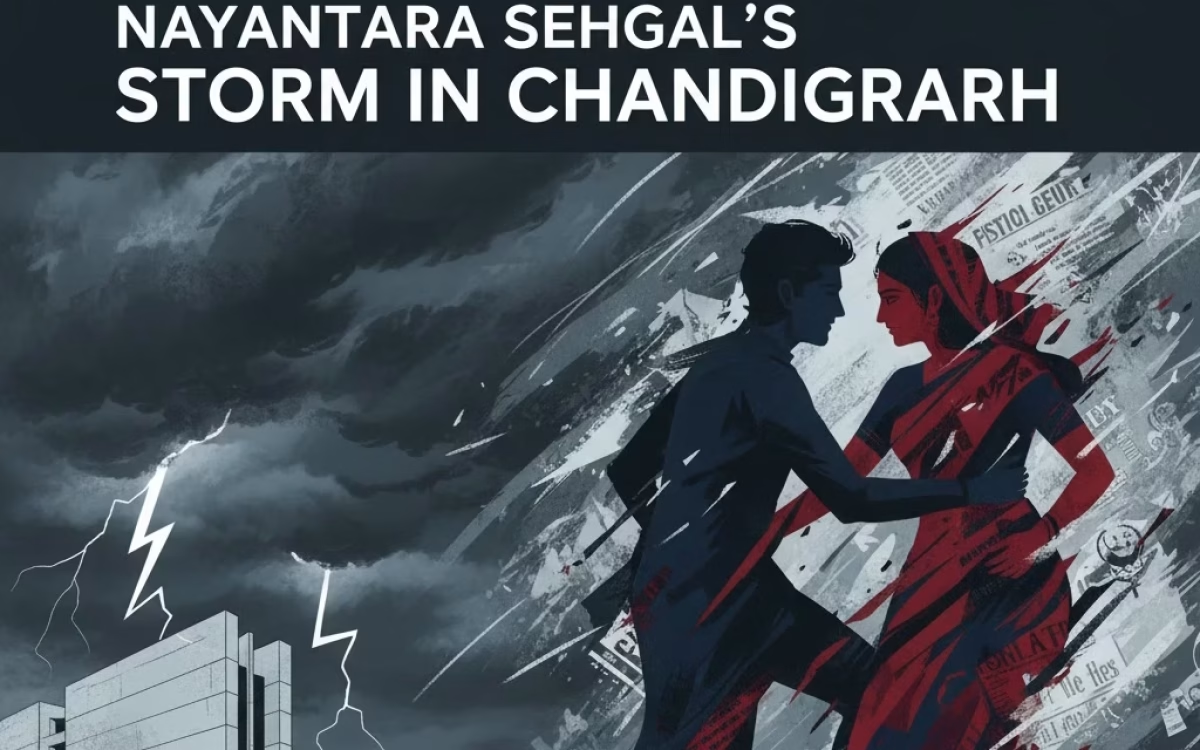
A dynamic and intense book cover illustration for NAYANTARA SEHGAL'S STORM IN CHANDIGARH. The image depicts a dramatic scene with two figures, a man in blue and a woman in red, seemingly caught in a swirling storm of newspaper clippings and abstract strokes. In the background, modernist buildings (characteristic of Chandigarh's architecture) stand under a dark, stormy sky with a jagged lightning bolt. The title is boldly displayed at the top.

October 30, 2025/

INTRODUCTION Nayantara Sehgal’s Storm in Chandigarh is a powerful literary work. It brilliantly captures the complex political and social upheavals in post-independence India. The novel is set in Chandigarh, a modern city that serves as the capital for both Punjab and Haryana. Importantly, the story unfolds during a time marked by political rivalry, linguistic tensions, and regional discord. Sehgal’s narrative delves deep into these conflicts. She shows how they disrupt not only territorial boundaries...

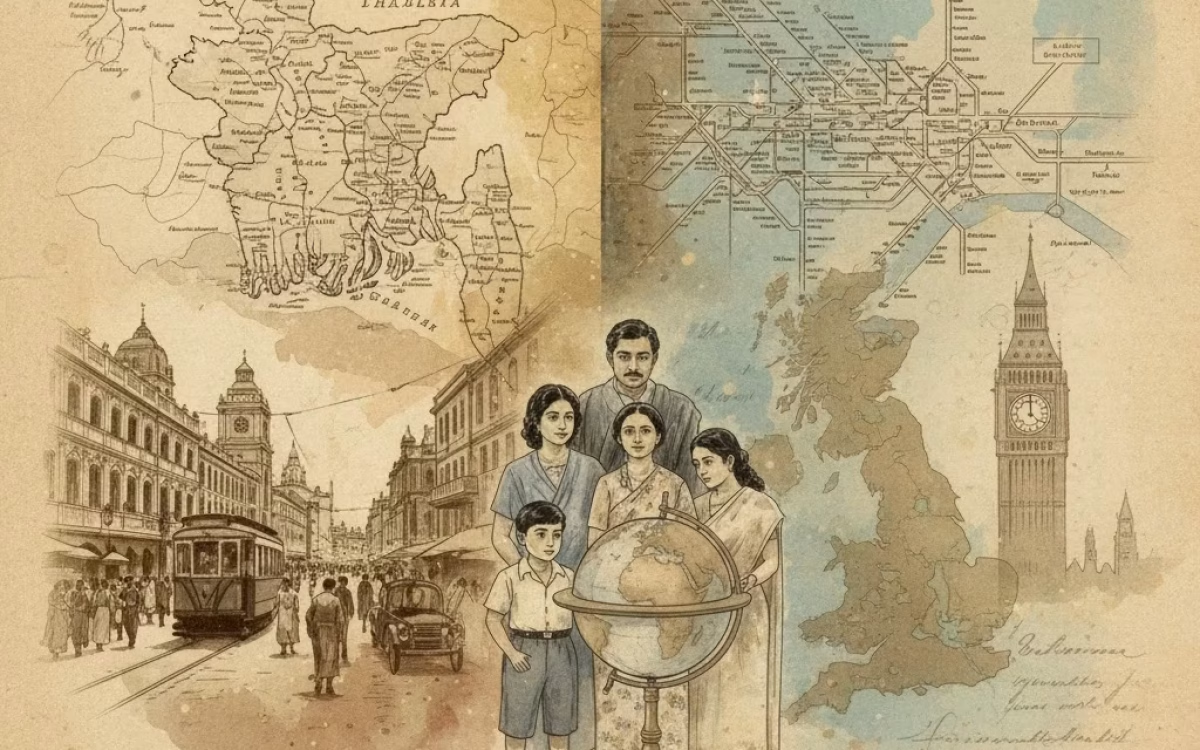
A richly detailed, sepia-toned book cover for Amitav Ghosh's The Shadow Lines. The image combines elements of old maps, cityscapes, and family portraits, suggesting themes of geography, history, and connection. A family of five stands around a globe in the foreground. In the background, there's a street scene with a tram and old buildings, a map of Bangladesh (labeled "BHARATA"), a London Underground map, and an outline of Great Britain with Big Ben. The title is in a classic, elegant font at the top.

October 29, 2025/

INTRODUCTION Amitav Ghosh’s The Shadow Lines is a landmark novel of Indian English literature. It blends personal memory with major historical events to offer a deep meditation on identity, belonging, and the illusion of borders. Published in 1988, the novel won the Sahitya Akademi Award. It follows the narrator’s fragmented recollections, connecting two extended families—one in Calcutta, the other in London—through decades marked by the Swadeshi movement, World War II, Partition, and communal riots...

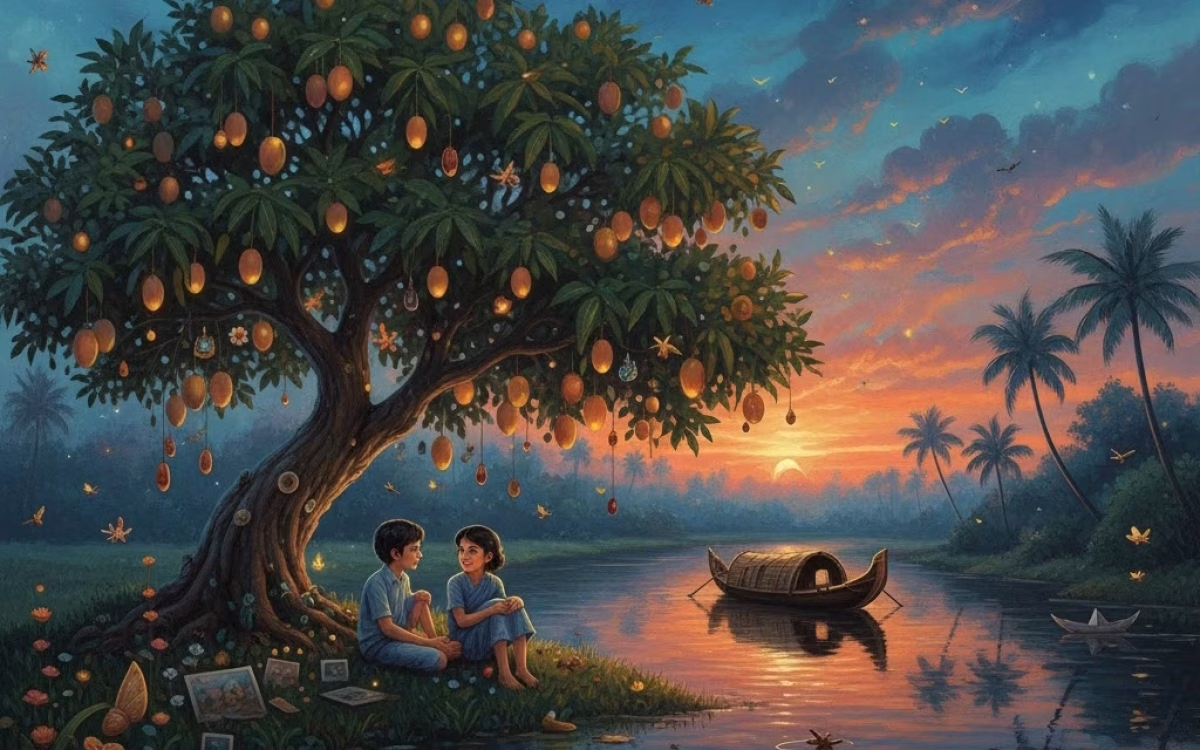
A beautifully illustrated book cover for Arundhati Roy's The God of Small Things. Two children sit by a riverbank under a large, fruit-laden tree, decorated with small, hanging ornaments and fireflies. A traditional boat floats on the water, and palm trees line the opposite bank. The sky is a vibrant blend of sunset colors and twilight stars, with the title in an elegant script font at the top.

October 20, 2025/

Introduction Arundhati Roy’s The God of Small Things is not just a story—it’s an experience. Set in the lush green landscapes of Kerala, the novel moves like the monsoon: slow, rhythmic, but unstoppable. Its rain doesn’t merely fall; it seeps into the soil of memory and family history. Published in 1997, the book won the Booker Prize, marking Roy’s explosive arrival on the global literary scene. What makes The God of Small Things special is how it...

A detailed and evocative book cover illustration for Premchand's The Holy Panchayat. Underneath a grand, ancient tree in an Indian village, a group of wise elders in traditional attire are seated on a raised platform, engaged in discussion. Other villagers are gathered around them, listening intently. The background shows thatched-roof huts and a serene rural landscape at sunset. The title is prominently displayed at the top in a warm, earthy font.

October 16, 2025/

Introduction In the vast canvas of Indian literature, few stories have achieved the enduring impact of Premchand’s ‘The Holy Panchayat’. First published in the early 20th century, this tale isn’t just a simple village anecdote; it’s a deep reflection on justice, impartiality, and the resilience of the Indian rural spirit. With themes echoing across generations, ‘The Holy Panchayat’ embodies the enduring moral conflicts that ripple through the fabric of our villages even...

A richly textured book cover illustration for Shashi Deshpande's The Binding Vine. The title is in a golden, ornate font at the top. Below it, a central motif of intertwining green vines with small red flowers forms four circular frames. Each frame contains a silhouette: a woman reading and writing, a distressed woman, an older woman with a tear, and a symbolic figure of a child with a toy. The background has faint, abstract text and a deep blue-brown hue, giving it an ancient manuscript feel.

October 15, 2025/

Introduction Shashi Deshpande’s The Binding Vine is a profound exploration of female resilience and societal oppression. It weaves through multiple generations of women’s lives in India, revealing their struggles across personal trauma and social repression. At its core, the novel highlights their unyielding spirit of endurance and strength. Rather than presenting suffering as an inevitable fate, the narrative emphasizes the quiet dignity in their perseverance. Through nuanced storytelling, it offers a realistic portrayal of...

A composite image for Jhumpa Lahiri's The Namesake blog post. On the left, in a brown-toned, stylized illustration, a young Bengali couple, Ashima and Ashoke, stand with suitcases, seemingly at a train station or dock, with a city skyline in the background. On the right, a photorealistic image of a young man, presumably Gogol, sits comfortably in a study or library setting, engrossed in reading a book. The blog title "Jhumpa Lahiri's THE NAMESAKE" is prominently displayed at the top center of the image on a brown background with a golden underline.

October 6, 2025/

INTRODUCTION Jhumpa Lahiri’s The Namesake is a deeply evocative novel that explores the complexities of identity, culture, and belonging experienced by immigrant families. The story unfolds across two generations of the Ganguli family, originally from Calcutta (now Kolkata), India, who build new lives in the United States while striving to maintain their Bengali heritage. The narrative begins in 1968 as Ashima and Ashoke Ganguli settle into a small apartment in Cambridge, Massachusetts. Ashoke, a...

About Me

Hello, I'm Bangera Rupinder Kaur

It is a space where readers can find insightful articles, thoughtful analyses, and engaging discussions on various literary topics.

Popular Posts

  • All Post
  • American Literature
  • Blog
  • English Literature
  • Indian Writings in English
  • Literary Trivia
  • World Literature
    •   Back
    • UGC NET ENGLISH

Featured Posts

  • All Post
  • American Literature
  • Blog
  • English Literature
  • Indian Writings in English
  • Literary Trivia
  • World Literature
    •   Back
    • UGC NET ENGLISH

Categories

Tags

Edit Template

© 2025 a2zliterature.com | All Rights Reserved