Introduction
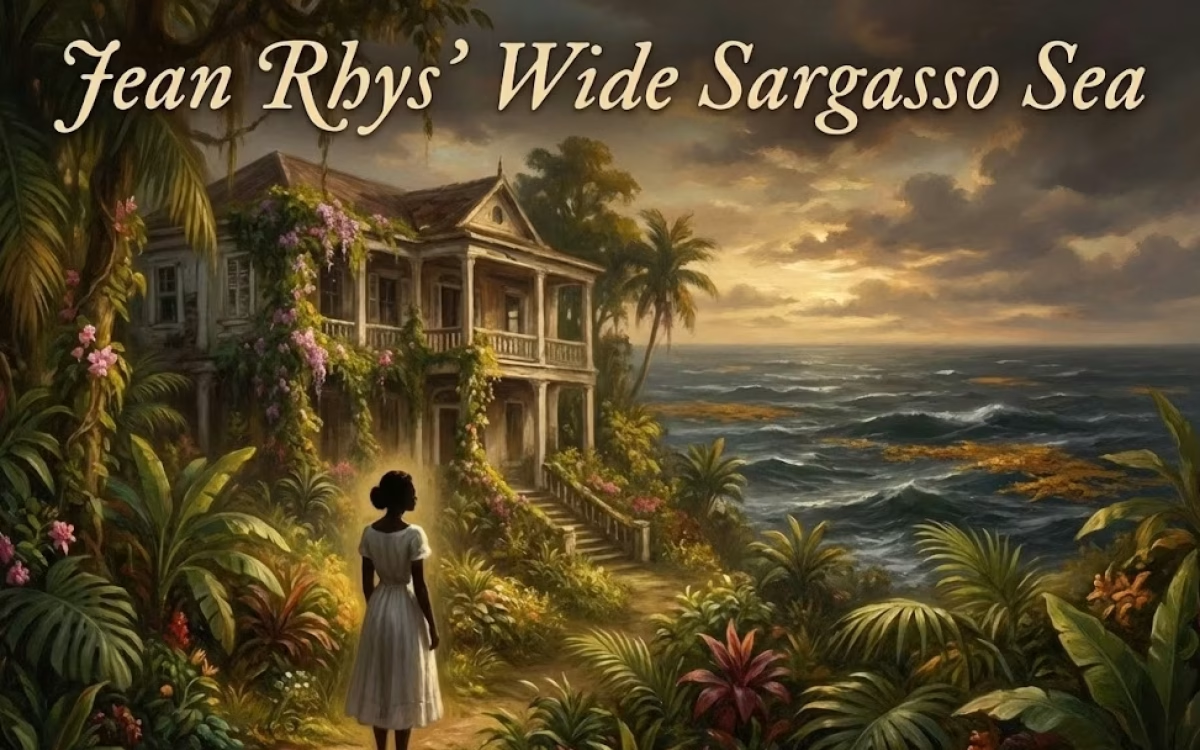
When most readers finish Jane Eyre, they remember the terrifying “madwoman in the attic” who burns down Thornfield Hall. However, very few stop to ask for her side of the story. This is exactly what Jean Rhys explores in her modern masterpiece, Wide Sargasso Sea.
Published in 1966, this novel serves as a post-colonial prequel to Charlotte Brontë’s Victorian classic. Jean Rhys, who was herself a Creole woman from the Caribbean, felt that the character of Bertha Mason was unfairly silenced. Instead of accepting her as a monster, Rhys re-imagines her as Antoinette Cosway—a vulnerable young woman caught between two hostile cultures.
In this post, we will provide a complete summary and critical analysis of Wide Sargasso Sea. We will look at how the novel gives a voice to the voiceless, transforming a Gothic villain into a tragic victim of patriarchy and colonialism.
Quick Summary: Wide Sargasso Sea
Wide Sargasso Sea (1966) is a post-colonial prequel to Charlotte Brontë’s Jane Eyre. It tells the story of Antoinette Cosway, a Creole heiress in Jamaica who marries a young Englishman (implied to be Mr. Rochester). The novel explores how cultural isolation, a loveless marriage, and patriarchal oppression drive her into the madness that eventually leads to her imprisonment in the attic of Thornfield Hall.
Plot Summary
Jean Rhys structures Wide Sargasso Sea into three distinct parts, each with a shifting narrator that mirrors the novel’s fractured identities and unreliable truths. This breakdown makes Wide Sargasso Sea analysis straightforward for students—think of it as a roadmap through Antoinette’s tragic unraveling, from Caribbean childhood to English imprisonment.
Part 1: Childhood at Coulibri Estate
Antoinette Cosway grows up on the decaying Coulibri Estate in post-Emancipation Jamaica, around the 1830s. Slavery’s end has left her family—white Creoles, former plantation owners—stranded in hostility. Black neighbors resent them bitterly, whispering “white cockroach” as their wealth evaporates. Antoinette’s world feels isolated, almost dreamlike: lush gardens hide simmering tensions.
Her mother, Annette, remarries a wealthy Englishman for security, but it backfires. Annette’s fragile nerves crack under gossip and fear, spiraling into what locals call madness. Then disaster strikes—the estate burns to the ground, torched by ex-slaves seeking revenge. Antoinette watches her home—and her childhood—go up in flames. Christophine, the Martinican obeah woman who becomes her fierce protector, steps in amid the ashes. For Indian readers studying colonial aftershocks, this part echoes partition-era ruins: when empires crumble, who pays the price?
Part 2: Marriage and Cultural Clash in Dominica
Fast-forward to Antoinette’s young adulthood. An unnamed Englishman—readers know him as Rochester—arrives for an arranged marriage, lured by her small inheritance. Their honeymoon in Dominica starts intoxicatingly lush: mountains, rainforests, and a honeymoon house called Granbois pulse with Caribbean vibrancy. But Rochester’s English reserve clashes hard against this “too-hot” world. He feels out of place, suspicious of the locals’ rhythms and Antoinette’s easy warmth with them.
Tensions boil when Rochester hears rumors of her family’s “madness.” Jealousy festers; he suspects infidelity. Enter Christophine again—she offers an obeah love potion to rekindle his affection, but Rochester twists it into proof of witchcraft and betrayal. He renames her “Bertha,” stripping away her Creole identity like shedding a skin. The marriage turns prison: he controls her fortune, isolates her, and poisons their bond with racial paranoia. It’s a slow suffocation—patriotism meets empire, love curdles into ownership. Students often nod here: doesn’t this mirror arranged marriages strained by cultural gaps, even today?
Part 3: Imprisonment in the English Attic
The final part snaps to Thornfield Hall, syncing perfectly with Jane Eyre‘s timeline. Now “Bertha,” Antoinette narrates in fragmented bursts from her attic cell. England is gray fog and stone—no colors, no warmth, just a faceless English girl (Jane) glimpsed below. Her husband watches through a keyhole; servants fear her as the mad Creole.
Dreams haunt her: red skies, burning houses, a white horse urging violence. She clutches a candle, whispering of escape. The section ends ambiguously—does she light the fire that dooms Rochester? Rhys leaves it open, but the intent burns clear: erasure breeds rebellion.
Character Analysis
Characters in Wide Sargasso Sea aren’t flat stereotypes—they’re cracked mirrors reflecting the novel’s big questions on identity, power, and resistance. Jean Rhys crafts them with raw empathy, making Wide Sargasso Sea analysis a goldmine for students unpacking postcolonial feminism. Let’s meet the trio who drive this haunting tale.
Antoinette Cosway: The Displaced Creole Heart
Antoinette Cosway tugs at you from page one—vulnerable yet fiercely sensitive, a girl adrift in a world that rejects her at every turn. Born white to Jamaican locals, she’s branded a “white cockroach,” spat on for her family’s slave-owning past. Yet to her English husband, she’s not white enough—too “colored” by Caribbean sun and spirit, her laughter too loud, her emotions too unbound. She belongs nowhere, a classic Creole hybrid caught between worlds.
Think of her childhood at Coulibri: isolated, dreaming in gardens while resentment simmers outside. Marriage offers no anchor; it drags her deeper into alienation. Her “madness” isn’t some genetic curse—it’s the slow poison of displacement, gossip, and control. As a reader from India, where so many juggle regional roots with English-medium ambitions, Antoinette’s ache feels personal. She’s no victim waiting for rescue; her final dream of fire hints at a spark of defiance. Rhys makes her unforgettable: not Brontë’s monster, but a woman the empire broke.
The Unnamed Husband (Rochester): Colonial Patriarch Unleashed
Never named—that’s deliberate. He’s every Englishman who sailed west to “civilize,” embodying patriarchy fused with empire. Fresh from chilly England, he lands in the Caribbean’s “wildness” and recoils. Lush forests? Savage. Antoinette’s warmth? Promiscuous. He doesn’t adapt; he conquers, renaming her “Bertha” to erase her Creole self, seizing her inheritance like colonial land grabs.
His narration in Part Two reveals the rot: paranoia blooms from rumors, jealousy from her ease with locals. He hates the island’s heat, its obeah whispers, its refusal to bend to his rules. Taming Antoinette becomes his mission—locking her away, shipping her to England’s gray attic. Yet Rhys slips in his cracks: loneliness, wounded pride. He’s no cartoon villain; he’s the system personified, blind to how his “order” destroys. For postcolonial students, he mirrors the Raj’s memsahibs and sahibs—imposing control while fearing the “other” they can’t tame.
Christophine: Obeah Rebel and Voice of Resistance
If Antoinette breaks your heart, Christophine lights a fire under it. The Martinican obeah woman towers as the novel’s strongest soul—independent, sharp-tongued, unafraid. She sees through Rochester from the start: “You make her like that… you make her unhappy.” No deference here; she calls out his hypocrisy, offers love potions from ancient wisdom, defies his legal threats.
Steeped in Caribbean spirituality, Christophine resists colonial logic. Obeah isn’t superstition to her—it’s power, healing, truth the English dismiss as “black magic.” She embodies what the empire fears: self-reliant women outside its grasp, economies beyond its banks. When Rochester confronts her, she doesn’t cower; she laughs, vanishing into the hills like folklore made flesh.
In Indian classrooms dissecting subaltern voices, Christophine steals the show. She’s the auntie who spots family gaslighting, the Dalit elder challenging caste norms—raw resistance wrapped in quiet strength. Rhys gives her the last word on Antoinette’s behalf, proving some spirits can’t be locked away.
These characters interlock like the Sargasso seaweed—tangled, trapping each other in cycles of hurt and rebellion.
Now that you have heard Antoinette’s side of the story, revisit the classic that started it all. Read our [Complete Summary and Analysis of Jane Eyre] to see how the two narratives connect.
Critical Themes
Wide Sargasso Sea pulses with themes that demand a second read—postcolonial fury, power plays, and symbols that scorch the page. Jean Rhys weaves them tightly, outshining shallow summaries by forcing us to question who writes history. Let’s analyse these:
The “Other”: Postcolonial Rejection and In-Betweenness
Antoinette Cosway embodies the postcolonial “other” in the cruelest way—shunned by everyone, belonging to no one. To Black Jamaicans, fresh from slavery’s chains, she’s a “white cockroach,” heir to the whip-cracking Cosway planters who once owned their lives. They torch her home at Coulibri, eyes gleaming with long-overdue revenge. Yet flip the lens to her English husband, and suddenly she’s not white enough—too sun-kissed, too Creole-wild, her French patois and island ease marking her as “colored” and suspect.
This double exile isn’t accidental; it’s the hallmark of colonial hybrids, forever displaced. Postcolonial theory—think Homi Bhabha’s “third space”—nails it here: Antoinette’s identity fractures under the gaze of both oppressed and oppressor. For students in India, poring over Fanon or Spivak in Delhi or Mumbai syllabi, she mirrors the Eurasian clerk eyed warily by British sahibs and Indian nationalists alike. No wonder her mind unravels; rejection from both sides leaves no ground to stand on. Rhys doesn’t pity her—she indicts the system that creates such ghosts.
Renaming as Control: Erasing Identity
Rochester’s casual “Bertha” isn’t a slip; it’s a weapon, stripping Antoinette bare. Her name—French-Creole, tied to sunlit Dominica and maternal whispers—holds her history. “Bertha” flattens it into something blunt, English, anonymous, like labeling a colony for the map. He renames to own, echoing how empires rebranded lands and peoples: Bombay to Mumbai, but only after the fight.
In Part Two, this act cements his dominance. Gossip about her “mad” mother? He amplifies it, turning family whispers into legal chains. Her fortune? Redirected to his pockets. Christophine calls him out—”You want her money, not her”—but he presses on, forging letters to declare her insane. It’s patriarchal colonialism at work: women and colonies as malleable property, reshaped to fit the master’s narrative. Reflective pause: in our world of social media handles and forced assimilation, doesn’t renaming still silence voices? Rhys spots the violence in a syllable, making this theme stick like glue.
Fire Imagery: Destruction and Defiant Liberation
Fire bookends Wide Sargasso Sea like a curse—and a promise. Coulibri burns first, ex-slaves’ flames devouring the estate in 1830s fury, orphaning Antoinette amid charred ruins. It’s destruction pure: end of white planter privilege, her mother’s descent into opium haze. Fast-forward to Thornfield’s attic, and fire returns in her fevered dream—candle in hand, she walks halls lined with thorns, igniting the blaze that scars Rochester in Jane Eyre.
But Rhys flips the script: fire isn’t just ruin; it’s release. Coulibri’s pyre severs Antoinette from a poisoned past, thrusting her toward uneasy freedom. Thornfield’s inferno? Her final rebellion, torching the prison of gray English walls that leeched her color and voice. Symbol scholars love this—fire as purgation, like Sita’s trial by Agni in the Ramayana, proving purity through trial. Or think Diwali lamps chasing shadows. For Caribbean and Indian readers alike, it whispers that oppression’s structures must burn before new growth sprouts. Rhys leaves us smoldering: is Antoinette mad, or is the world that caged her?
These themes interlock like Sargasso weeds, trapping yet propelling the story. They elevate Wide Sargasso Sea beyond prequel status, demanding we rethink Brontë’s attic-dweller.
Intertextuality: Wide Sargasso Sea vs. Jane Eyre
Jean Rhys didn’t just write a novel—she rewrote Jane Eyre, slipping into Charlotte Brontë’s cracks to humanize the figure we all dismissed as a howling beast. This intertextual dance makes Wide Sargasso Sea analysis irresistible for students: it pits two masterpieces against each other, exposing how “truth” in literature bends to the narrator’s gaze. Suddenly, that attic fire isn’t villainy; it’s backstory begging for mercy.
Bertha as Beast in Jane Eyre
Brontë’s 1847 classic paints Bertha Mason as pure monster— a “clothed hyena” with “bloated” features, gnashing teeth, and demonic strength. Locked in Thornfield’s attic, she’s Jane’s dark shadow: animalistic, secretive, a threat to rational English order. Rochester calls her his “curse,” a secret shame from his youthful folly in Jamaica. No voice, no history—just snarls and arson, justifying her chains. Victorian readers nodded: colonial “others” were savage by nature, best contained.
It’s tidy Gothic horror, sure. Bertha embodies repressed passion, racial fears, even Jane’s suppressed rage. But Brontë never questions the gaze; Rochester’s word is law, Bertha’s silence complicity. For us today, it feels uncomfortably imperial— the mad Creole woman as exotic menace, her Caribbean roots reduced to a footnote.
Antoinette as Victim in Wide Sargasso Sea
Rhys flips the script with surgical grace. Bertha is Antoinette Cosway—flesh-and-blood victim of empire’s grind. We trace her from sun-drenched Coulibri childhood, through cultural exile, to that foggy attic. No hyena here: she’s sensitive, loving, fractured by rejection. Her English husband sneers at her “colored” warmth, renames her, steals her fortune, ships her north like cargo.
In Rhys’ hands, madness isn’t innate—it’s manufactured. Coulibri’s burning scars her soul; Rochester’s paranoia poisons their bed; isolation in gray England erases her. Her final dream-candle? Not mindless rage, but a desperate reclaiming of agency. Rhys gives her fragmented words, dreams, humanity—turning Brontë’s symbol into a breathing tragedy. Christophine even names the injustice: “Read and write—I know that. But I know more than that.”
“To fully understand the tragedy of Antoinette, you need to read it alongside the original. I recommend reading them back-to-back.”
Conclusion
Jean Rhys doesn’t just rescue Bertha Mason from the attic—she hands her a voice, a history, and a blazing refusal to stay silent. In Wide Sargasso Sea, that famous line echoes like a challenge: “There is always the other side, always.” What Brontë sketched as a snarling shadow becomes Antoinette Cosway—flesh, fire, and fractured dreams—pushing us to rethink every “madwoman” we’ve dismissed in literature’s long attic.
This novel lingers because it mirrors our own tangled worlds. For students in Indian classrooms—from Himachal’s misty hills to bustling Delhi seminars—Rhys’ tale hits close: the Creole caught between cultures feels like navigating colonial syllabi in regional tongues, or family expectations clashing with modern ambitions. Postcolonial feminism isn’t abstract here; it’s the slow burn of erased identities fighting back.
Dive into Wide Sargasso Sea analysis, and you’ll carry its heat long after the pages close. Rhys proves classics evolve when we listen to the silenced—not with pity, but with the fierce curiosity they deserve. Next time you crack open Jane Eyre, pause at the attic door. Someone’s story waits on the other side.
FAQS
Is Antoinette truly mad or driven mad?
Antoinette is not “mad” by birth. She is driven to breakdown by trauma and isolation. Her childhood brings pain—Coulibri’s burning and her mother’s madness. Marriage deepens the wound. Rochester isolates her, renames her “Bertha,” and steals her identity.
What is the significance of the title Wide Sargasso Sea?
The title refers to the Sargasso Sea—a calm Atlantic stretch choked with seaweed. It lies between the Caribbean and Europe, trapping ships in stillness. The image mirrors the gulf between Antoinette’s wild island life and Rochester’s cold England.