Introduction
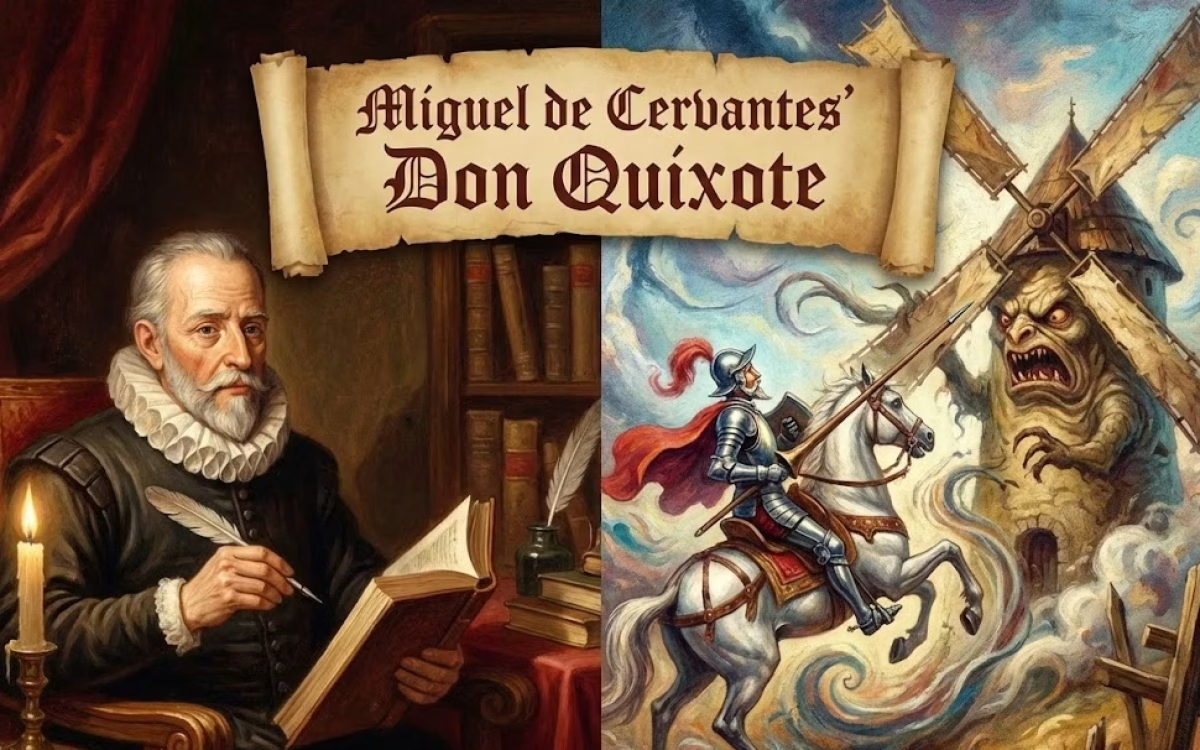
Miguel de Cervantes’ Don Quixote stands as a towering achievement in world literature. It has inspired generations of readers, writers, and thinkers across continents and centuries. For students, scholars, and literature lovers in India and beyond, the story of the delusional knight remains timeless. His quest to tilt at windmills is as relevant today as it was in the early 1600s.
At its heart, Don Quixote is more than a tale of madness and adventure. It is a profound reflection on the human condition and imagination. The novel also explores the eternal struggle between idealism and reality.
The protagonist, Alonso Quixano, is a middle-aged gentleman from La Mancha. His obsession with chivalric romances transforms him into the self-styled knight Don Quixote. He renames his horse Rocinante and chooses a local peasant as his lady, Dulcinea. Quixote sets out to revive the lost age of chivalry. Yet, he is constantly defeated by a world that no longer believes in knights and quests. His loyal squire, Sancho Panza, adds comic relief and offers practical wisdom. He grounds the story in a reality that contrasts sharply with Quixote’s imagination.
Don Quixote captivates readers with its blend of satire, philosophy, and narrative innovation. Cervantes skillfully plays with the boundaries between fiction and reality. He invites readers to question the hero’s sanity and the nature of truth itself. The self-aware structure, with multiple narrators and metafictional layers, makes it a landmark in fiction. Critics often celebrate it as the first modern novel. It paved the way for later experimental works and continues to redefine storytelling.
For readers worldwide, the themes of Don Quixote hold deep meaning. The clash between tradition and modernity reflects the tensions of modern life. The pursuit of dreams despite obstacles mirrors the spirit of resilience. These struggles find echoes in contemporary Indian society. Students striving for success and entrepreneurs adapting to global challenges can relate to Quixote’s journey. His story offers timeless lessons about hope and human aspiration.
The influence of Don Quixote extends far beyond literature. It has inspired countless adaptations in theatre, cinema, and other art forms. The novel reshaped how we think about heroism, madness, and imagination. In this article, we will explore the plot, themes, and characters of Don Quixote. We will also examine its enduring relevance in the modern world.
Quick Summary: Don Quixote
Don Quixote (published in two parts, 1605 and 1615) is widely considered the first modern novel. Written by Miguel de Cervantes, it tells the story of Alonso Quixano, an aging nobleman who reads so many chivalric romances that he loses his sanity. Believing he is a knight named Don Quixote de la Mancha, he sets out to revive chivalry and serve his imaginary lady love, Dulcinea. Accompanied by his realistic and faithful squire, Sancho Panza, he embarks on a series of misadventures (most famously attacking windmills he believes are giants). The novel is a profound satire on the clash between idealism and reality.
Miguel de Cervantes’ Don Quixote: Plot Overview
Don Quixote’s plot is a sprawling, episodic journey that blends comedy, tragedy, and philosophical reflection, following the adventures of a delusional knight and his pragmatic squire as they traverse the Spanish countryside.
Part I: The Knight’s First Sallies
Alonso Quixano is a middle-aged gentleman from La Mancha. Gradually, he becomes obsessed with chivalric romances and decides to become a knight-errant. Therefore, he renames himself Don Quixote de la Mancha and sets out to revive the lost ideals of chivalry. To prepare for his quest, he puts on old armor and renames his horse Rocinante. Moreover, he chooses a local peasant woman, Aldonza Lorenzo, as his lady, calling her Dulcinea del Toboso.
Soon after, Don Quixote’s first adventure ends in disaster. For instance, he mistakes an inn for a castle and prostitutes for noble ladies. As a result, he is badly beaten during these misadventures. Later, he tries to save a servant being whipped, but his interference only worsens the situation. Eventually, he is rescued and returned home, exhausted and disillusioned. In an attempt to help him, his friends burn his chivalric books to cure his madness.
Nevertheless, Don Quixote remains determined to continue his pursuit of glory. Consequently, he persuades his neighbour Sancho Panza, a simple farmer, to become his faithful squire. In return, he promises Sancho the governorship of an island as a reward. Together, they set off on a new journey filled with strange and absurd adventures. Along the way, Quixote attacks windmills he believes to be giants and flocks of sheep he mistakes for enemy armies. Furthermore, he claims that a barber’s basin is a legendary golden helmet. Meanwhile, Sancho constantly points out the truth, but Quixote blames enchanters for twisting reality against him.
Part II: Fame, Deception, and the Return Home
By the time Don Quixote begins his second journey, his exploits have become widely known. As a result, several characters, including a Duke and Duchess, play elaborate pranks on him. These playful deceptions blur the line between fiction and reality within the novel. Gradually, the story becomes increasingly self-aware and reflective. In fact, some characters even read and discuss the first part of the novel. Consequently, Quixote’s adventures take on a distinctly metafictional tone.
Meanwhile, Don Quixote and Sancho Panza continue their travels and face many unusual experiences. For instance, they attend a grand wedding and visit the mysterious Cave of Montesinos. Additionally, they are entertained by the Duke and Duchess, who stage mock chivalric quests for their amusement. Later, Sancho is briefly made governor of a small village, where he proves wise and fair. However, the position ultimately turns out to be a prank, adding a bittersweet irony to the tale.
Eventually, Quixote is defeated by a disguised friend known as the Knight of the White Moon. This final confrontation forces him to return home in defeat. Soon after, on his deathbed, he renounces his chivalric fantasies and regains his sanity before dying peacefully.
Throughout the novel, Cervantes blends satire, philosophy, and narrative innovation with remarkable skill. Indeed, his masterpiece remains as relevant and engaging today as it was when first published.
“This is a massive book (over 1000 pages). Get the most affordable complete edition here: [Check Price: Don Quixote on Amazon].”
Miguel de Cervantes’ Don Quixote: Major Themes
These themes make Don Quixote a timeless work that continues to resonate with readers across cultures and generations:
Idealism versus Reality
Don Quixote’s adventures constantly highlight the clash between his idealistic vision and the harsh realities of the world. He sees windmills as giants and inns as castles, while Sancho Panza remains grounded in practicality. This tension invites readers to reflect on the value of dreams and the dangers of losing touch with reality.
Madness and Sanity
Cervantes blurs the line between madness and sanity. Don Quixote’s delusions are often portrayed as a form of higher truth, while those who label him mad are sometimes revealed as cynical or indifferent. The novel challenges us to consider whether true madness lies in chasing impossible ideals or in accepting a world stripped of wonder.
Friendship and Companionship
The evolving relationship between Don Quixote and Sancho Panza showcases the power of friendship. Sancho follows Quixote for personal gain but grows genuinely loyal, while Quixote treats Sancho with respect, despite their social differences. Their bond illustrates how companionship can transform individuals and bridge social divides.
Identity and Performance
Both Don Quixote and Sancho Panza perform roles that shape their identities. Don Quixote’s self-reinvention as a knight-errant and Sancho’s brief governorship demonstrate how identity is fluid and shaped by narrative and performance. This theme resonates with contemporary discussions on self-fashioning and personal transformation.
The Power of Imagination
Imagination is both a source of strength and a potential pitfall in Don Quixote. Quixote’s fantasies inspire acts of courage and kindness, but they also lead to humiliation and suffering. The novel encourages readers to balance imaginative daring with self-awareness, recognising the impact of stories on our lives.
Social Critique
Through its characters and episodes, Don Quixote offers a critique of social hierarchies, hypocrisy, and the gap between ideals and practice. The Duke and Duchess’s pranks expose the cruelty and manipulation that can exist within the upper classes, while the interactions with peasants and outcasts highlight issues of justice and equality.
The Nature of Truth and Fiction
Cervantes plays with the boundaries between truth and fiction, using metafictional elements and unreliable narrators. The novel questions how stories shape our perceptions and invites readers to consider the reliability of their own beliefs and experiences.
The Search for Meaning
Don Quixote’s quest for chivalric glory reflects a universal search for meaning and purpose. His journey, though often misguided, underscores the human need for ideals and the importance of finding dignity in the face of adversity.
Miguel de Cervantes’ Don Quixote: Character Analysis
Here’s a detailed character analysis of the main figures in Don Quixote, highlighting their roles, traits and significance in the novel:
Don Quixote de la Mancha
Don Quixote is a complex blend of idealism, madness, and nobility. His obsession with chivalric romances transforms him into a delusional knight who sees the world through a lens of fantasy. He is both comic and tragic: ridiculous in his misadventures, yet deeply moving in his unwavering commitment to justice and honor. Don Quixote’s character embodies the human capacity for perseverance and imagination, even when his actions are misguided. His inner contradictions—between sanity and madness, nobility and folly—make him one of literature’s most enduring and fascinating figures.
Sancho Panza
Sancho Panza, Don Quixote’s squire, is the voice of reason and practicality. He is a simple farmer, motivated by the promise of an island to govern, but his loyalty and growing affection for his master drive him through their adventures. Sancho’s earthy humor, proverb-filled speech, and occasional cowardice contrast sharply with Don Quixote’s lofty ideals. Over time, Sancho absorbs some of his master’s idealism, becoming wiser and more confident. His journey from a skeptical peasant to a self-assured man illustrates the transformative power of companionship and experience.
Dulcinea del Toboso
Dulcinea, originally Aldonza Lorenzo, is the object of Don Quixote’s chivalric devotion. She never appears directly in the novel, existing only as an idealized image in Don Quixote’s mind. By elevating a simple peasant to the status of a noble lady, Don Quixote demonstrates the power of imagination and the danger of projecting fantasies onto real people. Dulcinea’s absence from the narrative underscores her symbolic role: she represents Don Quixote’s chivalric ideals and the unattainable nature of perfection.
Rocinante and Dapple
Rocinante, Don Quixote’s horse, and Dapple, Sancho’s donkey, are more than mere animals—they are symbols of their masters’ personalities. Rocinante’s name, meaning “old nag,” reflects Don Quixote’s delusions of grandeur, while Dapple’s practicality mirrors Sancho’s down-to-earth nature. Both animals endure the hardships of their journeys, embodying the resilience and loyalty of their riders.
The Duke and Duchess
The Duke and Duchess are aristocrats who entertain themselves by playing pranks on Don Quixote and Sancho. Their cruelty and boredom highlight the emptiness of their privileged lives, contrasting with the genuine, if misguided, ideals of Don Quixote. Their elaborate schemes blur the line between reality and fiction, exposing the superficiality of social hierarchies and the human tendency to seek amusement at others’ expense.
Other Notable Characters
Countess Trifaldi: A fictitious character created by the Duke’s steward, she serves as a comic foil and a vehicle for Don Quixote’s chivalric quests.
Gines de Pasamonte: An ungrateful galley slave whom Don Quixote frees, he appears for comic relief but also challenges Don Quixote’s justifications for his actions.
These characters, each with their unique traits and roles, contribute to the rich tapestry of Don Quixote, making it a masterpiece of character development and social commentary.
Miguel de Cervantes’ Don Quixote: Picaresque Novel
Don Quixote is often celebrated as a pioneering picaresque novel, a genre that originated in Spain and features a roguish protagonist who journeys through society, encountering a series of episodic adventures while exposing the vices and follies of the world around them. In this tradition, Don Quixote fits the mold of a pícaro—a wandering antihero whose journey is marked by satire, social critique, and a blend of comedy and tragedy.
The Picaresque Structure
The novel’s episodic structure is a hallmark of the picaresque genre. Don Quixote and Sancho Panza travel from one adventure to the next, meeting a diverse cast of characters—innkeepers, peasants, nobles, and outlaws—each encounter revealing a different facet of Spanish society. These episodes are loosely connected, often lacking a tight plot, but they collectively paint a vivid picture of the social landscape and the human condition.
The Rogue Hero
Don Quixote himself embodies the picaresque hero. Though he is not a rogue in the traditional sense, his delusions and misadventures set him apart from society, much like the classic pícaro. His quest for chivalric glory is both noble and absurd, reflecting the genre’s blend of idealism and realism. Sancho Panza, with his earthy humor and practical wisdom, serves as the quintessential sidekick, grounding the narrative in reality and providing comic relief.
Social Critique and Satire
Like other picaresque novels, Don Quixote uses its episodic adventures to critique social hierarchies, hypocrisy, and the gap between ideals and practice. The Duke and Duchess’s pranks, the encounters with corrupt officials, and the interactions with peasants and outcasts all highlight the flaws and contradictions of the social order. The novel’s satire is both biting and compassionate, exposing the follies of the powerful and the resilience of the marginalized.
Realism and Fantasy
The picaresque genre is known for its blend of realism and fantasy, and Don Quixote exemplifies this duality. Don Quixote’s delusions—seeing windmills as giants and inns as castles—contrast sharply with the grounded reality of Sancho Panza and the world they inhabit. This interplay between fantasy and reality is a defining feature of the picaresque, inviting readers to reflect on the nature of truth and the power of imagination.
Legacy and Influence
Don Quixote’s influence on the picaresque tradition is profound. It inspired countless later works, from Spanish classics to modern novels, and helped shape the genre’s conventions. The novel’s blend of satire, social critique, and episodic adventure continues to resonate with readers, making it a timeless example of the picaresque novel.
Miguel de Cervantes’ Don Quixote: Reflections and Relevance
Don Quixote’s reflections and relevance stretch far beyond its 17th-century origins, offering timeless insights into the human spirit, society, and the power of storytelling. The novel’s central theme—the tension between idealism and reality—resonates with readers across generations and cultures, inviting us to question what is real, what is imagined, and how we navigate a world increasingly shaped by media, technology, and shifting truths.
Reflections on Human Nature
At its core, Don Quixote is a profound exploration of the human condition. Don Quixote’s delusions, while often comic, reveal a deep yearning for meaning, dignity, and justice in a world that often feels indifferent or unjust. His unwavering commitment to chivalric ideals, even in the face of ridicule and failure, challenges us to consider the value of holding onto dreams, no matter how quixotic they may seem.
Sancho Panza, with his practical wisdom and earthy humor, serves as a counterbalance, reminding us of the importance of grounding our ideals in reality. Together, their journey illustrates the complexity of human nature, the interplay between imagination and pragmatism, and the enduring power of friendship and loyalty.
Relevance in the Modern World
In today’s world, Don Quixote’s story feels startlingly relevant. The novel’s themes—idealism versus pragmatism, the search for meaning, and the impact of stories on our lives—are echoed in contemporary issues such as social media saturation, the rise of AI and the blurring of reality and fiction. Just as Don Quixote’s delusions were shaped by the chivalric romances he consumed, today’s selves can be shaped by the narratives we encounter online, in films, and through digital platforms.
The novel also speaks to the challenges of maintaining personal integrity and authenticity in a media-saturated age. Don Quixote’s determination to define his own narrative, even when it looks absurd to others, is a powerful reminder of the importance of staying true to one’s values and imagination.
Social Critique and Humanism
Don Quixote’s adventures offer a sharp critique of social hierarchies, hypocrisy, and the gap between ideals and practice. Through its characters and episodes, the novel exposes the flaws and contradictions of the social order, highlighting the resilience of the marginalized and the folly of the powerful.
Cervantes’ humanistic ideals—individual liberty, freedom, and equality—are as relevant today as they were in his time. The novel’s advocacy for breaking down feudal hierarchies and valuing people based on their virtues rather than their social status continues to inspire readers and thinkers around the world.
Miguel de Cervantes’ Don Quixote: Cultural and Literary Impact
Don Quixote’s influence on literature and culture is profound. Over the centuries, the novel has inspired countless adaptations, reinterpretations, and artistic appropriations. Consequently, its characters have evolved into enduring cultural archetypes. Moreover, the image of the knight facing windmills—believing them to be giants—has become a lasting symbol of noble yet misguided idealism. As a result, this image carries deep philosophical, political, and existential meanings that continue to resonate.
In today’s era, marked by fake news, fragmented realities, and crises of meaning, the question posed by Don Quixote—What is real?—acquires renewed significance. Indeed, the idealism of Don Quixote and the scepticism of Sancho Panza reflect timeless human contrasts. These opposing perspectives, always in tension, mirror the struggle between belief and doubt that defines the human experience.
Ultimately, Don Quixote’s reflections remain as powerful as ever. Through its enduring insight, the novel continues to inspire, challenge, and provoke readers around the world. Therefore, it stands as a timeless masterpiece that speaks directly to the heart of humanity. EXPLORE OTHER AUTHORS
Miguel de Cervantes’ Don Quixote: Conclusion
Don Quixote endures as one of the most influential novels ever written. It captures the timeless struggle between dreams and reality. Even today, it resonates deeply with readers across cultures and generations. Moreover, through the journey of its idealistic knight and his grounded squire, Cervantes urges us to value our ideals. He reminds us to hold on to them even when the world mocks or misunderstands them.
Importantly, the novel’s central question—what is real?—remains as pressing today as it was in the 17th century. In today’s world shaped by media, technology, and shifting truths, this question feels even more relevant. Don Quixote’s belief in chivalry, justice, and honor challenges us to see the strength of imagination. Furthermore, it calls us to define our own stories even when reality stands in opposition. At the same time, Sancho Panza’s simple wisdom reminds us that ideals must stay rooted in reality to guide true action.
Additionally, Don Quixote’s influence extends far beyond literature. It has inspired countless adaptations and artistic interpretations across centuries. Its characters have become lasting symbols in global culture. The image of the knight tilting at windmills now stands as a universal symbol of noble yet misguided idealism. Consequently, it echoes through philosophy, politics, and even daily life.
Equally significant, Cervantes’ message of liberty, equality, and human dignity continues to inspire readers around the world. His critique of hypocrisy and rigid social hierarchies remains sharp and relevant. Therefore, the novel still challenges us to build a more just and compassionate society.
In conclusion, in this fractured world of competing realities and crises of meaning, Don Quixote offers enduring insight. Its reflections on the human condition continue to inspire, challenge, and provoke us. Ultimately, it remains a timeless masterpiece that speaks to the essence of being human.
Miguel de Cervantes’ Don Quixote: FAQS
What is the main theme of Don Quixote?
The main theme is the conflict between idealism and reality. Indeed, Don Quixote’s chivalric dreams clash with the practical world. As a result, the story prompts readers to reflect on the value of holding onto ideals versus accepting reality.
Who is Sancho Panza in Don Quixote?
Sancho Panza is Don Quixote’s squire and a peasant from La Mancha. Also, he is practical, humorous, and loyal, providing a grounded contrast to Don Quixote’s idealism. Over time, Sancho grows in wisdom and confidence through their adventures.
Why is Don Quixote considered the first modern novel?
Don Quixote is often called the first modern novel because of its realistic characters, psychological depth, and self-conscious narrative style. Moreover, Cervantes masterfully blends satire, realism, and metafiction, thereby influencing later literature across the world.
What is the significance of the windmill scene?
The windmill scene, where Don Quixote attacks windmills he believes are giants, is iconic. Moreover, it symbolises the clash between imagination and reality, and the noble, if misguided, pursuit of ideals.
How does Don Quixote end?
Don Quixote returns home after being defeated in a duel. On his deathbed, he renounces his chivalric fantasies and regains his sanity, passing away peacefully. The ending underscores the novel’s themes of idealism, reality, and the search for meaning.