
Introduction
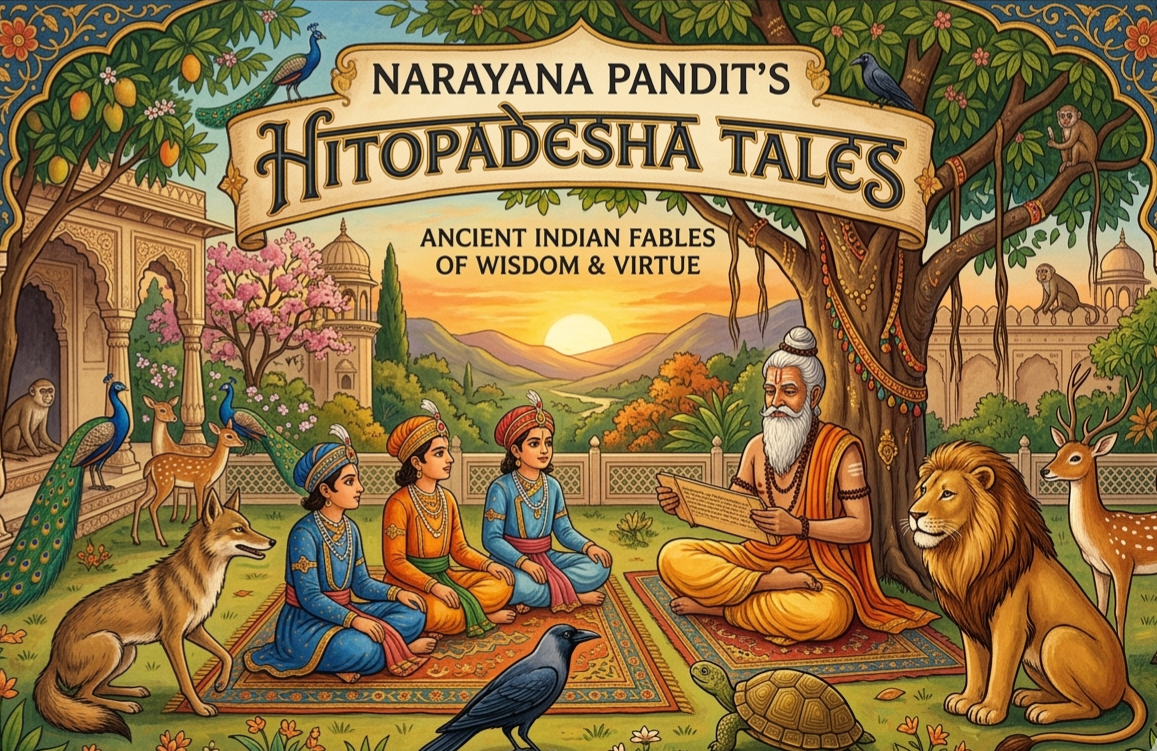
Narayana Pandit’s Hitopadesha Tales
Why do we still turn to animal stories to teach adults how to survive the real world? These timeless fables cut through illusions, revealing raw truths about human nature.
Enter Narayana Pandit, the 14th-century scholar who compiled the Hitopadesha—a Sanskrit collection of beastly tales drawn from ancient Panchatantra roots. Unlike modern morality tales that peddle rosy ideals, Hitopadesha delivers pragmatic survival lessons: dodge betrayals, outsmart foes, and thrive amid chaos.
Ultimately, Hitopadesha doesn’t preach how the world should be. It maps how the world actually is—brimming with tricksters, fools, and hidden dangers that demand sharp wit to conquer.
“To fully grasp the poetic beauty of the original Sanskrit structure, reading a modern, academic translation is highly recommended. The absolute best edition for students is [Hitopadesha translated by A.N.D. Haksar on Amazon].”
Quick Summary
The Hitopadesha (meaning “Beneficial Advice”) is a celebrated collection of Sanskrit fables, compiled by the scholar Narayana Pandit around the 12th century. Heavily inspired by the older Panchatantra, these stories use talking animals and human archetypes to teach Niti (practical wisdom, statecraft, and worldly conduct). The tales were originally designed to educate young princes on how to survive and thrive in a complex, often deceptive world, making their lessons highly pragmatic rather than purely spiritual.
1. The Foolish Tortoise: A Hitopadesha Fable on Pride and Peril
The Gripping Tale
In one of Narayana Pandit’s Hitopadesha Tales, meet Kambugriva, a boastful tortoise befriended by two loyal swans. A brutal drought dries up their lake, so the swans devise a clever escape: they’ll carry Kambugriva skyward by having him grip a stick in his jaws mid-flight. They warn him sternly—not a word, or disaster strikes.
Soaring over a bustling town, villagers gawk and jeer at the odd sight. Kambugriva’s pride erupts; he snaps open his mouth to hurl insults. The stick slips. He plummets to his doom on the hard ground below.
The Timeless Moral
This Hitopadesha animal fable hammers home a stark truth: Heed the wisdom of true friends, or pride and impulsivity spell your downfall. Kambugriva’s lack of self-control turns salvation into tragedy, reminding us that silence often saves lives.
2. The Three Fish: Foresight vs. Fate in Hitopadesha Tales
The Tense Tale Unfolds
Narayana Pandit’s Hitopadesha Tales spotlight three fish in a serene pond: Forethought (Anagatavidhata), ever-vigilant; Ready-Wit (Pratyutpannamati), sharp and sly; and Fatalist (Yadbhavishya), passive and resigned. Fishermen shout their plan—nets drop tomorrow.
Forethought bolts to safer waters instantly. Ready-Wit lingers, plotting an escape. Fatalist shrugs: “What will be, will be.” Dawn breaks; nets ensnare them. Ready-Wit feigns death, slips free. Fatalist thrashes—and dies.
The Sharp Moral
This Hitopadesha fable drives home proactive planning as king. Quick wits save in a pinch. But fatalism? It’s a death sentence, surrendering to destiny without a fight.
3. The Quick-Witted Wife: Cunning Words Save the Day
The Daring Domestic Drama
In Narayana Pandit’s Hitopadesha Tales, a clever wife faces catastrophe: her husband bursts in, catching her red-handed with a lover. Panic? Not her. She unleashes lightning-fast psychological manipulation, weaving a flawless tale of devotion and religious duty. Was she worshipping a “deity” in disguise? Performing a secret vow? Her silver tongue flips the script—suddenly, she’s the hero, and hubby buys it hook, line, and sinker. Crisis averted, no questions asked.
The Pragmatic Power Lesson
This Hitopadesha gem teaches raw survival: A razor-sharp mind and eloquent narrative extract you from disaster. Forget ideals—worldly wit rules, turning peril into triumph.
4. The Short-Sighted Crane: Deception’s Deadly Boomerang
The Sly Scheme Unravels
Narayana Pandit’s Hitopadesha Tales feature a cunning aging crane, too feeble to snag fish. He spins a yarn: “Drought looms—climb on, I’ll ferry you to a lush lake!” Gullible fish hop aboard, one by one. But he dumps them on a rock and devours them, bones piling high.
Enter the crafty crab, hitching a ride. Spotting the grisly pile, he clamps his claws on the crane’s neck—and snips it clean off. Justice served, crab-style.
The Ruthless Moral
Greed blinds you to lurking threats. In Hitopadesha wisdom, deceivers invite their match: someone sharper, more ruthless, ready to strike back.
5. The Hermit and the Mouse: Gratitude or Betrayal?
The Magical Makeover Gone Wrong
In Narayana Pandit’s Hitopadesha Tales, a kind hermit rescues a helpless mouse from a crow’s beak. To shield it, he wields ascetic powers: mouse to cat, cat to dog, dog to fierce tiger. Empowered, the beast prowls safely—or so it seems.
But the tiger seethes. His glorious form? Tainted by that “pathetic mouse” origin. As long as the hermit lives, shame lingers. He lunges to devour his saviour. The hermit peers into his mind—and zaps him back to mousehood, scampering in defeat.
The Bitter Moral
Never elevate the ungrateful; their base nature bites back. Hitopadesha warns: Feed the hand that feeds you, or face inevitable betrayal.
“If you are studying classical Indian literature, these stories are almost always taught alongside Buddhist fables.
Check out our complete study guide to the [Jataka Tales: The Stupid Monkeys and Other Summaries] to compare the moral themes.”
Conclusion
Narayana Pandit’s Hitopadesha Tales deliver more than quaint animal fables—they forge a survival toolkit for life’s brutal arena. Intelligence ignites escapes, as the quick-witted wife and crab prove. Yet raw smarts falter without self-awareness and situational wisdom. Recall the tortoise’s prideful plummet or tiger’s ingrate betrayal: Overreach invites ruin.
These stories thrive on pragmatic niti (worldly policy), contrasting utopian myths. Under a postcolonial lens, they echo power negotiations in colonial shadows—cunning as resistance. Jungian readers spot archetypes: the shadow trickster in the crane, the wise elder hermit restoring order.
Why Hitopadesha Matters Now
Studying these texts unveils classical Indian aesthetics: layered metaphors, rhythmic Sanskrit prose, and moral ambiguity that defies binaries.
Statecraft Insights: Kings consulted Hitopadesha for diplomacy; modern leaders glean negotiation tactics from fishy foresight.
Psychological Depth: Freudian impulses drive folly; self-control averts doom.
Embrace Hitopadesha—not as relic, but realpolitik guide. Which fable shapes your worldview? Share below!
FAQS
Who Wrote the Hitopadesha?
Narayana Pandit, a 14th-century Sanskrit scholar, authored the Hitopadesha. Composed between 800-950 CE in eastern India, he drew from ancient sources to create these stories for princes, blending animal fables with pragmatic life lessons.
What Is the Difference Between the Panchatantra and the Hitopadesha?
The Hitopadesha is a later compilation by Narayana Pandit that borrows heavily from the older Panchatantra—about three-fourths of its tales and verses—but adds unique framing, original verses, and a structured focus on four policy books: Winning Friends, Losing Friends, Waging War, and Peace. While Panchatantra emphasises raw moral tales, Hitopadesha refines them with poetic elegance and courtly wisdom for easier instruction.