January 14, 2026
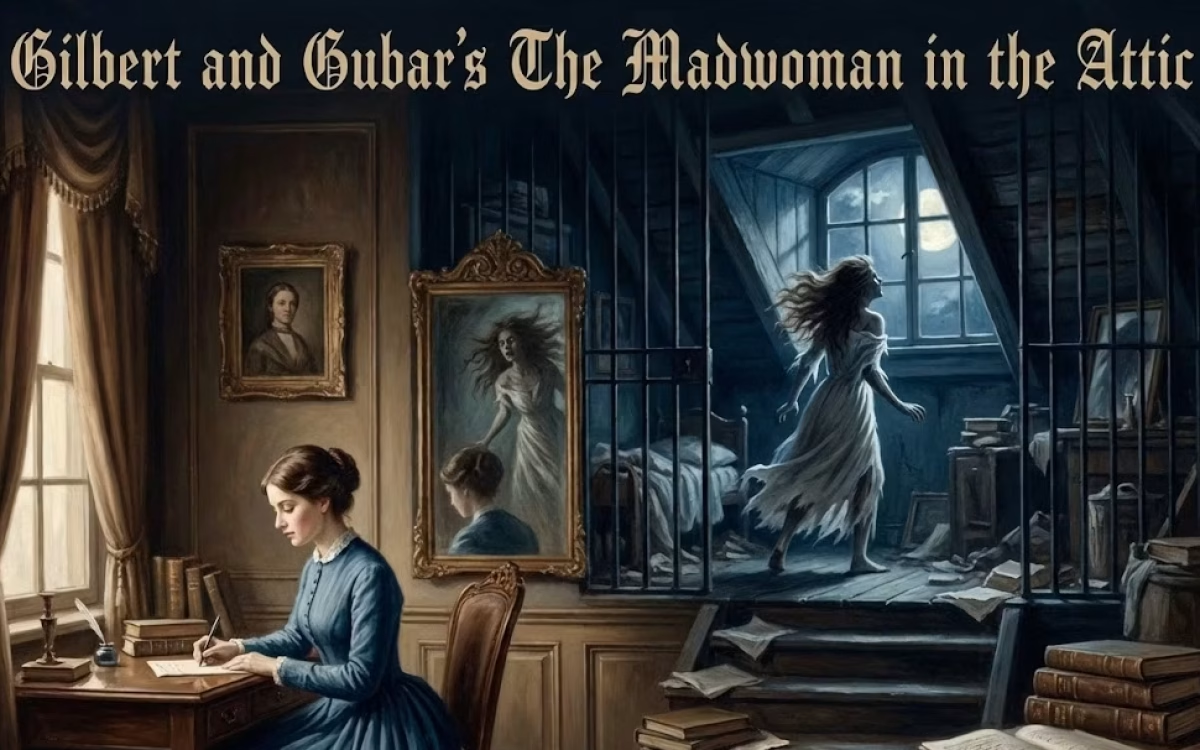
Introduction The Madwoman in the Attic: Why Society Labels Female Rage as Madness Think of the “crazy ex-girlfriend” trope in movies and memes. She’s furious, vengeful, unhinged—always the villain. Why do we slap the “crazy” label on angry women, from pop culture hysterics to literary outcasts? It reveals a deeper cultural reflex: silencing female fury by calling it insanity. Enter The Madwoman in the Attic, Sandra Gilbert and Susan Gubar’s groundbreaking 1979 feminist critique. This seminal text revolutionised literary...

Introduction Most readers know The Jungle Book from the famous Disney movie. However, Rudyard Kipling’s The Jungle Book is far darker, deeper, and more thought-provoking than its animated version. Kipling wrote it in the 1890s while living in Vermont, USA. Still, the stories draw heavily...

Introduction Ruskin Bond’s The Blue Umbrella captures the charm of the quiet Garhwal hills—where life moves slowly, and every sound echoes through the misty silence. Yet, this serene landscape is suddenly brightened by a flash of blue, a simple umbrella that transforms the...

Introduction Sigmund Freud’s Psychoanalytic Theory helps us understand why characters in literature often behave irrationally. Why does Hamlet hesitate endlessly while Macbeth rushes into murder? Freud’s answer lies in the unconscious mind—a hidden space where suppressed emotions, desires, and fears shape human actions....

Introduction A Catch-22 is a “no-win situation”—a paradox where escaping a problem is impossible because of conflicting rules or conditions. The term itself has become part of everyday language, symbolising life’s frustrating contradictions. Interestingly, it originated not from a dictionary but from...

Introduction When most readers finish Jane Eyre, they remember the terrifying “madwoman in the attic” who burns down Thornfield Hall. However, very few stop to ask for her side of the story. This is exactly what Jean Rhys explores in her...

Introduction August Wilson’s The Piano Lesson is part of his famous “Pittsburgh Cycle.” This ten-play series explores African American life in each decade of the twentieth century. In this play, Wilson focuses on the 1930s, showing how the legacy of slavery and Jim...