Introduction
Aldous Huxley’s Brave New World (1932) stands as a formidable beacon in dystopian literature. It vividly paints a future. Science and rationality have overrun human values. Society now prioritises collective stability and superficial happiness. This comes at a cost: freedom, individuality, and genuine emotion are lost. Set in a thoroughly engineered World State, Huxley exposes the perils of technological control intertwined with consumerism and psychological manipulation. The novel remains a powerful mirror reflecting modern societal anxieties and ethical dilemmas.
The Plot and Setting of Brave New World
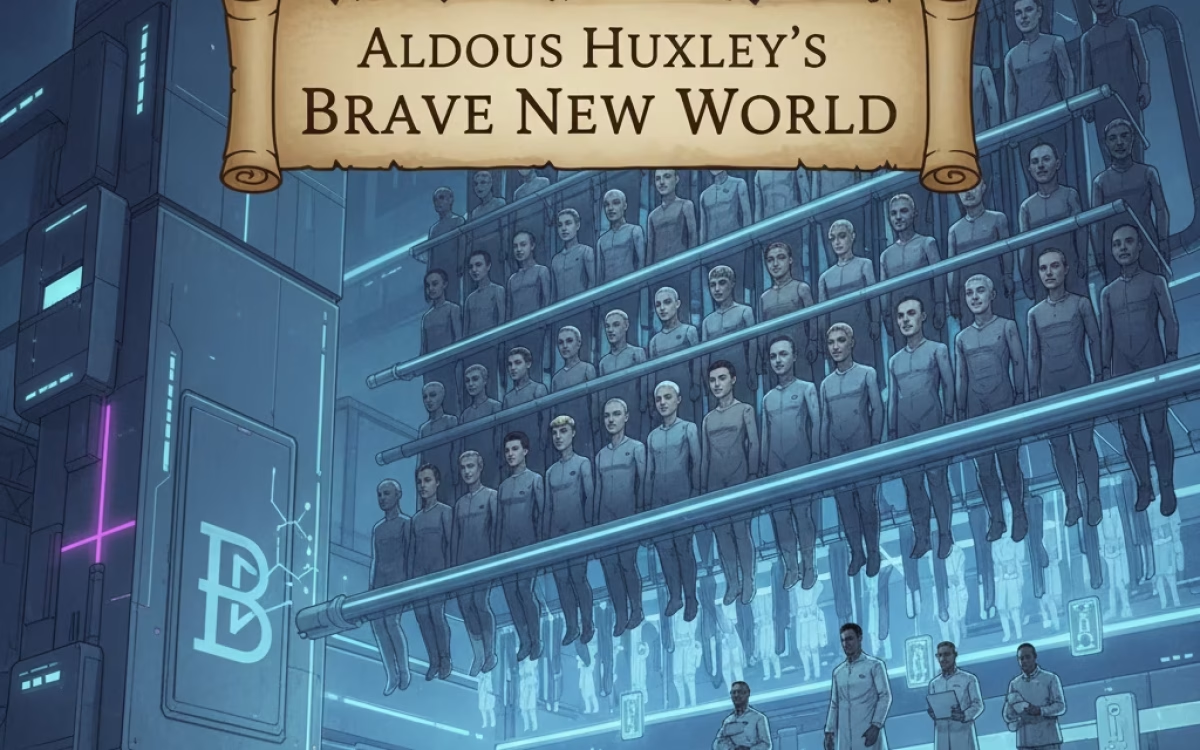
The novel is set in 2540 CE. In the story, this is AF 632 (“After Ford”). It marks Henry Ford’s rise as an iconic figure. The story begins at the Central London Hatchery and Conditioning Centre. Here, human reproduction is mechanised. People are genetically divided into castes. Alphas are the intellectual elite. Betas, Gammas, Deltas, and Epsilons follow. They descend in physical and mental ability. Each caste is tailored for specific roles.
Society conditions citizens from birth through hypnopaedia (sleep-teaching) and drug-induced conformity. Soma, a hallucinogenic drug, ensures emotional placidity and suppresses unrest or dissatisfaction. Family units and romantic love are obsolete concepts, replaced by promiscuity and social pleasure to maintain societal equilibrium.
The story revolves around two characters who contrast sharply with this engineered norm. Bernard Marx, an Alpha who senses his alienation and questions societal norms, and John the “Savage,” raised on a Savage Reservation outside the World State, steeped in literary works, especially Shakespeare. John’s entrance into the civilised world starkly exposes the artificiality and emptiness of the World State, leading to profound tragedy and reflection. FULL TEXT
Themes and Literary Significance
The Price of Stability: Control versus Freedom
Huxley’s narrative probes the tension between societal stability and personal freedom. The World State guarantees peace and order by eradicating conflict through relentless control—genetic, psychological, and social. However, this comes at the crushing cost of individuality and freedom of thought. Society conditions citizens to accept their status and find contentment through consumerism and pleasure, sacrificing their autonomy.
This theme resonates with contemporary concerns about surveillance states, mass media manipulation, and the erosion of privacy and dissenting voices. Huxley warns that a society that trades freedom for control and security risks suffocating its humanity.
Technology as a Double-Edged Sword
Huxley presents technology not as inherently beneficial but as a potential instrument of oppression. Science, devoid of ethical grounding, uses the Hatchery’s reproductive technologies, hypnopaedia, and widespread pharmaceutical methods to dominate.
In an era of rapid biotechnological advances and data surveillance, these anticipations spark critical ethical debates. Technology’s promise of progress becomes a paradoxical nightmare when it undercuts human dignity and diversity. TEXT REVISITED
The Role of Happiness and Suffering
A remarkable aspect of Aldous Huxley’s Brave New World is its exploration of happiness. The World State’s citizens live in artificial euphoria, maintained by soma and distractions. However, Huxley questions the value of such happiness, which entails the suppression of all pain, suffering, and genuine emotional depth.
By contrast, John the Savage, who experiences joy and sorrow authentically, symbolises the importance of suffering as a pathway to humanity and meaning. Happiness devoid of freedom and truth is exposed as hollow.
Literary Context and Influences
Huxley’s work responds to and complements other dystopian works like Orwell’s Nineteen Eighty-Four, but with a distinct emphasis on control through pleasure rather than repression through fear. The title itself is a satirical nod to Miranda’s awe in Shakespeare’s The Tempest, underscoring a gulf between idealised innocence and harsh realities.
The intellectual milieu of the early 20th century, shaped by industrial innovation, social upheaval, and scientific breakthroughs, deeply informs Huxley’s critique. His personal interactions with the scientific community and exposure to American materialism lend a rich complexity to his novel’s social commentary.
Characters: Complexities in a Controlled World
Bernard Marx: His alienation and insecurities reflect the psychological cost of conformity. Despite being an Alpha, he questions the system, highlighting tensions between individual desire and social expectations.
John the Savage: Raised outside the World State with exposure to Shakespearean ideals, John embodies the clash between natural humanity and artificial social engineering.
Lenina Crowne: A conforming citizen who embodies conditioned pleasure-seeking but experiences flashes of doubt, illustrating the novel’s tension between individual and society.
Mustapha Mond: The World Controller who justifies the society’s hypocrisies, articulating the philosophical rationale behind stability at the expense of freedom.
Relevance Today: Aldous Huxley’s Brave New World
Nearly a century after Aldous Huxley wrote it, Brave New World remains strikingly relevant. The novel’s critiques resonate with contemporary debates around genetic engineering, pharmaceutical overuse, mass consumerism, digital surveillance, and the commodification of pleasure.
In an age of increasing technological dependence and manipulated information, Huxley’s caution that unchecked scientific and social engineering can erode the essence of human dignity is even more urgent. OTHER AUTHORS
Conclusion
Brave New World is not just a dystopian tale but a profound philosophical inquiry into what it means to be human in a mechanised society. It implores readers to consider the cost of convenience and the price of peace when borne on the backs of freedom and individuality.
Huxley’s visionary novel remains a vital text for anyone wanting to navigate the complex interplay between technology, society, and the human spirit. Through its vivid narrative and rich themes, the novel urges vigilance and critical reflection on our world’s trajectory.
FAQs
What is the main theme of Brave New World?
The main theme revolves around the tension between societal stability and individual freedom, exploring how technology and conditioning can suppress humanity and autonomy.When was Brave New World published?
Aldous Huxley’s Brave New World was published in 1932.What is the setting of Brave New World?
In the year 2540 CE, also known as AF 632 (‘After Ford’), a dystopian World State governs society through technological control and engineered social order.Who are the key characters in Brave New World?
Important characters include Bernard Marx, John the Savage, Lenina Crowne, and Mustapha Mond, each representing different perspectives on the engineered society.