Introduction
Eliot’s The Waste Land, published in 1922, is a profound reflection of the disillusionment and fragmentation that followed World War I. It stands as a pillar of modernist literature. The poem challenges readers with its complexity but offers rich rewards. It grapples with themes of spiritual desolation, cultural decay, and the search for meaning in a broken world. In this analysis, we will explore the poem’s historical context, structure, themes, and literary artistry. The insights blend scholarly rigor with a human, reflective voice, designed to engage and inspire readers worldwide.
Eliot’s The Waste Land: Historical Context
The early 20th century was a period marked by trauma and transformation. The devastation of the First World War shattered traditional beliefs and imposed a new reality defined by uncertainty and loss. Eliot wrote The Waste Land during this turbulent time, capturing not only the physical aftermath but also the spiritual emptiness that society experienced.
Eliot’s personal struggles, including a nervous breakdown, permeate the poem’s mood. The broad cultural references incorporated from Western and Eastern traditions illustrate his attempt to understand a world where old certainties were crumbling. This was also a moment when literature itself was evolving—with modernist writers pushing boundaries in form and style to mirror the fractured post-war reality. FULL TEXT
Eliot’s The Waste Land: Structure and Form
Eliot’s poem is divided into five sections: “The Burial of the Dead”, “A Game of Chess”, “The Fire Sermon”, “Death by Water”, and “What the Thunder Said”. Each segment shifts tone and narrative style, reflecting the instability and chaos of the modern world. The poem’s fragmented form deliberately eschews conventional cohesion, drawing readers into a disorienting journey that echoes the fractured nature of the modern condition.
The Burial of the Dead presents a landscape of despair, introducing fractured voices and symbolic images like the “heap of broken images”, which suggest spiritual fragmentation.
A Game of Chess dramatises human alienation through contrasting portraits of a neurotic, wealthy woman and a London pub conversation, exposing the vacuity of modern relationships.
The Fire Sermon uses the Buddhist sermon on desire to critique the mechanical and uninspired sexual and social lives of urban dwellers.
Death by Water is a brief, elegiac reflection on mortality, illustrating the indiscriminate power of death.
What the Thunder Said culminates the poem with apocalyptic imagery, contemplating destruction and the hope of spiritual renewal signified by cryptic Eastern references.
This structure feels disjointed by design—shifting voices, abrupt changes in scene, and a wide array of literary allusions reflect the chaotic modern world and deepen the poem’s themes of dislocation.
Eliot’s The Waste Land: Major Themes
Fragmentation and Spiritual Desolation
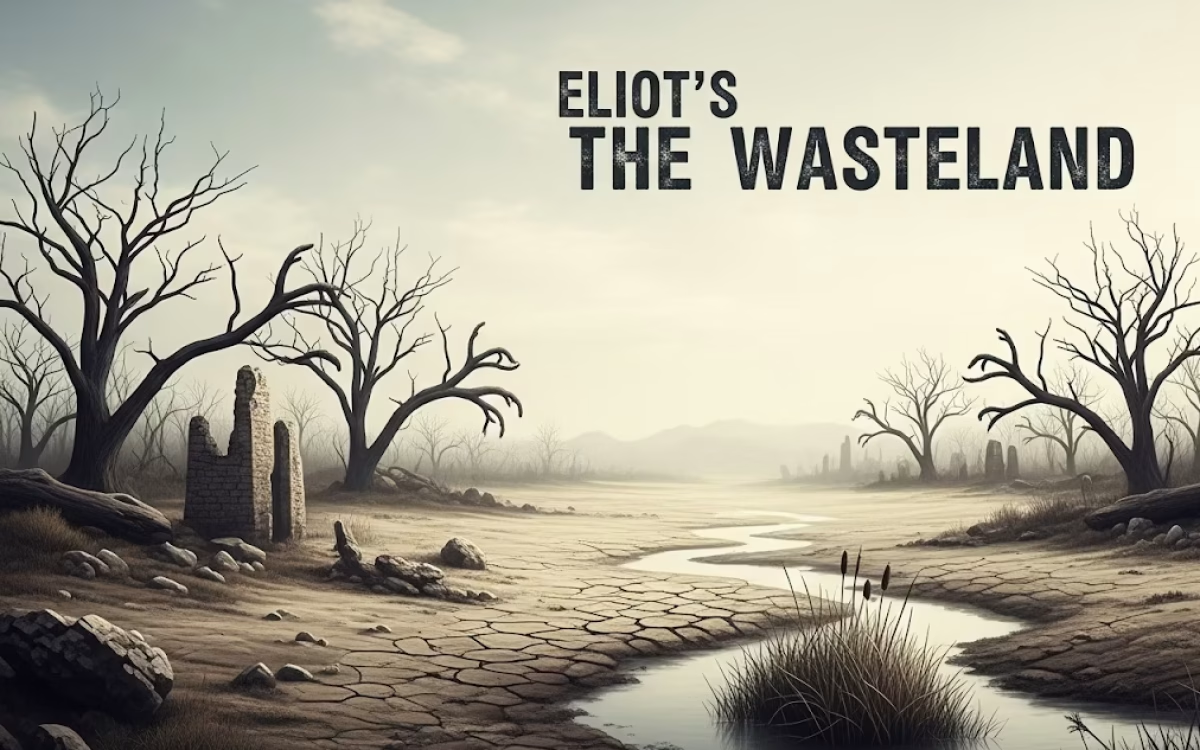
At its core, The Waste Land portrays a world broken physically, emotionally, and spiritually. The images of desert and wasteland represent barrenness not only in the land but also in human relationships and faith. The “heap of broken images” metaphor underlines a civilisation struggling to piece itself together from fractured histories and identities.
Death and the Possibility of Regeneration
Despite the prevailing despair, Eliot draws on myth and religion to express a deep yearning for regeneration. Central to this is the legend of the Fisher King, a wounded ruler whose injury causes his land to become infertile. This figure serves as an allegory for modern society’s wounded soul, marked by spiritual decay and impotence. Throughout the poem, Eliot gestures toward rites of rebirth and spiritual cleansing. He notably includes the three sacred Sanskrit words “Datta, Dayadhvam, Damyata”, meaning “Give, Sympathise, Control”, which offer symbolic pathways toward salvation and renewal.
Cultural Allusion and Intertextuality
Eliot’s erudition is on full display with references to a vast cultural and literary horizon: classical mythology, the Bible, Eastern religious texts, Shakespearean plays, contemporary popular culture like jazz, and more. These allusions form a rich tapestry that demands reader engagement and multiple readings to unpack the poem’s layered meanings.
Stylistic Innovation and Language
Eliot’s use of language is deliberately complex and varied. He shifts between high literary diction and everyday speech, using fragmentation as a poetic device to mirror the instability of modern life. The poem’s rhythm moves from free verse to structured quatrains, emphasising contrasts like sterility versus fertility and despair versus hope. Heavy symbolism, ironic juxtapositions, and mythic frameworks create a cyclonic intensity in the poem. Yet, this is balanced by moments of stark simplicity and emotional depth that resonate powerfully with readers.
Personal Reflection
Reading The Waste Land evokes a strange sense of familiarity despite its historical roots in post-war Europe. Its exploration of alienation, disillusionment, and longing for meaning transcends its era. Today’s world—fraught with its own crises—finds a mirror in Eliot’s fractured verses.
The poem’s open-ended conclusion, repeating the Sanskrit word “Shantih”, offers a contemplative echo of peace, elusive yet forever sought after. This mixture of despair and tentative hope adds to the poem’s enduring power to move readers across generations and geographies.
Although rooted in the cultural context of early 20th-century Western modernism, the themes of The Waste Land resonate globally. Its incorporation of Eastern spirituality alongside Western literary tradition mirrors today’s interconnected world, where cultural boundaries are increasingly fluid.
Readers from diverse countries dealing with their own social and spiritual upheavals can find a shared sense of human struggle in Eliot’s poem. It stands as a universal chronicle of loss and the effort to rebuild meaning in fractured times. EXPLORE MORE WORKS
Conclusion
Eliot’s The Waste Land remains a towering achievement in English literature. It stands as a landmark of modernist poetry. The poem’s radical form, thematic depth, and cultural richness challenge readers to confront the complexities of the human condition in an era defined by fragmentation. By engaging deeply with its rich imagery, intricate allusions, and intense emotions, readers embark on a profound journey. This journey reflects both the chaos and resilience of the modern world. The poem’s legacy endures not just as a historical artifact but also as a living conversation. It continues to explore the nature of despair, hope, and artistic expression across generations.
Frequently Asked Questions
Q1: What is the overall meaning of T.S. Eliot’s The Waste Land?
The Waste Land captures the despair and fragmentation of the post-World War I era, portraying a spiritual wasteland marked by cultural decay, broken relationships, and a search for meaning amid chaos. It balances themes of death and the hope for regeneration through mythic and religious symbolism.
Q2: Why is The Waste Land considered a modernist poem?
Eliot’s poem is modernist because it breaks away from traditional poetic forms, using fragmented structure, multiple voices, and dense allusions to reflect the fractured reality of the early 20th century. Its innovative style embodies modernism’s emphasis on complexity, ambiguity, and experimental narrative.
Q3: What are the main sections of The Waste Land and their significance?
The poem is divided into five parts:
The Burial of the Dead (disillusionment and desolation)
A Game of Chess (emotional sterility and alienation)
The Fire Sermon (moral and sexual decay)
Death by Water (mortality’s inevitability)
What the Thunder Said (apocalyptic vision and hope for renewal)
Each section explores different facets of the modern spiritual and cultural crisis.
Q4: How does Eliot use cultural and literary allusions in the poem?
Eliot weaves references from classical mythology, the Bible, Eastern religions, Shakespeare, and contemporary culture to create a multi-layered text. These allusions deepen the poem’s meaning and invite readers to consider the fragmented nature of history and culture.
Q5: Who is the speaker in The Waste Land?
The poem presents multiple speakers and shifting perspectives, reflecting the fragmented modern voice. One central figure is Tiresias, a mythic seer who unites various experiences and genders within the poem’s narrative.