Introduction
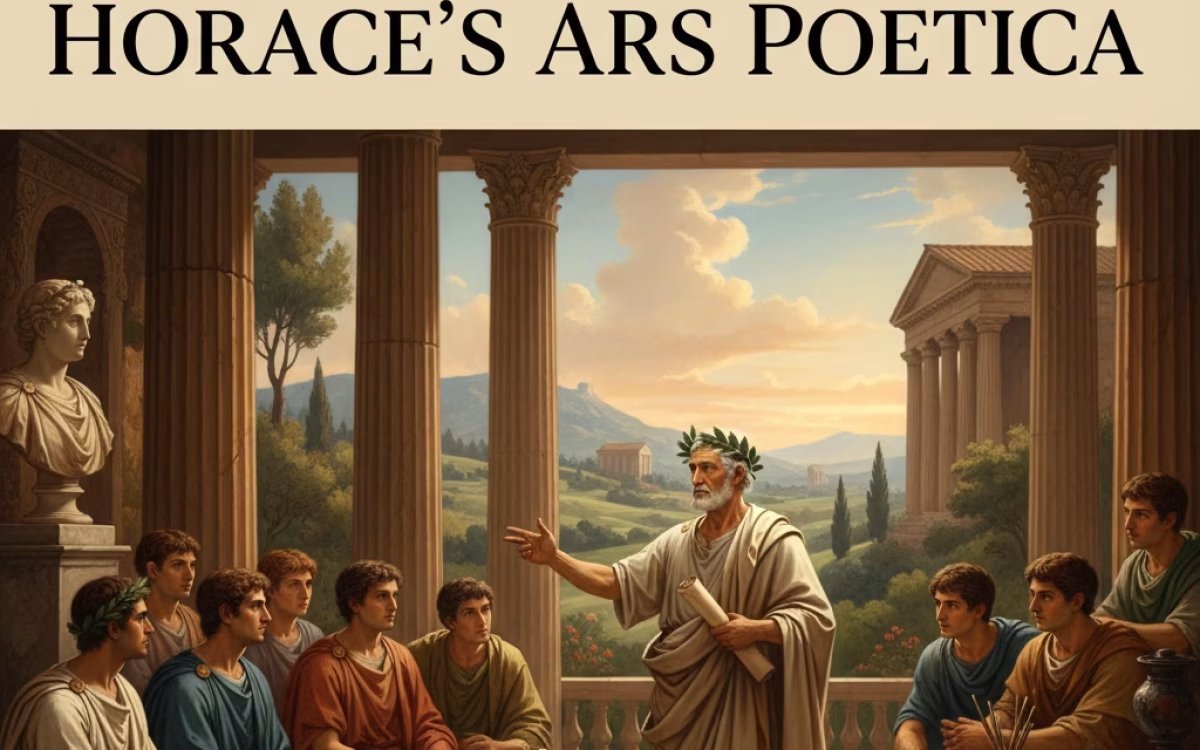
Horace’s Ars Poetica stands as a towering achievement in literary criticism, famous for its blend of practical advice and poetic reflection. Written as an epistolary poem, its influence has rippled through centuries, shaping how scholars, poets, and dramatists approach the craft of writing. When considering “Horace Ars Poetica”, the world is invited to a dialogue with the wisdom of ancient Rome—one that thrives in the modern age, especially for writers seeking both instruction and inspiration.
The Legacy of Ars Poetica
Horace’s poem is unique—not just for being one of the earliest literary criticism texts, but also for the engaging conversational tone that marks its advice. Addressed to the Piso family, the work bridges the gap between formal critique and friendly mentorship. Ars Poetica revolutionised the standards of poetic creation, embracing not only meter and diction but also the purpose of literature itself. FULL TEXT
The poem sets out nearly thirty maxims for poetic practice.
Influenced French drama and Renaissance criticism.
English, European, and global literary circles continue to resonate with this poem.
Horace’s Approach: Beyond Theory
Horace wasn’t interested solely in abstract principles. His Ars Poetica pulses with practical advice, advocating for organic unity, harmony, and the power of personal observation. The poet, Horace, contends that it stands at the intersection of tradition and innovation.
Poetic unity is likened to the structure of a good painting: every part connected, nothing monstrous or forced.
Horace encourages poets not only to thoughtfully coin new words but also to revive forgotten gems from the past.
Each genre demands its appropriate metre, echoing the classical Greeks.
As someone who has struggled with balancing originality and convention in academic writing, Horace’s counsel feels reassuring: transformation is permitted, even celebrated, yet it must be grounded in a deep understanding.
Why Ars Poetica Matters
The “Horace Ars Poetica” phrase encapsulates a philosophy as much as a methodological guide. The poem presses poets to keep their audience in mind, a reminder that vibrant communication always outweighs empty novelty.
The principle of decorum governs everything from vocabulary to dramatic construction.
Horace’s warning against “purple prose” signals a commitment to clarity and coherence.
Occasionally, when crafting a new blog post, there’s a temptation to show off with elaborate language. Ars Poetica wisely urges restraint—a lesson learned the hard way after receiving mixed feedback on overly ornate analysis pieces.
The “Instruct and Delight” Maxim
Among Horace’s most quoted insights is his belief that poetry should “instruct and delight”. It’s a dual-purpose philosophy—literature should inform, advise, and entertain, a blend that modern educators endorse.
Horace’s dictum appears across various translations and adaptations: “miscuit utile dulci” (“a mix of useful and sweet”).
The ideal poem is pleasurable yet offers tangible lessons or warnings.
A dry academic treatise rarely engages students, but a well-told story—one that’s insightful and enjoyable—can spark curiosity and retention. Horace was a pioneer in his field.
Poetic Unity and Structure
Among Horace’s main tenets is organic unity: every part of a poem must serve the whole. This echoes the artistry found in painting, where a disjointed composition is visually jarring, much like incoherent verse.
Argues against mismatched imagery—“no horse’s neck on a human head”.
Careful organisation and consistency elevate poetry beyond mere words.
Classic genres should use the meter they historically demand, emphasising tradition’s value.
Reflecting on personal blogging experience, disjointed paragraphs can leave readers confused. Applying Horace’s advice, restructuring for flow and consistency led to measurable improvements in engagement.
The Responsibility of the Poet
For Horace, a poet is more than a craftsman—a responsible cultural figure who must observe, reflect, and embody artistic standards. Through “Horace Ars Poetica,” poets are urged to:
Observe humanity keenly, capturing manners, motivations, and moods with honesty and depth.
Select themes that suit both personal capacity and audience expectations.
Cultivate virtue through artistic endeavours, contributing to the larger project of civilisation.
There’s a subtle, almost philosophical undercurrent here: writing poetry isn’t just self-expression. It’s an act of service, drawing on personal insight to communicate universal truths.
Ars Poetica in Modern Criticism
The phrase “Horace Ars Poetica” continues to anchor scholarship in literary studies and criticism worldwide. Its appeal crosses boundaries, reflected in high search volumes in academic databases and student forums.
English literature curricula and competitive exam syllabi frequently cite it.
Modern critics reference it as a foundational text, ensuring its relevance in contemporary literary debates.
It continues to hold a central position in discussions about authorial intent, poetic craft, and the evolution of literary genres. READ OTHER AUTHORS
Conclusion: Horace’s Ars Poetica—A Universal Guide for Writers Across Cultures
Horace’s Ars Poetica continues to shine as a universal guide, not just for classical scholars in Italy and Europe, but also for literary communities in India, North America, the UK, and beyond. Its lasting lessons on poetic unity, clarity, and understanding the audience are part of many university courses from Delhi to Oxford and are useful for important exams like UGC NET and A-level Literature.
For bloggers in Mumbai seeking to engage local readers, for academic writers in New York aiming for international reach, or for students in Sydney preparing for their finals, Horace’s core message remains the same: blend creativity with disciplined craft, respect tradition while embracing innovation, and—no matter your location—write poetry and criticism that connect deeply with your audience.
Ars Poetica isn’t just a set of ancient guidelines—it’s an ever-relevant companion for anyone, anywhere, striving to write with purpose and resonance in today’s interconnected world.
FAQs
Q1: What is Horace’s Ars Poetica about?
Ars Poetica is Horace’s well-known poem outlining principles for poetic composition, focusing on unity, decorum, audience engagement, and poetic truth.
Q2: Why is Ars Poetica important in literary criticism?
It provides foundational advice, influencing Western criticism for over 2,000 years and shaping literary standards in drama, poetry, and prose.
Q3: How does Ars Poetica compare to Aristotle’s Poetics?
While Aristotle’s Poetics offers systematic theory, Horace favours practical guidance—a sensitive blend of tradition and innovation.
Q4: What is ‘decorum’ in Ars Poetica?
Decorum refers to appropriateness in style and subject, ensuring coherence and clarity in literary works.