INTRODUCTION
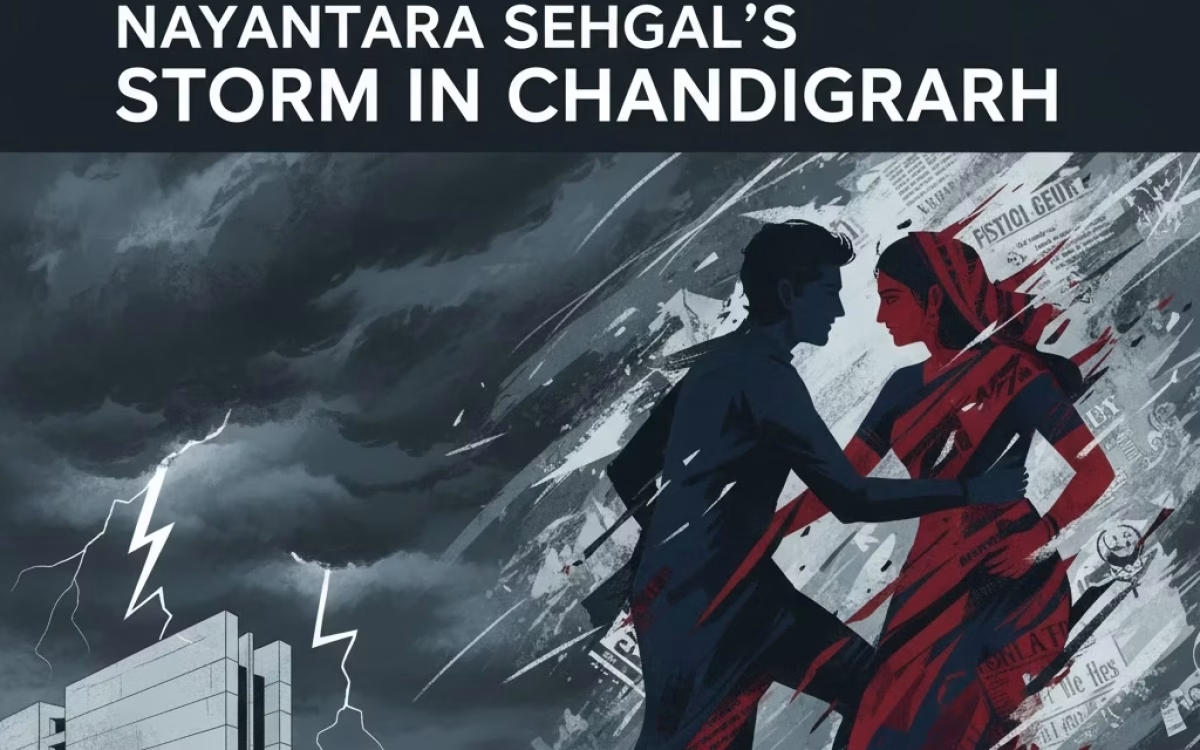
Nayantara Sehgal’s Storm in Chandigarh is a powerful literary work. It brilliantly captures the complex political and social upheavals in post-independence India. The novel is set in Chandigarh, a modern city that serves as the capital for both Punjab and Haryana. Importantly, the story unfolds during a time marked by political rivalry, linguistic tensions, and regional discord.
Sehgal’s narrative delves deep into these conflicts. She shows how they disrupt not only territorial boundaries but also the very fabric of human relationships and individual identities. At the heart of this gripping novel is the intersection of political storm and personal strife.
Through the experiences of key characters like Vishal Dubey, an ICS officer tasked with brokering peace, and Saroj, a woman grappling with societal expectations, Sehgal explores themes of power, freedom, and the quest for selfhood. Moreover, the novel reflects the charged atmosphere of Punjab in the late 1960s. This period saw the creation of Haryana, which led to political friction and administrative challenges.
What makes Storm in Chandigarh uniquely compelling is its feminist sensibility woven through the political narrative. Sehgal presents women protagonists who confront patriarchy and gender discrimination, asserting their autonomy even amid chaos. Saroj’s personal journey symbolises the broader struggle of women seeking identity beyond their traditional roles in a rapidly changing society.
The regional backdrop of Chandigarh and the adjoining states adds a geo-contextual richness to the novel, making it a vivid exploration of cultural and linguistic divides alongside the political quarrels. Through eloquent prose and insightful character studies, Nayantara Sehgal invites readers to reflect on the multiple storms—political, societal, and psychological—that shape human experience.
Nayantara Sehgal’s Storm in Chandigarh: The Political Backdrop
At its heart, Storm in Chandigarh focuses on the bitter dispute between Punjab and Haryana after India’s partition. The novel highlights key issues like boundary waters, electric power, and administrative control. Nayantara Sehgal depicts this regional conflict with great sensitivity. She reveals not only struggles over territory and resources but also deep political mistrust and identity crises.
Vishal Dubey, a central bureaucratic figure, symbolises fragile efforts for governance and peace amid rising tensions. His personal dilemmas mirror the complex challenges of managing a divided polity. What makes this conflict so striking is how deeply it affects individuals. Whether through strikes, political maneuvering, or communal violence, lives are upended.
Sehgal’s portrayal goes beyond political facts. It captures the emotions and fears felt by ordinary citizens, especially women, during such storms. This backdrop creates a historically and geographically grounded setting. Readers get a vivid sense of Chandigarh, a city known for its unique architectural modernity, contrasting starkly with the surrounding turmoil. FULL TEXT
Nayantara Sehgal’s Storm in Chandigarh: Feminist Perspectives
While the political storyline is robust, Storm in Chandigarh excels equally in feminist literary exploration. Sehgal’s female characters, foremost among them Saroj, channel the novel’s feminist energies. Saroj is portrayed not just as a bystander but as an active agent of change, wrestling with societal constraints in a patriarchal world that seeks to define and limit her role. Through Saroj and other women, Sehgal critiques gender discrimination and raises questions about women’s autonomy and identity during politically charged times.
The feminist subtext enriches this narrative, placing Storm in Chandigarh squarely within the tradition of Indian English literature that foregrounds women’s liberation struggles amid socio-political change. The novel reflects not just on public conflicts but on the intimate battles for personal freedom, making it both timely and timeless. Saroj’s journey encourages readers to ponder how political unrest can intersect with, and sometimes exacerbate, gender inequalities.
Nayantara Sehgal’s Storm in Chandigarh: Cultural and Linguistic Conflicts
Deeper than the political and feminist themes are the cultural and linguistic tensions that thunder through the novel. Southeast Punjab, encompassing Chandigarh, is a crossroads of language, culture, and identity—Punjabi and Hindi speakers, Sikhs, and Hindus negotiate their coexistence against the backdrop of partition legacies and administrative rearrangements.
Sehgal captures these linguistic bifurcations and cultural clashes with finesse, illustrating how language politics can escalate into broader social discord. The feud over governance between the two states is as much about cultural hegemony as it is about administrative control. This layered narrative complexity enriches the reading experience, especially for those familiar with the local geopolitical landscape. The story situates Chandigarh not only as a political battleground but also as a cultural microcosm of India’s layered identity.
Nayantara Sehgal’s Storm in Chandigarh: Psychological Storms
The title Storm in Chandigarh aptly signifies not just the external political upheaval but also the internal emotional turmoils within the characters. Sehgal’s writing shines in its psychological insight, portraying how political chaos reverberates in personal domains. Family tensions, friendships, and romantic relationships are all beset by the same storms shaping the public sphere.
This duality—the political and the personal—creates a tightly woven narrative fabric. Interpersonal conflicts and transformations mirror societal upheavals, underscoring Sehgal’s belief that history and politics profoundly shape individual destinies. The nuanced emotions that flow through her characters give the novel a humanistic depth often missing in strictly political narratives.
Nayantara Sehgal’s Storm in Chandigarh: Narrative Technique
Sehgal’s prose in Storm in Chandigarh balances the elegance of literary fiction with the immediacy of political storytelling. Her narrative is structured episodically, reflecting the fragmented, sometimes chaotic experience of political unrest. The dialogues are sharp and loaded with local idioms and inflections, which lend authenticity and regional colour to the text.
Her style varies sentence length to maintain reader engagement—short, punchy sentences punctuating longer, reflective passages. This dynamic rhythm mimics the novel’s thematic tensions between calm and storm, order and chaos. Readers benefit from Sehgal’s ability to engage both the intellect and the emotions, making the novel both a cerebral and emotive journey. EXPLORE OTHER WRITERS
CONCLUSION
Nayantara Sehgal’s Storm in Chandigarh remains a timeless exploration of individual and political struggles during a fraught historical moment. Indeed, the novel masterfully intertwines political turmoil between Punjab and Haryana with deeply personal stories. As a result, it reveals how large-scale conflicts penetrate everyday lives. Through her vivid portrayal of bureaucrats like Vishal Dubey and resilient characters such as Saroj, Sehgal exposes the delicate balance among power, governance, and personal freedom.
Moreover, the novel’s feminist undertones highlight women’s persistent fight against patriarchal constraints. Therefore, Storm in Chandigarh is not just a political narrative but also a powerful social commentary. Sehgal reminds readers that the quest for identity—whether regional, political, or gendered—is full of contradictions and hardships.
Set against the uniquely modern yet troubled cityscape of Chandigarh, this literary work captures emotional, cultural, and psychological storms that continue to resonate in India’s evolving society. Consequently, for readers, students, and lovers of Indian English literature, Sehgal’s novel offers profound insights into the intersections of politics, culture, and personal lives.
Ultimately, Storm in Chandigarh challenges us to reflect on the cost of division and the resilience required to seek unity and freedom. Hence, it is a must-read for anyone wanting to understand India’s complex history through empathetic and incisive storytelling.
Frequently Asked Questions
Q1: What is the central theme of Nayantara Sehgal’s Storm in Chandigarh?
A1: The novel primarily explores political tensions between Punjab and Haryana, intertwined with feminist themes, identity struggles, and the impact of regional conflict on personal lives.
Q2: How does Storm in Chandigarh reflect the political situation of post-independence India?
A2: The story portrays the administrative challenges and political rivalry after Haryana’s creation in the 1960s, highlighting boundary disputes, water issues, and power struggles that disrupt social harmony.
Q3: Who are the main characters in Storm in Chandigarh?
A3: Key characters include Vishal Dubey, an Indian Civil Service officer trying to mediate peace, and Saroj, a strong-willed woman challenging patriarchal norms amidst political chaos.
Q4: Why is Storm in Chandigarh considered an important feminist novel?
A4: The novel foregrounds women’s fight for autonomy and freedom in a patriarchal society, making its feminist undertones an essential part of its political and social commentary.
Q5: What role does Chandigarh’s setting play in the novel?
A5: Chandigarh’s unique status as a shared capital city embodies the cultural, linguistic, and political tensions between Punjab and Haryana, enriching the novel’s geographical and historical authenticity.