Introduction
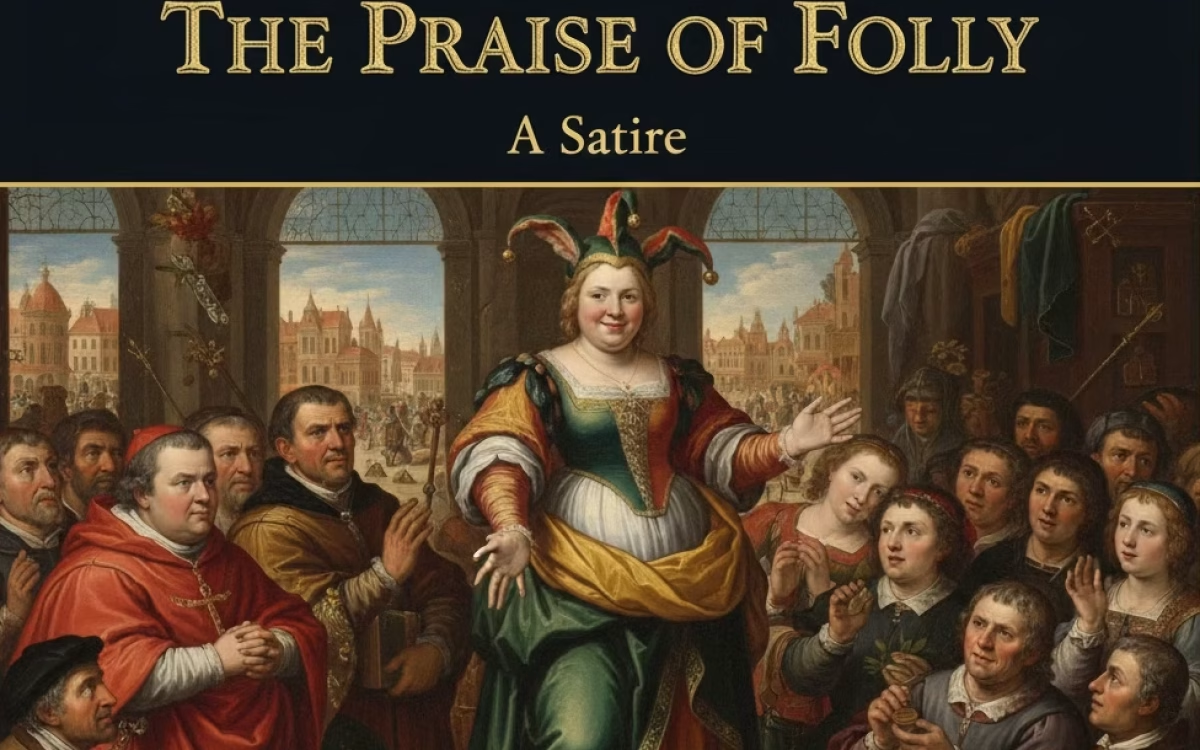
In the bustling intellectual circles of early 16th-century Europe, Desiderius Erasmus penned a work that would forever tickle the funny bone of philosophy: The Praise of Folly. Imagine someone named Folly strutting onto the stage, microphone in hand, delivering a hilarious TED Talk on why stupidity might just be the secret sauce of human happiness. That’s the charm of this Renaissance masterpiece, where Erasmus, through Folly’s voice, skewers the pretensions of scholars, clergy, and kings alike. But beneath the laughs lies a profound nudge: in a world obsessed with wisdom, perhaps a dash of folly keeps us sane. This blog dives deep into The Praise of Folly analysis, unpacking its satire and relevance today, especially for those pondering life’s absurdities from an academic lens.
Written in 1509 during a feverish week in Thomas More’s home, Erasmus’ The Praise of Folly emerged as a playful yet pointed critique of Renaissance humanism’s excesses. Erasmus, the Dutch scholar famed for his biblical editions and calls for church reform, didn’t just write a book; he crafted a mirror for society’s vanities. Folly, personified as a bold orator, praises her own virtues while exposing how “wise” folks chase shadows. It’s no wonder this slim volume sparked debates that echoed through the Reformation. For modern readers, especially in India where postcolonial literature often grapples with hybrid wisdoms, Praise of Folly resonates—like a satirical bridge between classical folly and Dalit narratives of subverted intelligence.
Erasmus’ The Praise of Folly: Historical Context
Picture Europe in 1511, when In The Praise of Folly first hit the presses: the Renaissance is blooming, Gutenberg’s ink is barely dry, and the Catholic Church’s grip feels both ironclad and comically corrupt. Erasmus, born in Rotterdam around 1466, was no stranger to this turmoil. A monk turned humanist, he championed education in Greek and Latin classics, urging a “philosophy of Christ” over dogmatic rituals. Yet, his friendship with More inspired this mock eulogy—Folly’s speech at a fictional festival, blending classical rhetoric with Christian irony. I often think how Erasmus, dodging papal politics, used humour as his shield; it’s a tactic echoing in today’s satirical podcasts or LinkedIn rants against corporate folly.
The era’s intellectual ferment, from Plato’s caves to emerging Protestant stirrings, fuelled Praise of Folly‘s bite. Erasmus targeted the Scholastics—those hair-splitting theologians whose debates rivalled modern Twitter wars. In India, this mirrors our own blend of ancient Vedantic wisdom and colonial critiques, where folly isn’t just error but a lens on power. Historically, the book’s woodcut illustrations by Hans Holbein added visual punch, making it a multimedia hit before the term existed. No wonder it sold out editions swiftly, influencing thinkers from Montaigne to Gandhi’s ironic takes on empire. This context isn’t just backdrop; it’s the soil from which Folly’s wildflowers sprout.
Erasmus’ The Praise of Folly: Plot Overview
The Praise of Folly is structured as a satirical monologue delivered by Folly herself, personified as a lively and witty goddess. She begins her speech by praising her own virtues, claiming that she is the source of human happiness, love, and even knowledge. Throughout her speech, Folly mocks various societal institutions, including the church, academia, politics, and the legal system, exposing their hypocrisies and absurdities.
Erasmus uses Folly’s voice to critique the pretensions of scholars who overanalyse, clergy who indulge in greed and corruption, and rulers who are driven by vanity and self-interest. She advocates for a simple, joyful life centred around faith and humour, criticising the foolishness of overreliance on human wisdom and rigid dogmas. Folly’s speech also lampoons the monks, priests, and religious figures who exploit religion for personal gain, parodying the corruption within the church.
The climax underscores how folly is woven into the fabric of human existence—affecting even the most revered institutions—yet it also offers a sense of humility and laughter amid life’s chaos. Erasmus concludes with Folly humorously acknowledging her influence on all aspects of life, urging the audience to embrace a little folly to achieve true happiness and authenticity.
Overall, the work is a clever critique wrapped in humorous rhetoric, blending classical satire with Christian moral reflections. It invites readers to laugh at their follies, recognise societal hypocrisies, and perhaps, find joy in imperfection. FULL TEXT
Erasmus’ The Praise of Folly: Major Themes
Folly vs. Wisdom
Folly argues that true happiness comes not from wisdom, but from embracing folly. She claims that wise people are often miserable, while fools enjoy life, love, and simple pleasures. Erasmus uses this to critique the Renaissance obsession with intellectualism and rationality, suggesting that a balance between wisdom and folly leads to a more fulfilling life.
Satire of Social Institutions
Folly mocks the church, academia, politics, and the legal system, exposing their corruption, hypocrisy, and pretensions. She ridicules scholars for their pedantry, clergy for their greed, and rulers for their vanity, highlighting how these institutions often serve self-interest rather than public good.
Hypocrisy and Vanity
The work repeatedly points out the gap between appearance and reality, especially in religious and scholarly circles. Folly exposes how people, particularly those in power, often pretend to be virtuous while acting selfishly, revealing the folly of human vanity.
The Role of Faith
Folly suggests that true faith is a kind of folly, as it involves believing in things that cannot be proven by reason. Erasmus draws on Christian teachings, particularly Paul’s idea of “foolishness for Christ’s sake,” to argue that humility and simplicity are virtues that often appear foolish to the world.
Human Nature and Imperfection
The satire highlights the imperfections and contradictions of human nature. Folly shows that everyone, from kings to beggars, is prone to folly, and that recognising this shared imperfection can lead to greater empathy and self-awareness.
Joy and Humour in Life
Folly celebrates laughter, humour, and the ability to find joy in simple things. She argues that these qualities are essential for a happy life, and that too much seriousness and intellectualism can lead to misery.
Critique of Excessive Reason
Erasmus warns against overreliance on reason and logic, suggesting that they can lead to arrogance and unhappiness. He advocates for a more balanced approach that values both reason and emotion, intellect and intuition.
Erasmus’ The Praise of Folly: Character Analysis
Folly (Moria)
Folly is the central character and narrator of the work, personified as a lively, witty goddess. She presents herself as the source of human happiness, love, and even knowledge, arguing that her influence is essential for a joyful life. Folly’s speech is filled with irony and humour, as she mocks the pretensions of scholars, clergy, and rulers. Her character embodies the idea that embracing folly can lead to greater authenticity and happiness, challenging the Renaissance ideal of wisdom. Through her, Erasmus critiques the hypocrisy and corruption in various institutions, using her voice to expose the absurdities of human behaviour.
Erasmus (as the implied author)
While not a character in the narrative, Erasmus’ presence is felt throughout the work. He uses Folly’s speech to express his own views on society, religion, and human nature. Erasmus’ character is that of a humanist reformer, advocating for a return to simplicity and authenticity in both religious and secular life. His use of satire and irony reflects his desire to critique the excesses of the church and academia without resorting to harsh condemnation. Erasmus’ character is also marked by his wit and intellectual curiosity, as he engages with classical and Christian traditions to create a work that is both entertaining and thought-provoking.
The Audience (Implied Listeners)
The audience in The Praise of Folly is a diverse group of listeners, including scholars, clergy, and laypeople. Folly addresses them directly, using her speech to challenge their assumptions and provoke reflection. The audience’s reactions are not explicitly described, but their presence is implied through Folly’s rhetorical questions and appeals. This creates a sense of engagement and interaction, as if the readers are part of the audience being addressed by Folly. The audience’s role is to reflect on their own follies and consider the possibility that embracing a little folly might lead to greater happiness and authenticity.
Other Characters (Scholars, Clergy, Rulers)
These characters are not fully developed individuals but rather archetypes representing various social institutions. Scholars are portrayed as pedantic and overly intellectual, clergy as corrupt and greedy, and rulers as vain and self-serving. Folly uses these archetypes to expose the hypocrisies and absurdities of these institutions, highlighting the gap between appearance and reality. Through her satire, Erasmus critiques the pretensions and corruption of these groups, using humor and irony to make his points.
Each character in The Praise of Folly serves a specific purpose in Erasmus’ satire, contributing to the work’s exploration of folly, wisdom, and human nature. Folly’s lively personality and ironic speech make her the most memorable character, while the implied presence of Erasmus and the audience adds depth and engagement to the narrative.
Erasmus’ The Praise of Folly: Narrative Technique
Personification and First-Person Narration
The most striking narrative technique in The Praise of Folly is the personification of Folly as the narrator. Erasmus gives Folly a distinct voice, allowing her to deliver a witty, ironic, and often humorous monologue. This first-person perspective creates an intimate and engaging experience for the reader, as Folly directly addresses the audience and draws them into her world. The use of personification also enables Erasmus to explore complex ideas through the lens of folly, making his satire more accessible and entertaining.
Satirical Monologue
The work is structured as a single, continuous monologue delivered by Folly. This technique allows Erasmus to maintain a consistent tone and voice throughout the text, while also providing opportunities for digressions and asides. The monologue format gives Folly the freedom to range widely over different topics, from love and marriage to religion and politics, creating a sense of spontaneity and unpredictability. This technique also enables Erasmus to critique various social institutions and human behaviours in a playful and engaging manner.
Irony and Humour
Irony and humour are central to the narrative technique of The Praise of Folly. Folly’s speech is filled with ironic statements and humorous anecdotes, which serve to highlight the absurdities and contradictions of human behaviour. Erasmus uses irony to challenge the reader’s assumptions and provoke reflection, while humour makes the satire more palatable and enjoyable. The combination of irony and humour creates a tone that is both critical and lighthearted, inviting the reader to laugh at their own follies while also considering the deeper implications of the text.
Allusions and Classical References
Erasmus incorporates numerous allusions to classical literature, philosophy, and Christian teachings. These references enrich the narrative, providing a sense of depth and intellectual sophistication. By drawing on a wide range of sources, Erasmus demonstrates his erudition and creates a dialogue between different traditions. The allusions also serve to reinforce the satirical effect, as Folly uses them to mock the pretensions of scholars and clergy.
Rhetorical Devices
Erasmus employs a variety of rhetorical devices, such as hyperbole, parody, and exaggeration, to enhance the satirical effect of the narrative. These devices allow Folly to amplify the absurdities of human behaviour and create a sense of comic exaggeration. The use of rhetorical devices also contributes to the playful and engaging tone of the work, making it more memorable and impactful.
Erasmus’ The Praise of Folly: Symbolism
Folly as a Symbol of Human Nature
Folly is the central symbol in the work, representing the universal human tendency towards irrationality, humour, and imperfection. By personifying Folly as a goddess, Erasmus elevates folly from a mere flaw to a fundamental aspect of human nature. Folly’s presence reminds readers that everyone, regardless of status or intellect, is prone to folly. This symbolism challenges the Renaissance ideal of wisdom and rationality, suggesting that embracing folly can lead to greater authenticity and happiness.
The Mask of Folly
Folly’s mask symbolises the duality of human nature—the contrast between appearance and reality. The mask represents the ways in which people hide their true selves behind pretensions of wisdom and virtue. By wearing the mask of folly, individuals can reveal their authentic selves and find joy in imperfection. This symbolism is particularly relevant in the context of social institutions, where appearances often mask corruption and hypocrisy.
The Fool’s Cap
The fool’s cap is a traditional symbol of folly, often associated with jesters and court fools. In The Praise of Folly, the fool’s cap represents the role of the fool as a truth-teller who exposes the absurdities and contradictions of society. The cap also symbolises the freedom and creativity that come from embracing folly, as fools are often the most honest and insightful members of society.
The Carnival
The carnival is a recurring symbol in the work, representing the temporary suspension of social norms and the celebration of folly. Carnivals are times when people can let go of their pretensions and embrace their true selves, revelling in the joy and chaos of folly. This symbolism highlights the importance of laughter and humour in human life, suggesting that a little folly can bring balance and happiness.
The Mirror
The mirror is a symbol of self-reflection and self-awareness. In The Praise of Folly, the mirror represents the need for individuals to recognise their own follies and imperfections. By looking into the mirror, people can confront their flaws and find the courage to embrace their true selves. This symbolism is particularly relevant in the context of personal growth and self-improvement.
The Lamp
The lamp is a symbol of enlightenment and wisdom, but in The Praise of Folly, it is also a symbol of the limitations of human reason. Folly argues that the light of reason can sometimes blind people to the joys and pleasures of life, suggesting that a balance between reason and folly is necessary for true happiness. The lamp symbolises the need for humility and the recognition that wisdom is not always the answer. EXPLORE MORE WRITINGS
Conclusion
Erasmus’ The Praise of Folly stands as a landmark in Renaissance literature, not only for its biting satire but also for its enduring message about the human condition. At its heart, the work is a playful yet profound meditation on the paradoxes of wisdom and folly. Folly’s monologue, filled with irony and wit, reminds us that life’s greatest joys often come not from rigid rationality but from embracing our imperfections and the absurdities that make us human.
The satire’s lasting significance lies in its ability to challenge social, religious, and intellectual conventions with humour rather than dogma. By personifying Folly, Erasmus invites readers to laugh at their own pretensions while reflecting on the follies that shape society. The work’s critique of the church, academia, and politics remains strikingly relevant, encouraging a spirit of humility and self-awareness that transcends time and culture.
Ultimately, The Praise of Folly is not just a historical curiosity but a living testament to the power of laughter and self-reflection. Erasmus’ blend of classical allusions, Christian ideals, and humanist values creates a work that continues to inspire and provoke thought. As readers, we are reminded that sometimes, the wisest thing we can do is to embrace a little folly, for in doing so, we may just find a deeper sense of happiness and authenticity in our lives.
FAQS
1. What is the main message of Praise of Folly?
The main message is that folly, far from being a vice, is essential to human happiness and authenticity. Erasmus argues that excessive wisdom and prudence can lead to misery, while embracing a bit of folly allows people to enjoy life, form meaningful relationships, and find joy in simple things. The work is a satire that flips conventional ideas of wisdom and folly, suggesting that sometimes, being a little foolish is wiser than being overly rational.
2. Why does Erasmus use Folly as the narrator?
Erasmus uses Folly as the narrator to create a playful, ironic perspective that challenges readers’ assumptions about wisdom and virtue. By giving Folly a voice, Erasmus can critique social institutions, religious hypocrisy, and intellectual pretensions in a humorous and engaging way. Folly’s perspective allows Erasmus to expose the absurdities of human behaviour while encouraging readers to reflect on their own follies.
3. How does The Praise of Folly critique the church and society?
Erasmus uses satire to mock the corruption, hypocrisy, and pretensions of the church, academia, and political leaders. Folly’s speech highlights how these institutions often serve self-interest rather than public good, exposing the gap between appearance and reality. The work is a sharp social critique that remains relevant for its honest portrayal of human flaws and the follies of power.
4. What role does Christianity play in The Praise of Folly?
Christianity is central to the work, as Erasmus draws on Christian teachings to argue that true faith involves a kind of folly. He references Paul’s idea of “foolishness for Christ’s sake” and suggests that humility and simplicity are virtues that often appear foolish to the world. The work critiques the abuses of the church while affirming the value of genuine Christian humility and joy.
5. Why is The Praise of Folly still relevant today?
The Praise of Folly remains relevant because its themes—such as the folly of excessive rationality, the importance of humour, and the critique of hypocrisy—are timeless. The work encourages readers to embrace imperfection, question authority, and find joy in life’s absurdities. Its blend of satire, wisdom, and wit continues to inspire and provoke thought in modern audiences.