INTRODUCTION
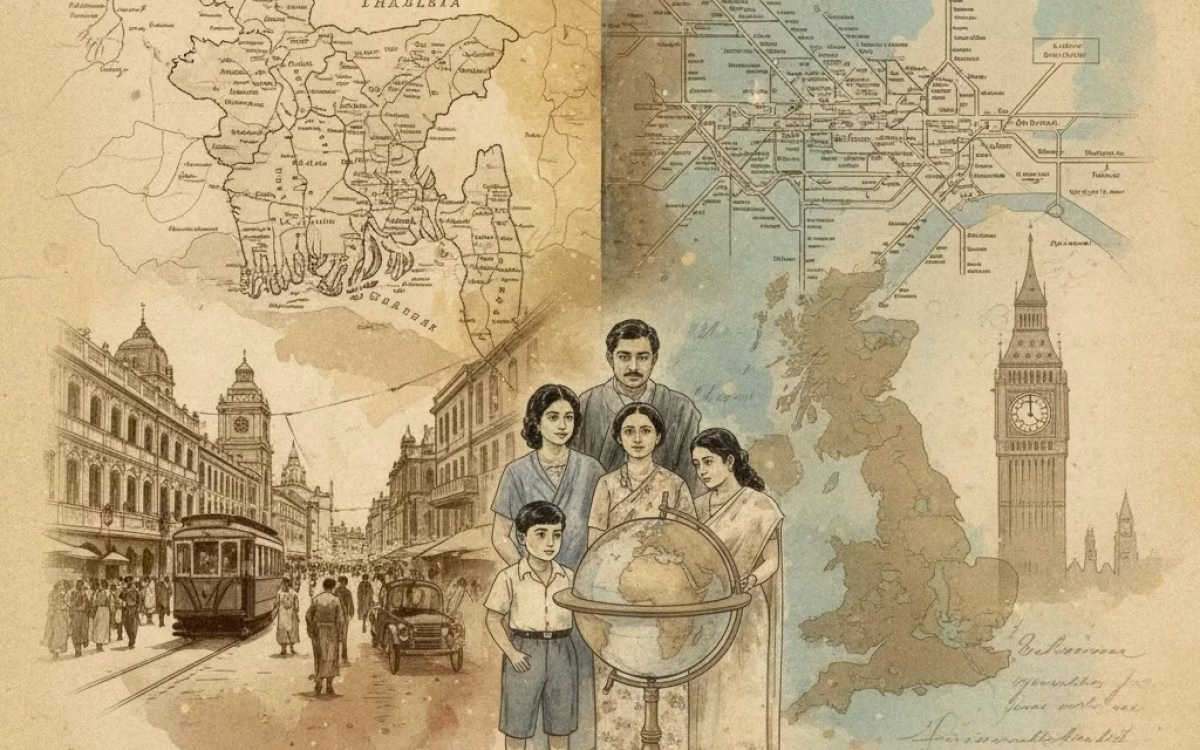
Amitav Ghosh’s The Shadow Lines is a landmark novel of Indian English literature. It blends personal memory with major historical events to offer a deep meditation on identity, belonging, and the illusion of borders. Published in 1988, the novel won the Sahitya Akademi Award. It follows the narrator’s fragmented recollections, connecting two extended families—one in Calcutta, the other in London—through decades marked by the Swadeshi movement, World War II, Partition, and communal riots in Dhaka and Calcutta. Through this coming-of-age story, Ghosh challenges readers to question the legitimacy and permanence of dividing lines. Are these boundaries merely shadows cast by history and memory?
The novel’s non-linear structure mirrors how memory shapes both personal and national identity. Events and emotions overlap instead of following a neat chronology. Key characters like Tridib, the philosophical cousin; Tha’mma, the staunch matriarch; and Ila, the cosmopolitan traveller, represent differing views on home, exile, and tradition. Ghosh’s storytelling moves between Calcutta, London, and Dhaka. It shows that no matter how firmly borders are drawn or nationalism is embraced, our memories, relationships, and sense of belonging refuse simple categories. As conflicts, migrations, and family stories span generations, readers are prompted to rethink what truly connects—and divides—us. Throughout, The Shadow Lines remains a compelling call to empathise beyond boundaries, making it deeply relevant for readers in India and worldwide.
Amitav Ghosh’s The Shadow Lines: Plot Overview
Amitav Ghosh’s The Shadow Lines is a landmark novel of Indian English literature. It blends personal memory with major historical events to offer a profound meditation on identity, belonging, and the illusion of borders. Published in 1988, the novel received the Sahitya Akademi Award. It follows the narrator’s fragmented recollections, connecting two extended families—one in Calcutta, the other in London—through decades shaped by the Swadeshi movement, World War II, Partition, and communal riots in Dhaka and Calcutta.
Through the narrator’s coming-of-age, Ghosh challenges readers to question the legitimacy and permanence of lines that divide people. Are these boundaries only shadows cast by history and memory?
The novel’s non-linear structure reflects how remembrance shapes personal and national identity. Events and emotions overlap instead of following a neat chronology. Key characters include Tridib, the philosophical cousin; Tha’mma, the staunch matriarch; and Ila, the cosmopolitan traveller. They represent conflicting attitudes toward home, exile, and tradition.
Ghosh’s storytelling moves across Calcutta, London, and Dhaka. It shows that no matter how firmly borders are drawn or nationalism embraced, memories, relationships, and belonging defy simple categories.
As conflicts, migrations, and family stories echo across generations, readers are invited to reconsider what truly connects—and divides—us. Throughout, The Shadow Lines remains a compelling call to empathize beyond boundaries, making it ever-relevant to readers in India and worldwide. FULL TEXT
Amitav Ghosh’s The Shadow Lines: At a Glance
The Shadow Lines is not a story in the traditional sense. Instead, Ghosh crafts an intricate tapestry where memory and storytelling themselves become protagonists. The unnamed narrator journeys through the lives of his own family and the intertwined Price and Datta Chaudhuri families.
Key characters: Tridib, the philosophical cousin; the narrator’s formidable grandmother, Tha’mma; cosmopolitan Ila; the Price family.
Setting: Circulates between 1960s Calcutta, WWII-era London, and riot-torn Dhaka.
Historical backdrop: Second World War, Partition, and the 1963-64 Dhaka riots; the shadow of Swadeshi movement looms, shaping characters’ fates.
Drawing from his own childhood in Calcutta, Ghosh ensures that every description pulses with lived-in authenticity. The result? A work that feels at once scholarly and startlingly intimate—perfect for academic citation or coffee shop debate.
Amitav Ghosh’s The Shadow Lines: Themes
At the core of The Shadow Lines lies the idea that the “lines” dividing nations are, in fact, mere “shadows”—social constructs more than concrete boundaries. Ghosh elegantly reframes the bloody, irrevocable trauma of Partition not just as a political tragedy, but as a deeply personal, psychic wound.
Borders and Shadow Lines
Borders in the novel are ambiguous, sometimes real, often emotionally or psychologically constructed.
Tha’mma’s confusion in seeking a visible border between India and what was East Pakistan stands as a haunting emblem for contemporary South Asian identity crises.
The “shadow lines” mirror fractures not only between countries but within families.
Memory’s Transformative Power
The narrative flits non-linearly—mirroring how trauma and nostalgia infiltrate memory.
Small personal stories sit beside tectonic historical events, reminding readers that history is never “out there”—it’s always in our living rooms, photos, and silences.
The narrator reconstructs Partition and communal violence through family stories, creating a sense of “lived history” that official records cannot replicate.
Identity and Displacement
Characters grapple with belonging: Are “home”, “country”, or “community” fixed or shifting concepts?
The Datta Chaudhuri family’s movement between cities and nations pinpoints how violence and migration yield fragmented, hybrid identities.
Ila’s diasporic experience, in particular, asks: Can you truly belong anywhere, or are you always looking in from outside?
Amitav Ghosh’s The Shadow Lines: Literary Analysis
Ghosh’s narrative bends time and space with nearly magical agility. The unnamed narrator stands in for generations of Indians and Bangladeshis who have seen families and histories sundered by arbitrary lines on a map.
The use of a first-person narrator, yet refusing to name him, intensifies the sense of universality—this could be any South Asian family, and every reader is invited into their story.
Ghosh employs detailed, almost cinematic imagery. From bomb shelters in London to a Dhaka home besieged by riots, every location crackles with sensory detail.
What sets The Shadow Lines apart, however, are:
Shifting timeframes: The past seeps endlessly into the present, and no fact is ever allowed to “settle.”
Multiplicity of voice: Although there’s only one ostensible narrator, his consciousness is shaped by the voices and stories of every character around him.
Subtle satire and humour: Even amidst tragedy, Ghosh punctuates his narrative with gentle irony—especially in familial disputes and perceptions of the West.
Amitav Ghosh’s The Shadow Lines: Character Insights
Tridib: The Philosopher as Victim
Tridib is both guide and casualty—a man possessed by curiosity, philosophical skepticism, and self-sacrifice. His tragic end haunts every page, reminding us how idealism collides with communal violence and historical absurdity.
Tha’mma: The Matriarch and Nationalist
Loyal, fierce, and sometimes rigid, Tha’mma embodies the generation scarred by Partition. Her confusion about borders and her tenacity to rescue her uncle animate the book’s underlying questions about freedom and nationhood.
Ila: The Diasporic Spirit
She represents the postcolonial, cosmopolitan generation. Her migration and complicated loyalties reflect both the allure and alienation of global citizenship.
May Price & Others: Connectors
May’s relationship with Tridib, and her role in recounting his demise, creates a bridge between cultures—and serves as a poignant counterpoint to the failure of political peace.
PERSONAL REFLECTIONS:
Engaging with The Shadow Lines offers a deeply moving experience that stays with readers long after finishing the book. What makes this novel unique is not just its complex plot or vivid settings. It boldly examines how history and memory shape our identities and communities. As a literary enthusiast, one cannot help but reflect on how these “shadow lines” represent the invisible boundaries we all carry inside us. These lines exist between past and present, between “us” and “them,” and even between the stories we inherit and the truths we choose to believe.
Reading Ghosh’s narrative today, especially through the lens of India’s intricate sociopolitical realities, feels especially timely. The novel’s themes of shifting identity, the pain caused by displacement, and the arbitrary nature of political borders resonate strongly with current debates about nationalism and migration. It reminds us that beneath geopolitical headlines lie deeply human stories marked by love, loss, and resilience. EXPLORE OTHER WORKS
Conclusion
Amitav Ghosh’s The Shadow Lines closes with the narrator realising that the past, present, and future are deeply connected. The boundaries that separate nations or people are rarely as solid as they appear. The tragic loss of Tridib remains with the narrator, but instead of offering simple answers, the novel encourages reflection on the arbitrary and shadowy nature of borders created by history, memory, and politics. Ghosh’s powerful conclusion emphasizes that violence and division do not disappear with the drawing of new national lines. Rather, experiences of migration, loss, and longing connect people across generations and places. Ultimately, The Shadow Lines challenges us to question the legitimacy of the boundaries that define our world. It urges compassion, empathy, and deeper understanding, reminding readers that the most meaningful connections often exist beyond the limits we imagine for ourselves.