INTRODUCTION
Few stories in Indian literature have captured the suffocating reality of caste oppression as vividly as Bandhu Madhav’s The Poisoned Bread. Bandhu Madhav wrote this Marathi short story in the mid-20th century, and it is not just a narrative—it holds up a mirror to the deep-seated injustices faced by Dalits in rural Maharashtra. The story’s title, The Poisoned Bread, is more than a metaphor; it’s a haunting symbol of how the caste system has poisoned the very means of survival for generations. For readers, especially those from marginalized communities, this story resonates with a painful familiarity. But even for those outside the Dalit experience, Madhav’s work offers a window into the everyday struggles, quiet resistance, and enduring hope that define Dalit life.
Bandhu Madhav: The Voice of the Marginalized
Early Life and Literary Journey
Bandhu Madhav was a Marathi Dalit writer from the Mahar community, active during the 1950s and 1960s. His writing emerged at a time when Dalit voices were beginning to find space in Indian literature, thanks in part to the efforts of leaders like Dr. B.R. Ambedkar. Madhav’s work was published in influential Dalit periodicals such as Janata and Prabuddha Bharat, which were instrumental in spreading awareness about caste-based discrimination and the need for social reform.
The Dalit Literary Movement
Madhav’s writing is deeply rooted in the Dalit literary movement, which sought to give voice to the experiences, struggles, and aspirations of India’s most marginalized communities. This movement was not just about storytelling; it was about reclaiming identity, challenging dominant narratives, and demanding social justice. Madhav’s The Poisoned Bread is a seminal work in this canon, often included in anthologies and academic studies on Dalit literature.
Plot Summary
The Grandfather’s Plight
The story is narrated by Mhadeva, a young Dalit boy, who recalls a visit to his village with his grandfather, Yetalya. The two go to the house of Bapu Patil, a wealthy upper-caste landowner, in hopes of securing a larger share of the harvest. Yetalya, like many Dalits, is forced to beg for scraps, a practice that underscores the deep humiliation and dependence imposed by the caste system.
The Poisoned Bread
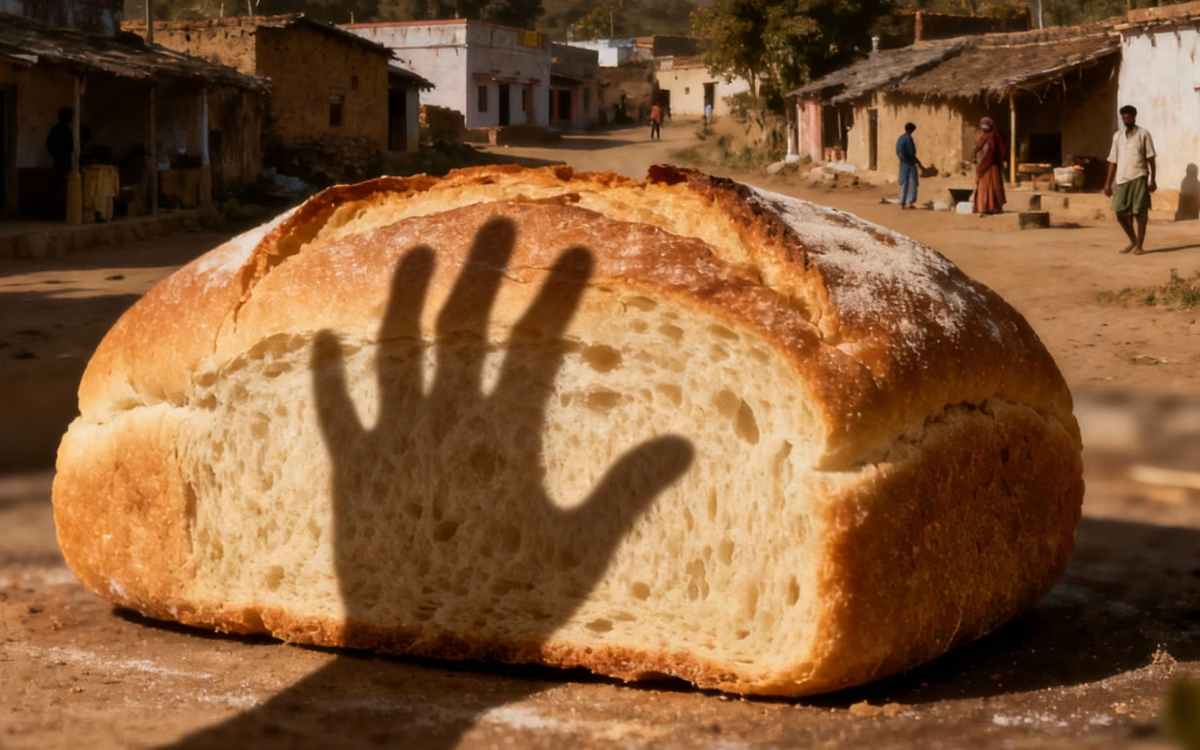
During their visit, Yetalya notices stale, rancid bread lying near the oxen. Desperate and hungry, he begs for these crumbs, which are smeared with dung and urine. The family later consumes this bread, leading to severe illness. Yetalya falls gravely ill and dies, but not before imparting a crucial lesson to his grandson: never depend on the “poisoned bread” of caste servitude. Also, he urges Mhadeva to seek education and break free from the cycle of oppression. FULL TEXT
Themes
Caste-Based Discrimination
At its core, The Poisoned Bread is a forceful condemnation of caste-based injustice. The story exposes the systemic oppression faced by Dalits, from the denial of basic food to the constant humiliation and subjugation. The bread, tainted and discarded by the upper castes, becomes a powerful symbol of the insidious nature of caste discrimination.
Resistance and Human Dignity
Despite the harsh realities depicted, the story also highlights moments of resistance and the quest for dignity. Yetalya’s final words to Mhadeva are a call to action, urging the younger generation to seek education and challenge the status quo. This theme of resistance is central to Dalit literature, reflecting the ongoing struggle for equality and justice.
The Multi-Layered Metaphor
The poisoned bread can be interpreted on multiple levels:
It represents the actual act of upper-caste individuals poisoning food intended for Dalits, a practice tragically documented in real-life incidents.
It symbolises how the caste system itself “poisons” the very means of survival for Dalits, making even basic necessities a source of danger and humiliation.
Bandhu Madhav uses the poisoned bread as a metaphor to show how caste discrimination permeates all aspects of society, contaminating even the most fundamental human interactions.
Bandhu Madhav’s The Poisoned Bread: Narrative Structure
First-Person Perspective
Madhav’s use of a first-person narrative allows readers to experience the story from the intimate perspective of a young Dalit boy. This narrative choice creates a strong emotional arc, immersing readers in the protagonist’s world and making the story’s themes more relatable and impactful.
Character Depth
The characters in The Poisoned Bread are not mere stereotypes; they are imbued with individual depth and complexity. Yetalya, the grandfather, embodies both the resilience of the Dalit community and the weight of generational trauma. His relationship with Mhadeva highlights the intergenerational transmission of both suffering and hope.
Bandhu Madhav’s The Poisoned Bread: Socio-Political Context
Historical and Cultural Setting
The Poisoned Bread is set against the backdrop of growing social and political movements advocating for Dalit rights. The story’s publication coincided with a period of increased visibility and articulation of Dalit experiences in Indian literature. Madhav’s work played a crucial role in this movement, giving voice to the struggles and aspirations of marginalised communities.
Impact on Dalit Literary Movement
Madhav’s story has contributed significantly to the canon of Dalit literature. Its brutal depiction of caste discrimination, combined with its literary brilliance, has made it a seminal work in the category. The story’s inclusion in Dalit literature anthologies and scholarly studies attests to its enduring relevance and influence.
Bandhu Madhav’s The Poisoned Bread: Character Analysis
Yetalya: The Embodiment of Dalit Struggle
Yetalya, the grandfather in Bandhu Madhav The Poisoned Bread, is not just a character—he is a living testament to the resilience and suffering of Dalit communities. His actions and words reveal the deep scars of caste oppression, but also the quiet dignity that persists despite it. Yetalya’s decision to beg for stale bread, even when it is tainted, speaks volumes about the desperation and humiliation forced upon Dalits. Yet, his final words to Mhadeva—urging him to seek education and break free from caste servitude—show a man who refuses to let despair define his legacy.
Mhadeva: The Hopeful Heir
Mhadeva, the young narrator, represents the next generation of Dalits. His perspective is crucial because it allows readers to witness the impact of caste discrimination through innocent eyes. Mhadeva’s observations of Yetalya’s suffering and his own hunger create a powerful emotional arc. His journey from passive witness to active listener of Yetalya’s wisdom mirrors the broader theme of resistance and hope in Bandhu Madhav The Poisoned Bread. Mhadeva’s character reminds us that change begins with awareness and education.
Bapu Patil: The Face of Caste Privilege
Bapu Patil, the wealthy upper-caste landowner, embodies the systemic oppression faced by Dalits. His indifference to Yetalya’s plight and his casual disposal of food highlight the deep-seated caste hierarchy. Bapu Patil’s character is not portrayed as a villain, but as a product of a society that normalizes discrimination. His actions serve as a stark contrast to Yetalya’s dignity, emphasizing the need for social reform.
The Role of Minor Characters
Minor characters in Bandhu Madhav The Poisoned Bread, such as the family members and villagers, add depth to the narrative. Their reactions to Yetalya’s illness and death reflect the collective trauma and resilience of Dalit communities. These characters, though not central, play a crucial role in highlighting the social dynamics and the impact of caste discrimination on everyday life. EXPLORE MORE
Personal Reflection
Reading Bandhu Madhav’s The Poisoned Bread for the first time wasn’t just an academic exercise for me—it hit me like a gut punch. I remember sitting in my classroom, teaching Dalit literature to a group of students who, like me, had grown up hearing about caste but never truly felt its weight until that moment. The story’s raw honesty, along with its unflinching portrayal of hunger and humiliation, made me pause and reflect on my own privilege. In fact, I realized how easy it is to talk about social justice from a distance, yet much harder to truly understand the lived experiences of those who face caste discrimination every day.
What struck me most, however, was Yetalya’s quiet dignity. Even in the face of unimaginable suffering, he never lost his sense of self-worth. Moreover, his final words to Mhadeva—urging him to seek education and break free from caste servitude—resonated deeply with me. Moreover, these moments of resilience and hope, woven into the narrative, remind us that stories like The Poisoned Bread are not just about pain, but also about the enduring strength of the human spirit.
Conclusion
In summary, Bandhu Madhav The Poisoned Bread is much more than a story about hunger and humiliation; it is a powerful testament to the resilience and dignity of Dalit communities. Throughout this article, we have explored the key themes, characters, and literary techniques that make this short story a cornerstone of Dalit literature. Moreover, we have reflected on its relevance in today’s world, where conversations about caste, identity, and social justice continue to evolve.
Indeed, Bandhu Madhav The Poisoned Bread challenges readers to confront uncomfortable truths about caste oppression and to recognize the enduring strength of those who resist it.
Frequently Asked Questions
Who is Bandhu Madhav?
Bandhu Madhav, also known as Madhav Dadaji Modak (1927–1997), was a Marathi Dalit writer from the Mahar community. He was a prominent figure in the Dalit literary movement and wrote extensively about the struggles and aspirations of Dalit communities in India. Also, his works, including The Poisoned Bread, played a crucial role in raising awareness and inspiring social change.
What is the main theme of The Poisoned Bread?
Bandhu Madhav explores caste-based discrimination and the resilience of Dalit communities as the main theme in The Poisoned Bread. Moreover, the story highlights the daily humiliations and injustices faced by Dalits, as well as their quiet resistance and quest for dignity. It also emphasizes the importance of education and self-reliance as tools for breaking free from caste oppression.
Why is The Poisoned Bread considered important in Dalit literature?
Scholars and readers consider The Poisoned Bread a landmark in Dalit literature because Bandhu Madhav gives voice to the lived experiences of Dalits in rural Maharashtra. Moreover, the story’s realistic portrayal of caste oppression, combined with its literary brilliance, has made it a seminal work in the Dalit literary canon. It continues to inspire readers and scholars alike, serving as a powerful tool for social critique and awareness.
What is the significance of the title The Poisoned Bread?
The title The Poisoned Bread is a powerful metaphor for the insidious nature of caste discrimination. The bread, tainted and discarded by the upper castes, symbolizes how the caste system itself “poisons” the very means of survival for Dalits. It also represents the humiliation and suffering that Dalits endure, as well as their resilience in the face of adversity.