Introduction
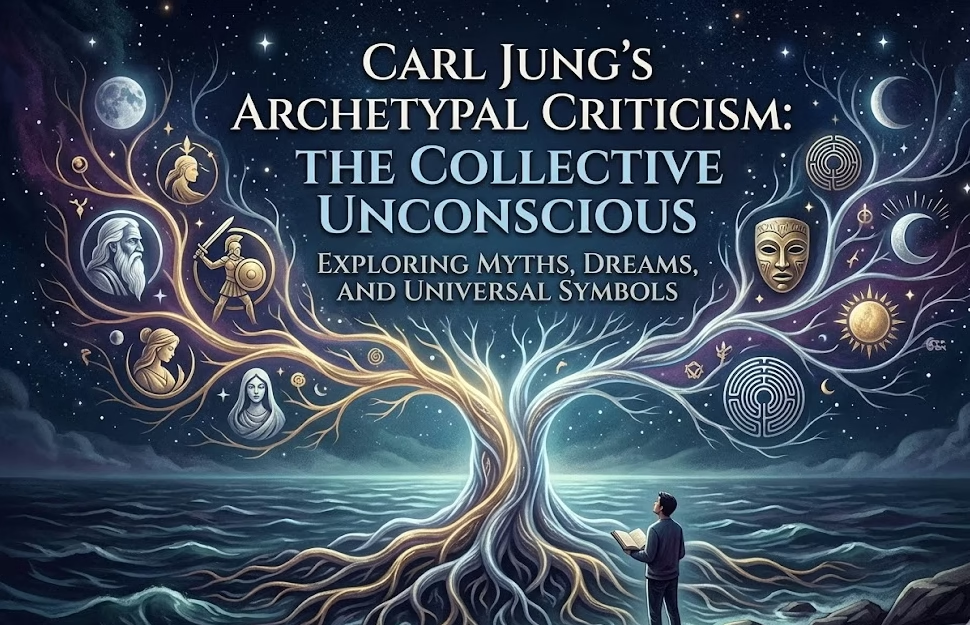
Carl Jung’s Archetypal Criticism: The Collective Unconscious
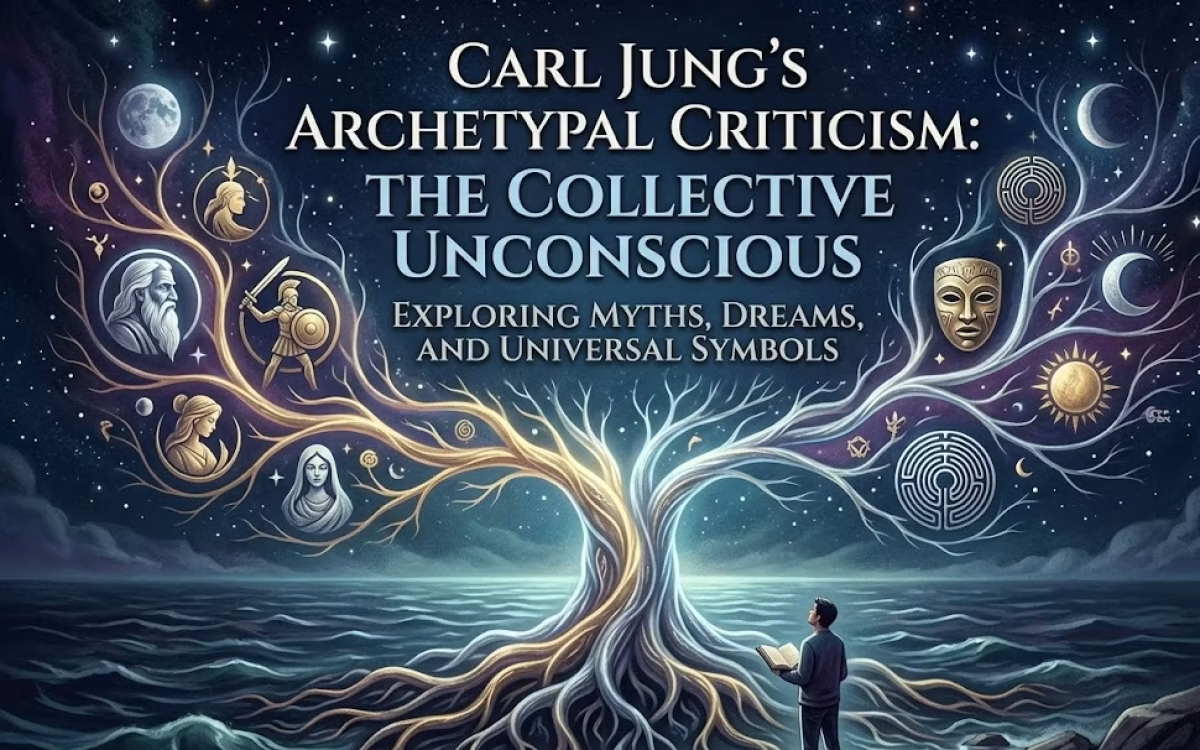
Have you ever wondered why a Native American myth, an ancient Greek epic, and the latest Marvel movie all feature a wise old man guiding a young hero? These recurring patterns aren’t coincidences. They stem from Carl Jung’s archetypal criticism and his groundbreaking theory of the collective unconscious.
Carl Jung began as Sigmund Freud’s favourite student. Yet he broke away, convinced the human mind extended far beyond personal childhood trauma. Jung proposed a deeper layer: the collective unconscious, a shared reservoir of images and instincts inherited by all humans.
In archetypal criticism, authors don’t invent stories from scratch. They draw from this universal psychological well that all humans share, tapping into timeless archetypes like the hero, shadow, or wise mentor to craft narratives that resonate across cultures and eras.
Quick Summary
Archetypal Criticism is a literary theory heavily based on the psychology of Carl Jung. Jung argued that beneath our personal memories lies a Collective Unconscious—a deep, inherited mental vault shared by all human beings across time and cultures. This shared unconscious contains Archetypes: universal, primordial images and character patterns (like the Hero, the Mother, the Trickster, or the Shadow). In literature, authors tap into these ancient archetypes, which is why the same myths, plot structures, and symbols appear independently in stories from all over the world.
Freud’s Personal Unconscious vs. Jung’s Collective Unconscious
Freud viewed the unconscious as a personal basement. We stash repressed memories, forbidden desires, and childhood traumas there. These hidden elements drive our slips, dreams, and neuroses—but they stem solely from individual life experiences.
Jung built on this but dug deeper. Beneath Freud’s personal basement lies a massive, shared underground cave system: the collective unconscious. We all inherit this blueprint of human experience, packed with universal archetypes like the hero or the wise old man.
Freud’s model stays private and acquired. Jung’s reveals our deep connection to humanity’s shared psyche, explaining why myths and stories echo across cultures.
“Jung’s original writing can be incredibly dense. The absolute best starting point for students is his last work, designed for everyday readers: [Man and His Symbols by Carl Jung on Amazon].”
What is an Archetype?
An archetype in Carl Jung’s archetypal criticism is a primordial psychological mould or universal “pattern of behaviour” embedded in the collective unconscious. It represents innate, instinctual templates for human experience, not fixed ideas but dynamic structures that shape thoughts, images, and actions across all cultures.
Unlike a stereotype, which is a superficial cultural cliché, an archetype remains empty—a neutral blueprint—until activated by personal or societal context. Jung described it as an inherited mode of functioning, akin to biological instincts like a bird building its nest.
Authors fill this mould with specific cultural details: the “Mentor” archetype appears as the wizard Merlin in Arthurian legends or Yoda in Star Wars, yet both evoke the same guiding wisdom. This adaptability explains why archetypal stories feel timeless and universally resonant.
The Core Jungian Archetypes in Literature
Jungian archetypes form the backbone of literary analysis, helping students decode character motivations and thematic depth. These universal patterns from the collective unconscious appear across stories, making them essential for essays on works like Dr. Jekyll and Mr. Hyde or Harry Potter.
The Persona: This is the “mask” characters wear to fit societal expectations, hiding their true selves. Dr. Jekyll embodies it as the respectable Victorian doctor, contrasting his hidden Hyde.
The Shadow: The dark, repressed, animalistic side everyone possesses. Villains often represent the hero’s shadow—Mr Hyde unleashes Jekyll’s savagery, while Voldemort mirrors Harry Potter’s untamed potential.
The Anima/Animus: A man’s inner feminine image (Anima) or a woman’s inner masculine image (Animus). Characters achieve wholeness by integrating it—Luke Skywalker confronts his Anima through Leia in Star Wars, balancing emotion with action.
The Self: The ultimate archetype of integration, symbolising psychological wholeness after the hero’s journey. Frodo reaches it post-Ring destruction in Lord of the Rings, uniting his fragmented psyche.
| Archetype | Role in Story | Literary Example |
|---|---|---|
| Persona | Social mask | Dr. Jekyll’s public facade |
| Shadow | Repressed darkness | Voldemort as Harry’s dark twin |
| Anima/Animus | Contrasting gender image | Yoda guiding Luke’s emotional growth |
| Self | Total integration | Dumbledore’s wisdom in Harry Potter |
These examples equip students to argue how archetypes drive plot and character arcs.
Common Archetypal Characters and Situations
Archetypes extend beyond core Jungian ones to recurring characters, situations, and symbols that propel narratives. These patterns, drawn from the collective unconscious, appear in myths, literature, and films, offering students rich material for analysis.
Archetypal Characters
The Trickster: A chaotic disruptor who challenges norms and sparks change, like Loki in Norse myths or the Joker in Batman—cunning, unpredictable, and transformative.
The Wise Old Man: A guide dispensing wisdom during crises, such as Gandalf in The Lord of the Rings or Obi-Wan Kenobi in Star Wars, embodying insight and mentorship.
The Great Mother: Nurturer or devourer figure, like Demeter in Greek mythology who controls fertility and seasons, or nurturing-yet-fierce characters like Molly Weasley in Harry Potter.
Archetypal Situations
The Quest: Hero’s journey for a vital goal, as in Odysseus’s voyage home or Frodo’s ring quest—testing resolve and growth.
The Initiation: Rite-of-passage trial, like young Simba’s exile in The Lion King, marking transition to maturity.
The Fall: Descent into chaos or sin, echoing Adam and Eve or Macbeth’s moral collapse—exploring hubris and consequence.
Death and Rebirth: Symbolic transformation, such as Jesus’s resurrection or phoenix-like renewal in Harry Potter, signifying renewal.
Key Symbols
Water: Represents creation, purification, or the unconscious depths—baptism scenes or drowning motifs signal rebirth.
The Forest: A liminal space of danger and the unknown psyche, like the Forbidden Forest in Harry Potter or Dante’s dark wood.
Fire: Dual force of knowledge (Promethean gift) and destruction (Sodom’s fate), illuminating truth or consuming flaws.
| Category | Example | Literary Role |
|---|---|---|
| Character | Trickster (Loki) | Catalyses chaos and revelation |
| Situation | The Quest | Drives heroic growth |
| Symbol | Water | Purifies or overwhelms |
These elements interconnect, fuelling timeless storytelling across cultures.
“While Jung focused on psychology, other theorists mapped how these patterns organise all of literature. Read our guide to [Northrop Frye’s Anatomy of Criticism] to see the literary side of archetypes.”
How to Apply Archetypal Criticism to a Text
Archetypal criticism unlocks deeper layers in any literary work by spotting universal patterns from Jung’s collective unconscious. Students can use this practical, exam-ready checklist to analyse texts like Hamlet or The Mahabharata systematically.
Step-by-Step Checklist
Identify recurring symbols or character types: Scan for familiar archetypes—does a wise mentor appear, like Gandalf? Note symbols too, such as water for rebirth or forests for the unknown psyche.
Ask: How does this tap into ancient human experiences? Trace connections to myths. A trickster like Loki disrupts order, mirroring chaos in Iago from Othello—link it to shared human fears of betrayal.
Look for the “Individuation” process: Check if the hero integrates opposites for wholeness. Does Hamlet confront his Shadow (repressed rage) to achieve balance, or fail like Macbeth?
| Step | Action | Example in Harry Potter |
|---|---|---|
| 1 | Spot archetypes | Voldemort as Shadow; Dumbledore as Wise Old Man |
| 2 | Link to human experience | Hero’s Quest echoes global myths of trials |
| 3 | Trace Individuation | Harry integrates anger (Shadow) for maturity |
Practice on one text per study session—this method scores high in essays by showing psychological depth.
Conclusion
Archetypal criticism, rooted in Carl Jung’s vision of the collective unconscious, transforms how we read literature. It shifts focus from surface plots to the deep psychological patterns that define human experience.
No matter how divided the world seems—by culture, era, or conflict—our stories reveal we all share the exact same psychological DNA. The wise mentor guiding a hero appears in Vedic hymns, Greek tragedies, African folktales, and Marvel blockbusters, proving our inner worlds connect us universally.
This makes archetypal criticism the ultimate tool for comparing literature across completely different eras and continents.
FAQS
What is the difference between Jungian criticism and Northrop Frye's archetypes?
Jungian criticism is psychological, focusing on innate archetypes from the collective unconscious that reveal the author's or character's psyche. Frye's archetypes are structural and mythic, treating literature as a self-contained system of recurring genres and plots, like comedy or romance cycles, without delving into personal psychology.
What is the collective unconscious in simple terms?
It's a shared, inherited layer of the mind containing universal instincts, images, and patterns common to all humans—like a psychological blueprint from our ancestors. Unlike personal repressed memories, it explains why myths and symbols recur across unrelated cultures.