INTRODUCTION
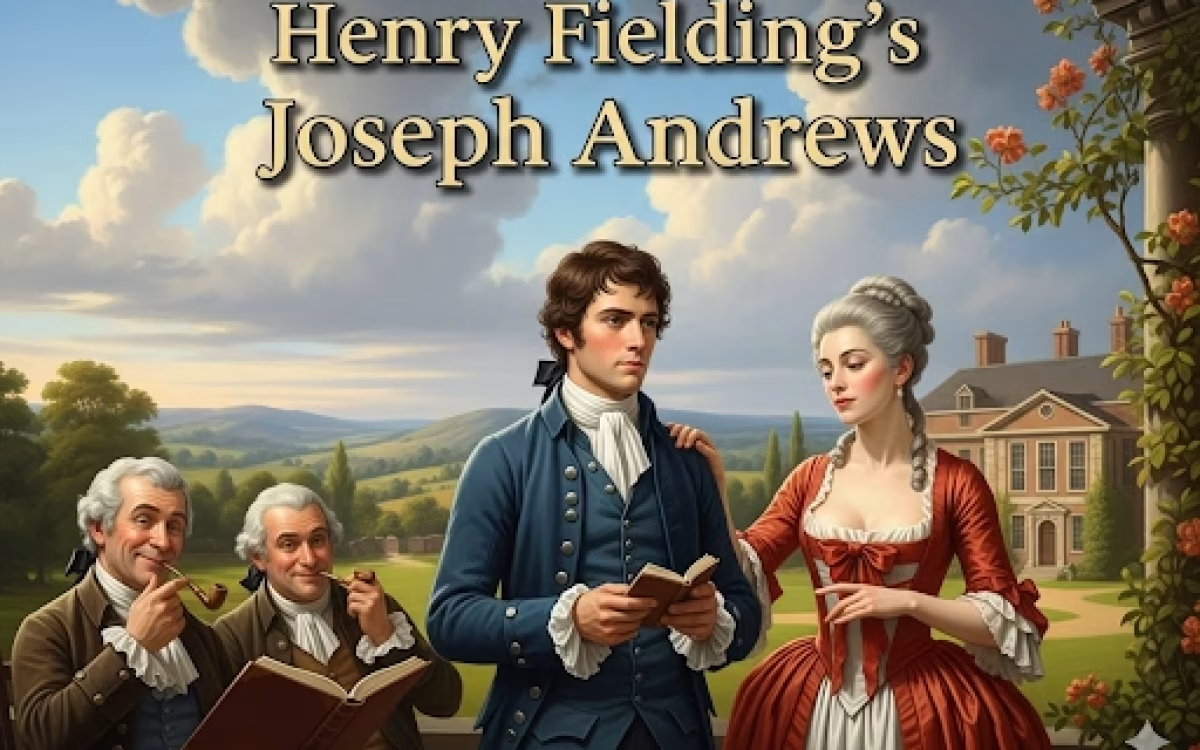
Henry Fielding’s Joseph Andrews stands as a seminal work in eighteenth-century English literature, combining elements of humor, social critique, and moral inquiry. The narrative follows Joseph, a footman characterized by unwavering virtue, who, after resisting the inappropriate advances of Lady Booby, is dismissed from her service. In pursuit of his beloved Fanny Goodwill, Joseph embarks on a journey through rural England, accompanied by the well-intentioned but often imprudent Parson Adams. Their travels expose a wide array of characters and social circumstances, effectively portraying the complexities of contemporary society.
The novel’s episodic nature allows Fielding to present both comedic situations and pointed commentary on societal norms. It skillfully blends farcical encounters with a sincere exploration of virtue. Moreover, Fielding’s portrayal of characters strikes a nuanced balance between caricature and empathy. This balance enables a vivid depiction of eighteenth-century manners and morals, which transcends straightforward satire.
Henry Fielding’s Joseph Andrews Analysis
The Novel’s Comic Epic Form
Fielding’s self-description of Joseph Andrews as a “comic epic” captures the novel’s distinctive fusion of grand literary tradition with everyday reality. He appropriates the conventions of classical epic poetry—genres usually reserved for heroic figures—and applies them instead to the exploits of an ostensibly ordinary protagonist. This stylistic choice serves as a deliberate subversion, elevating the seemingly mundane trials of Joseph into a narrative of considerable significance. Fielding achieves this often through mock-heroic diction and intricate narrative asides that both entertain and invite reflection.
The alternating register between elevated language and colloquial humor engenders a dynamic narrative tone. This oscillation enables Fielding to highlight the absurdities of social pretension while simultaneously affirming a genuine moral center, rooted in Joseph’s steadfastness. Such a technique demonstrates Fielding’s mastery in manipulating form to prompt both amusement and reflection in the reader. FULL TEXT
Social Satire and the Age of Reason
At its core, Joseph Andrews critiques the hypocrisies and social stratifications characteristic of eighteenth-century England. Throughout the narrative, Fielding critically examines institutions such as the judiciary, the clergy, and the aristocracy. He exposes their moral failings and pretenses, revealing a society rife with corruption and hypocrisy. Within this context, Parson Adams emerges as a figure representing sincere virtue. Despite his intellectual shortcomings, Adams functions as Fielding’s vehicle for highlighting genuine goodness amidst widespread folly.
Set during the era widely identified as the Age of Reason, the novel juxtaposes Enlightenment ideals of rationality and progress with the persistence of human folly. Fielding tempers his satire with a notable sense of compassion for his characters’ weaknesses, thereby acknowledging the universal complexities inherent in human conduct.
Joseph Andrews as a Picaresque Novel
The novel fits within the picaresque tradition due to its episodic structure and its focus on the adventures of a roguish protagonist navigating a complex social landscape. Fielding openly acknowledges his literary debt to Cervantes’ Don Quixote. This influence appears in the narrative’s digressive style and its blend of humor with social critique.
This narrative structure provides a panoramic view of eighteenth-century English society. It enables Fielding to expose a diverse range of social types and customs, employing both comic and critical registers. The novel’s leisurely pace and episodic nature might often appear as digressions. However, these elements significantly enrich the text’s texture. They allow for a multidimensional portrayal that rewards attentive and repeated readings.
Literary Devices and Characterization
Allusion and Parody
Fielding employs allusion and parody extensively, particularly targeting the sentimental novel exemplified by Samuel Richardson’s Pamela. These literary devices function to both critique and engage with contemporary literary forms, thereby positioning Joseph Andrews as a foundational work in the evolution of the English novel.
The novel’s frequent narrator intrusions and direct address to readers establish a metafictional dimension, inviting readers into a collaborative interpretive experience. This narrative stance enhances the novel’s humor while simultaneously fostering critical engagement with its themes and conventions.
The Role of Women
Through characters such as Lady Booby, Mrs. Slipslop, and Fanny Goodwill, Fielding offers a broad spectrum of female characterizations that reflect his social milieu. Lady Booby’s actions reveal a complex mix of entitlement and frustration. In contrast, Mrs. Slipslop provides comic relief through her frequent linguistic and moral blunders. Fanny embodies rural innocence and steadfastness, providing a moral counterpoint to the more satirical character portrayals.
Fielding’s treatment of these characters reveals an awareness of the social constraints placed upon women, balancing satire with a degree of nuanced sympathy.
Henry Fielding’s Joseph Andrews in the Literary Canon
Fielding’s Enduring Legacy
Written amid personal and financial adversity, Joseph Andrews established Fielding as an innovator in the English novel form. Fielding’s enduring influence appears clearly in the works of later writers such as Sterne and Dickens. Both authors adopted and expanded upon his innovative narrative techniques and incisive social insights.
Academic and Contemporary Perspectives
Scholarly discourse has increasingly recognized the novel’s sophisticated interplay of theatricality and moral inquiry. Early critics often undervalued the complexity of Fielding’s characters. However, contemporary analysis recognizes the subtlety with which characterization unfolds. This development occurs cumulatively through episodes and narrative asides, revealing depth over the course of the novel.
Fielding’s integration of reflective narration and ethical consideration offers fertile ground for ongoing critical engagement, underscoring the novel’s relevance across historical and cultural contexts. EXPLORE MORE AUTHORS
Conclusion
Joseph Andrews endures as a formative text that innovatively blends comic epic form with incisive social satire. Its rich characterization, narrative inventiveness, and moral intricacy continue to engage readers and critics alike. For scholars and students of English literature, Fielding’s work not only illuminates the literary and social currents of the eighteenth century but also provides a timeless meditation on virtue, folly, and human nature.
Frequently Asked Questions
Is Joseph Andrews a parody?
Indeed, Fielding conceived Joseph Andrews as a parodic response to the sentimental novel Pamela. However, the novel transcends mere parody, establishing itself as a substantial comic epic with enduring literary merit.
What themes predominate in Joseph Andrews?
The novel addresses themes including virtue, hypocrisy, class dynamics, and rural-urban tensions, all interwoven with humor and ethical reflection.
Why is Joseph Andrews regarded as a picaresque novel?
Its episodic structure, focus on the adventures of a roguish protagonist, and its satirical treatment of society align it with the picaresque tradition, which Fielding adapts notably for English literature.