Introduction
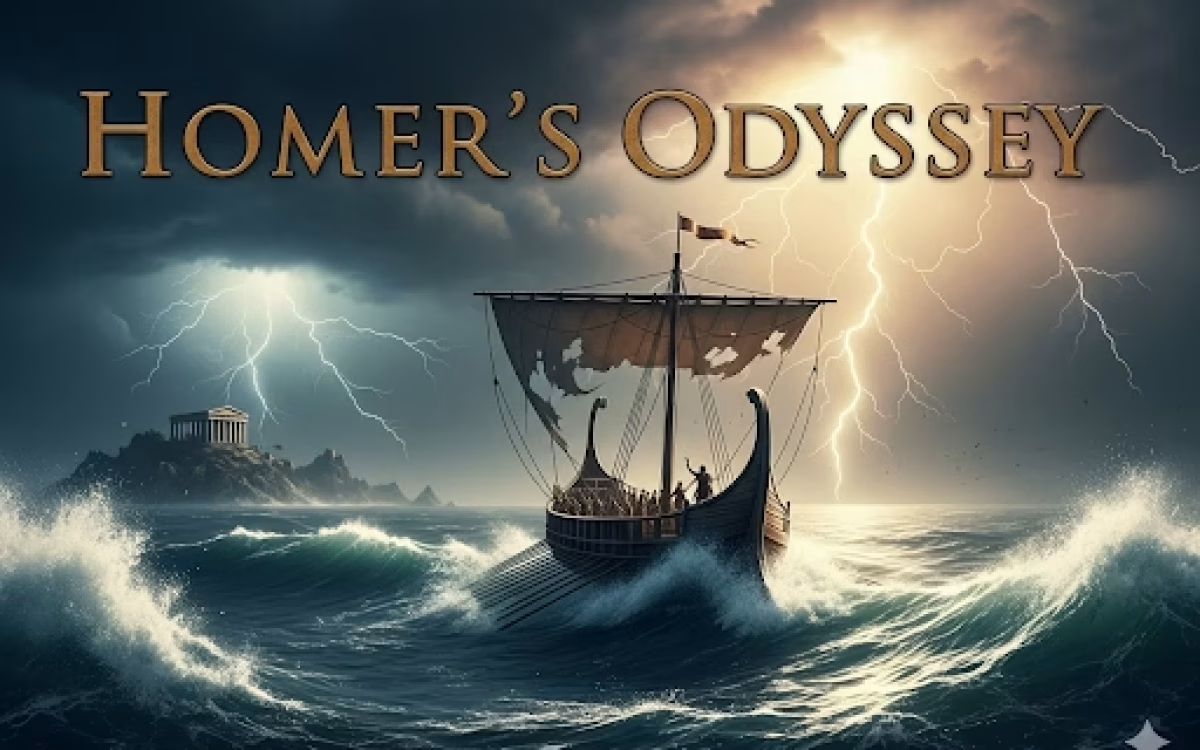
Few works of literature have held such monumental power and timeless allure as The Odyssey—Homer’s epic poem that recounts the adventurous journey of Odysseus as he strives to return home after the Trojan War. This ancient Greek epic, rich with gods and monsters, heroism and human frailty, explores universal themes that transcend time and culture. It is not just a tale of adventure but a profound inquiry into identity, loyalty, fate, and perseverance.
At its core, The Odyssey is the story of a man—Odysseus—whose physical journey across the seas parallels a spiritual journey of self-discovery and endurance. Written around the late 8th century BCE, the poem still resonates today, both in literary academia and popular culture. Yet, despite its age, it continues to offer fresh insights with each reading, inviting us to navigate its complex web of characters, situations, and themes.
Homer’s Odyssey: The Epic Journey
The Storyline Unfolded
Homer’s Odyssey is set roughly twenty years after the Trojan War’s conclusion. Odysseus, the king of Ithaca, has still not returned home, causing grief to his wife Penelope and son Telemachus and prompting political instability as suitors vie for Penelope’s hand.
The narrative weaves together two primary threads: Odysseus’s perilous return journey and Telemachus’s coming of age in his father’s absence. The gods, especially Athena and Poseidon, play critical roles — Athena frequently aids Odysseus, while Poseidon, harboring a grudge over the blinding of his son the Cyclops, creates obstacle after obstacle.
Odysseus recounts his adventures after finally reaching the Phaeacian court, including:
Encounters with the Lotus Eaters, whose narcotic flowers cause forgetfulness,
The clever blinding of Polyphemus, the Cyclops, leading to Poseidon’s wrath,
A dangerous stay with the sorceress Circe, who transforms men into swine,
Near-temptation by the Sirens’ irresistible song,
Journeys to the Underworld for prophetic guidance,
Battles with the monstrous Scylla and deadly whirlpool Charybdis,
The fatal consumption of Helios’s sacred cattle by his men sealed their doom.
After a series of trials and losses, Odysseus reaches Ithaca disguised as a beggar to assess loyalty and reclaim his household. The story culminates in his reunion with Penelope, Telemachus, and his aged father Laertes, and the violent purging of the suitors. FULL TEXT
Reflections on the Hero’s Journey
One might be tempted to see Odysseus as a flawless hero, but he is anything but perfect. His hubris—excessive pride—often leads to further suffering, whether it’s taunting Polyphemus or ignoring divine warnings. This deeply human flaw grants the epic an emotional complexity: we root for Odysseus because he is brave and clever, yet we recognize his impulsive mistakes as well.
His journey also explores what it means to be a leader and a man. He balances strength and cunning with compassion and loyalty—values that his son Telemachus learns to embody through his own evolving leadership.
The Odyssey Themes Explored
Loyalty and Perseverance
The most prominent theme in The Odyssey is loyalty. Penelope’s steadfast faithfulness to Odysseus, despite decades of absence and suitors pressing her to remarry, becomes a powerful symbol of marital fidelity and hope. Similarly, Odysseus’s loyalty to his homeland and family fuels his grueling journey.
This loyalty extends to the Greek cultural concept of xenia—hospitality between guest and host. Throughout the poem, the bonds of hospitality dictate social conduct, and suitors who violate these norms by overstaying their welcome and abusing Odysseus’s resources meet a grim fate.
The Role of Fate and the Gods
While Odysseus is lauded for his intelligence and perseverance, his path is heavily influenced by divine forces. The gods act as arbiters of human destinies, reflecting the ancient Greek belief that mortals are at the mercy of divine will.
However, there is a balancing act between fate and free will. Odysseus exercises his agency decisively—yet fate ensures he faces trials that test his character. This tension adds philosophical depth to the narrative: even mortal heroes are not fully masters of their own destinies.
Home and Identity
Arguably, The Odyssey is a meditation on the idea of home. Odysseus’s journey is less about mere location and more about reclaiming his identity, family, and responsibilities. His return to Ithaca symbolizes restoration and renewal—not only of political order but of personal selfhood.
At the same time, the poem asks: what happens when the world changes while one is away for years? Will home still be the same? Penelope’s weaving and unweaving of the burial shroud symbolises time’s relentless march and the challenge of preserving one’s place in a shifting world.
Homer’s Odyssey: Character Analysis
Odysseus: The Archetypal Hero
Odysseus is a polymath of ancient heroism—brave, cunning, and at times flawed. His intelligence is his greatest weapon, whether devising the Trojan Horse stratagem or outwitting Polyphemus. Yet he is not immune to moments of vulnerability, homesickness, and moral ambiguity.
He exemplifies the Greek hero who must balance his desire for glory with duties to family and community, thus embodying a complex existential struggle.
Penelope: The Model of Fidelity and Wit
Penelope, often eclipsed by her husband’s adventures, is a hero in her own right. Her loyalty and resilience anchor the Ithacan household amid chaos. Penelope’s cleverness shines in her strategy of delaying remarriage by weaving and unraveling Laertes’s funeral shroud, deftly balancing hope and pragmatism.
Telemachus: The Coming of Age
Telemachus’s storyline mirrors the classic rite of passage. Initially uncertain and underconfident, emboldened by Athena’s guidance, he grows into an assertive figure fit to inherit Ithaca’s throne. His emergence underscores themes of legacy, maturation, and filial duty.
The Gods: Agents of Fate and Morality
The divine cast—Athena, Poseidon, Zeus, Hermes—reflects a sophisticated dramatization of fate, justice, and human-divine interaction. Athena’s guidance embodies wisdom and justice, while Poseidon’s wrath reminds us of the precarious relationship between humans and nature’s forces.
Literary Significance of Homer’s Odyssey
A Cornerstone of Western Literature
The Odyssey is foundational not only as an epic poem but as a cultural touchstone that has shaped storytelling conventions for centuries. Its narrative techniques—such as flashbacks, complex characterization, and intertwining storylines—illustrate early literary sophistication.
Its influence ripples through classical literature into modern novels, films, and psychological archetypes. The phrase “the odyssey” itself has entered everyday language as a metaphor for a transformative journey.
Symbolism and Style
Homer’s use of epic similes, rich imagery, and formulaic phrases weaves a tapestry that is both oral tradition and poetic artistry. Symbols like Odysseus’s bow and the immovable bed serve not just practical plot devices but allegories for rightful authority and marital fidelity.
The poem’s oral origins are evident in repetition and rhythmic cadence, inviting oral performance and communal engagement that gave it lasting vitality before the written word solidified its legacy. EXPLORE MORE AUTHORS
Conclusion
In delving into The Odyssey, readers embark on more than just a voyage across seas and mythical landscapes; they encounter a timeless narrative that probes the essence of humanity. Homer’s masterful weaving of adventure, emotion, divine interplay, and ethical inquiry offers a literary treasure that will continue inspiring readers, scholars, and storytellers.
By engaging with the epic’s rich layers—from its grand heroic exploits to its intimate human moments—we not only appreciate the power of The Odyssey but also glimpse the timeless odyssey contained within our own lives.
(FAQs) About Homer’s The Odyssey
Q1: What is The Odyssey about?
The Odyssey is an ancient Greek epic poem attributed to Homer, detailing the adventures of Odysseus as he struggles to return home after the Trojan War. It combines themes of heroism, loyalty, fate, and perseverance into a story of endurance and identity.
Q2: Who are the main characters in The Odyssey?
The primary characters include Odysseus, the hero and king of Ithaca; Penelope, his loyal wife; Telemachus, his son; Athena, the goddess who aids Odysseus; and Poseidon, the god who opposes him.
Q3: What are the major themes of The Odyssey?
Key themes include loyalty and perseverance, the role of fate and the gods, the significance of home and identity, hospitality (xenia), and the human struggle between impulse and reason.
Q4: What is the significance of hospitality in The Odyssey?
Hospitality (xenia) reflects ancient Greek social values. Respecting guests and hosts is a moral imperative, and violations, such as the suitors abusing Odysseus’s household, are met with severe consequences.
Q5: How does The Odyssey explore the idea of identity?
Odysseus’s journey is as much about self-discovery as physical travel. His return to Ithaca marks the reclamation of his role as king, father, and husband, highlighting the connection between place, identity, and responsibility.