
Introduction
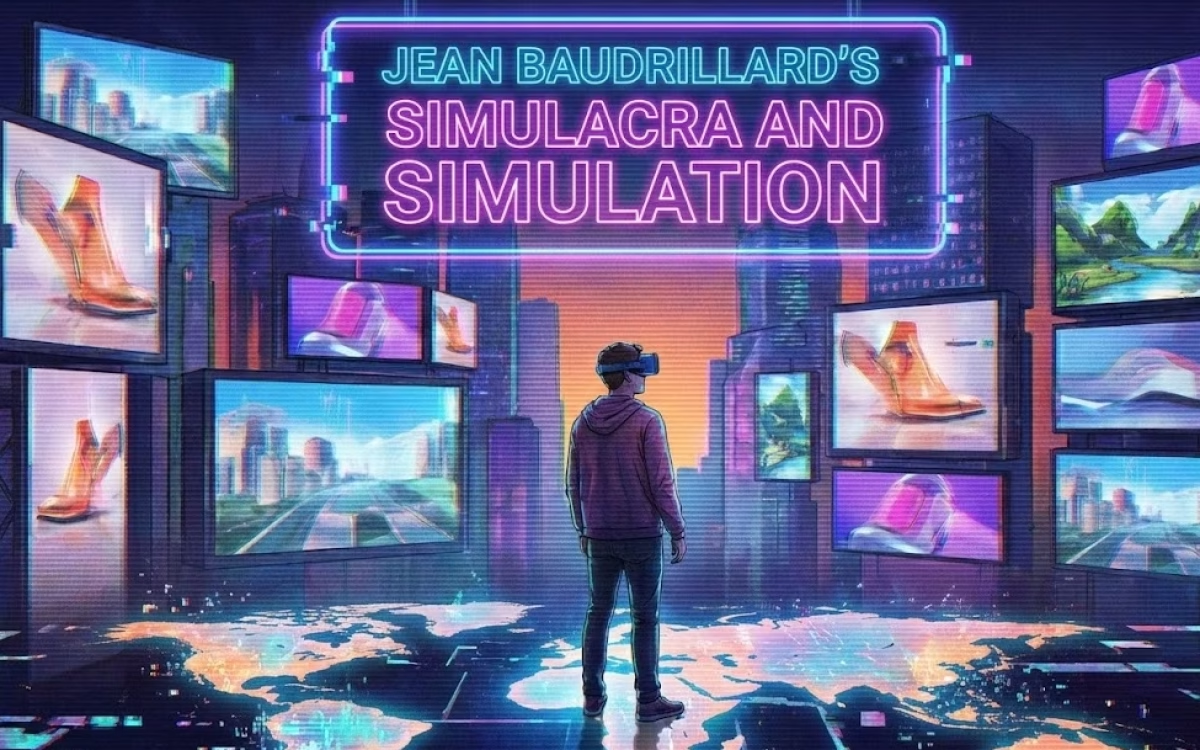
Jean Baudrillard’s Simulacra and Simulation famously inspired The Matrix. Morpheus utters the iconic line, “Welcome to the desert of the real”—a direct nod to Baudrillard’s vision of a hyperreal world stripped of authenticity.
As the high priest of Postmodernism, Baudrillard dissects how media, technology, and culture have collapsed reality into endless reproductions. His 1981 book argues that signs and symbols now dominate, replacing the “real” with fabricated versions.
In essence, Jean Baudrillard’s simulacra and simulation theory reveals a profound shift: we no longer live in a world of originals. Instead, we inhabit a realm of copies that reference other copies, where truth dissolves into simulation.
Quick Summary
In his 1981 treatise Simulacra and Simulation, French philosopher Jean Baudrillard argues that postmodern society has replaced all reality and meaning with symbols and signs. A Simulacrum is a copy of something that either no longer has an original, or never had an original to begin with. When these simulacra become so widespread that we can no longer distinguish the simulation from reality, we enter a state of Hyperreality—a condition where the “fake” is perceived as more real than the actual real world.
What Is a Simulacrum? Baudrillard’s Core Concept Explained
A simulacrum lies at the heart of Jean Baudrillard’s Simulacra and Simulation. But what exactly is a simulacrum? Baudrillard contrasts it sharply with a simple “copy” to highlight our hyperreal age.
Copy vs. Simulacrum: Key Differences
Copy: A faithful reproduction of a real original, like a photograph of a specific red apple from your kitchen. It points back to that tangible reality.
Simulacrum: A detached representation of “appleness” itself, such as the sleek Apple logo or artificial apple flavoring in candy. It evokes the idea without linking to any real apple—pure simulation.
This distinction shows how simulacra in Baudrillard’s theory detach from origins, circulating as self-referential signs.
The Map and the Territory: Borges’ Fable
Baudrillard draws on Jorge Luis Borges’ fable to illustrate the simulacrum definition. An empire crafts a map so precise it blankets the entire territory. Over time, the real world erodes, leaving only the map.
The map becomes the simulacrum: more “real” than reality, yet empty of it. In our world, think news cycles or social media feeds—they map events but often supplant the actual territory.
“If you want to read the book that inspired The Matrix, you can pick up the translated edition here: [Simulacra and Simulation by Jean Baudrillard on Amazon].”
The Four Stages of the Sign
Mastering the four stages of the sign is essential for exams on Jean Baudrillard’s Simulacra and Simulation. Baudrillard outlines how signs evolve from reflections of reality to pure simulacra. This progression reveals our shift to hyperreality—break it down simply below.
Stage 1: Faithful Copy (Reflection of Profound Reality)
The sign mirrors a real original.
Example: A portrait painting of a king accurately represents the living monarch, pointing directly to reality.Stage 2: Perversion of Reality (Masks and Denatures)
The sign distorts the original to hide flaws.
Example: A Photoshopped magazine cover of a celebrity sells “perfection,” perverting the real person’s appearance.Stage 3: Pretense of Reality (Masks Absence)
The sign admits it’s fake but conceals that all reality is absent.
Example: Disneyland pretends to be the “imaginary” to convince us Los Angeles is “real”—yet LA itself simulates endless wealth and glamour.Stage 4: Pure Simulacrum (No Relation to Reality)
The sign exists only among other signs, untethered from any origin.
Example: A CGI Instagram influencer or cryptocurrency like Bitcoin—values circulate in a closed loop of data and hype.
These four stages of the sign in Baudrillard’s theory form the backbone of postmodern analysis.
What Is Hyperreality? Baudrillard’s Ultimate Simulation
Hyperreality emerges when Stage 4—the pure simulacrum—dominates in Jean Baudrillard’s Simulacra and Simulation. Here, simulations outshine reality itself.
Hyperreality Definition
Hyperreality is a state where the copy feels more vivid, desirable, and “real” than the original. Boundaries blur: we prefer the bright illusion to the dull authentic. Baudrillard warns this defines our postmodern world.
Everyday Examples of Hyperreality
Reality TV’s scripted drama: Shows like The Bachelor feel more intense than genuine human connections, despite heavy scripting.
Pumpkin spice lattes: We crave this artificial flavor (no real pumpkin involved) more than an actual pumpkin pie.
These hyperreality examples show how Baudrillard’s simulacra and simulation theory permeates daily life—making the fake our new normal.
Baudrillard vs. The Matrix: A Common Essay Misconception
Students often invoke The Matrix in essays on Jean Baudrillard’s Simulacra and Simulation—but many miss the mark. This section clears up the Baudrillard vs. The Matrix debate.
The Movie’s Flaw
The Matrix (1999) posits a binary: the fake Matrix simulation versus the gritty real world of Zion. Neo “wakes up” to authenticity, escaping the hyperreal desert of the real.
Baudrillard’s Critique
Baudrillard reportedly disliked the film. Why? His theory rejects any “Zion.” Once Stage 4 pure simulacra take hold, the real vanishes forever—no escape, no awakening. We’re trapped in endless hyperreality, with no outside reality to reclaim.
This distinction sharpens your analysis: The Matrix romanticises redemption, but Baudrillard’s simulacra and simulation offers no such hope.
“Hyperreality is ultimately a system of control. To see how other theorists viewed invisible structures of power, read our guide to [Michel Foucault’s Panopticism].”
Baudrillard in Literature
Jean Baudrillard’s Simulacra and Simulation transforms literary criticism, especially in postmodern and cyberpunk works. Apply the four stages of the sign and hyperreality to unpack texts where reality frays.
Postmodern Fiction: Don DeLillo’s White Noise
In White Noise (1985), the “most photographed barn in America” embodies pure simulacrum. Tourists flock not for the barn’s essence, but its fame as a photographed icon. DeLillo shows Stage 4: the image supplants reality—no one sees the actual barn.
Cyberpunk: William Gibson’s Neuromancer
Gibson’s Neuromancer (1984) pioneers cyberspace as hyperreality. The matrix is a consensual hallucination brighter than flesh—and-data reality. Characters jack in, preferring simulated thrills to the “real” world’s decay, echoing Baudrillard’s critique.
These applications of Baudrillard’s simulacra in literature reveal how novels critique our sign-saturated world. Spot hyperreal motifs for sharper analysis.
“If signs only point to other signs, then texts only point to other texts. See how this connects to literary theory in our post on [Julia Kristeva and Intertextuality].”
Conclusion
When Jean Baudrillard penned Simulacra and Simulation in 1981, his ideas on the four stages of the sign and hyperreality struck many as dystopian sci-fi paranoia. Fast-forward to 2026: AI generates “realer-than-real” influencers, and virtual realities like the metaverse eclipse physical ones. What once seemed speculative now reads like a stark documentary of our world.
Baudrillard’s genius lies in providing the perfect framework for dissecting media, literature, and culture. Whether analysing Don DeLillo’s simulated barns, Gibson’s cyberspace, or today’s scripted TikTok “authenticity,” his theory unmasks how truth evaporates, identities fragment into avatars, and technology breeds endless copies of copies. Unlike The Matrix‘s hopeful Zion, Baudrillard offers no escape hatch—only the desert of the real, where simulacra reign supreme.
Yet this bleakness empowers critics: they wield his tools to question the hyperreal deluge. In an era of AI art and viral illusions, Simulacra and Simulation remains essential reading for anyone navigating the blurred line between original and fake.
FAQS
What is the difference between simulation and simulacrum?
Simulation copies reality (like a flight simulator training pilots). A simulacrum detaches fully, becoming more real than reality (Stage 4: e.g., a viral meme outshining the event it depicts).
What did Baudrillard mean by the 'Desert of the Real'?
It's the barren void left when signs erase originals—echoed in The Matrix. No profound reality remains; only empty simulations, like endless social media scrolls.
