Introduction
Jyotirao Phule’s Caste Laws: Challenging Divine Inequality
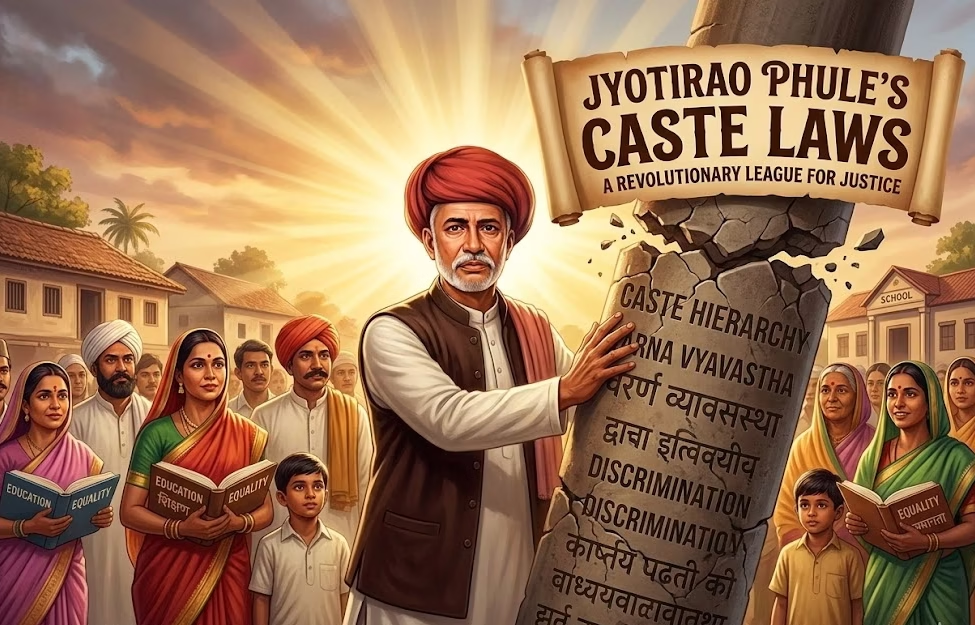
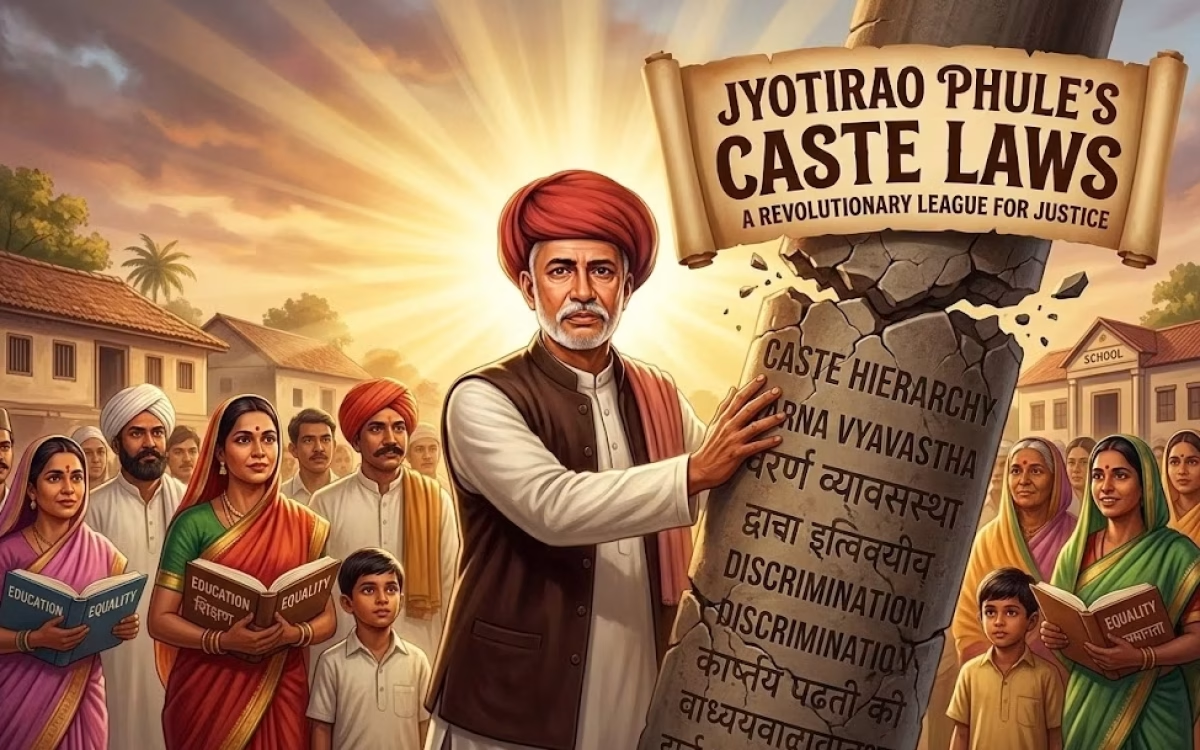
Jyotirao Phule’s caste laws exposed the brutal truth behind India’s social order. For centuries, inequality was not just a social norm; it was treated as divine law. Who was the man who finally called it what it was—slavery?
Mahatma Jyotirao Phule, born into the Mali caste in 19th-century Maharashtra, rose against this oppression. He faced a rigid socio-political climate where Brahmin dominance enforced untouchability and exploitation. Phule, a social reformer and educator, witnessed lower castes trapped in poverty and illiteracy.
Phule’s literature shifted the anti-caste movement profoundly. He argued Hindu scriptures were not holy texts but political tools created to enslave lower castes. This bold thesis ignited reform, paving the way for equality.
Quick Summary
Mahatma Jyotirao Phule (1827–1890) was a pioneering Indian social reformer who dedicated his life to eradicating untouchability and the caste system. In his seminal 1873 book, Gulamgiri (Slavery), Phule rejected the idea that caste laws were divine. Instead, he argued that the caste system was an artificial hierarchy created by invading Aryans (Brahmins) to subjugate the indigenous populations (Shudras and Ati-Shudras). Phule dismantled the authority of Hindu scriptures, arguing they were written by the oppressors as “laws” to maintain their economic and social dominance.
The Core Text: Gulamgiri (Slavery)
Jyotirao Phule’s Gulamgiri stands as a cornerstone of anti-caste literature. Published in 1873, this groundbreaking book dismantled the myth of divine caste hierarchy. It boldly redefined inequality as modern-day slavery.
Note that Phule dedicated Gulamgiri to American Civil War abolitionists. He directly compared Black slaves’ plight in America to India’s Ati-Shudras (untouchables). This parallel highlighted shared chains of oppression across continents.
Phule wrote Gulamgiri as a lively dialogue between himself and Dhondiba. This format makes complex ideas accessible, much like a Socratic dialogue. Readers grasp his critique of Brahminical scriptures effortlessly.
Through Gulamgiri, Phule empowered lower castes to question their subjugation. It fuelled the non-Brahmin movement and inspired future reformers.
“To truly understand the depth of his arguments, reading the original text is essential. Get your copy of [Selected Writings of Jotirao Phule on Amazon] for your sociology or literature studies.”
Phule’s Theory of Aryan Invasion: Flipping Colonial Narratives
Jyotirao Phule’s Aryan Invasion theory revolutionised caste critique. It challenged colonial scholarship head-on. British scholars argued Aryans were a superior race invading India. Phule flipped this narrative entirely.
Phule argued Aryans—whom he identified as Brahmin ancestors—were violent foreign invaders. They conquered India through deceit and force, he claimed. This view positioned Brahmins as outsiders imposing slavery.
The indigenous people, per Phule, were Shudras and Ati-Shudras. He stated they were original rulers of India. Defeated by Aryans, they faced enslavement and cultural erasure.
This theory in Gulamgiri empowered lower castes. It reframed history as a story of lost glory, inspiring resistance against Brahmin dominance.
The Weaponisation of Religion as “Caste Law”
Jyotirao Phule’s caste laws critique targeted religion’s dark role. He exposed how oppressors weaponised faith. This built on his Aryan Invasion theory, revealing scriptures as tools of control.
Dismantling the Myths
Phule heavily criticised texts like the Manusmriti. He mocked Vishnu avatars, such as Parashurama, as fictional enforcers of inequality. These myths, he said, justified Brahmin supremacy.
Religion as a Trap
Phule argued these texts were not God’s words. Instead, they were man-made “laws” to trick lower castes. By framing caste as “religious duty” (Dharma), oppressors ensured slaves never rebelled.
Economic Exploitation
Phule connected rituals to theft. Brahmins collected Dakshina—donations from poor peasants—under the guise of piety. This drained Shudras economically while binding them spiritually.
Phule’s analysis freed minds from dogma. It sparked demands for rational reform.
“Phule’s method of challenging the dominant historical narrative is a precursor to modern post-colonial theory. See how power and narratives are linked in our overview of [Edward Said’s Orientalism].”
Education as the Ultimate Weapon Against Caste Laws
Jyotirao Phule viewed education as the ultimate weapon. If caste laws thrived on ignorance of true history, education was the cure. It broke the chains of Brahminical control.
Phule acted decisively. He and Savitribai pioneered reforms.
First School for Girls: In 1848, they opened India’s first school for girls in Pune. Savitribai braved abuse to teach untouchable daughters.
Schools for Untouchables: Phule expanded access, opening schools for Shudras and Ati-Shudras. These defied caste taboos, fostering equality.
Phule captured this in his famous Marathi poem Vidyabina: “Vidye bina mati geli, matina na bhav aala; bhav bina mitra duar, duar bina ghar na gela.” (Lack of education leads to lack of wisdom, which leads to ruin; without wisdom, no friends or home.)
Education, for Phule, rebuilt indigenous dignity. It armed the oppressed for lasting freedom.
“Because Phule and his wife Savitribai championed women’s education, their work intersects with early feminist movements. Compare their fight for women’s autonomy with western feminist critiques in [The Madwoman in the Attic].”
The Satyashodhak Samaj: Phule’s Bold Rebellion
Jyotirao Phule Satyashodhak Samaj marked a practical uprising. Founded in 1873, it embodied his vision. This “Truth Seekers’ Society” challenged caste oppression directly.
Core Mission
Its mission was clear: liberate lower castes from Brahminical scriptures and priests. It rejected priestly intermediaries, promoting self-reliance. This aligned with Phule’s education drive.
Revolutionary Practices
They pioneered radical changes.
Conducted marriages without Brahmin priests— a massive legal rebellion.
These “Satyashodhak” weddings empowered Shudras, bypassing exploitative rituals.
Socially, it defied norms, fostering inter-caste unity.
The Samaj spread rapidly in Maharashtra. It inspired non-Brahmin politics, echoing Gulamgiri’s call to action.
Conclusion
Jyotirao Phule’s caste laws critique went beyond reform. He sought total destruction of the oppressive framework. Through Gulamgiri, schools, and Satyashodhak Samaj, Phule armed the marginalised.
He laid the groundwork for giants like Dr. B.R. Ambedkar. Ambedkar drew from Phule’s inversion of history and scripture. Moreover, Phule’s ideas fueled India’s Dalit and non-Brahmin movements.
Why Gulamgiri Matters Today
Phule’s work resonates in modern struggles.
Human Rights: It parallels global fights against systemic racism and slavery echoes.
Social Justice: Challenges religious dogma fueling inequality, from caste to gender.
Education Equity: Reminds us ignorance sustains power—knowledge liberates.
Today, amid rising caste violence and digital divides, Phule warns us. Reading Gulamgiri equips us for justice. Ultimately, his call endures: reject chains, reclaim history.
FAQS
What is the main theme of Gulamgiri?
The main theme of Gulamgiri is caste as slavery. Phule compares Indian lower castes to American Black slaves. He urges Shudras to reject Brahminical myths for liberation.
Who founded the Satyashodhak Samaj and why?
Jyotirao Phule founded the Satyashodhak Samaj in 1873. He aimed to free lower castes from priestly and scriptural oppression. It promoted equality through priestless rituals and education.
How did Jyotirao Phule view British rule?
Phule saw British rule positively for lower castes. It offered modern education, breaking traditional Brahmin restrictions. He viewed it as a chance to escape caste slavery temporarily.