INTRODUCTION
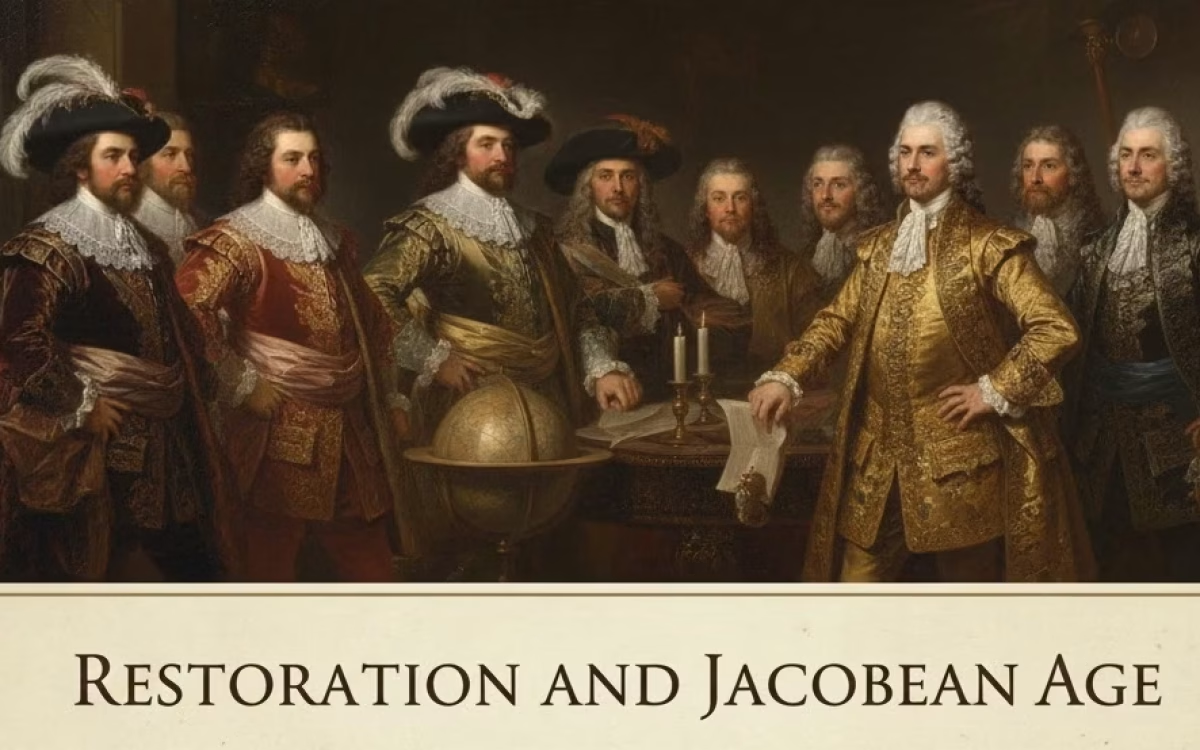
The Jacobean Age (1603–1625) and the Restoration Age (1660–1700) are two monumental periods in English literature, each deeply shaped by the socio-political upheavals of their time and therefore leaving a lasting impact on the trajectory of English letters. Together, they frame a century of dramatic literary evolution—from the dark complexities of early 17th-century England to the witty social satires following monarchy restoration.
Specifically, the Jacobean Age, named after King James I, marked a shift from the Elizabethan optimism toward a more serious, darker, and psychologically intense literary style. This period witnessed the flourishing of tragic drama, characterised by complex characters, themes of corruption, power struggles, and existential angst. For instance, playwrights such as Shakespeare, John Webster, and Ben Jonson produced works that grappled with the unsettling uncertainties of Jacobean England, including political turmoil and religious tensions. Moreover, the publication of the King James Bible in 1611 represents a cultural milestone embedded in this age, influencing the English language and literature profoundly.
In contrast, the Restoration Age ushered in a cultural renaissance after the Puritan Commonwealth’s suppression of the arts. With King Charles II’s return to the throne in 1660, theatres reopened, and literature shifted toward a neoclassical emphasis on reason, wit, and social manners. Restoration literature is renowned not only for its sharp satire, comedic brilliance, and vigorous prose, but also for reflecting a society eager for levity while simultaneously critical in its reflection on politics and human folly. Authors such as John Dryden, Aphra Behn, and William Congreve defined the literary landscape with works that combined elegance, humor, and social critique.
Therefore, this article is crafted to help students, competitive exam aspirants, and literature enthusiasts understand these two pivotal periods through expertly curated Multiple Choice Questions (MCQs), important questions with answers, and detailed literary analysis.
Understanding the Jacobean Age (1603–1625)
The Jacobean Age takes its name from the reign of King James I and marks a transitional phase from the Elizabethan optimism to a more somber and intricate literary tone. This era unfurls a canvas rich with psychological exploration, dark tragedies, and social critique. Jacobean literature exhibits a distinctive blend of stark realism and symbolism, emphasizing themes of corruption, power, and the supernatural.
Key Features of Jacobean Literature
In the Jacobean period, drama truly ascended to new heights, characterized not only by its gritty portrayal of human nature but also by a pervasive sense of moral ambiguity. Significantly, plays from this era often echo the anxieties of a society grappling with political instability and religious tension. Furthermore, Jacobean dramas frequently include Aristotelian heroes whose tragic flaws lead to their downfall, adding layers of complexity to characterization and plot. Moreover, themes such as revenge, murder, witchcraft, and supernatural elements like ghosts permeate many works, highlighting the era’s fascination with the darker sides of human experience.
In addition to tragedy, Jacobean literature also explored satire through comedic works that targeted political and religious institutions, reflecting widespread social unrest. Notably, playwrights such as Ben Jonson pioneered this satirical comedy form, while John Webster’s intense tragedies like The Duchess of Malfi exemplify the dark, complex moods of the period. Moreover, the Jacobean Age was marked by the flourishing of metaphysical poetry, characterized by intellectual complexity and elaborate metaphors, with John Donne as its foremost exponent.
The prose of the Jacobean era also demonstrated a new toughness and flexibility of style, as seen in the works of Francis Bacon and Robert Burton, whose writings blended scientific inquiry with human psychology. Thus, the Jacobean period presents a rich, multifaceted literary landscape that grapples with existential questions, social anxieties, and a growing philosophical rigor, mirroring the turbulent historical context of early 17th-century England. FULL TEXT
Noteworthy Jacobean Writers and Their Contributions
William Shakespeare continued to write some of his most profound works, including tragedies like Macbeth and King Lear, that delve into human ambition and downfall.
John Webster’s The Duchess of Malfi stands as a hallmark of Jacobean tragedy, with its intense emotional depth and critique of societal corruption.
Ben Jonson’s satirical plays and masques explored human folly and social pretensions.
Philip Massinger and Thomas Middleton contributed richly to the dramatic landscape with their diverse plays.
Beyond drama, prose giants like Francis Bacon and Robert Burton penned essays and philosophical treatises, reflecting the intellectual depth of the age.
Themes Predominating Jacobean Literature
Power struggles, betrayal, the supernatural, and existential dread permeate the literature of this period, mirroring a world rife with uncertainty. The theatrical works, in particular, pull the audience into a shadowy exploration of human weaknesses and societal flaws.
The Restoration Age (1660–1700): A New Dawn
Following years of Puritanical suppression, the Restoration period heralded a revival of arts and culture, coinciding with the return of Charles II to the throne. This era is celebrated for its lively spirit, wit, and a flourishing of literature that embraces clarity, order, and often, a sharp satirical edge.
Historical and Cultural Context of the Restoration
The reopening of theaters and the patronage of arts signaled a break from the repressive literary policies of the previous era. This newfound freedom gave rise to Restoration Comedy and a renewed vigor in poetry and prose.
Prominent Writers of the Restoration Period
John Dryden, a towering figure, shaped the literary aesthetics of the period with his poetry, plays, and criticism.
Aphra Behn broke new ground as one of the first women to earn a living through writing, with works that challenged societal norms.
William Congreve and William Wycherley crafted comedies renowned for their clever dialogue and critique of the aristocracy’s morals.
Other notable figures include Samuel Pepys, whose diaries offer invaluable insights into the period.
Characteristics and Themes of Restoration Literature
A signature feature of Restoration literature, above all, is its satirical wit and a sharp focus on manners, politics, and human folly. Specifically, this wit manifests itself through the comedic genres, biting social commentary, and a general critique of the aristocracy and court life. Moreover, themes like libertinism, social satire, and the tension between appearance and reality often dominate Restoration works, reflecting the complexities and contradictions of a society in transition. For instance, Restoration plays such as William Wycherley’s The Country Wife candidly depict the sexual libertinism and moral duplicity of the time, highlighting the decadence amid social decorum. Furthermore, the literature often explores the blurred line between public reputation and private behavior, emphasizing hypocrisy and irony.
In addition to social themes, Restoration literature frequently engages with political commentary and philosophical ideas. The return of the monarchy created a backdrop where writers like John Dryden combined literary artistry with political allegiance or critique, using heroic couplets and dramatic allegories. Consequently, Restoration prose also developed, with increased clarity and a move away from the ornate complexity of earlier periods, paralleling the rise of journalism and essay forms that shaped public discourse. Overall, the literature of this time paints a vivid picture of a world anxious to reconcile reason and passion, morality and libertinism, order and chaos.
Restoration and Jacobean Age: Overview
Here is a detailed table showcasing key Jacobean and Restoration Age authors, their important works, approximate publication years, literary movements/genres, and key details related to their contributions:
| Author | Important Works | Approximate Publication Year | Literary Movements/Genres | Key Details |
|---|---|---|---|---|
| William Shakespeare | Macbeth, King Lear, Othello | 1603–1616 | Jacobean Drama, Tragedy | Wrote some of his greatest tragedies in the Jacobean era; explored themes of power, fate, and human nature. |
| John Webster | The Duchess of Malfi | 1613 | Jacobean Tragedy | Known for dark, psychological tragedy with social critique and complex characters. |
| Ben Jonson | Volpone, The Alchemist, Bartholomew Fair | 1606–1631 | Jacobean Satire, Comedy | Master of satirical plays and masques; influenced English comedy; literary critic and poet. |
| Francis Bacon | Essays (e.g., Of Studies, Of Truth) | 1597–1625 | Jacobean Prose, Philosophy | Father of empiricism; advanced scientific method; major essayist influencing prose style and philosophy. |
| Robert Burton | The Anatomy of Melancholy | 1621 | Jacobean Prose, Early Psychology | Seminal prose work on human psychology and melancholia; deeply reflective and scholarly. |
| John Dryden | Absalom and Achitophel, All for Love | 1660s–1690s | Restoration Drama, Neoclassicism | Dominant literary figure of Restoration; refined poetry, drama, and criticism; shaped neoclassical ideals. |
| Aphra Behn | The Rover, The Emperor of the Moon | 1670s–1680s | Restoration Drama, Comedy | One of first professional female writers; notable for witty, bold plays challenging gender/status norms. |
| William Congreve | The Way of the World, Love for Love | 1690, 1695 | Restoration Comedy | Known for sharp wit and social satire focused on manners and morality within aristocratic society. |
| William Wycherley | The Country Wife, The Plain Dealer | 1675, 1676 | Restoration Comedy | Master of Restoration Comedy known for daring subject matter and cutting social commentary. |
| Samuel Pepys | Diary (Chronicles 1660–1669) | Published 1825–1829 | Restoration Prose, Historical Diary | Official and eyewitness account of Restoration England; vivid social and cultural descriptions. |
Restoration and Jacobean Age vs Other Ages
Jacobean Age (1603–1625) vs Elizabethan Age (1558–1603)
The Jacobean Age succeeded the Elizabethan Age, thereby inheriting England’s vibrant Renaissance cultural climate but simultaneously shifting in tone and thematic preoccupations. Whereas Elizabethan literature celebrated human potential, optimism, and expansive creativity, Jacobean literature on the other hand often depicted a darker, more cynical view of the human condition. Elizabethan drama, typified by many of Shakespeare’s earlier works, flourished with themes of heroism, exploration, and romance. In contrast, Jacobean drama delved deeper into human psychology, moral ambiguity, and corruption, with playwrights like John Webster and Ben Jonson pioneering works filled with political intrigue and existential unrest. Moreover, the Jacobean era also saw prose works with growing philosophical rigor, such as Bacon’s essays, thus signaling an intellectual transition.
Restoration Age (1660–1700) vs Jacobean Age (1603–1625)
The Restoration Age emerged after the political and cultural disruptions that followed the Jacobean period, most notably Puritan rule and the English Civil War. Unlike the introspective darkness of Jacobean literature, Restoration literature is marked by its revival of wit, satire, and theatricality. Furthermore, the reopening of theaters and the resurgence of courtly life under Charles II infused literature with comedic vitality and social critique. Moreover, the Restoration emphasized classicism, adherence to rules of decorum, and a focus on manners, which contrasted sharply with the more experimental and tragic tendencies of Jacobean drama. Notably, major Restoration writers like Dryden and Congreve honed sharp verbal wit, reflecting a society eager to poke fun at itself and the rigidity of social conventions, while Jacobean writers often portrayed the weight and complexity of moral dilemmas.
Restoration Age vs Romantic Age (1789–1837)
The Romantic Age, which arrived roughly a century later, significantly marked a dramatic shift from Restoration ideals. While Restoration literature prized reason, social order, and satire, Romantic literature instead celebrated emotion, individual imagination, and nature. For example, Romantic poets like Wordsworth, Shelley, and Keats actively responded against Enlightenment rationality, emphasizing creative freedom and personal experience. Consequently, the Rococo sophistication and social satire of the Restoration gradually gave way to the earnest, nostalgic, and often revolutionary spirit of Romanticism. Thus, in comparison, the Restoration’s neoclassical formality and social critique might seem restrained when set against the Romantic emphasis on spontaneity and emotion.
Jacobean Age vs Victorian Age (1837–1901)
Victorian literature, flourishing two centuries after Jacobean times, similarly grappled with social change and human psychology, but it did so predominantly through realism and moral seriousness, aligned with the realities of an industrializing society. Novelists like Dickens and the Brontë sisters explored class issues, morality, and psychological depth, yet with a generally more optimistic belief in progress and reform. Jacobean drama’s preoccupation with fatalism and dark tragedy contrasts sharply with Victorian literature’s broader social reformist undertones and narrative realism. However, both periods shared a deep interest in character complexity and moral questions, albeit expressed through very different forms and social contexts. Thus, Victorian literature not only reflected the stark realities of the rapidly changing 19th-century society but also sought to influence and inspire moral and social reform through its vivid portrayal of human struggles and social inequities.
| Literary Age | Key Characteristics | Dominant Genres | Themes and Tone | Notable Writers |
|---|---|---|---|---|
| Elizabethan Age | Optimism, Renaissance humanism | Drama, Poetry | Heroism, Exploration, Romance | Shakespeare (early works), Marlowe |
| Jacobean Age | Darker tone, psychological complexity | Tragedy, Satire, Prose | Corruption, Power, Existential Angst | Shakespeare (later works), Webster, Jonson |
| Restoration Age | Neoclassicism, wit, social satire | Comedy, Poetry, Criticism | Social manners, Satire, Reason | Dryden, Congreve, Behn |
| Romantic Age | Emotion, imagination, nature | Poetry, Novel | Individualism, Nature, Revolution | Wordsworth, Shelley, Keats |
| Victorian Age | Realism, moral earnestness | Novel, Poetry | Social reform, Morality, Progress | Dickens, Brontë Sisters |
FAQS
What historical events led to the beginning of the Restoration period?
Answer: The restoration of the monarchy with Charles II in 1660 ended the Puritan Commonwealth and reopened theaters, marking the Restoration period.Which monarch’s reign defines the Jacobean Age?
Answer: King James I.What are the main characteristics of Jacobean drama?
Answer: Dark themes, psychological depth, complex characters, and moral ambiguity.Discuss the contribution of John Webster to English drama.
Answer: Webster wrote intense tragedies like The Duchess of Malfi, known for deep exploration of human suffering and societal corruption.How did the political and religious climate influence Jacobean literature?
Answer: Tensions around monarchy, religion, and societal instability inspired themes of power, betrayal, and existential dread.Define Restoration Comedy and its social significance.
Answer: Restoration Comedy is witty, satirical drama mocking aristocratic manners and morals, reflecting the licentiousness of Charles II’s court.What role did Aphra Behn play in Restoration literature?
Answer: She was one of the first professional female writers, known for witty plays challenging gender norms.Compare the themes of tragedy and comedy in the Jacobean and Restoration ages.
Answer: Jacobean tragedies were dark and fatalistic, while Restoration comedies were light, witty, and socially satirical.How did the Puritan rule affect English drama?
Answer: Theaters were closed and drama suppressed, causing a cultural halt until Restoration.Explain the importance of satire in Restoration literature.
Answer: Satire was used to critique social pretensions, politics, and human folly with humor and irony.Describe the influence of French classicism on Restoration playwrights.
Answer: French Neoclassicism introduced rules of unity and decorum impacting Restoration drama’s structure.What are the notable prose contributions of the Jacobean period?
Answer: Philosophical essays by Francis Bacon and Robert Burton’s The Anatomy of Melancholy.Discuss the evolution of women’s roles in literature during the Restoration.
Answer: Women became visible as writers and subjects, with Aphra Behn as a leading figure.How did John Dryden influence literary criticism and poetry?
Answer: He set standards for Neoclassical poetry and criticism emphasising reason and wit.What social issues are reflected in Restoration plays?
Answer: Class, gender roles, hypocrisy, and libertinism.Examine the use of supernatural elements in Jacobean drama.
Answer: Ghosts and omens often symbolized fate and moral decay.How did the reopening of theaters impact English literature?
Answer: It revived drama, encouraging experimentation and public engagement.What are the stylistic features of Jacobean poetry?
Answer: Complex metaphors, dark imagery, and exploration of melancholy.Analyze the philosophical ideas expressed in Francis Bacon’s essays.
Answer: Empiricism and practical knowledge as foundations for understanding the world.What distinguishes Restoration satirical works from those of the Jacobean Age?
Answer: Restoration satire is more social and witty, often lighter, while Jacobean is darker and more moralistic.Identify key differences between Jacobean and Elizabethan drama.
Answer: Jacobean drama is darker, more cynical, and psychologically complex compared to Elizabethan optimism.How is morality portrayed in Restoration works?
Answer: Often as ambiguous, highlighting hypocritical social norms.Discuss Samuel Pepys’ contribution to the cultural understanding of the Restoration era.
Answer: His diary provides a vivid first-person account of everyday life and events.Explore the significance of wit and irony in Restoration literature.
Answer: They serve to entertain and critique society simultaneously.How did the Jacobean and Restoration literary periods reflect the societal changes of their time?
Answer: Jacobean literature reflects political anxiety and moral complexity, while Restoration literature mirrors a cultural revival and social satire.
Restoration and Jacobean Age: Commentary
The Jacobean and Restoration ages, although distinct yet deeply intertwined, embody a fascinating and complex evolution in English letters. On the one hand, the sombre introspection and tragic dimensions of Jacobean drama underscore a literary period preoccupied with exploring moral ambiguity, human frailty, and often bleak existential themes. On the other hand, these characteristics stand in contrast yet also complement the Restoration period’s spirited wit, sharp satire, and theatrical exuberance that celebrated society’s follies with cleverness and social critique. Together, these two literary periods offer timeless insights into human nature and society’s evolving complexities, providing a dual lens through which to understand the fluctuating cultural and political landscapes of early modern England. Furthermore, for students of literature, mastering these periods transcends mere exam preparation; it fosters an appreciation for the enduring legacy of England’s literary heritage, illuminating how historical contexts shape artistic expression and philosophical thought across ages. EXPLORE MORE
Conclusion
The Restoration and Jacobean Ages mark two of the most dynamic, contrasting, and influential periods in English literary history. Spanning from the early 17th century’s intrigue and darkness to the late 17th century’s exuberance and wit, these eras distinctively reflect England’s evolving political, social, and cultural landscapes through their literature. Therefore, grasping the essence of these ages involves more than memorizing dates or authors; importantly, it requires appreciating how historical contexts shaped literary forms, themes, and styles.
Specifically, the Jacobean Age, named after King James I, is characterized by its exploration of human nature’s darker facets, which manifests in complex tragedies and morally ambiguous characters. Notably, writers like Shakespeare, Webster, and Jonson pushed the boundaries of drama and prose, reflecting societal anxieties, religious tensions, and political uncertainties of early 1600s England. Their works delve into themes of power, corruption, fate, and existential despair, thereby laying a foundational stone for English tragic literature.
In sharp contrast, the Restoration Age emerged from the ashes of Puritan rule to celebrate renewal and artistic freedom. Marking the return of Charles II to the throne, this period redefined literary expression through sharp social satire, sophisticated wit, and the flourishing of comedy. Figures such as John Dryden, Aphra Behn, and William Congreve reflected a society eager for entertainment yet insightful social critique. Thus, Restoration literature embodied the values of reason, clarity, and elegance aligned with neoclassical ideals, while boldly addressing themes of class, gender, and morality.