
Introduction
The Madwoman in the Attic: Why Society Labels Female Rage as Madness
Think of the “crazy ex-girlfriend” trope in movies and memes. She’s furious, vengeful, unhinged—always the villain. Why do we slap the “crazy” label on angry women, from pop culture hysterics to literary outcasts? It reveals a deeper cultural reflex: silencing female fury by calling it insanity.
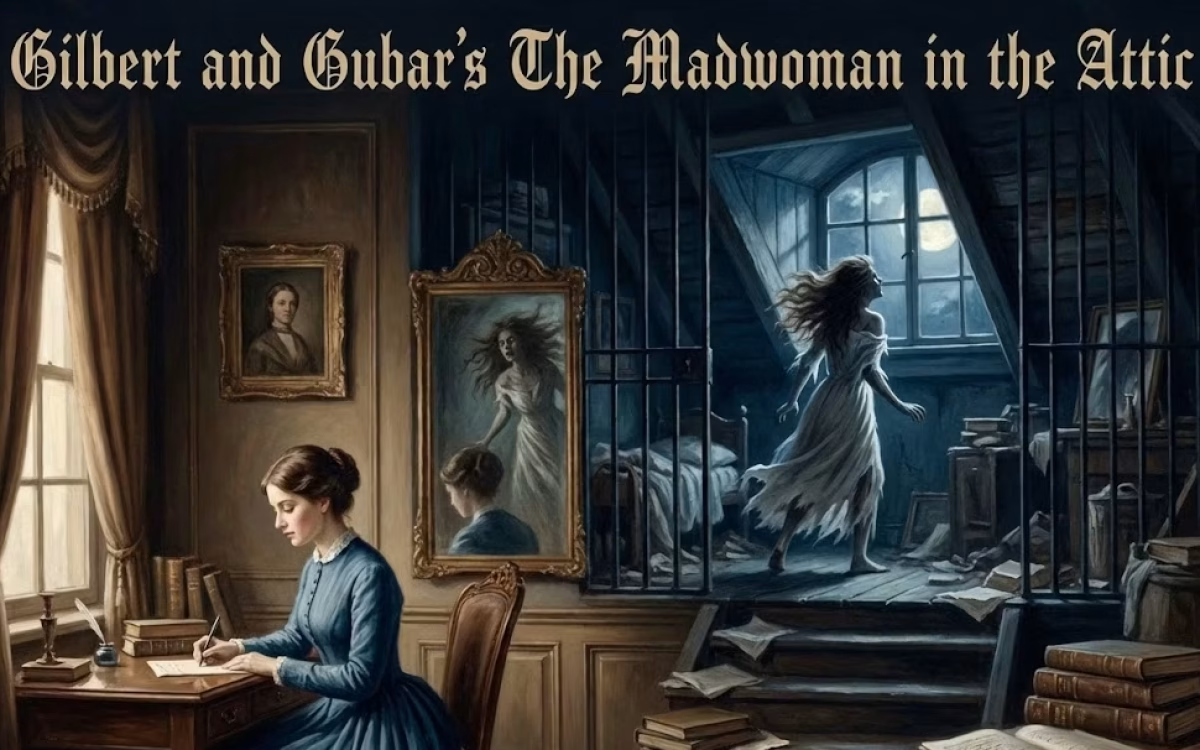
Enter The Madwoman in the Attic, Sandra Gilbert and Susan Gubar’s groundbreaking 1979 feminist critique. This seminal text revolutionised literary analysis, especially of Victorian novels like Jane Eyre. Gilbert and Gubar argue that patriarchal storytelling traps women’s authentic voices in attic-like confines of madness and monstrosity.
Far from a mere villain, the “madwoman” embodies repressed female rage that society desperately tries to lock away. She demands we confront the rage Victorian authors—and our world—feared most.
Quick Summary
Published in 1979, “The Madwoman in the Attic” is a seminal work of feminist literary criticism by Sandra Gilbert and Susan Gubar. They argue that 19th-century women writers were confined by a patriarchal binary: female characters could only be the submissive “Angel in the House” or the rebellious “Madwoman” (Monster). The “madwoman” is not actually insane but a representation of the author’s own repressed anger and desire for freedom. The most famous example is Bertha Mason in Jane Eyre, who acts as a “dark double” for the protagonist.
The Angel vs. The Monster: Gilbert and Gubar’s Core Theory
Gilbert and Gubar dismantle Victorian gender myths in The Madwoman in the Attic. They pit two archetypes against each other: the Angel and the Monster. These represent society’s impossible bind for women.
The Angel in the House: Purity and Submission
Coventry Patmore’s 1854 poem The Angel in the House defined the ideal Victorian woman. She was submissive, pure, and self-sacrificing—devoted to husband and home. Virginia Woolf later “killed” this angel to write freely. Yet, Gilbert and Gubar show how it haunted all creative women.
The Monster: Rage Unleashed
Refuse the angel role? Become the monster. She’s sexual, angry, or boldly creative—traits deemed unnatural for women. Bertha Mason in Jane Eyre embodies this: fiery, trapped, destructive. Society brands her mad to contain the threat.
The Anxiety of Authorship: Women’s Creative Struggle
Women writers like the Brontës faced the “anxiety of authorship”. Creativity was a “male” domain; female pens risked monstrosity. Gilbert and Gubar argue the madwoman bursts forth as their frustration—the rage of voices stifled by patriarchy.
This binary explains why Victorian novels teem with attic-bound fury. It forces us to reread these stories through a feminist lens.
“This theory is a must-read for any serious student of literature. Get the original text: [The Madwoman in the Attic on Amazon].”
Case Studies: Madwomen Who Shatter the Silence
Gilbert and Gubar’s theory shines in real texts. These case studies from The Madwoman in the Attic reveal how authors externalise female rage.
Case Study 1: Jane Eyre (The Original Madwoman)
Charlotte Brontë’s Jane Eyre birthed the iconic madwoman: Bertha Mason.
Bertha’s Fury: Locked in Thornfield Hall’s attic by husband Rochester, Bertha embodies raw rebellion. She sets his bed ablaze and burns the house down—acts of vengeful destruction.
The “Double” Dynamic: Bertha is Jane Eyre’s subconscious shadow. When Jane seethes at Rochester’s lies but stays “civilised”, Bertha acts. She voices Jane’s buried anger, doing what propriety forbids.
Bertha isn’t chaos; she’s Jane’s unleashed id. This “double” lets Brontë explore rage without dooming her heroine.
Case Study 2: The Yellow Wallpaper (The Medical Madwoman)
Charlotte Perkins Gilman’s 1892 story indicts “medical” madness.
The Diagnosis: The narrator suffers “hysteria” and is prescribed Silas Weir Mitchell’s infamous “rest cure”—bed rest, isolation and no writing. It aimed to tame women but bred despair.
The Wallpaper Trap: She fixates on creeping women trapped behind the yellow wallpaper pattern. They symbolise her stifled self, straining to break free.
Analysis: She’s not inherently mad. Boredom and repression from childlike treatment spark her “insanity”. It’s a sane revolt against patriarchal control—a madwoman born of neglect.
These cases prove Gilbert and Gubar right: Madwomen channel the monster within every “angel”.
Modern Evolution: Gone Girl and the “Cool Girl” Madwoman
The Madwoman in the Attic echoes in today’s thrillers. No longer attic-bound, the madwoman claims center stage as anti-heroine.
From Attic to Protagonist: The Shift
Victorian monsters hid in shadows. Modern ones—like Gillian Flynn’s Amy Dunne in Gone Girl (2012)—drive the plot. She fakes her death, frames her husband Nick, and returns vengeful. Readers cheer her chaos.
Exposing the “Cool Girl” Myth
Amy dismantles the “Cool Girl”—Flynn’s update to the Angel in the House.
She’s the low-maintenance dream: hot, fun, burger-loving, never needy.
But it’s a mask. Amy rejects it, embracing full “monster” mode: calculating, violent, unapologetic.
She burns the house (metaphorically) on patriarchal expectations, much like Bertha Mason.
Is Reclaiming the “Psycho” Feminist?
Gilbert and Gubar might applaud the rage. Amy voices what Janes and narrators suppressed.
Yet, is it empowering or a trap?
Pro: It subverts silence, letting women own their darkness.
Con: Glamorizing psychopathy risks reinforcing stereotypes—crazy women as villains, even if “cool.”
Gone Girl evolves the madwoman but questions if freedom means monstrosity. Feminism demands more than revenge.
“To understand the human side of the ‘monster’ in the attic, you must read our analysis of [Jean Rhys’s Wide Sargasso Sea] [Charlotte Bronte’s Jane Eyre].”
Conclusion
Gilbert and Gubar flung open The Madwoman in the Attic in 1979. Today, the door stays wide. Women writers no longer bury rage in attic subplots—Amy Dunne and her sisters strut onstage.
This Victorian trope endures because society still squirms at angry women. From Bertha’s fire to the Cool Girl’s mask, it spotlights our discomfort with female fury. Next time you spot a “crazy” label, ask: Who’s really locked away?
Reread Jane Eyre or binge Gone Girl. The madwomen wait to speak.
FAQS
What is the main argument of The Madwoman in the Attic?
Gilbert and Gubar argue Victorian women writers faced an “anxiety of authorship”. They split into Angel (submissive) or Monster (rebellious), with madwomen embodying repressed rage against patriarchy.
Who is the Angel in the House?
From Coventry Patmore’s 1854 poem, she’s the ideal Victorian woman: pure, self-sacrificing, devoted to home and husband. Virginia Woolf “killed” her to create freely.
Is Bertha Mason a villain or a victim?
Both. In Jane Eyre, Bertha is Rochester’s attic-locked wife, a “monster” of rage. Yet, Gilbert and Gubar see her as Jane’s double—a victim of repression, voicing forbidden fury.
