Introduction
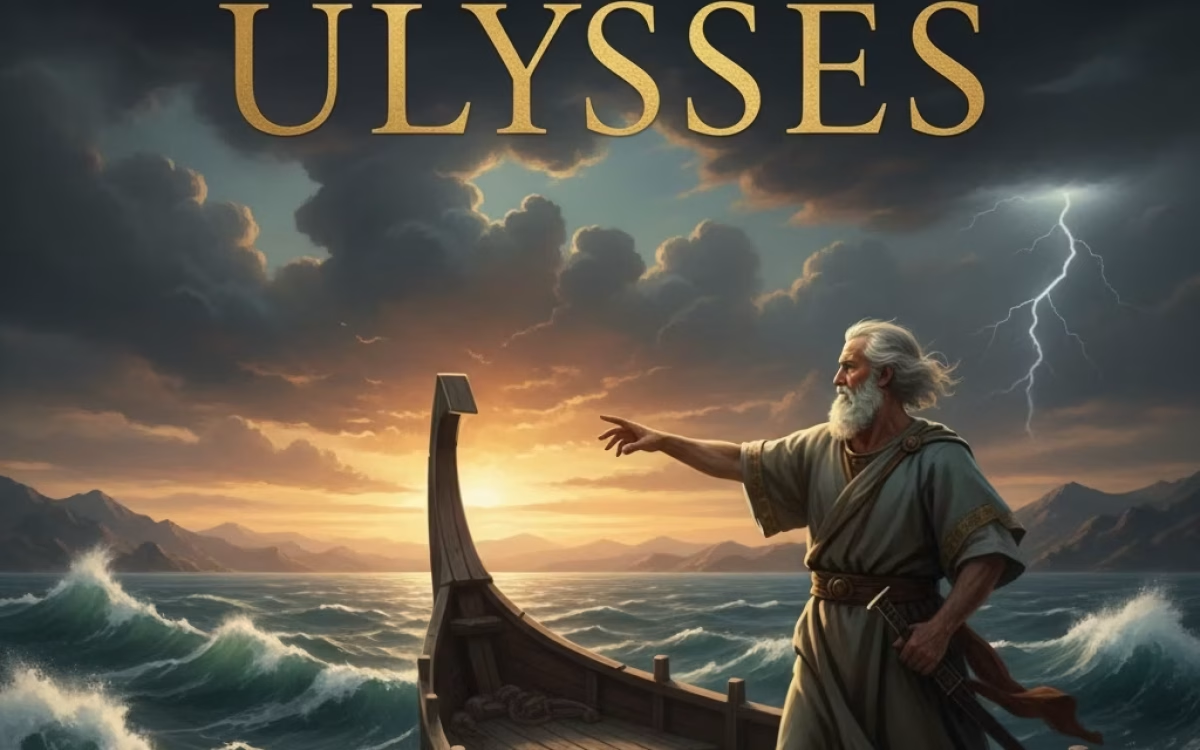
Alfred Lord Tennyson’s “Ulysses” isn’t simply a poem; it’s an anthem for every soul that refuses to succumb to stasis—a whirlwind of longing, loss, and fearless striving that echoes through the corridors of human experience. Written after the death of Tennyson’s beloved friend Arthur Hallam, the poem transforms an epic hero’s myth into an intimate confession—a powerful reminder that our search for meaning may never be complete but must always be courageous.
Natural as rain on a tin roof, the poem’s voice is personal yet universal. Here is a speaker who has tasted the salt of the sea, craves new horizons, and—despite grey hair and the passage of years—burns with that singular desire: “To strive, to seek, to find, and not to yield.”
Lord Tennyson’s Ulysses: An Overview
At its heart, “Ulysses” is a dramatic monologue: an ageing king (the Roman name for Homer’s Odysseus) resists the staleness of domesticity, yearning instead for more adventure, even as death approaches. Ulysses feels restless back home in Ithaca, surrounded by “an aged wife” and a “savage race” he rules but who “know not me.” His life has been a series of epic journeys, and he bristles at the quiet normalcy of governance.
Far from a mere nostalgia trip, the poem builds a philosophy out of restlessness. It’s as if Tennyson whispers, “Old age has its honour and toil; / Death closes all: but something ere the end, / Some work of noble note, may yet be done.” The resolve to sail again becomes a metaphor for the persistent human urge to learn, grow, and evolve—even when the world expects resignation. COMPLETE TEXT
Lord Tennyson’s Ulysses: Personal Backdrop & Mythic Sources
Tennyson was no stranger to sorrow. Arthur Hallam’s early death shattered him, infusing “Ulysses” with the sort of existential ache one feels after a funeral when the ordinary suddenly glows with elusive meaning. The real Ulysses, or Odysseus, is lifted from Homer’s Odyssey and Dante’s Inferno, but Tennyson’s take is intensely modern: less about gods and monsters, more about human resilience and the meaning of a life fully lived.
Lord Tennyson’s Ulysses: Structure, Form & Devices
“To follow knowledge like a sinking star…”
Dramatic Monologue: Ulysses addresses both himself and an imagined audience (his men, perhaps us), swinging between confession and persuasion. The poem is structured in a single, sweeping stanza, mimicking the unbroken current of thought.
Iambic Pentameter: The musicality of the poem comes from its steady iambic pentameter—think heartbeat, think dogged persistence.
Literary Devices:
Metaphor: “Still hearth” for idleness; “life to the lees” for full, exuberant living
Antithesis: “Enjoy’d greatly… suffer’d greatly”
Onomatopoeia: “ringing plains of windy Troy”
Epigram: Memorable lines like “To follow knowledge like a sinking star” linger in the mind like a catchy refrain.
Symbolism: The “sea” for adventure; “land” for safety and domesticity.
Lord Tennyson’s Ulysses: Insights & Commentary
The Poet’s Restlessness
Right from the opening, Ulysses confesses how “it little profits that an idle king” should languish at home. His heart belongs to the life of adventure—to drinking “life to the lees” and to a roaming spirit that can never settle.
Personal insight: As someone who’s often felt the tug of new projects before the old ones are done, this sentiment feels painfully familiar. Is it courage or folly to leave comfort for chaos? Ulysses (and Tennyson) seems to answer: it is both.
Ulysses’s Grief and Ambition
Haunted by memories of Troy and “the ringing plains of windy Troy”, Ulysses is aware of his diminished power but is undeterred. His experiences form an “arch wherethro’ / Gleams that untravell’d world whose margin fades …” Every experience, every loss, has only made the unknown more alluring.
Telemachus: Duty vs. Desire
Ulysses introduces his son, Telemachus, who is left to govern Ithaca. He appreciates his son’s virtues—prudence, gentleness, and a sense of duty—but knows such virtues are not his own. The torch is handed over, but Ulysses keeps the fire for himself. This moment is both proud and quietly, painfully resigned.
Brotherhood, Beyond the Sunset
In urging his old fellow mariners to “push off”, Ulysses illustrates that adventure is not a solo act. “My purpose holds / To sail beyond the sunset…” Ageing bodies, perhaps, but “equal temper of heroic hearts”.
Reflective note: The old camaraderie—the thrill of shared struggle—feels like an echo of late nights with friends, all ambition and possibility, just before life’s narrowing routines set in.
The Closing Affirmation
The iconic close—“To strive, to seek, to find, and not to yield”—reminds readers of the Victorian faith in effort, but Tennyson’s context gives this endurance a bittersweet, almost defiant note. As if he dares us, in our own moments of doubt, to press forward anyway.
Lord Tennyson’s Ulysses: Major Themes
Optimism in the Face of Mortality: The poem’s recurring answer to “death closes all” is an unyielding optimism and will to action—even when success is not guaranteed.
The Heroic Ideal & Victorian Ethos: Ulysses embodies the Victorian thirst for discovery and self-overcoming.
Restlessness and Dissatisfaction: The deeply modern itch to resist routine and the boundaries of one’s station.
Brotherhood and Leadership: The mythic hero isn’t alone; true adventure requires companionship—even as one grows frail.
Knowledge & Experience: “To follow knowledge like a sinking star” becomes a rallying cry for lifelong learning, whether academic or existential.
Lord Tennyson’s Ulysses: Dramatic Monologue
“Ulysses” uses the dramatic monologue not to brag, but to confess. His famous lines become as much about inner turmoil as about external adventure. Readers, then, must sift truth from self-deception—does Ulysses seek meaning or simply an escape? Is reckless ambition always noble, or does it have costs? There are no easy answers—and it’s precisely this nuance that gives the poem its lasting power. EXPLORE OTHER WRITERS
Lord Tennyson’s Ulysses: Literary Devices
Tennyson’s mastery shines in the poem’s seamless blend of stately iambic pentameter, vivid metaphors, and aphoristic power (“To rust unburnish’d, not to shine in use!”). The poem moves from narration to exhortation and back again—each shift revealing Ulysses’ changing moods and deepening resolve. No word is wasted.
Conclusion
At the end of the day, “Ulysses” endures not just for its grandeur but for its deeply personal, almost private ache—the feeling that even in loss, even at the threshold of old age or failure, something essential remains: a will that remains unbroken.
Stories end, journeys pause, but the yearning—the ache “to strive, to seek, to find, and not to yield”—outlives them all.
FAQS:
| Question | Answer |
|---|---|
| How does Ulysses view his own age? | He sees old age as honoured yet full of untapped potential; it’s not a stop sign but a final adventure. |
| What is unique about the poem’s structure? | It’s a dramatic monologue in iambic pentameter—one sweeping stanza evoking internal and external journeys. |
| Why does Ulysses leave governance to Telemachus? | His son excels at managing duties and cares; Ulysses, restless, seeks higher aims. |
| Is the ending optimistic or tragic? | It’s bravely optimistic with an undercurrent of future uncertainty—a refusal to give up even in the face of fate |