INTRODUCTION
Om Prakash Valmiki’s Joothan is not just a book—it’s a raw, unflinching journey into the heart of caste discrimination and the relentless pursuit of dignity in India. Through his powerful autobiography, Valmiki pulls back the curtain on the everyday realities faced by Dalits, exposing the deep-rooted social exclusion and humiliation that shaped his life. Moreover, from being denied access to water and education to enduring the pain of untouchability, Joothan lays bare the systemic injustices that continue to haunt marginalised communities. In fact, these experiences are not isolated incidents but reflect a broader pattern of oppression. This post dives deep into the themes, struggles, and triumphs that define Om Prakash Valmiki’s Joothan. By offering readers a compelling look at how one man’s story became a voice for millions, the narrative invites reflection on the enduring power of resilience and resistance in the face of adversity.
What is Joothan?
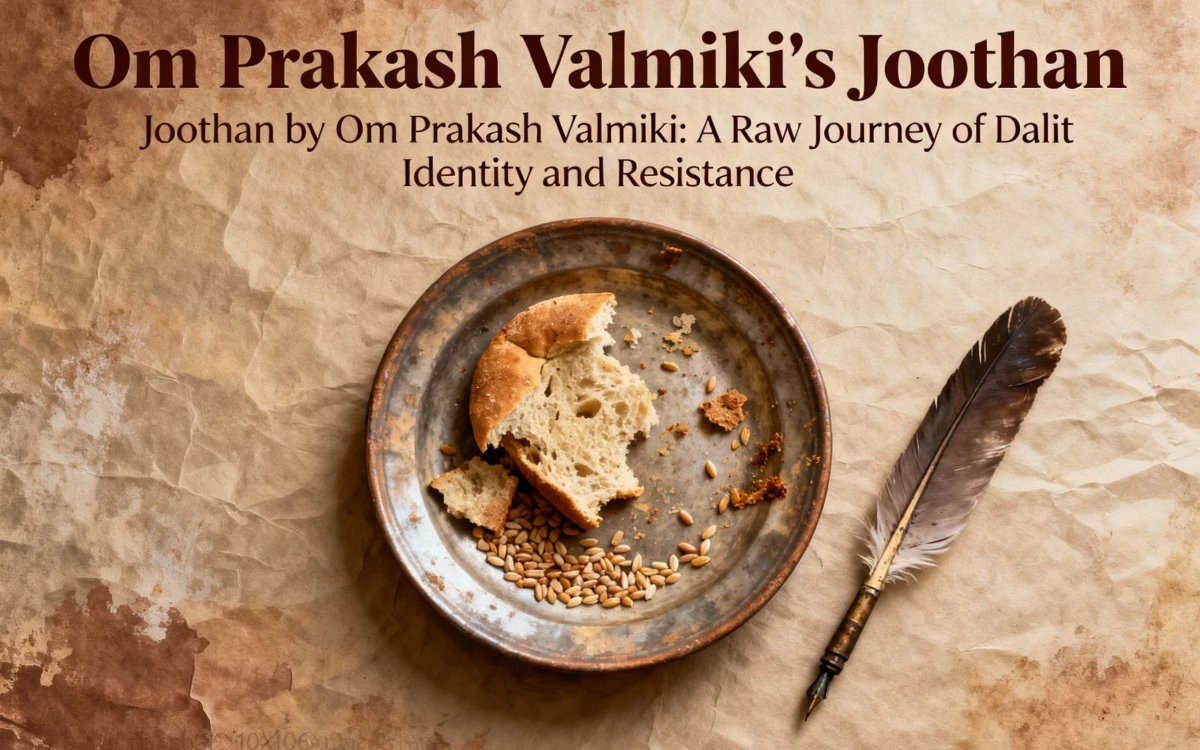
The word Joothan literally means “scraps” or “leftovers”—the food left on a plate after someone has eaten, considered polluted and unfit for consumption by the original eater or their family. In Dalit life, Joothan becomes a metaphor for the indignity and humiliation faced by those at the bottom of the caste hierarchy.
Valmiki’s narrative draws from his own experiences growing up in a village in Uttar Pradesh. He and his family had to survive on the scraps left behind by upper-caste families. This reality shaped his understanding of caste and became the foundation of his powerful story. The practice of eating Joothan was not just about hunger. It symbolised the deep-seated social exclusion and dehumanisation that Dalits endured. Valmiki’s account offers readers a vivid glimpse into the daily struggles and resilience of Dalit communities in India. FULL TEXT
Om Prakash Valmiki’s Joothan: Social Context
Om Prakash Valmiki was born in 1950 in a small village in Uttar Pradesh. His family belonged to the Chuhra community, considered “untouchable” in the caste hierarchy. From a young age, Valmiki was acutely aware of the social barriers that defined his life. He was denied access to education, forced to do menial labor, and subjected to constant humiliation by upper-caste villagers.
Despite the odds, Valmiki’s determination to educate himself became a turning point in his life. He faced numerous obstacles—teachers who mocked him, classmates who ostracised him, and a system that seemed designed to keep him down. Yet, he persevered. Education became his weapon against oppression, and through it, he found his voice.
Valmiki’s journey from a marginalised boy to a celebrated writer is nothing short of inspiring. His decision to write Joothan was not just an act of self-expression but a political statement. By sharing his story, he challenged the dominant narrative and gave voice to millions of Dalits who had been silenced for generations.
Om Prakash Valmiki’s Joothan: Themes
Caste Discrimination and Social Exclusion
Caste discrimination in Joothan is not just a backdrop—it is the central reality that shapes every aspect of Valmiki’s life. From childhood, Dalits like Valmiki faced systematic exclusion from basic human rights and dignity. Society denied them access to public water sources, forced them to live in segregated colonies, and barred them from entering temples or schools. Moreover, the most visceral example is the practice of untouchability. Dalits could not touch upper-caste people or their belongings and were often forced to eat leftovers—literally, Joothan (left-overs)—from the plates of others. This daily humiliation was not just about food; it constantly reminded them of their “polluted” status in society.
In addition, Valmiki’s narrative reveals how these practices were not isolated incidents. Instead, they formed part of a deeply entrenched social system that kept Dalits subjugated and invisible. As a result, the reader gains a profound understanding of how caste discrimination permeates every layer of life for Dalits in India.
The Struggle for Dignity
Om Prakash Valmiki’s journey shows the incredible strength of the human spirit to resist oppression and reclaim dignity. From a young age, people told Valmiki he was “unfit” to learn or succeed. Yet, he refused to accept that fate. His story is full of quiet acts of defiance—standing up to teachers who mocked him, pushing through his studies despite the odds. The pursuit of dignity isn’t just about personal achievement; it’s about demanding to be treated as a human being. Valmiki transformed from a marginalised boy into a respected writer and activist. He proved that dignity isn’t something others can give or take away. Instead, it’s something each person must claim and defend, often at great personal cost.
The Role of Education
Education is the turning point in Valmiki’s life and a recurring theme in Joothan. For Dalits, education has historically been both a privilege and a weapon. Denied access to schools for generations, Dalits like Valmiki saw education as a means to break free from the cycle of poverty and oppression. In the book, Valmiki describes how learning to read and write opened his eyes to new possibilities and gave him the tools to question the social order. Education empowered him to challenge the status quo, to articulate his experiences, and to find his voice as a writer and activist. The transformative power of education is not just about individual success; it is about collective empowerment. Educated Dalits are more likely to demand their rights, participate in civic life, and advocate for social change.
Identity and Self-Discovery
Joothan is also a story of self-discovery, as Valmiki grapples with his identity as a Dalit in a society that seeks to erase or marginalise it. His journey is not just about overcoming external obstacles like poverty and discrimination; it is also about coming to terms with who he is and what he stands for. Through his writing, Valmiki reclaims his identity and asserts his right to be seen and heard. This process of self-discovery is deeply personal, but it also has broader implications for the Dalit community. By sharing his story, Valmiki challenges the dominant narrative and creates space for other Dalits to tell their own stories. His narrative reminds us that identity is not something others can impose—it is something each person must discover and affirm for themselves.
Om Prakash Valmiki’s Joothan: Literary Analysis
Narrative Style and Structure
Valmiki’s narrative style is direct and unflinching. He does not shy away from describing the brutal realities of his life. The book is structured as a series of vignettes, each one highlighting a different aspect of his experience. This fragmented structure mirrors the fragmented nature of Dalit identity and the constant struggle to piece together a sense of self.
The title Joothan itself is a powerful metaphor for the indignity and humiliation faced by Dalits. Throughout the book, Valmiki uses food and eating as symbols of social exclusion and oppression. The act of eating leftovers becomes a metaphor for how Dalits must survive on the scraps left behind by the privileged.
Valmiki’s use of language is simple yet powerful. He writes in a style that is accessible to a wide audience, making his story relatable to readers from all walks of life. His voice is authentic and unapologetic, reflecting the raw emotions of someone who has lived through the pain he describes.
Joothan in the Context of Dalit Literature
Dalit literature in India has its roots in the struggle for social justice and equality. Writers like Valmiki have played a crucial role in giving voice to the marginalized and challenging the dominant narrative. Joothan is part of a larger tradition of Dalit literature that seeks to expose the realities of caste oppression and advocate for change.
Since its publication, Joothan has had a profound impact on Indian society. It has been widely read and discussed, both in academic circles and among the general public. The book has inspired countless readers to question the social order and advocate for the rights of the oppressed. EXPLORE MORE
Conclusion
Om Prakash Valmiki’s Joothan stands as a remarkable testament to the lived realities of caste-based discrimination in India. Through his autobiographical narrative, Valmiki exposes the enduring cruelty and social exclusion faced by Dalits. He charts a powerful journey toward self-awareness, resilience, and pride. His life story reveals the complex intersections of caste, class, and identity. Deeply embedded social hierarchies continue to shape individual destinies and collective experiences, even after legal reforms aimed at equality.
Joothan is more than a personal memoir. It is a poignant socio-political document. The book challenges readers to confront uncomfortable truths about systemic oppression. Valmiki’s narrative forces us to acknowledge the silent suffering endured by marginalised communities. It highlights the ongoing struggle to dismantle caste-based hegemony. At the same time, it celebrates the transformative power of education, activism, and the assertion of dignity. This is a narrative of hope within hardship. Valmiki’s critique of entrenched caste structures, along with his intimate portrayal of pain and defiance. It makes Joothan a vital contribution to Dalit literature and Indian socio-cultural discourse. His work stands out for its powerful voice and unflinching honesty. It offers a unique perspective on the struggles and resilience of Dalit communities. Through his narrative, Valmiki challenges the status quo and gives voice to the silenced, making Joothan an essential read for anyone interested in social justice and identity.