Introduction
Coleridge’s The Rime of the Ancient Mariner, is widely regarded as one of the most influential poems in English literature. This haunting ballad is celebrated for its vivid storytelling and profound themes. It explores ideas like sin, guilt, redemption, and the complex relationship between humans and nature. First published in 1798 as part of the landmark collection Lyrical Ballads, the poem has captivated readers for over two centuries. It has inspired countless interpretations and analyses.
In this detailed analysis, we’ll examine the poem’s intricate symbolism, narrative techniques, and moral lessons. By delving into key characters, supernatural elements, and the poem’s enduring relevance, readers will gain a comprehensive understanding of Coleridge’s vision. This exploration will guide you through the timeless appeal of “The Rime of the Ancient Mariner”. FULL TEXT
Quick Summary
This long lyrical ballad (1798) by Samuel Taylor Coleridge tells the haunting story of a sailor who shoots an Albatross, bringing a curse upon his ship. It is a tale of crime, punishment, and supernatural horror (“Water, water, everywhere, nor any drop to drink”). The poem explores the Romantic ideal of respecting nature, ending with the Mariner’s lesson to the Wedding Guest: “He prayeth best, who loveth best / All things both great and small.”
About the Author
Samuel Taylor Coleridge was a towering figure in English literature. He was known as a poet, literary critic, philosopher, and theologian. Born on October 21, 1772, in Ottery St. Mary, Devonshire, England, he was the youngest of fourteen children. His father was a vicar and schoolmaster, and Coleridge’s early life was shaped by deep intellectual curiosity and a love for books.
His education began at the King’s School in his hometown. Later, he attended Jesus College, Cambridge. At university, he became involved in radical political and philosophical ideas. He even planned a utopian community called “Pantisocracy” with fellow poet Robert Southey. Although this plan never came to life, it showed his early idealism and desire for social change.
A key moment in Coleridge’s career was his collaboration with William Wordsworth on the landmark collection Lyrical Ballads, published in 1798. This volume is widely seen as the starting point of the English Romantic movement. Coleridge’s contribution, “The Rime of the Ancient Mariner,” became one of the most famous poems in the English language. His other major works include “Kubla Khan,” “Christabel,” and the prose masterpiece Biographia Literaria, which remains a cornerstone of literary criticism.
Throughout his life, Coleridge was also known for his lectures, essays, and philosophical writings. He introduced German idealist philosophy to English audiences and coined influential terms such as “suspension of disbelief.” Despite personal struggles with health and addiction, his ideas and writings left a lasting impact on literature and criticism.
Coleridge passed away on July 25, 1834, in Highgate, near London. His legacy as a pioneer of Romanticism and a profound literary thinker endures to this day.
Coleridge’s Rime of the Ancient Mariner: Background
“The Rime of the Ancient Mariner” was written by Samuel Taylor Coleridge in 1797–98. It was first published in the landmark 1798 edition of Lyrical Ballads, a collection co-edited with William Wordsworth that is widely seen as the beginning of English Romanticism. The poem’s creation was influenced by real events, literary conversations, and Coleridge’s imagination. One major inspiration was a walking tour with Wordsworth and Dorothy through Somerset’s Quantock Hills, where they discussed a book about a privateering voyage. In that story, a sailor named Simon Hatley shot a black albatross—this incident sparked the idea for the poem’s central act of violence.
Coleridge was also inspired by Captain James Cook’s voyages, especially his explorations of Antarctica and the Pacific. His own tutor, William Wales, who sailed on Cook’s flagship, influenced the poem’s icy settings and mysterious seas. These real-world adventures and the Romantic fascination with the sublime are reflected in the poem’s imagery. Coleridge also drew from local legends, such as tales of spectral ships crewed by ghostly sailors, which contributed to its supernatural atmosphere.
When published, “The Rime of the Ancient Mariner” stood out for its length, archaic language, and haunting symbolism. Initially, critics found it obscure and challenging, partly due to its style and moral ambiguity. Coleridge revised it multiple times, most notably in 1817, adding marginal glosses that explained and interpreted its deeper meanings.
The poem was created during a period of radical change—when Romantic writers questioned Enlightenment rationalism and celebrated emotion, nature, and the supernatural. Coleridge’s focus on guilt, redemption, and interconnectedness made it a defining work of the Romantic era, reflecting its core values and issues.
Coleridge’s Rime of the Ancient Mariner: Themes
Respect for Nature and All Living Creatures:
One of the poem’s central themes is the sanctity of nature. The killing of the albatross disrupts the harmony between humans and the natural world, triggering a curse and supernatural punishment. Coleridge emphasises that every creature, no matter how small or seemingly insignificant, deserves respect and compassion as a part of God’s creation. This theme urges readers to recognise the intrinsic value of all life and warns against reckless harm to nature.
Sin, Guilt, and Repentance:
The Ancient Mariner’s impulsive killing of the albatross is a symbolic sin that brings immense suffering. The poem explores the psychological and spiritual consequences of wrongdoing, highlighting guilt and isolation. The Mariner’s journey is one of penance and spiritual awakening, culminating in his ability to appreciate the beauty of even the smallest creatures and offering a path to redemption. However, his punishment continues, as he must retell his cautionary tale endlessly.
The Supernatural and the Sublime:
Coleridge weaves supernatural elements throughout the poem, such as ghost ships, spirits, and curses. These elements serve to heighten the sense of awe, fear, and mystery typical of Romantic literature. The supernatural forces symbolise moral justice beyond human understanding and add layers of spiritual and metaphysical significance to the Mariner’s ordeal.
Isolation and Alienation:
After the sin, the Mariner experiences profound physical and emotional isolation. The crew dies, leaving him utterly alone except for the eerie company of ghostly sailors. His suffering includes not only loneliness but also a spiritual disconnection from God and the natural world. This isolation reflects the human experience of alienation as a consequence of wrongdoing or separation from moral truth.
The Power of Storytelling:
The poem’s frame narrative — the Mariner recounting his tale to the Wedding Guest — underscores storytelling’s transformative power. It acts as a method of confession and warning, suggesting that sharing experiences, especially painful or moral ones, can lead to wisdom and healing. The Wedding Guest’s change at the poem’s end illustrates how listening to stories can impact one’s understanding and growth.
Duality and Contrasts:
The poem constantly contrasts natural and supernatural, life and death, sin and redemption and isolation and connection. This duality reflects broader Romantic themes about the complexity of human experience and the coexistence of opposites in the natural and spiritual worlds.
These themes interlace to form a richly textured narrative that remains relevant, inviting readers to contemplate humanity’s place within the natural order, the consequences of moral choices, and the enduring need for compassion and humility.
Coleridge’s Rime of the Ancient Mariner: Character Analysis
The Ancient Mariner
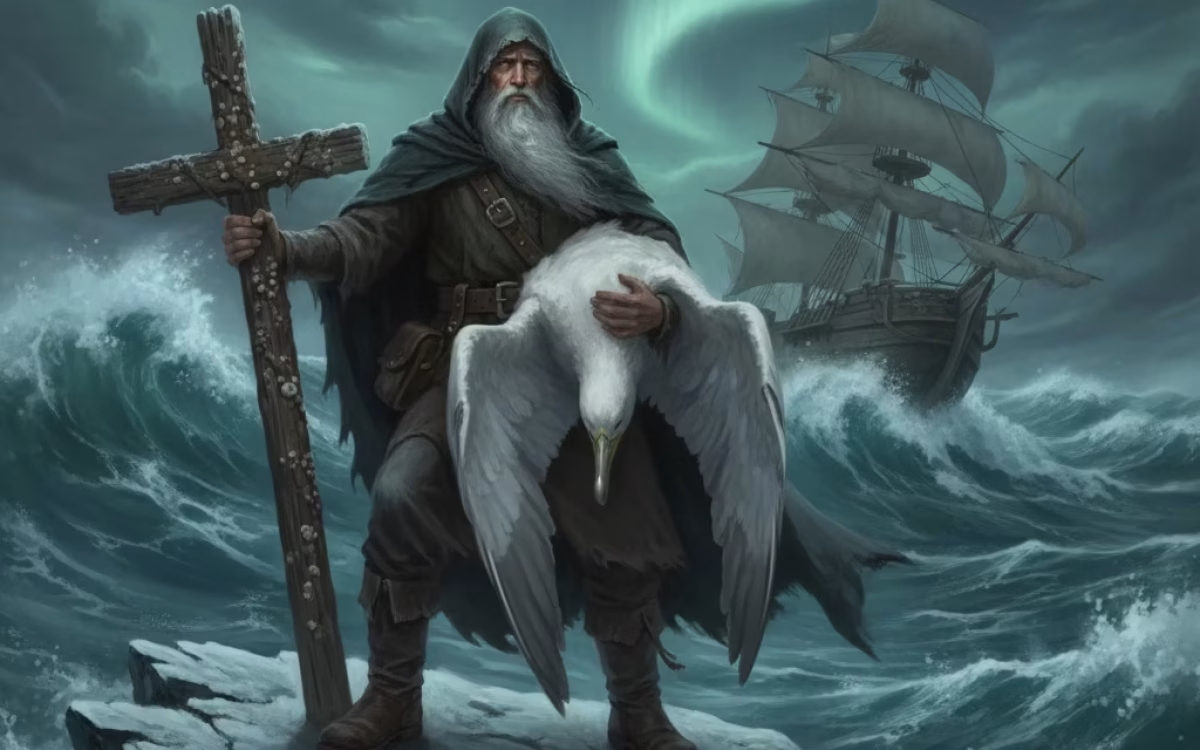
The Ancient Mariner is the poem’s main character. He is an old sailor with a “long grey beard and glittering eye,” who compels a Wedding Guest to listen to his story. He is a mysterious figure, both physically and psychologically. His character embodies the consequences of guilt and the possibility of redemption. His impulsive act—killing the albatross—sets off a chain of supernatural events and suffering. The Mariner’s personality reveals deep remorse and isolation. He also shows a relentless need to confess his story, which indicates his penance is both spiritual and psychological. Despite enduring much suffering, he eventually learns to appreciate the beauty of nature. He blesses sea creatures and finds some relief from his guilt.
The Wedding Guest
The Wedding Guest is a young man on his way to a wedding celebration. At first, he is impatient and reluctant to listen to the Mariner’s story. As the Mariner’s tale unfolds, the Wedding Guest’s attitude changes. His reactions shift from amusement to impatience, then to fear and fascination. By the end of the poem, he becomes “a sadder and a wiser man.” This shows he has gained a deeper understanding of human suffering and the moral lessons in the Mariner’s story. The Wedding Guest’s character acts as a bridge between the reader and the poem’s themes, making the Mariner’s tale accessible and impactful.
The Crew
The crew of the ship is a collective character, representing the fickleness and instability of human judgment under pressure. Initially, they blame the Mariner for killing the albatross, then support his action when the weather improves, and finally curse him again when their fortunes change. Their shifting attitudes highlight the moral ambiguity and unpredictability of human nature. After their deaths, the crew becomes spectral beings who perpetually haunt the Mariner, serving as a constant reminder of his transgressions.
The Hermit
The Hermit is depicted as a pious and simple man who engages in constant prayer. He contrasts with the fear and superstition of the Pilot and his boy, embodying a sense of spiritual calm and acceptance. The Hermit’s role in the poem is to provide a moment of prayer and reflection, helping the Mariner find temporary relief from his agony and setting the stage for his ongoing penance.
Other Characters
Death and Life-in-Death: These supernatural figures represent the ultimate forces of fate and punishment. Death wins the souls of the crew, while Life-in-Death wins the Mariner, condemning him to a fate worse than death.
The Pilot and the Pilot’s Boy: The Pilot rescues the Mariner but is shocked by his survival. The Pilot’s boy, upon seeing the Mariner, laughs and cries, thinking he is the devil, highlighting the Mariner’s otherworldly and unsettling presence.
These characters collectively illustrate a rich tapestry of human experience intertwined with spiritual and moral dilemmas, inviting readers to reflect on the complexities of guilt, redemption, and the interconnectedness of all life.
Coleridge’s Rime of the Ancient Mariner: Symbolism
The Albatross
The albatross is the most iconic symbol in the poem. At first, it stands for good fortune and hope, welcomed by the sailors as a sign of luck and grace. It guides the ship out of icy waters, embodying nature’s kindness and the sailors’ faith. But when the Mariner kills the bird, everything changes. The albatross becomes a symbol of sin and guilt. The crew hangs its dead body around the Mariner’s neck, making it a visible mark of his wrongdoing. This act turns the albatross into a metaphor for the heavy psychological and emotional weight of guilt. It also gives rise to the idiom “an albatross around one’s neck,” meaning a burdensome responsibility or source of guilt.
The Sun and Moon
The sun and moon are powerful symbols throughout the poem. They reflect competing influences of nature, the supernatural, and divine justice. The sun often represents wrath, punishment, and the harshness of nature. This is especially clear when it beats down on the stranded ship, causing thirst and suffering. In contrast, the moon symbolizes the supernatural and divine guidance. It leads the Mariner through moments of spiritual awakening and redemption. Together, the sun and moon highlight the duality of human experience—sin and redemption, punishment and grace. Their interplay underscores the poem’s exploration of moral and spiritual cycles.
The Sea
The sea itself is a multifaceted symbol, embodying both the beauty and terror of nature. At times, it is calm and life-giving; at others, it is a barren wasteland, reflecting the Mariner’s inner turmoil and the consequences of his actions. The sea’s changing nature mirrors the Mariner’s emotional journey, from isolation and despair to eventual spiritual growth.
Water and Thirst
Water, especially in the famous line “Water, water, everywhere, nor any drop to drink,” is a symbol of both life and punishment. The sailors’ inability to drink the surrounding seawater, despite their desperate thirst, represents the curse and retribution for the Mariner’s sin. This paradox underscores the poem’s theme of spiritual drought and the consequences of violating natural harmony.
Death and Life-in-Death
These are personified as supernatural figures, representing the ultimate forces of fate and punishment. Death claims the souls of the crew, while Life-in-Death wins the Mariner, condemning him to a life of suffering and penance. These figures symbolize the inescapable consequences of human actions and the moral balance between life and death.
The Ghost Ship
The ghost ship, crewed by Death and Life-in-Death, is a symbol of supernatural intervention and divine justice. Its appearance marks the turning point in the Mariner’s journey, signaling the beginning of his punishment and the start of his spiritual reckoning.
The Hermit
The Hermit represents piety, spiritual calm, and the possibility of redemption. His role in the poem is to offer a moment of prayer and reflection, helping the Mariner find temporary relief from his agony and setting the stage for his ongoing penance.
These symbols collectively enrich the poem’s narrative, inviting readers to reflect on the complexities of guilt, redemption, and the interconnectedness of all life.
Personal Reflections
When I first read “The Rime of the Ancient Mariner,” the poem struck me as a warning from the past—one that still echoes powerfully in our present world. The Mariner’s impulsive act of killing the albatross seems trivial at first. Yet, it sets off a chain of consequences that feels almost biblical in scope. It made me wonder: how often do we commit small acts of thoughtlessness—harming nature, ignoring others’ feelings, or dismissing something or someone important—only to face unexpected and lasting repercussions?
What really stayed with me was the Mariner’s isolation. Left alone on the ship, surrounded by the accusing eyes of his dead crew, he reveals how guilt can cut a person off from the world. Even when others are physically present, guilt or regret can make someone feel utterly alone. Coleridge’s portrayal of this emotional and spiritual loneliness is haunting. Many of us can relate to it, whether from personal experience or from observing others.
The moment the Mariner blesses the sea-snakes, and the albatross finally falls from his neck, feels like a turning point. It’s not a grand, dramatic act. Instead, it’s a quiet, heartfelt appreciation for life in all its forms. This made me reflect on how often we overlook the beauty in the smallest things. A simple act of gratitude or kindness can be transformative.
Teaching this poem to students, I’ve seen how its themes resonate across generations. The idea that every living thing deserves respect, and that our actions have far-reaching consequences, feels more urgent than ever in an age of climate change and environmental crisis. The Mariner’s story is not just a cautionary tale about sin and punishment. It’s a reminder that redemption is possible—if we’re willing to learn from our mistakes and find compassion in our hearts.
Coleridge’s Rime of the Ancient Mariner: Conclusion
“The Rime of the Ancient Mariner” is a timeless masterpiece. Coleridge weaves together themes of sin, guilt, redemption, and the sacredness of nature in a haunting, unforgettable narrative. Rich symbolism runs throughout—like the albatross as a burden of guilt, the sun and moon as competing forces of nature and the divine, and the sea as a mirror of the Mariner’s inner turmoil. Readers are invited to reflect on the consequences of their actions and the possibility of spiritual renewal. The poem’s power comes not just from its dramatic story, but also from its moral lessons, which remain relevant across centuries and cultures.
The Mariner’s journey—from thoughtless violence to painful penance and eventual redemption—shows that no act is too small to escape moral consequences. True healing, the poem suggests, comes from compassion and respect for all living things. Storytelling itself becomes a form of penance and transformation. The Mariner’s tale warns others, guiding them to become “a sadder and a wiser man.”
Coleridge’s poem calls us to recognize our interconnectedness with the natural world. It urges humility, reverence, and love for all life. In an age marked by environmental crises and moral uncertainty, “The Rime of the Ancient Mariner” continues to inspire reflection, empathy, and a deeper understanding of our place in the universe. EXPLORE OTHER WRITINGS
Coleridge’s Rime of the Ancient Mariner: FAQS
What is the main moral or message of the poem?
The primary message of the poem is the importance of respecting nature and all living beings. It emphasizes that acts of cruelty can have severe spiritual and moral consequences, and that redemption comes through remorse, compassion, and respect for the natural world.
Why does the Mariner suffer so much after killing the albatross?
The Mariner’s suffering stems from his reckless act of killing a seemingly innocent creature that symbolizes divine goodness. His guilt results in supernatural punishment, including eternal penance, spiritual isolation, and the need to continuously recount his tale as a moral warning.
What is the significance of the albatross around the Mariner’s neck?
The albatross becomes a symbol of guilt and burden. When the sailors hang it around the Mariner’s neck, it visually represents his moral guilt and responsibility for the curse that follows. Over time, its removal signifies spiritual cleansing and repentance.
How does the poem depict the relationship between nature and morality?
The poem portrays nature as a moral force that reacts to human actions. When the Mariner kills the albatross, nature retaliates with storms and supernatural punishments. Conversely, when he begins to respect and bless living creatures, the natural world shows mercy and restores balance.
Why does the Mariner keep telling his story?
The Mariner’s repetitive storytelling acts as a moral lesson for others, especially the wedding guest. It is an act of penance and a means of spreading awareness about the sacredness of all life, encouraging compassion and reverence for nature to prevent others from making similar mistakes.