Introduction
Franz Kafka’s The Trial stands as one of the most haunting and influential novels of the 20th century. From its very first line—Kafka pulls readers into a world where logic falters and justice becomes a shadowy, unreachable concept. This opening immediately sets the tone for a narrative that is both deeply unsettling and profoundly relevant.
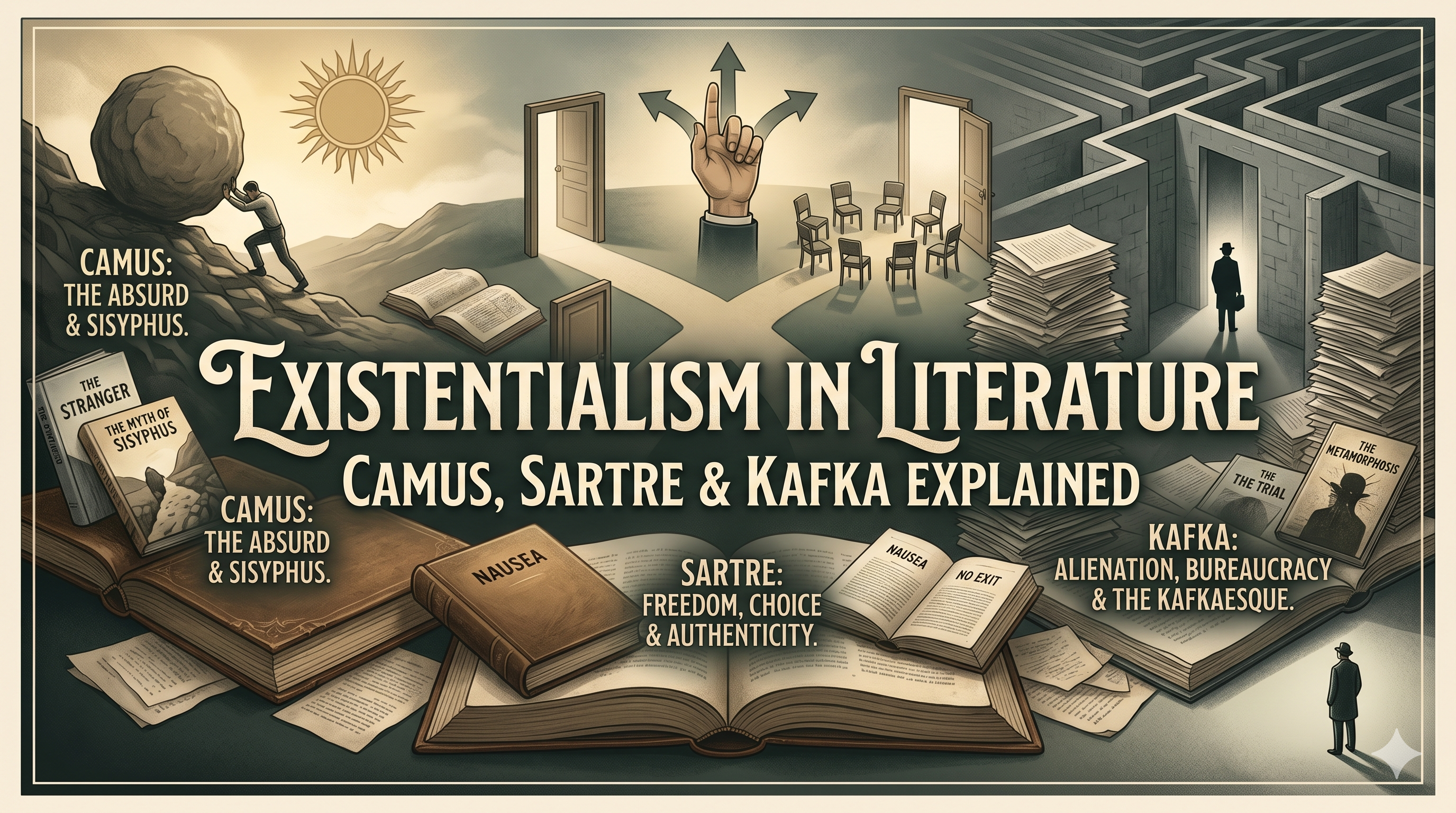
At its heart, The Trial is not just a story about a man caught in a legal nightmare. It is a powerful exploration of modern alienation, bureaucratic absurdity, and the psychological burden of guilt—even when no crime has been committed. Kafka’s unique style, blending the ordinary with the surreal, creates a world that feels both dreamlike and disturbingly real. The novel’s themes resonate strongly with contemporary readers, especially in an age where complex systems—be they government, corporate, or digital—often leave individuals feeling powerless and confused.
One of the most striking aspects of The Trial is its portrayal of the legal system. Kafka does not show a courtroom filled with dramatic arguments or impassioned speeches. Instead, he presents a series of fragmented, often absurd encounters—secret hearings in dusty attics, endless paperwork, and officials who seem more interested in procedure than truth. This depiction has become so iconic that the term “Kafkaesque” is now used worldwide to describe situations where individuals face incomprehensible, impersonal forces.
As we delve deeper into the novel, we will also examine its central themes: guilt without crime, the isolation of the individual, and the powerlessness of ordinary people in the face of vast, opaque institutions. These themes are not only timeless but also highly relevant to Indian readers, who may recognise similar experiences in their own lives—whether in the context of competitive exams, bureaucratic delays, or the struggle for justice in a complex society.
“To truly understand the suffocating atmosphere of ‘Kafkaesque’ bureaucracy, you need to read the text closely. This edition includes helpful notes on the unfinished chapters. [Buy The Trial (Oxford World’s Classics)].”
Quick Summary: The Trial
The Trial (published posthumously in 1925) is Franz Kafka’s most famous novel about the terrifying power of bureaucracy. The story begins with one of the most famous opening lines in literature: “Someone must have been telling lies about Josef K., for without having done anything wrong he was arrested one fine morning.” The novel follows K. as he tries to defend himself against an inaccessible Court system that never reveals the charges against him. It is a nightmare vision of a world where logic has collapsed and the Law is unreachable.
Franz Kafka’s The Trial: Plot Overview
Franz Kafka’s The Trial begins with a shocking event: Josef K., a bank officer, is arrested one morning for an unspecified crime. He does not get taken to prison; instead, he is allowed to continue his daily life while a mysterious court case unfolds in the background. This strange arrangement immediately sets the tone for a narrative filled with confusion, frustration, and a sense of looming dread.
K. tries to make sense of his situation by attending a hearing in a crowded, chaotic attic. He delivers a passionate speech defending himself, but no one seems to listen. The court officials appear indifferent, and the process feels arbitrary and absurd. As K. continues to navigate this surreal system, he encounters a series of bizarre characters—warders, lawyers, clerks, and court officials—all of whom seem to operate by their own inscrutable rules.
Throughout the novel, K. visits various court offices hidden in tenement buildings. These offices are overcrowded, disorganised, and filled with minor officials who are more interested in procedure than justice. K. hires a prestigious advocate, Herr Huld, but the lawyer’s help proves ineffective. Instead of clarity, K. receives more confusion and delay. He also meets Block, another accused man, who has become a pitiful, subservient figure, illustrating the dehumanising effects of the legal process.
As K.’s case drags on, his personal and professional life begin to unravel. His relationships become strained, and he finds himself drawn into sexual entanglements with women like the washerwoman and Leni, who are themselves entangled with the court. These relationships offer no real solace, only further complications.
One of the most memorable moments in the novel occurs when K. visits a cathedral and meets the prison chaplain. Subsequently, the chaplain shares the parable “Before the Law,” which describes a man who spends his entire life waiting to enter a door meant only for him. Indeed, this parable highlights the futility and isolation that K. experiences throughout his ordeal.
Moreover, on the eve of his thirty-first birthday, two court agents arrive at K.’s lodging. Then, without any formal trial or sentence, they lead him to an abandoned quarry at the edge of the city. There, they execute him with a butcher’s knife. As he dies, K. thinks of his own execution as “like a dog,” a brutal end that underscores how completely his humanity has been stripped away by the impersonal system.
This reveals a novel that is both a gripping narrative and a profound exploration of modern alienation, bureaucratic absurdity, and existential anxiety. Furthermore, Kafka’s masterful storytelling ensures that The Trial remains a timeless work, resonating with readers across generations and cultures.
Franz Kafka’s The Trial: Major Themes
Guilt without Crime
Josef K. is arrested for an unspecified crime, yet he insists he is innocent. Kafka explores how guilt can become a psychological burden even when no actual wrongdoing has occurred. This theme highlights the internal struggle between innocence and self-doubt, making K.’s experience deeply relatable.
Alienation and Isolation
K. moves through crowded spaces—courtrooms, offices, boarding houses—but remains fundamentally alone. Kafka shows how modern systems and institutions can create profound loneliness, even in the midst of society. This theme resonates with anyone who has felt disconnected or misunderstood.
Bureaucracy and Powerlessness
The novel depicts a labyrinthine legal system filled with endless paperwork, minor officials, and opaque procedures. Kafka illustrates how bureaucracy can strip individuals of agency and reduce them to mere cogs in a machine. This theme is especially relevant in today’s world, where complex systems often leave people feeling helpless.
Justice vs. the Law
Kafka draws a sharp distinction between justice as a moral ideal and “the Law” as a concrete institution. The court claims to embody justice but operates by its own arbitrary rules, ignoring fairness and reason. This theme invites readers to question the legitimacy of systems that claim authority without transparency.
Existential Anxiety
K.’s journey is marked by a constant sense of dread and uncertainty. Kafka uses K.’s experience to explore the existential fear of meaninglessness and the human struggle to find purpose in an indifferent universe. This theme connects The Trial to broader philosophical questions about existence.
The Kafkaesque
The term “Kafkaesque” has become synonymous with situations that are absurd, nightmarish, and incomprehensible. Kafka’s portrayal of a man trapped in a surreal, bureaucratic nightmare has influenced literature, film, and everyday language. This theme underscores the novel’s lasting impact on culture.
Power and Control
The court exercises power through confusion, delay, and the constant threat of punishment. Kafka shows how systems can maintain control not through overt violence, but by creating an atmosphere of fear and uncertainty. This theme is a powerful critique of authoritarianism and institutional manipulation.
The Parable “Before the Law”
The parable shared by the prison chaplain highlights the futility and isolation K. experiences. It suggests that individuals may internalise prohibition so deeply that they never act on their own potential. This theme adds a layer of philosophical depth to the novel’s exploration of power and identity.
Franz Kafka’s The Trial: Character Analysis
Franz Kafka populates The Trial with characters who blur the line between allies and antagonists. Each one reveals different facets of the opaque court system and K.’s own flaws. Let’s examine the key figures driving this haunting narrative.
Josef K.
Josef K. anchors the story as a diligent bank officer thrust into chaos. At thirty, he embodies middle-class respectability—organised, ambitious, confident. Yet Kafka quickly exposes his limitations. K. reacts to his arrest with indignation rather than fear. He lectures court officials, demands explanations, and treats subordinates with condescension.
This arrogance blinds him to the system’s true nature. Instead of seeking genuine allies, K. manipulates women and competes with his lawyer. His final moments reveal self-awareness too late: dying “like a dog,” he acknowledges his own complicity in his downfall. Students often debate whether K. represents universal victimhood or personal failure—a question central to any solid The Trial summary and analysis.
The Court Officials
Warders, examiners, and executioners personify the court’s inhuman machinery. The initial warders—Franz and Willem—arrive politely but enforce absurd rules. They eat K.’s breakfast uninvited, explaining procedures with bureaucratic detachment. Later officials in attic courtrooms scribble notes amid suffocating crowds, ignoring K.’s eloquent defence.
These figures wield power through indifference. They neither hate nor pity K.; they simply process him. Kafka uses them to show how systems dehumanise everyone involved, turning people into interchangeable parts. In modern terms, they resemble faceless call-centre agents or online form validators—polite, procedural, powerless to help.
Herr Huld
K.’s lawyer, Herr Huld, promises salvation but delivers dependency. Bedridden and self-important, Huld boasts elite connections yet achieves nothing tangible. He drowns K. in vague reassurances and procedural rituals. When K. grows impatient, Huld lectures him on proper client behaviour.
Huld exemplifies professional parasitism. He profits from despair without resolving it. His nurse, Leni, seduces clients to bind them closer—a cynical twist on legal aid. Through Huld, Kafka skewers expertise that serves itself first, a theme painfully relevant to overpriced consultants or endless litigation.
Leni and the Women
Women surround K., offering fleeting intimacy amid isolation. Leni, Huld’s nurse, lures accused men with her webbed fingers and erotic promises. She claims to help but reinforces their entrapment. The washerwoman faces similar harassment from officials, warning K. of the court’s predatory reach. Fräulein Bürstner, K.’s neighbour, recoils from his aggressive advances.
Kafka portrays these women as doubly victimised—by patriarchy and bureaucracy. They navigate power through sexuality, gaining minor advantages at great personal cost. Yet none offers K. true partnership. Their presence underscores his profound loneliness, even in physical closeness.
Titorelli the Painter
Court painter Titorelli knows the system intimately yet remains powerless. He peddles portraits of judges and offers three outcomes: definite acquittal (impossible), apparent acquittal (temporary), or indefinite postponement (endless limbo). His attic studio overflows with identical judge paintings, symbolising interchangeable authority.
Titorelli provides rare clarity, admitting the court’s inescapable logic. Still, he profits from desperation, selling portraits to the damned. He represents insider knowledge without real agency—a poignant figure for anyone whispering truths while fearing reprisal.
Block
Businessman Block serves as K.’s dark mirror. Years into his case, Block grovels before multiple lawyers, selling his business to pay fees. He spies on Huld, bribes servants for secrets, and accepts perpetual defeat. K. pities him initially but recoils at his servility.
Block illustrates total surrender. Once independent, he now exists only for his case. Kafka uses him to warn against obsession, showing how bureaucracy erodes identity. In exam contexts, contrast Block’s passivity with K.’s resistance for deeper The Trial summary and analysis.
The Prison Chaplain
The cathedral chaplain delivers “Before the Law,” the novel’s philosophical core. Unlike other officials, he engages K. intellectually, debating the parable’s meaning. He hints at K.’s guilt within the court’s worldview, urging introspection over confrontation.
This character introduces metaphysical dimensions. The parable suggests self-imposed barriers prevent access to truth. The chaplain humanises the system momentarily, forcing K. (and readers) to question personal responsibility amid external oppression.
These characters collectively trap K. in a web of half-truths and power plays. Kafka avoids simple heroes or villains, creating instead a system where everyone colludes in absurdity. This nuanced portrayal elevates The Trial beyond mere allegory, demanding readers examine their own encounters with authority.
Franz Kafka’s The Trial: The Kafkaesque Meaning
Franz Kafka gave the world more than just novels—he gifted us a term that captures modern dread. “Kafkaesque” describes situations that feel nightmarishly complex, bizarre, or illogical, often trapping individuals in surreal bureaucratic mazes. Think endless paperwork loops, faceless officials enforcing absurd rules or systems that punish without explanation. Kafka’s The Trial birthed this concept, where Josef K. embodies the helpless everyman crushed by invisible forces.
True Kafkaesque scenarios blend oppression with irony: victims partly enable their torment through compliance or denial. K. demands answers but lectures subordinates; he seeks justice yet ignores personal flaws. This self-inflicted circularity amplifies the horror, turning alienation into existential trap. Dictionaries nail it as “suggestive of Kafka’s writings,” evoking surreal dread amid mundane details.
Franz Kafka’s The Trial: Core Traits of Kafkaesque Situations
Kafkaesque worlds share distinct hallmarks that elevate them beyond mere annoyance:
Surreal Bureaucracy: Labyrinthine procedures dominate, with rules that twist logic. Attic courtrooms in The Trial overflow with scribbling clerks; no one explains charges, yet everyone assumes guilt. Modern parallels? Digital forms rejecting valid inputs without reason, or corporate HR rituals that prolong suffering.
Powerlessness and Absurdity: Protagonists confront insurmountable obstacles, often self-perpetuated. K. navigates endless stairs to nowhere, mirroring life’s futile climbs. The feeling? You’re guilty until proven innocent—in a court that denies trials.
Alienation Amid Crowds: Isolation thrives in company. K. speaks passionately to indifferent audiences; no solidarity emerges. This resonates today: crowded queues where empathy evaporates, leaving dread in shared helplessness.
Nightmarish Realism: Kafka blends everyday banality with horror. Warders eat K.’s breakfast casually during arrest; executioners arrive politely with a butcher knife. The ordinary amplifies terror—no monsters, just dehumanising routine.
Franz Kafka’s The Trial: Reflections and Relevance
Franz Kafka’s The Trial is more than a century old, yet its themes feel startlingly fresh. The novel’s portrayal of alienation, bureaucracy and existential anxiety resonates with readers across generations. Kafka’s world, where individuals face incomprehensible systems, remains a powerful metaphor for contemporary society.
A Mirror to Modern Life
Today’s world is shaped by digital bureaucracies, endless paperwork, and opaque institutions. From government portals to corporate hierarchies, people often feel powerless and confused. Kafka’s depiction of Josef K.’s struggle mirrors these experiences. The sense of being trapped in a labyrinthine system, unable to find clear answers or justice, is all too familiar. This connection makes The Trial a timeless exploration of human vulnerability. EXPLORE OTHER WRITINGS
Conclusion
In conclusion, Kafka’s The Trial remains one of the most powerful and enduring works of modern literature. To begin with, the novel’s exploration of alienation, bureaucracy, and existential anxiety continues to resonate with readers across generations. Furthermore, Kafka’s unique style—blending the ordinary with the surreal—creates a world that feels both dreamlike and disturbingly real. As a result, the novel’s themes are not only timeless but also highly relevant to contemporary society.
Moreover, the term “Kafkaesque” has become a staple in everyday language, describing situations that are absurd, nightmarish, and illogical. For instance, anyone who has faced endless paperwork, confusing legal processes, or opaque institutions can relate to the novel’s portrayal of bureaucratic absurdity. In addition, Kafka’s depiction of Josef K.’s struggle highlights the vulnerability of individuals in the face of vast, impersonal systems. Consequently, The Trial serves as a powerful metaphor for the challenges and complexities of modern life.
Additionally, the novel’s philosophical depth invites readers to reflect on their own encounters with power and authority. For example, Kafka’s portrayal of K.’s journey encourages introspection, urging us to question our assumptions and actions. As a result, the novel becomes a valuable resource for anyone seeking to understand the human condition. In fact, its influence extends beyond literature, shaping how we critique and understand modern systems.
FAQS
1. What is the main theme of The Trial by Kafka?
The main theme of The Trial is the struggle of an individual against an incomprehensible and oppressive system. Furthermore, Kafka explores alienation, bureaucracy, and existential anxiety, showing how ordinary people can feel powerless in the face of vast, impersonal institutions. In addition, these themes highlight the challenges individuals face when confronting systems that seem indifferent to their needs and concerns.
2. What does “Kafkaesque” mean?
“Kafkaesque” describes situations that are absurd, nightmarish, or illogical, often involving surreal bureaucracy or oppressive systems. Also, it comes from Kafka’s novels, especially The Trial, where characters face confusing rules and feel trapped by forces beyond their control.
3. Who is the protagonist in The Trial?
The protagonist is Josef K., a bank officer who is arrested for an unspecified crime and spends the novel navigating a bizarre court system. Moreover, his journey highlights the novel’s themes of guilt, alienation, and the search for justice.
4. Why is The Trial important in literature?
The Trial is important because it captures the anxieties of modern life—bureaucracy, alienation, and the search for meaning. Moreover, Kafka’s unique style and the novel’s enduring relevance make it a classic in modernist literature and a touchstone for discussions of power and identity.
5. How does The Trial relate to real-life experiences?
The Trial relates to real-life experiences by portraying the frustration and confusion people often feel when dealing with complex systems, such as government agencies, legal processes, or corporate hierarchies. Kafka’s depiction of Josef K.’s struggle resonates with anyone who has felt powerless or misunderstood by authority.