Introduction
Sophocles’ Antigone offers one of the most compelling journeys through Greek tragedy, where private conscience collides head‑on with public law.
In this powerful play, the city of Thebes becomes a testing ground for questions that still trouble modern societies. For example, how far should citizens obey the state? Additionally, when, if ever, does an inner moral law override an official decree? Also, the readers who search for Sophocles’ Antigone seek a clear, insightful guide to themes, characters and debates about justice and power.
Sophocles’ Antigone unfolds after a brutal civil war between Oedipus’ sons, Eteocles and Polynices. These brothers have killed each other in a battle for the throne. Creon, the new king, decides to honor Eteocles with a proper burial but leaves Polynices’ body unburied and exposed, declaring him a traitor. He also threatens death to anyone who performs funeral rites for Polynices. Antigone, however, refuses to accept this division between the brothers. Guided by what she calls the “unwritten laws” of the gods and her loyalty to family, she resolves to bury Polynices—even if it means risking her own life. This act of defiance drives the central conflict in Sophocles’ Antigone and forms the core of any serious analysis. It forces readers to confront what happens when ethical duty clashes with state power.
Furthermore, the introduction to Sophocles’ Antigone highlights how the play carefully builds emotional and intellectual tension through its characters. Antigone stands for moral courage and unbending conviction. In contrast, Creon represents a ruler who believes that stability after war depends on uncompromising authority and strict obedience. Ismene, Antigone’s sister, embodies the fear and hesitation many people feel when they recognize injustice but doubt their capacity to act. Finally, Haemon, Creon’s son and Antigone’s fiancé, tries to mediate between love and loyalty to the state. Overall, these characters and their interactions deepen the play’s exploration of justice, morality, and authority.
Sophocles’ Antigone: Plot Overview
Sophocles’ Antigone begins in the aftermath of a devastating civil war in Thebes, where Oedipus’ sons, Eteocles and Polynices, have killed each other fighting for the throne. With the city left in turmoil, Creon, their uncle, assumes power and issues a decree: Eteocles will be buried with full honours as a hero, but Polynices, branded a traitor, will be left unburied, exposed to the elements and scavengers. Anyone who dares to bury Polynices will face execution. This harsh edict sets the stage for the central conflict of the play.
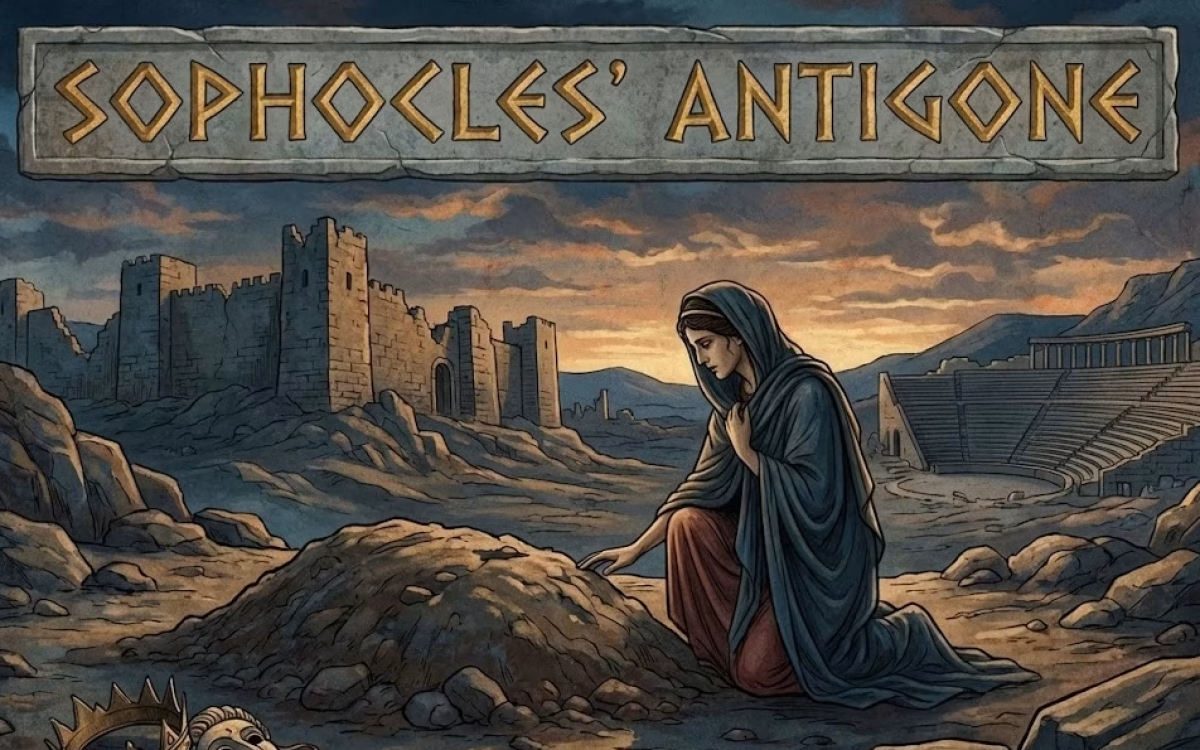
Antigone, sister to both dead brothers, is horrified by Creon’s decision. She believes that the gods’ laws—particularly the sacred duty to bury the dead—override any human law. Despite her sister Ismene’s warnings and fear of punishment, Antigone resolves to perform the burial rites for Polynices. She secretly sprinkles dust over his corpse, a symbolic act of defiance against Creon’s decree.
When the guards discover that someone has covered Polynices’ body, Creon is furious and orders a thorough investigation. Antigone is soon caught and brought before Creon, where she openly admits her actions and refuses to apologise. She argues that her duty to the gods and to her family is greater than her duty to the state. Creon, unmoved by her reasoning, sentences Antigone to be sealed alive in a stone chamber, hoping to avoid direct bloodshed while still enforcing his law.
Creon’s son Haemon, who is engaged to Antigone, pleads with his father to show mercy. Their argument reveals the growing tension between generations and the clash between personal loyalty and political authority. When Creon remains stubborn, Haemon leaves in despair. Meanwhile, the blind prophet Tiresias warns Creon that the gods are angered by his actions and that his stubbornness will bring disaster upon his family and the city. Only then does Creon begin to reconsider, but his change of heart comes too late.
Rushing to release Antigone and bury Polynices, Creon finds that Antigone has already taken her own life by hanging herself in her prison. Haemon, overcome with grief, kills himself beside her body. When news of these tragedies reaches the palace, Creon’s wife Eurydice also takes her own life, cursing Creon with her dying breath. The play ends with Creon standing alone, devastated by the consequences of his pride and inflexibility, while the Chorus reminds the audience that wisdom and humility come only through suffering and experience.
Sophocles’ Antigone: Major Themes
Divine Law vs Human Law
Sophocles’ Antigone centres on the conflict between divine law and human law. Antigone believes she must obey the “unwritten laws” of the gods, which demand that the dead be buried, regardless of state decrees. Creon, on the other hand, insists that civic law and order must be upheld at all costs. This clash forces the audience to consider the limits of state authority and the moral weight of religious or ethical obligations.
Individual vs State
The play explores the tension between individual conscience and the demands of the state. Antigone chooses to act according to her personal beliefs, even when it means defying the king and facing death. Creon represents the state’s insistence on obedience, but his rigid stance leads to tragedy. This theme invites readers to reflect on when, if ever, civil disobedience is justified.
Family Loyalty
Family loyalty is a powerful motivator for Antigone. She feels a sacred duty to bury her brother Polynices, even though he is considered a traitor by the state. Her actions highlight the importance of familial bonds in Greek culture and the personal cost of honouring those bonds in the face of political opposition.
Gender and Power
Antigone’s defiance also challenges traditional gender roles. In a society where women are expected to remain silent and obedient, Antigone’s bold actions and outspokenness disrupt the status quo. Creon’s anger is partly rooted in his sense of humiliation at being challenged by a young woman, reflecting anxieties about authority and masculinity in the play.
Fate and Free Will
The play grapples with the interplay between fate and free will. Antigone’s family is cursed, and the events of the play seem to unfold according to a tragic pattern. Yet, each character makes choices that influence the outcome. Antigone chooses to bury her brother, and Creon chooses to enforce his law. The play suggests that while fate may shape the broader context, individual decisions still matter.
Pride and Hubris
Creon’s downfall is driven by pride and hubris. He refuses to listen to warnings from his son, his advisors, and the prophet Tiresias. Only when he has lost everything does he admit his mistakes. This theme serves as a cautionary tale about the dangers of arrogance and the importance of humility.
Wisdom and Experience
The Chorus underscores the idea that wisdom comes through suffering and experience. Creon’s tragic journey teaches him the value of listening to others and recognising the limits of his own authority. This theme resonates with audiences, reminding them that true wisdom is often gained too late.
Sophocles’ Antigone: Character Analysis
Antigone – The Defiant Symbol of Morality
Antigone is the play’s protagonist, symbolizing moral courage and unwavering loyalty to divine law. She defies King Creon’s edict to bury her brother Polynices, believing her duty to the gods and family outweighs any human law. Antigone’s steadfastness highlights her role as a tragic heroine who prioritizes conscience over authority. Her willingness to face death reflects her deep sense of duty, making her a voice for social justice and individual integrity in Greek tragedy.
Creon – The Rigid ruler and tragic figure
Creon is the king of Thebes, embodying authority, order, and civic responsibility. His insistence on strict obedience and rejection of dissent reveals a man’s struggle with pride, hubris, and the burden of leadership. Creon’s tragic flaw lies in his inflexibility—his refusal to listen to warnings plunges him into personal and political catastrophe. His character demonstrates how authoritarian pride can lead to downfall, serving as a cautionary tale about the dangers of excessive pride in leadership.
Ismene – The Cautious Sister
Ismene, Antigone’s sister, represents cautious obedience and societal conformity. She hesitates to help Antigone bury Polynices, fearing the consequences of defying Creon’s law. Her character embodies the conflict between the fear of punishment and moral obligation. Despite her reluctance, Ismene’s loyalty to her family underscores the play’s exploration of varying responses to injustice and authority.
Haemon – The Young Meditator and Tragic Lover
Haemon, Creon’s son and Antigone’s fiancé, acts as a voice of reason and compassion. He pleads with his father to show mercy and recognizes Antigone’s moral worth. However, his love for Antigone ultimately leads to tragedy when he kills himself after her death, illustrating the devastating effects of stubbornness and unresolved conflict. Haemon’s character highlights the importance of empathy and the tragic consequences of loyalty torn between love and duty.
Tiresias – The Wise Prophet
Tiresias, the blind prophet, provides divine insight and warnings to Creon. His advice that the gods disapprove of Creon’s actions prompts a critical turning point. Tiresias’ character symbolizes divine wisdom, and his role underscores the theme that hubris can block moral and spiritual insight, leading to ruin. His warnings reinforce the idea that rulers must heed divine and moral voices to avoid tragedy.
The Chorus – The Community’s Voice
The Chorus in Antigone acts as a collective voice reflecting societal norms and values. They comment on unfolding events, often torn between loyalty to the king and moral reflection. The Chorus’s evolving stance exemplifies the play’s exploration of community, morality, and the tension between individual judgment and social pressure.
This character analysis captures the complex personalities in Sophocles’ Antigone, illustrating how each figure’s traits, flaws, and choices drive the tragic narrative. Their interactions deepen the play’s exploration of law, morality, pride, and humanity, making the characters enduring symbols of timeless dilemmas.
Sophocles Antigone: law, conscience and power
Many modern readers first meet Antigone as a fierce young woman who chooses inner conscience and divine law over the authority of the state. Her decision to bury Polynices comes from a sense of sacred duty to family and to the gods of the underworld, not from simple rebellion for its own sake.
Creon, by contrast, embodies the anxious city‑state that wants order at any cost; he insists that a leader must stand firm, fearing that compromise will look like weakness after war. Sophocles refuses to make either figure entirely right or entirely wrong. Antigone’s courage is radiant, but her inflexibility contributes to the chain of deaths. Meanwhile, Creon’s insistence on civic law collapses when it ignores basic piety and human limits.
From the perspective of Aristotle’s ideas about tragedy, both Antigone and Creon show traits of tragic figures. Each has a kind of hamartia, a fatal error rooted in character. This flaw leads to peripeteia, a reversal from security to devastation. Finally, it results in catharsis for the audience through pity and fear. Watching Creon lose everything forces viewers to confront how quickly a rigid policy can turn into moral blindness. In particular, this happens when leaders silence criticism and treat dissent as treason. Thus, the play challenges audiences to reflect on the consequences of pride and inflexibility in positions of power.
Sophocles’ Antigone: Greek Tragedy
Sophocles’ Antigone stands as a classic example of Greek tragedy. It embodies the key elements Aristotle outlined in his Poetics: a tragic hero, a fatal flaw, reversal of fortune, and catharsis. Antigone’s story unfolds with a sense of inevitability. Her unwavering commitment to divine law and familial duty ultimately leads to her downfall. The play’s structure, character arcs, and emotional impact all contribute to its status as a timeless tragedy.
Antigone herself is the tragic heroine. She is defined by her moral courage and unyielding principles. Her fatal flaw, or hamartia, is her inflexible devotion to conscience and divine law. This flaw blinds her to the consequences of her actions. As a result, her act of defiance brings about her own death and triggers a chain of tragedies for those around her. The audience experiences catharsis—emotional release through pity and fear—when they witness the devastating consequences of Antigone’s choices. Creon’s tragic downfall, driven by pride and stubbornness, leads to the loss of his entire family.
The tragedy of Antigone is not just personal. It reflects broader societal and ethical conflicts. For example, the clash between individual conscience and state authority is central to the play. The tension between divine and human law also plays a major role. Additionally, the cost of pride and inflexibility is a recurring theme. The Chorus, representing the voice of the community, heightens the sense of tragedy. It reflects on the suffering and wisdom gained through experience.
Sophocles’ Antigone remains a powerful tragedy. It forces audiences to confront difficult questions about justice, power, and the limits of human authority. Its enduring appeal lies in its ability to evoke deep emotional responses. Moreover, it provokes reflection on the nature of tragedy and the human condition. Overall, the play’s structure and themes ensure its lasting impact on readers and viewers alike.
Conclusion
Sophocles’ Antigone continues to captivate readers and audiences because it confronts timeless questions about law, morality, and the human spirit. At its core, the play is a profound tragedy that explores the consequences of choosing conscience over authority. Additionally, it examines the high cost of inflexible pride in leadership. Antigone’s unwavering commitment to divine law and family duty, despite risking her life, makes her a powerful symbol of moral courage and individual agency. Meanwhile, Creon’s tragic downfall serves as a cautionary tale about the dangers of hubris. It also highlights the importance of humility and compassion in governance.
The play’s enduring relevance lies in its ability to speak to universal themes. For example, conflicts between personal conscience and state law are central to the story. Equally important are the themes of family loyalty and the destructive impact of pride and stubbornness on human relationships. These themes do not only resonate in ancient Greece but also in contemporary society. Today, debates about justice, protest, and the limits of authority remain as vital as ever. Whether in classrooms, theatres, or public discourse, Antigone’s story continues to inspire reflection. It encourages dialogue on the nature of justice, the cost of dissent, and the value of wisdom gained through suffering.
In conclusion, Sophocles’ Antigone is more than just a classical tragedy. It is a living text that challenges readers to consider their own values and the choices they might face in similar circumstances. The play’s emotional depth, complex characters, and timeless themes secure its place as a cornerstone of world literature. For students, scholars, and casual readers alike, Antigone offers more than a gripping narrative. It provides a lasting lesson in the power of conscience and the tragic consequences of pride. Its legacy endures, reminding us that true wisdom often comes only after great loss. Ultimately, the ongoing struggle between law and morality is a journey that contains no easy answers—only profound human truth.
FAQS
1. What is the main theme of Antigone?
The main theme of Antigone is the conflict between divine law and human law. Antigone chooses to obey the gods’ laws by burying her brother, while Creon enforces the state’s laws, leading to tragic consequences for both.
2. Why is Antigone considered a tragedy?
Antigone is a tragedy because it features a protagonist with a fatal flaw (hamartia), a reversal of fortune (peripeteia), and a cathartic emotional release for the audience. The play explores the devastating effects of pride, stubbornness, and the clash between individual conscience and state authority.
3. What are the major characters in Antigone?
The major characters in Antigone are Antigone, Creon, Ismene, Haemon, Tiresias, and the Chorus. Each character represents different perspectives on law, morality, and authority.
4. How does Antigone relate to modern issues?
Antigone’s story resonates with modern debates about civil disobedience, the limits of state power, and the role of individual conscience in society. The play’s themes are relevant to discussions about justice, protest, and the balance between law and morality.
5. What is the significance of the Chorus in Antigone?
The Chorus in Antigone serves as the voice of the community, reflecting societal norms and values. They comment on the action, provide moral insight, and highlight the play’s central themes, helping the audience understand the broader implications of the characters’ choices.