Introduction
Few literary treasures have travelled continents and centuries like Aesop’s Fables. These simple animal stories, born in ancient Greece, still echo through classrooms, boardrooms, and bedtime routines. Yet, in an era defined by digital noise, these tales quietly remind us: wisdom may be ancient, but its lessons are evergreen.
As a literature educator, I’ve witnessed the stubborn power of a well-told fable to cut through cynicism and spark honest reflection. Whether I’m teaching undergraduates or working on LinkedIn posts, Aesop’s Fables feature in my toolkit for critical thinking, ethical debate, and emotional resonance. Today, let’s dive deeper—beyond the basic plots—into the roots, morals, and living impact of these ageless stories.
What Are Aesop’s Fables? (Defining the Genre)
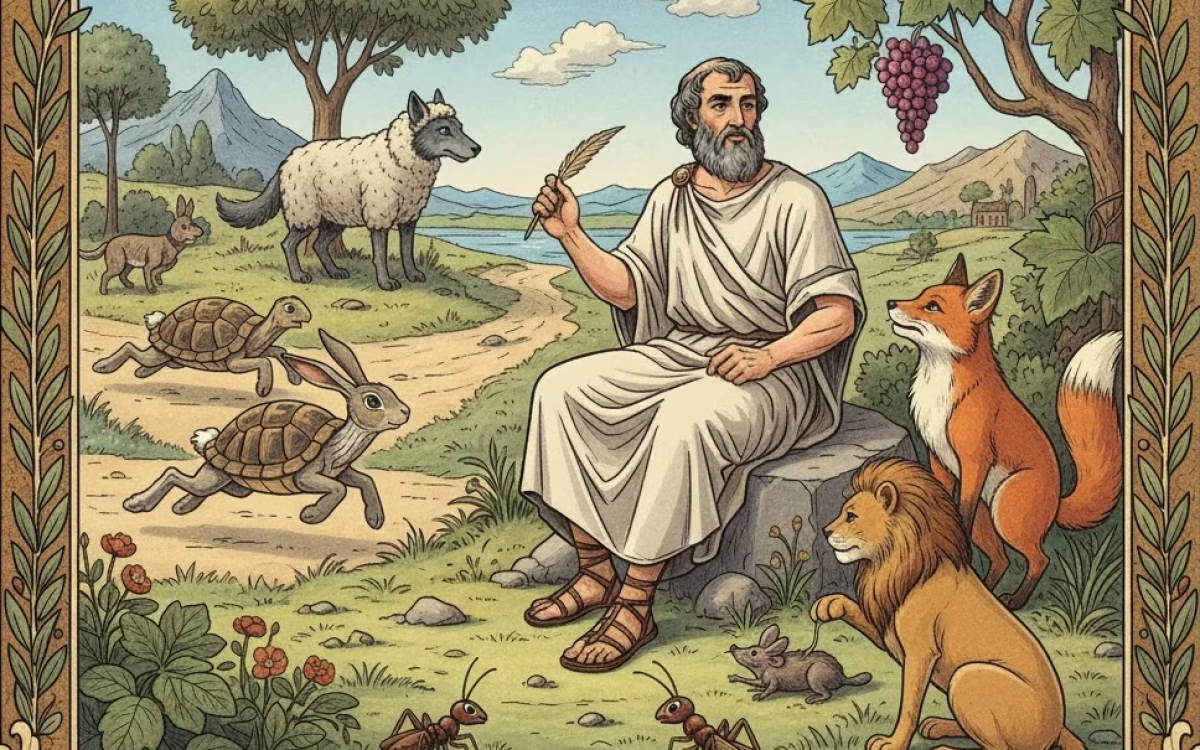
Aesop’s Fables are short, pithy stories where animals or objects behave like people to dramatize a clear moral lesson. Attributed to Aesop, a possibly enslaved storyteller from ancient Greece, the collection covers over 200 distinct narratives.
Each fable delivers wisdom in under a minute—powerful, because the moral always fits modern dilemmas: honesty, humility, caution, collaboration, and kindness.
Fables like “The Tortoise and the Hare,” “The Lion and the Mouse,” and “The Ant and the Grasshopper” have become universal reference points, available for free in countless languages and digital platforms.
The legacy of Aesop’s Fables is not merely literary—it’s cultural. These tales thread through Indian, African, European, and modern American storytelling, often localised with native species and local colour for increased relatability. FULL TEXT
Five classic Aesop’s Fables
The Tortoise and the Hare
On the surface, this familiar tale teaches that slow and steady wins the race. The overconfident Hare dashes ahead but grows complacent, while the persistent Tortoise moves forward deliberately and wins.
Meaning:
This fable challenges modern obsession with speed and instant gratification. In academic work, career growth, or creative projects, rushing often leads to burnout or careless mistakes. The Tortoise reminds us that consistent effort, resilience, and humility can outlast bursts of talent or enthusiasm.
Reflectively, it echoes a life truth: success isn’t a sprint but a marathon. The message remains vital in India’s fast-paced education and professional landscape, reminding students and professionals alike that patience fosters sustainable achievement.
The Lion and the Mouse
A tiny mouse unexpectedly helps a mighty lion, breaking the stereotype that small or weak has no value.
Meaning:
This fable flips power dynamics, teaching that kindness—especially toward those underestimated—builds reciprocal relationships. In real-life terms, it champions empathy, mentorship, and generosity, countering hubris or social hierarchies.
From a reflective angle, it invites unpacking biases toward “strength” and “status,” showing that humility and compassion nourish connections and often lead to unexpected support, personally or professionally.
The Ant and the Grasshopper
The ant works hard storing food for winter while the carefree grasshopper sings, ultimately suffering from lack of preparation.
Meaning:
While cautioning against laziness, this fable also nuances the balance between enjoyment and responsibility. It’s not about rejecting pleasure but about measured planning.
Reflectively, this applies to personal finance, education, and time management. In a culture that values social celebrations, the fable calls for foresight without sacrificing joy—a core human challenge everywhere.
The Crow and the Pitcher
Faced with water out of reach, the clever crow drops pebbles to raise the water level and drink.
Meaning:
Beyond the obvious cleverness, it’s a metaphor for resourcefulness and problem-solving amid constraints.
Reflecting on this, it resonates especially in today’s resource-limited environments. It encourages creativity over complaint, a mindset shift pivotal in classrooms and workplaces where innovation matters most.
The Goose That Laid the Golden Eggs
A farmer kills his golden-egg-laying goose out of greed, losing his steady source of wealth.
Meaning:
This fable warns against sacrificing sustainability for short-term gains—a lesson crucial to business ethics, environmental stewardship, and personal choices.
On reflection, it cautions societies and individuals to nurture their assets—be it natural, financial, or social—and resist shortsighted impulses that can lead to ruin.
These fables endure because their lessons touch human nature’s core: patience, kindness, prudence, creativity, and integrity. They remain rich tools for moral education and personal reflection across ages and cultures, making Aesop’s wisdom truly timeless and universally relevant.
Major Themes in Aesop’s Fables
1. Wisdom and Prudence
Many fables emphasize the value of careful thinking and wise decision-making. For example, “The Tortoise and the Hare” stresses patience and steady progress over rash actions. These stories teach readers to think before acting, encouraging foresight and deliberation in everyday decisions.
2. Honesty and Integrity
Several fables advocate the importance of truthfulness and the consequences of deceit. Stories like “The Boy Who Cried Wolf” warn that lying erodes trust and can lead to serious consequences. This theme instills ethical behaviour foundational to social cohesion.
3. Kindness and Compassion
Aesop shows that acts of kindness, no matter how small, can return unexpectedly. “The Lion and the Mouse” illustrates this beautifully, teaching that even the weakest can aid the strongest, promoting empathy and generosity.
4. Hard Work and Preparation
“The Ant and the Grasshopper” epitomises the theme that diligent effort and planning for the future are essential. This contrasts with short-term pleasure seeking and highlights responsibility and foresight in personal and social life.
5. Humility and Self-Awareness
Several fables critique arrogance and boastfulness. “The Fox and the Grapes” implicitly teaches about self-deception and coming to terms with limitations, encouraging humility and acceptance of one’s circumstances.
These themes work through anthropomorphic stories to give accessible, memorable moral guidance rooted in universal human experiences. They serve as ethical primers for children and reflective prompts for adults, capturing human nature’s complexities with simple clarity.
Allegory in Aesop’s Fables
Allegory is a narrative technique where characters, events, or settings symbolically represent broader human qualities, moral lessons, or social realities. Aesop’s Fables use allegory extensively by casting animals with human traits to dramatise ethical principles and societal behaviours. For example, in “The Tortoise and the Hare,” the tortoise represents perseverance and humility, while the hare symbolises arrogance and overconfidence. The story’s outcome allegorically teaches the value of steady effort over impulsiveness.
These fables act as compact moral allegories, each functioning as a cautionary or instructional tale. Unlike some allegories that might be complex and layered, Aesop’s are designed to be immediately understandable, with a clear symbolic framework that links animal traits to human virtues and vices. This straightforward allegory helps the fables transcend time and culture, making complex morals accessible.
Symbolism in Aesop’s Fables
Symbolism in these fables is largely enacted through the animal characters, whose species-specific qualities culturally symbolize certain human traits:
The lion symbolises strength, power, and sometimes pride.
Fox often stands for cunning and trickery.
Mouse or smaller animals represent humility and unexpected value.
The crow symbolises intelligence and resourcefulness.
Ant represents hard work and diligence.
These symbolic animals serve not just as characters but as embodied ideas, making abstract morals tangible. For instance, in “The Fox and the Grapes,” the fox symbolises human rationalisation—the “sour grapes” mentality—which critiques self-deception in the face of failure.
Together, allegory and symbolism in Aesop’s Fables create a layered narrative where simple stories carry profound ethical reflections. The animal characters’ symbolic meaning allows readers to quickly identify the underlying lesson, while the allegorical structure invites reflection on human nature.
This literary technique fosters engagement and memorability. Readers and listeners can see themselves or societal behaviors mirrored in these anthropomorphic tales. The surprising twist or outcome reveals deeper truths about virtues like honesty, prudence, and kindness, or warnings against vices such as greed, arrogance, and laziness.
Narrative Structure:
Brevity and Clarity
Aesop’s Fables typically employ a concise narrative structure—short, straightforward stories that quickly establish characters, conflict, and resolution. This brevity heightens the fables’ educational function by making their morals easy to grasp. Most fables follow a clear pattern: introduction of a problem or moral dilemma, interaction among anthropomorphic characters—usually animals embodying human traits—and a decisive outcome illustrating the lesson.
Use of Anthropomorphism
One of the key techniques is anthropomorphism, where animals or inanimate objects are endowed with human qualities such as speech, reasoning, and emotion. This method humanises abstract ideas and virtues, making ethical concepts concrete and relatable, especially for younger audiences or those new to moral philosophy.
Didactic Tone and Explicit Moral
The narrative is inherently didactic—its primary goal is to teach. Often, the moral is stated explicitly at the story’s end or implied through the plot resolution. This clear articulation prevents ambiguity in interpreting the lesson, distinguishing Aesop’s fables as instructional literature.
Simple Language and Repetition
The narratives use simple, accessible language and frequently employ repetition and rhythm to aid memorability, oral transmission, and engagement. These oral storytelling features contribute to the fables’ longevity and widespread appeal.
Use of Irony and Surprise
Finally, many fables leverage irony or unexpected twists to underscore their lessons effectively. For example, in “The Fox and the Grapes,” the fox’s sour-grapes rationalization surprises the audience by revealing a psychological truth in a relatable way. Such narrative surprises engage readers emotionally and cognitively, reinforcing the moral lesson.
Personal Reflections
Reflecting personally on Aesop’s Fables, I find their enduring appeal lies in their simplicity combined with profound wisdom—a rare balance that speaks across generations and cultures. What fascinates me most is how these brief animal tales manage to capture the complexities of human nature and societal dynamics with striking precision. As an educator and content creator, I appreciate how these fables offer more than just moral injunctions; they invite continuous interpretation and introspection, encouraging readers not only to learn lessons but to question, reflect, and relate them to their own lives.
In my own experience, stories like “The Lion and the Mouse” resonate deeply because they remind me of the unexpected ways kindness and mentorship shape personal and professional growth. These narratives are not just for children but offer nuanced insights that adults often need to revisit. I also find that the allegorical nature makes them flexible tools for discussion, allowing me to tailor lessons to diverse audiences with varying levels of sophistication.
Moreover, Aesop’s Fables challenge the modern preference for complexity and speed by privileging patience, humility, and foresight. Personally, they have taught me to value incremental progress and thoughtful decision-making, whether in academic research or content strategy. These reflections reaffirm that storytelling rooted in universal symbols and allegories remains a powerful pathway to shared understanding and ethical development. Ultimately, Aesop’s work is a reminder that wisdom often comes cloaked in the simplest forms, waiting for us to unpack and apply it thoughtfully in our everyday lives. EXPLORE OTHER WRITERS
Conclusion
Aesop’s Fables remain a profound literary and educational legacy because they distill complex human truths into simple, memorable stories. Their continued relevance lies in the universal themes they explore—wisdom, honesty, kindness, humility—that resonate regardless of cultural or historical context. The use of allegorical animals and concise narrative techniques allows these fables to communicate ethical lessons vividly and accessibly, making them effective tools for moral reflection across all ages.
Their power extends beyond mere storytelling; they invite readers to consider human nature, consequences of actions, and social values in an easily digestible format. Over centuries, Aesop’s Fables have shaped literary traditions, ethical education, and popular culture globally, adapting to diverse audiences while preserving their core didactic function.
In an age dominated by information overload, these fables remind us that truth and wisdom often come in humble packages, encouraging patience, critical thinking, empathy, and self-awareness. Their impact is not just historical but living, as they continue to foster personal growth and societal reflection. Thus, Aesop’s Fables stand as timeless moral compasses, guiding behaviour and thought with enduring clarity and relevance.
FAQS
What are Aesop’s Fables?
Aesop’s Fables are a collection of short stories, often featuring animals with human qualities, that convey moral lessons about human virtues and vices.
Who was Aesop?
Aesop was believed to be a storyteller and slave in ancient Greece around 620–564 BCE, traditionally credited with originating these fables.
Why do animals play central roles in these fables?
Animals are anthropomorphized to symbolize human traits and behaviours, making complex moral ideas easier to understand and more engaging.
What is the main purpose of Aesop’s Fables?
The primary goal is to teach ethical lessons and encourage reflection on human nature and social behaviour in an accessible, memorable format.