November 26, 2025

Introduction Michel Foucault’s Panopticism Have you ever slowed your car down because you saw a traffic camera, even if you weren’t sure it was turned on? That uneasy feeling of being watched captures Michel Foucault’s Panopticism in everyday life. French philosopher Michel Foucault introduced this idea in his landmark 1975 book, Discipline and Punish: The Birth of the Prison. Drawing from Jeremy Bentham’s Panopticon prison design—a circular structure where inmates are always visible to a central watchtower—Foucault explores how surveillance shapes...

INTRODUCTION Few literary works have captured the imagination and provoked profound questions about human nature, creativity, and ethics quite like Mary Shelley’s Frankenstein. Since its first publication in 1818, Frankenstein has transcended its Gothic roots to become an enduring cultural and philosophical touchstone. Indeed,...
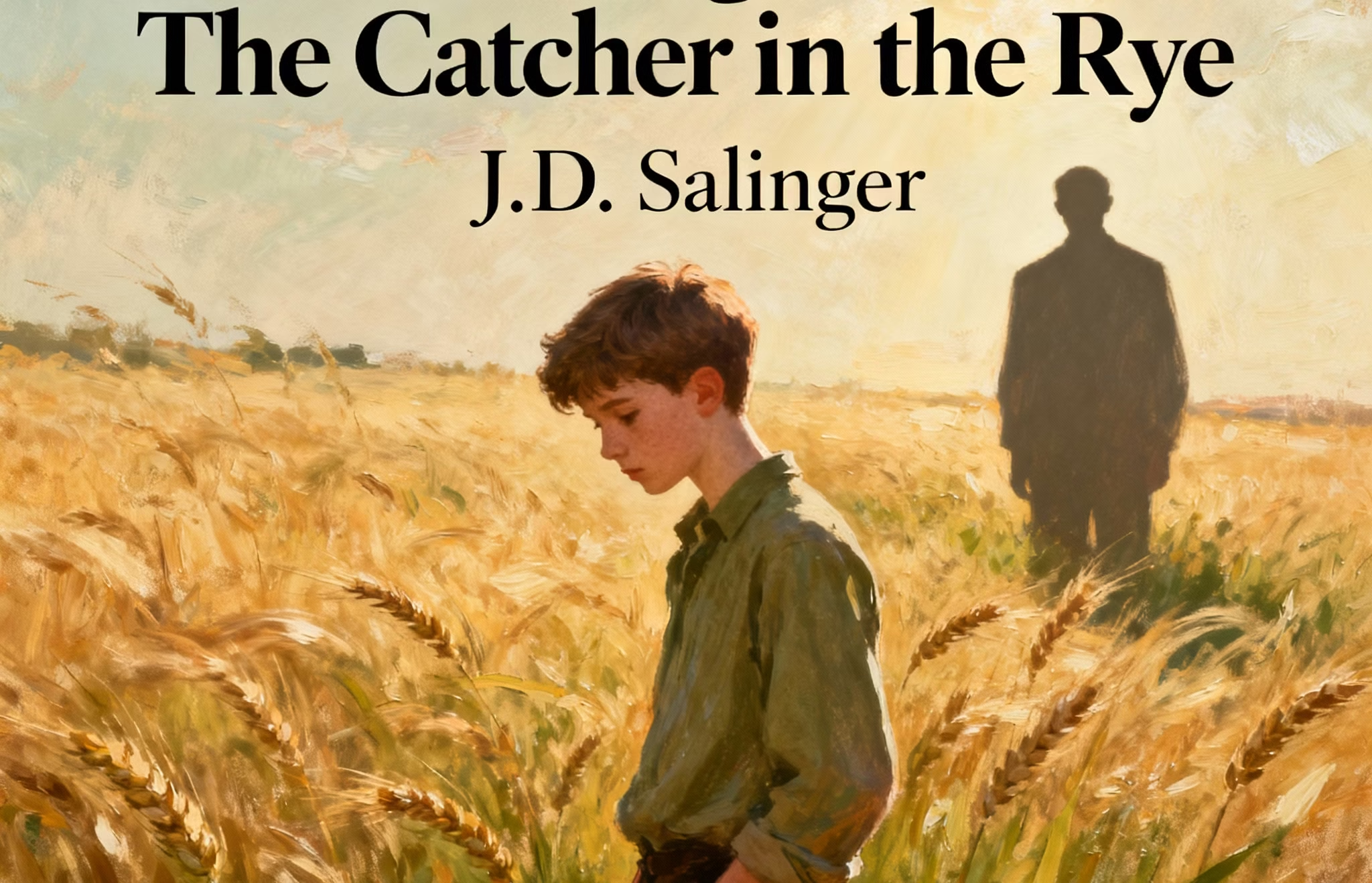
INTRODUCTION Salinger’s The Catcher in the Rye, published in 1951, is widely regarded as a landmark in American literature. It captures the poignant, often turbulent experience of adolescence with extraordinary authenticity and insight. The novel centres on Holden Caulfield, a sixteen-year-old...
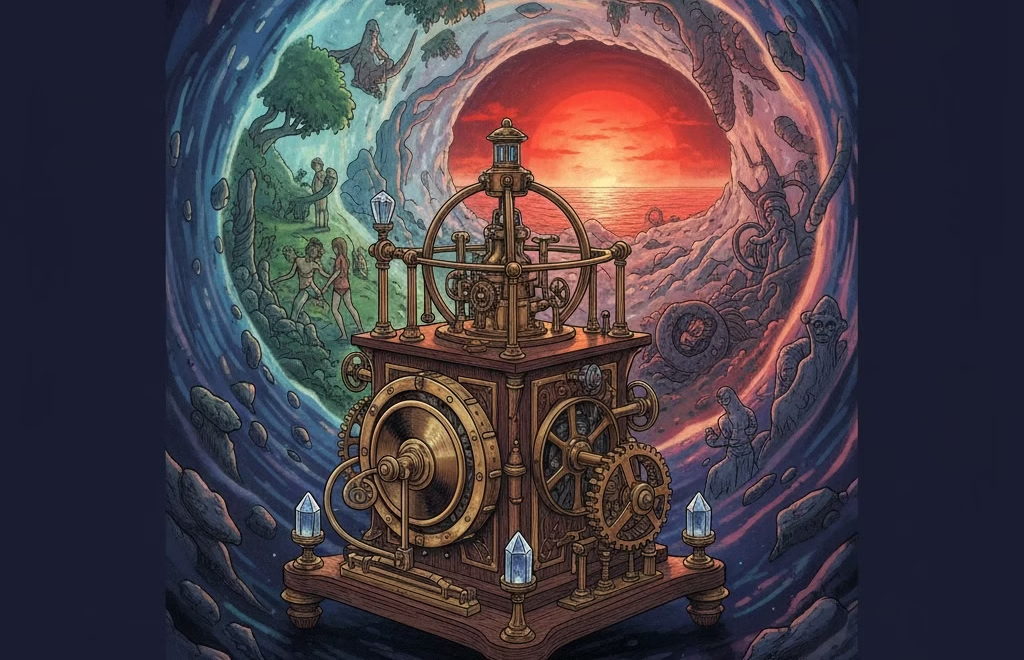
INTRODUCTION HG Wells’ The Time Machine is a landmark literary work that invites readers to embark on an extraordinary voyage beyond ordinary existence into the mysterious dimension of time. Published in 1895, this novella not only pioneered the science fiction genre but...

INTRODUCTION Nayantara Sehgal’s Storm in Chandigarh is a powerful literary work. It brilliantly captures the complex political and social upheavals in post-independence India. The novel is set in Chandigarh, a modern city that serves as the capital for both Punjab and Haryana. Importantly,...

INTRODUCTION Amitav Ghosh’s The Shadow Lines is a landmark novel of Indian English literature. It blends personal memory with major historical events to offer a deep meditation on identity, belonging, and the illusion of borders. Published in 1988, the novel won the Sahitya...

Introduction Virginia Woolf’s “To the Lighthouse” stands as a landmark in modernist literature, blending innovative narrative style with deep philosophical inquiry. At first glance, the novel’s pace appears meditative, drifting through the rhythms of domestic life along the Isle of Skye....