December 30, 2025
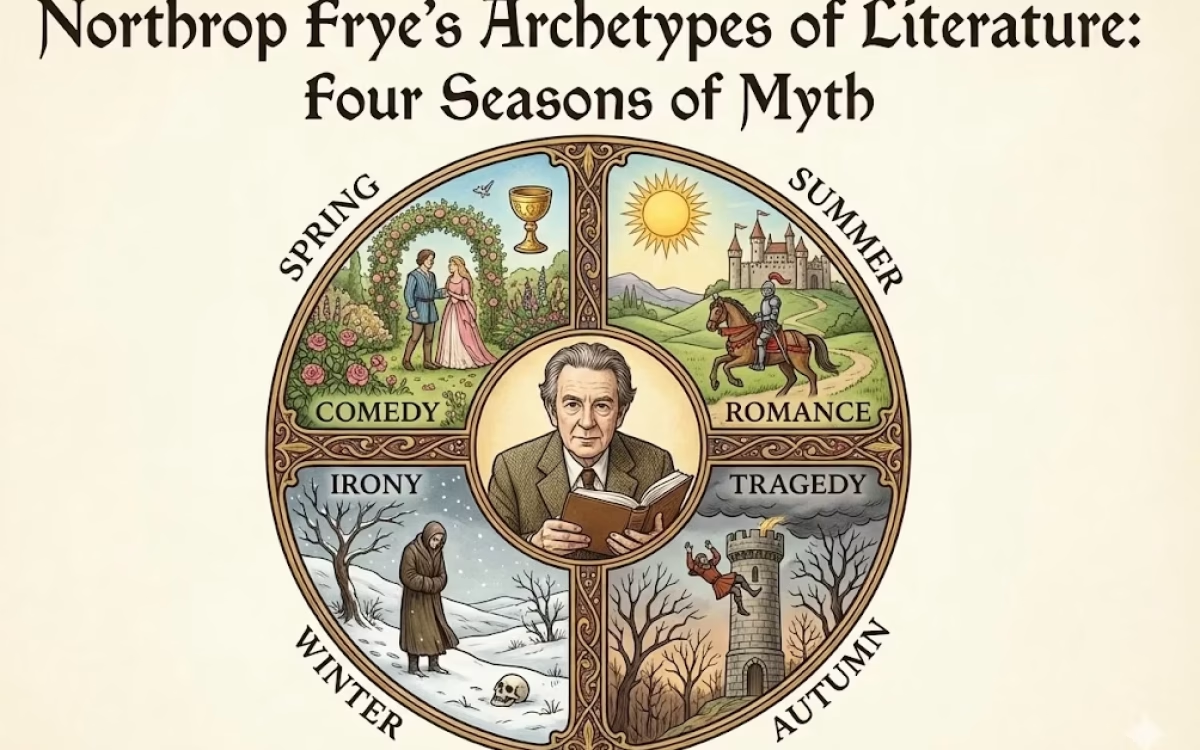
Introduction Northrop Frye’s Archetypes of Literature: Imagine if every book ever written was just a different version of the same story—myths, novels, and poems recycling timeless patterns. Enter Northrop Frye, the “Linnaeus of Literature,” who classified these patterns like a botanist organises plants in his 1957 masterpiece, Anatomy of Criticism. Frye shifts criticism from the narrow question “Is this book good?” to a bolder one: “How does it fit into literature’s larger archetypes?” This framework uncovers the seasons...

Introduction Sophocles’ Antigone offers one of the most compelling journeys through Greek tragedy, where private conscience collides head‑on with public law. In this powerful play, the city of Thebes becomes a testing ground for questions that still trouble modern societies. For...
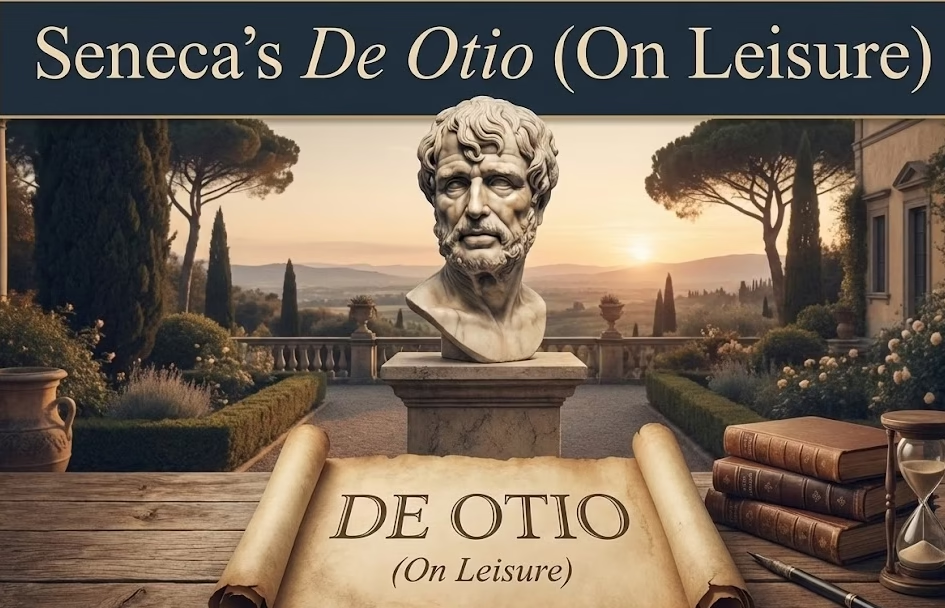
Introduction Seneca’s De Otio, usually translated as On Leisure, is a brief but provocative Stoic dialogue. It asks a very modern question: what should a wise person do with spare time in a noisy and demanding world? Written in first-century Rome,...
Introduction Lionel Trilling’s “Freud and Literature” is a landmark essay. It shapes how we think about psychology and art. Written by the influential American critic, the essay offers a nuanced look at how Freud’s psychoanalytic theories intersect with literary creation and...
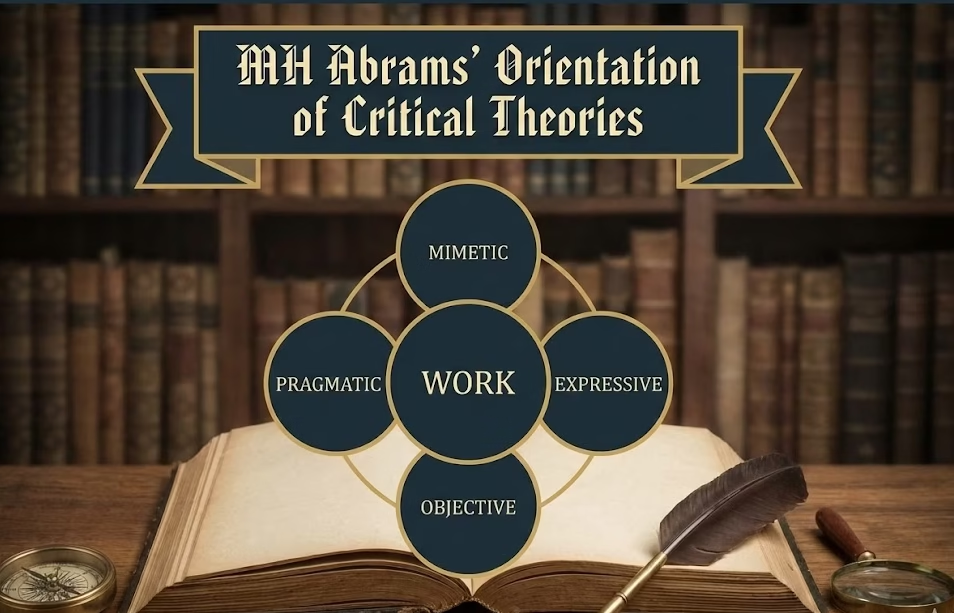
Introduction Abrams’ Orientation of Critical Theories is a foundational text that has shaped how generations of students and scholars approach literature. At its core, Abrams’ framework offers a simple yet powerful way to understand the diverse landscape of literary theory by...
Introduction Shakespeare’s Julius Caesar remains one of the most compelling and widely studied tragedies in English literature. Shakespeare’s Julius Caesar is more than a dramatisation of history. It is a profound exploration of power, ambition, loyalty, and the moral complexities that...
Introduction Thomas Kaminski’s Neoclassicism in literature compellingly captures the moment when Europe deliberately looked to the ancient past to become modern. From about 1660 to 1800, writers in France and England consciously adopted classical genres, techniques, and ideals. They aimed to...