
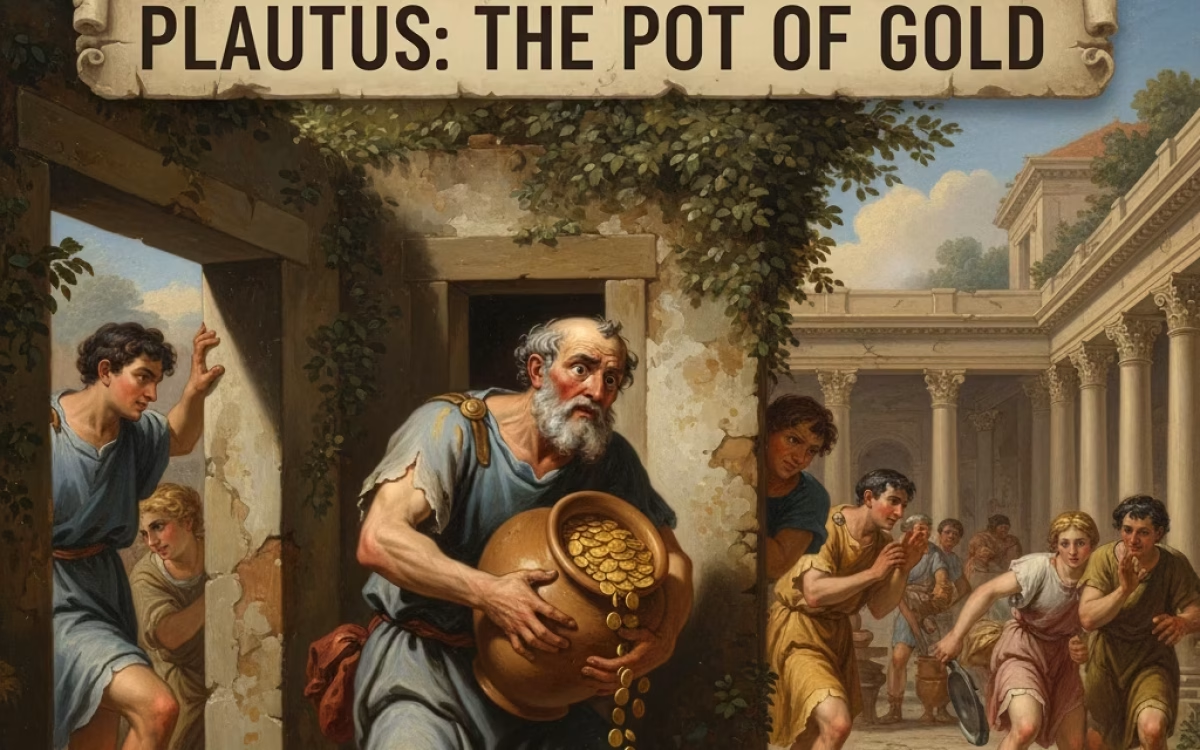
Introduction: Plautus and The Pot of Gold
Plautus The Pot of Gold is a classic Roman comedy that showcases the wit and genius of the playwright Plautus. In Plautus The Pot of Gold, audiences are treated to a humorous and insightful story about greed, family, and transformation, making it one of the most enduring works in ancient theater. Roman comedy owes much of its enduring appeal to the genius of Titus Maccius Plautus. Among his most celebrated works is The Pot of Gold (Latin: Aulularia), a play that masterfully blends humor, satire, and social commentary. Written in the 2nd century BCE, The Pot of Gold has influenced countless comedies across the centuries, from Shakespeare to Molière, and continues to be studied for its wit, structure, and thematic depth.
Plot Summary Plautus and The Pot of Gold
The story revolves around Euclio, an old and miserly Athenian who lives with his daughter, Phaedria. The play opens with the household god, Lar Familiaris. He explains that he has hidden a pot of gold in Euclio’s house. This is a reward for the virtue of Euclio’s daughter, Phaedria. When Euclio discovers this treasure, his life is turned upside down. Far from bringing him happiness, the gold becomes a source of constant anxiety and paranoia.
Euclio obsessively hides and re-hides the pot, suspecting everyone—his neighbors, his servants, even potential suitors for Phaedria—of wanting to steal it. His miserliness and suspicion isolate him from his community. Meanwhile, two suitors emerge for Phaedria: the wealthy Megadorus and the young Lyconides. Euclio, ever distrustful, suspects Megadorus is only interested in his gold, not his daughter.
Complications arise when Lyconides confesses to having impregnated Phaedria. This revelation is compounded by the theft of the pot of gold by Lyconides’ slave, Strobilus. The play’s original manuscript is incomplete, but scholars have reconstructed the likely ending. After much confusion, the gold is returned to Euclio, who ultimately gives it as a dowry for Phaedria’s marriage to Lyconides. READ MORE
Main Characters in Plautus The Pot of Gold
Euclio: The central character, a miser whose obsession with wealth drives the plot. His paranoia and social isolation are both comical and tragic, highlighting the destructive power of avarice.
Phaedria: Euclio’s virtuous daughter, whose plight (pregnancy out of wedlock) adds emotional depth to the comedy. She is largely passive but serves as a catalyst for the resolution.
Lyconides: The young man who loves Phaedria and ultimately marries her. He is honest and honourable, despite his earlier indiscretion.
Megadorus: A wealthy older suitor who proposes to Phaedria, but is suspected of ulterior motives by Euclio.
Staphyla: Euclio’s long-suffering servant, who provides comic relief and insight into the household’s dynamics.
Strobilus: Lyconides’ clever slave, who steals the pot of gold but ultimately helps restore it.
Lar Familiaris: The household god who delivers the prologue and sets the plot in motion.
Major Themes in Plautus The Pot of Gold
Avarice and Its Consequences: Euclio’s obsession with wealth leads to anxiety, paranoia, and social isolation. The play suggests that wealth is only valuable when it is used wisely and generously.
Social Class and Economic Commentary: Plautus contrasts the lives of the wealthy and the poor, highlighting the corrupting influence of sudden wealth and the transactional nature of marriage.
Moral Transformation: Despite his miserly nature, Euclio undergoes a transformation at the end of the play, giving away the gold and embracing generosity.
Comic Irony and Satire: The play uses humour and irony to critique human folly, especially the greed and hypocrisy of the upper classes.
Literary Techniques and Style
Plautus employs a range of comedic devices to engage his audience:
Verbal Comedy: Puns, wordplay, and exaggerated language create a lively, humorous tone.
Physical Comedy: Slapstick, chase scenes, and exaggerated gestures add visual humour.
Structural Comedy: Mistaken identities, dramatic irony, and parallel plot complications keep the audience entertained.
Stock Characters: The use of familiar character types (the miser, the clever slave, the romantic lead) ensures accessibility and broad appeal.
Historical and Cultural Context
The Pot of Gold is set in Athens but reflects the values and concerns of Roman society. Plautus adapted the play from a lost Greek original (possibly Menander’s Dyskolos), but infused it with distinctly Roman humour and social commentary. The play offers insights into the position of women and slaves in ancient Rome, as well as the importance of dowries and marriage alliances. FOR MORE INFORMATION
Critical Reception and Legacy
Plautus’ The Pot of Gold has enjoyed enduring popularity, both in its own time and in later centuries. It has inspired adaptations and imitations, most notably Molière’s L’Avare (The Miser), which features a similar protagonist but with a darker, more satirical edge.
Themes in Modern Perspective
The themes of The Pot of Gold remain relevant today. The destructive power of greed, the importance of generosity, and the complexities of social relationships are universal concerns. The play’s humour and insight into human nature ensure its continued appeal to modern audiences.
Conclusion
Plautus’ The Pot of Gold is a masterpiece of Roman comedy. It has blended humour, satire, and social commentary in a way that is both entertaining and thought-provoking. The story of Euclio and his pot of gold serves as a timeless reminder of the dangers of avarice and the value of generosity. Its influence on later comedy is undeniable, and its themes continue to resonate with audiences around the world. KEEP EXPLORING