Introduction
Raymond Williams: Dominant, Residual and Emergent Cultures
Why does reading a Victorian novel feel both incredibly old-fashioned and surprisingly modern at the same time? Because culture is never just one thing—it’s a dynamic battlefield.
Enter Raymond Williams, the influential Welsh critic who challenged strict Marxist views. He rejected the idea that the economy dictates everything. Instead, Williams argued that culture is where society’s real struggles unfold.
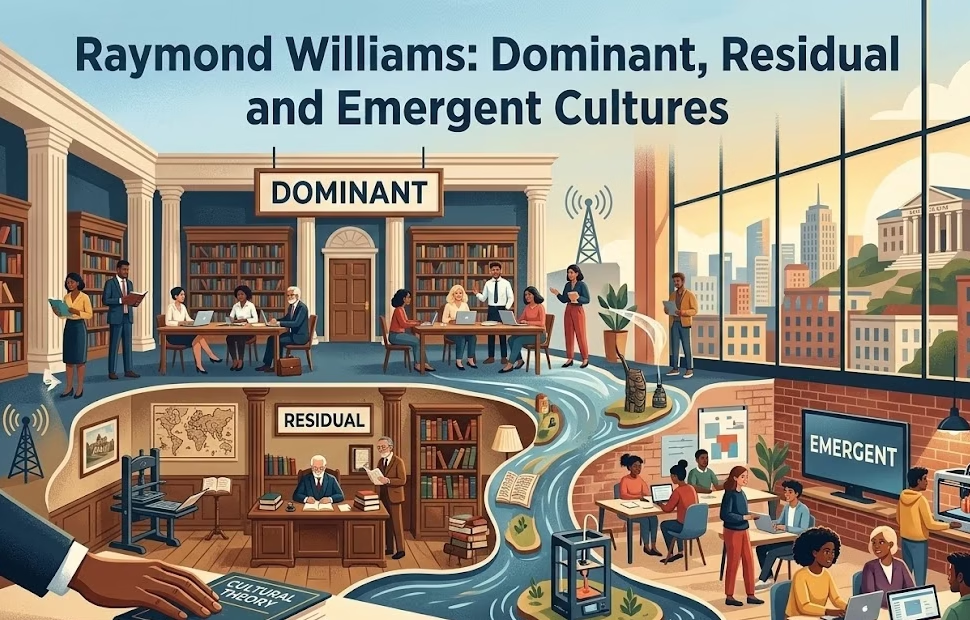
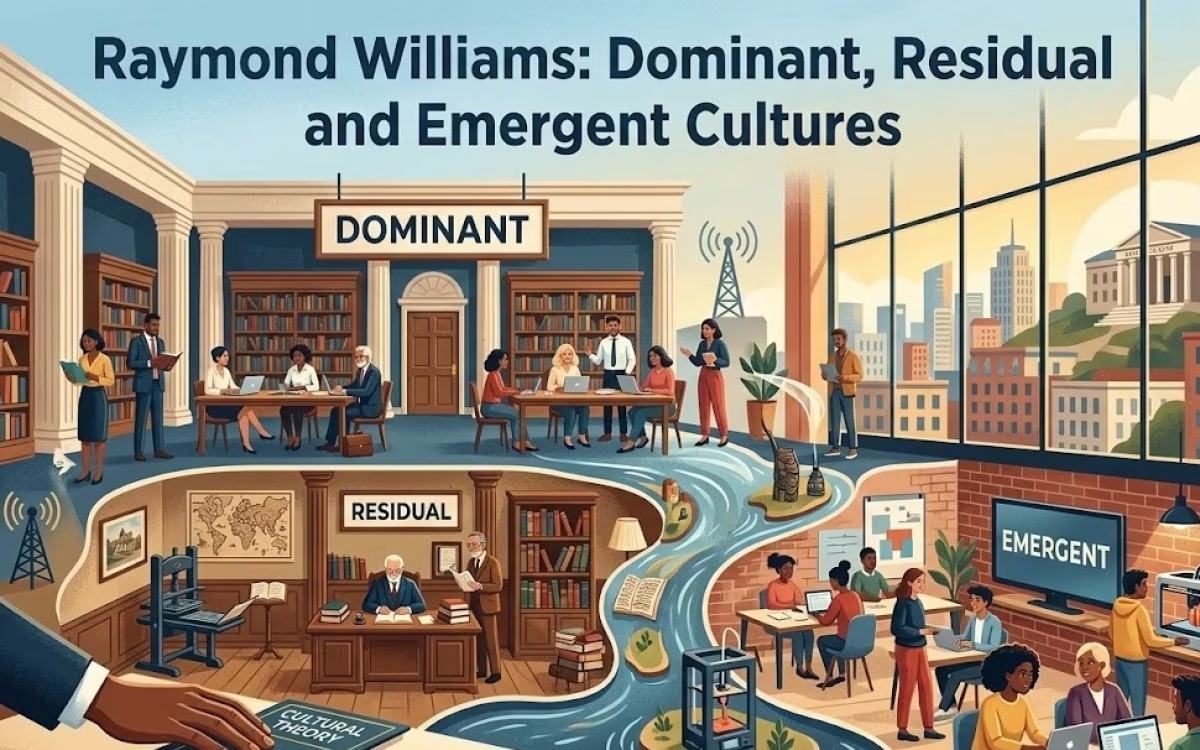
In fact, a literary text acts as a snapshot of this war zone. Here, the past (residual culture) clings on, the present (dominant culture) holds power, and the future (emergent culture) fights to break through.
Quick Summary
In his book Marxism and Literature (1977), Welsh academic Raymond Williams revolutionised cultural theory by arguing that culture is not static; it is a constant, dynamic struggle. To understand any society or literary text, he categorised cultural forces into three interacting areas: The Dominant (the current ruling values and beliefs of the ruling class), The Residual (old beliefs from the past that are still active and influencing the present), and The Emergent (new beliefs and practices being created that challenge the dominant system).
The Dominant Culture: Upholding the Status Quo
In Raymond Williams’ framework of dominant, residual, and emergent cultures, the dominant culture—often called “hegemony”—represents the ruling class’s grip on society. It feels utterly like common sense to those immersed in it, masking deeper power dynamics.
How Dominant Culture Works
This force permeates everyday institutions to maintain control:
Schools teach its values as universal truths.
Media amplifies its narratives through news, ads and entertainment.
Government enacts policies that reinforce its priorities.
Because it shapes what seems “normal,” dominant culture resists change effortlessly.
Real-World Example
Picture a corporate capitalist society, like much of the modern West. The dominant belief? Success means chasing money and climbing the career ladder. Hustle culture glorifies endless work, sidelining alternatives like communal living or artistic pursuits—until challengers emerge.
“To fully grasp how Williams changed literary criticism, reading his original essays is highly recommended. You can find his foundational text here: [Marxism and Literature on Amazon].”
The Residual Culture: Ghosts of the Past That Linger
Shifting from dominant culture’s iron grip, Raymond Williams describes residual culture as ideas and practices from older social formations that persist into the present. In his dominant, residual, and emergent model, these elements aren’t mere relics—they actively influence today.
Key Distinction: Alive, Not Archaic
Residual culture isn’t dead history frozen in museums. It lives on, shaping behaviours and beliefs in subtle ways. The dominant culture often tolerates it, provided it doesn’t challenge the status quo.
Everyday Examples
Organised religion in a mostly secular society: Rituals and moral codes endure, offering comfort amid modern scepticism.
Chivalry or noblesse oblige in democracies: Feudal notions of honour or elite duty echo in politics and social norms, like philanthropy from the ultra-wealthy.
These “ghosts” remind us how the past haunts the present, tolerated until they spark real tension.
The Emergent Culture: Seeds of Tomorrow’s Revolution
Completing Raymond Williams’ trio of dominant, residual, and emergent cultures, emergent culture sparks brand-new meanings, values, and practices. It often arises from marginalised groups, social movements, or cutting-edge technologies, challenging the old order.
The Inevitable Struggle
Dominant culture fights back fiercely: it crushes threats outright or “incorporates” them—co-opting ideas to neutralise their edge, like turning rebellion into profit.
Vivid Examples
Early feminism: Radical demands for equality bubbled from women’s margins, battling patriarchal norms before partial integration.
Digital cryptocurrency: Born in tech underbelly, it disrupts finance—yet giants now buy in to tame it.
Underground hip-hop (1980s): Street-born beats and stories resisted commercialisation, only to be polished and sold by mainstream labels.
Emergent forces promise change, but survival demands vigilance against absorption.
“Williams’ idea of ‘The Dominant’ relies heavily on the concept of invisible power and control. Compare this to how power operates in our breakdown of [Michel Foucault’s Panopticism].”
Applying Williams to Literature: Blueprint
Raymond Williams’ dominant, residual, and emergent cultures transform literary analysis from vague themes to a battlefield map. As educators, guide students here: Skip “What’s the theme?” Dive into cultural warfare.
Step-by-Step Blueprint for Analysis
Spot Dominant characters: Who embodies ruling-class “common sense”? (E.g., enforcers of status quo values.)
Identify Residual holdouts: Who clings to old ways, resisting change?
Hunt Emergent rebels: Who pushes radical new visions, clashing with the rest?
This framework reveals texts as living snapshots of cultural struggle.
Quick Literary Example: Shakespeare’s King Lear
Residual: King Lear, tied to feudal loyalty and divine-right monarchy.
Dominant: His cruel daughters Goneril and Regan, embodying ruthless individualism and power grabs of the emerging era.
Emergent: The storm’s chaos and Edgar’s moral quest hint at a new ethical order amid feudal collapse.
“Sometimes, the ‘Residual’ takes the form of ancient stories and myths that still shape our modern psychology. Explore this further in our guide to [Carl Jung and Archetypal Criticism].”
Conclusion: Culture’s Endless Battle
Raymond Williams’ genius lies in this truth: No dominant system reigns eternal. The “Dominant” culture of today—be it corporate hustle or digital surveillance—was once the daring “Emergent” force disrupting yesterday’s order. Residual echoes linger as battle scars, while new emergents simmer beneath.
This triad isn’t abstract theory; it’s a lens for real-time analysis. In literature, it unveils novels as war reports: Victorian texts pulse with industrial dominant vs. agrarian residual, hinting at social emergent reforms. Beyond books, it deciphers our world—social media’s grip, climate activism’s rise.
For students and scholars, Williams offers timeless power. Next time you crack open King Lear or a modern dystopia, ask: Who’s fighting for cultural control? Your insights will sharpen, revealing society’s hidden churn.
Embrace it—culture evolves, and so must our reading.
FAQS
What is Cultural Materialism?
Cultural Materialism, pioneered by Raymond Williams, views literature as intertwined with social and economic forces. Unlike pure Marxism, it emphasises culture's active role in shaping (and resisting) history through dominant, residual, and emergent elements.
What is the difference between residual and archaic?
Residual culture lives on from past formations, actively influencing the present (e.g., chivalry in democracies). Archaic is truly dead—irrelevant relics with no current impact.
How does the dominant culture incorporate the emergent?
Dominant forces neutralise threats by co-opting them: buying out innovations, diluting radical ideas into safe commodities, or rebranding rebellion as a mainstream trend (e.g., hip-hop's commercialisation).