
INTRODUCTION
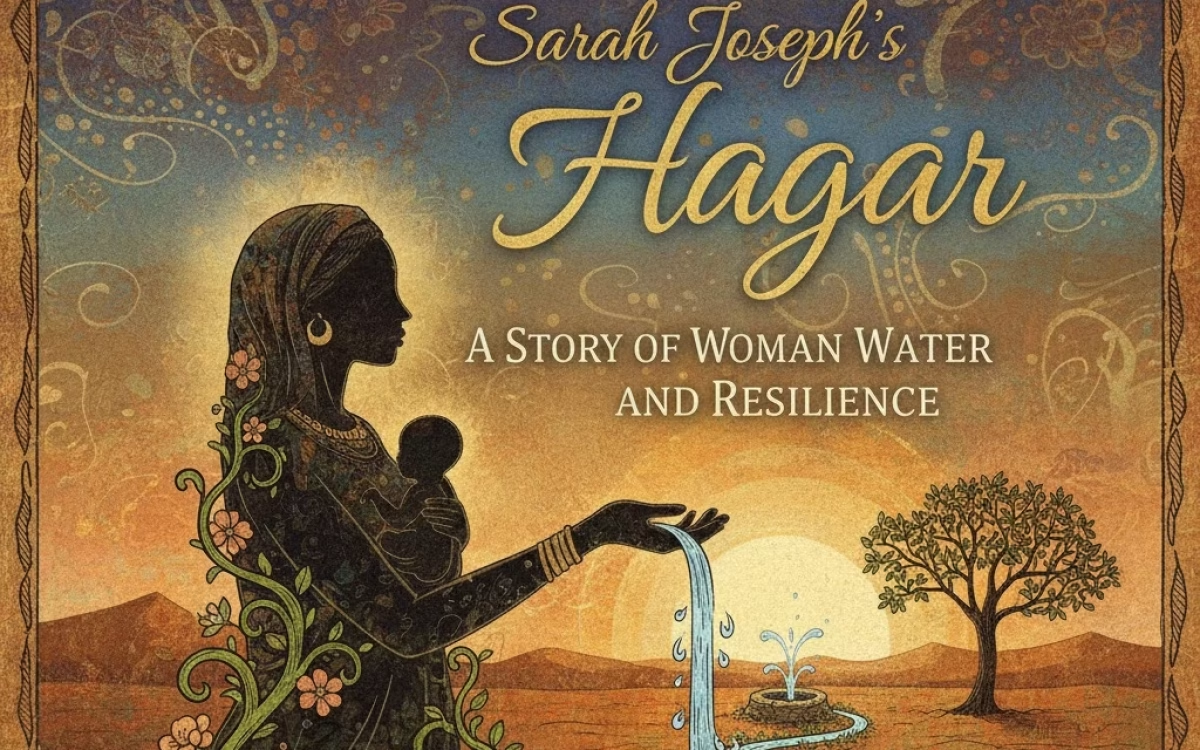
Sarah Joseph’s Hagar: A Story of Woman and Water is more than just a retelling of an ancient tale. It is a powerful exploration of resilience, identity, and the sacred bond between women and nature. At its heart, the story follows Hagar—a woman abandoned in the wilderness, facing thirst, loss, and isolation.
Yet, her journey is not merely about survival. It is about transformation, empowerment, and the forging of a covenant with the environment itself.
To begin with, Joseph’s narrative reimagines Hagar’s story through a feminist and ecological lens. This makes it deeply relevant for contemporary readers. The tale unfolds against the backdrop of water scarcity, a pressing issue in India and beyond. Hagar’s realization that “the value of the first drop of water is the value of the life of her firstborn” is not just a metaphor. It is a stark reminder of water’s life-giving power and the responsibilities we all share toward its preservation.
Moreover, Joseph’s writing style blends vivid imagery with poetic language. This draws readers into Hagar’s emotional and spiritual odyssey. Her journey from abandonment to empowerment mirrors broader themes of transformation and renewal. As Hagar becomes the caretaker of the water, she asserts her autonomy and challenges traditional gender roles. She embodies the qualities of endurance, compassion, and leadership.
In this way, Hagar: A Story of Woman and Water invites readers to reflect on the interconnectedness of humanity and nature. Sarah Joseph’s narrative stands as both a literary masterpiece and a call to action. It reminds us that the well-being of our communities depends on the health of our environment. FULL TEXT
Sarah Joseph’s Hagar: The Core Theme
The Symbolism of Water
Water is not just a physical necessity in Sarah Joseph’s narrative; it is a powerful metaphor for life, renewal, and the feminine spirit. From the very beginning, Joseph presents water as something sacred—more than a mere resource, it becomes a symbol of hope, healing, and spiritual connection. Hagar’s realization that “the value of the first drop of water is the value of the life of her firstborn” is not just a statement of survival; it is a profound declaration of the deep bond between motherhood and the environment.
Moreover, water in Joseph’s story goes far beyond its literal function. It is portrayed as a life-giving force, a source of renewal, and even a spiritual channel. When Hagar immerses her child in the spring, she is not only quenching his thirst but also participating in a ritual of rebirth and healing. She pours water into her son’s mouth and soaks herself in the stream, transforming the moment into one of renewal—where water becomes milk, and life is miraculously sustained. This imagery powerfully connects the physical act of drinking water with the nurturing qualities of motherhood, reinforcing the idea that water is both a physical and emotional necessity.
In addition, Joseph’s narrative draws attention to the broader ecological crisis. In a world where water scarcity is a growing concern, her story resonates deeply with readers who are grappling with environmental crises and the urgent need for sustainable living. Also, the covenant Hagar makes with the nomads—where she insists on protecting the water for future generations—highlights the importance of collective responsibility and stewardship. This covenant is not just about ownership; it is about safeguarding life itself, ensuring that the miracle of water continues to flow for all who depend on it.
Furthermore, Joseph gives water divine attributes. She refers to it as a goddess, embodying both nurturing and destructive powers. When the balance of water is disturbed, it can unleash fury, reminding us of the consequences of environmental neglect. This divine aspect of water serves as a warning and a call to action, urging readers to respect and protect this precious resource.
Womanhood and Resilience
Hagar’s story is a powerful testament to the strength and resilience of women. Abandoned by her husband and left to fend for herself and her child, Hagar faces the wilderness with courage and determination. Her journey is not just a physical one; it is also an emotional and spiritual odyssey that reveals the depths of her endurance, compassion, and leadership.
To begin with, Hagar’s experience in the wilderness is marked by unimaginable hardship. She is forced to confront the harsh realities of thirst, loss, and isolation, all while protecting her child. Yet, even in the face of despair, Hagar refuses to give up. Moreover, her determination to live for her son and protect him through the scorching heat of the desert is a striking example of maternal strength.
Moreover, Hagar’s resilience is not just about survival; it is about transformation. As she navigates the challenges of the wilderness, she undergoes a profound inner change. Her near-death experience becomes a turning point, where she emerges as a powerful figure, ready to meet all the challenges that life throws her way. This transformation is not only personal but also collective, as Hagar’s strength inspires those around her and leads to the formation of a new community.
In addition, Hagar’s story highlights the importance of compassion and leadership. When she enters into a covenant with the nomads, she insists on being the protector and caretaker of the water, recognizing its value for future generations. Also, her leadership is not based on authority but on her deep understanding of the needs of her community and her unwavering commitment to their well-being.
Furthermore, Hagar’s journey is a reminder of the enduring human spirit. Despite the odds stacked against her, she remains steadfast in her resolve to protect and nurture life. Her story resonates with readers who value resilience, compassion, and the sacred bond between humanity and nature.
Sarah Joseph’s Hagar: Literary Analysis
Feminist Perspective
Sarah Joseph is known for her feminist writings, and Hagar: A Story of Woman and Water is no exception. The story challenges traditional gender roles and highlights the agency of women in the face of adversity. Hagar’s decision to become the caretaker of the water is a bold assertion of her autonomy and her commitment to the well-being of her community.
Ecological Consciousness
Joseph’s narrative is infused with ecological consciousness. The story emphasizes the importance of preserving natural resources and living in harmony with the environment. Hagar’s covenant with the nomads, where she insists on the protection of the water, reflects a deep respect for nature and a recognition of its intrinsic value.
Narrative Structure
The story is structured as a journey, both physical and metaphorical. Hagar’s movement from abandonment to empowerment mirrors the broader themes of transformation and renewal. Joseph’s use of vivid imagery and poetic language enhances the emotional impact of the narrative, making it a compelling read for literature enthusiasts.
Sarah Joseph’s Hagar: A Pact with Nature
The Water Covenant
Hagar’s covenant with the nomads is a pivotal moment in the story. By agreeing to protect the water, Hagar establishes herself as a guardian of the environment. This covenant is not just a practical arrangement; it is a symbolic act of stewardship and responsibility. The nomads’ recognition of Hagar as the protector of the stream underscores the importance of community and collective action in addressing environmental challenges.
Environmental Stewardship
Joseph’s story highlights the need for environmental stewardship and sustainable living. Hagar’s commitment to preserving the water is a call to action for readers to take responsibility for the natural world. The story’s emphasis on the value of water and the need to protect it is particularly relevant in the context of climate change and environmental degradation.
Sarah Joseph’s Hagar: Feminist Critique
Challenging Traditional Roles
Sarah Joseph’s retelling of Hagar’s story challenges traditional gender roles and highlights the agency of women. Hagar’s journey from servant to protector is a powerful assertion of her autonomy. She shows deep commitment to her community’s well-being. The story’s feminist perspective is clear in its portrayal of Hagar as a strong, independent woman. She takes charge of her own destiny.
Empowerment Through Adversity
Hagar’s empowerment is not just a result of her resilience; it is also a product of her experiences. Her journey through the wilderness and her encounter with the nomads are transformative experiences that shape her character and her worldview. Joseph’s narrative celebrates the strength and resilience of women, making it a must-read for feminist readers.
Sarah Joseph’s Hagar: Historical Context
Biblical Roots
The story of Hagar has its roots in the biblical narrative of Abraham, Sarah, and Hagar. Joseph’s retelling draws on this tradition but also adds new layers of meaning and significance. The story’s emphasis on environmental stewardship and feminist critique reflects contemporary concerns and challenges. EXPLORE MORE
Conclusion
Sarah Joseph’s Hagar: A Story of Woman and Water is not just a retelling of an ancient tale. It is a powerful narrative that speaks to the resilience of women, the sanctity of nature, and the enduring strength of the human spirit. As Hagar journeys through the wilderness, she transforms from a figure of abandonment into a symbol of hope and renewal. Also, her covenant with the nomads, her fierce protection of water, and her unwavering commitment to her child all underscore the central themes of empowerment and environmental stewardship.
Moreover, Joseph’s feminist lens brings a fresh perspective to Hagar’s story. She challenges traditional gender roles and highlights the agency of women in the face of adversity. Hagar’s journey is not only a personal triumph but also a collective call to action. It reminds us that the well-being of our communities is inextricably linked to the health of our environment.
Reflecting on Hagar’s legacy, her story clearly transcends time and place. Whether read in the context of biblical tradition or contemporary Indian society, Hagar’s tale resonates with readers. Her story speaks to resilience, compassion, and the sacred bond between humanity and nature. Joseph’s narrative invites us to reconsider our relationship with the world around us. It urges us to recognize the profound impact of our choices on both people and the planet.
Ultimately, Hagar: A Story of Woman and Water is a testament to the power of storytelling. It inspires change, fosters empathy, and deepens our understanding of the world. As readers, we gain a deeper appreciation for Hagar’s journey. Furthermore, he also feel a renewed sense of responsibility to protect the resources that sustain us all. In this way, Sarah Joseph’s work continues to inspire and challenge us. It reminds us that the value of water is, indeed, the value of life itself.