Browsing Category: World Literature

  • All Post
  • American Literature
  • Blog
  • English Literature
  • Indian Writings in English
  • Literary Trivia
  • World Literature
    •   Back
    • UGC NET ENGLISH
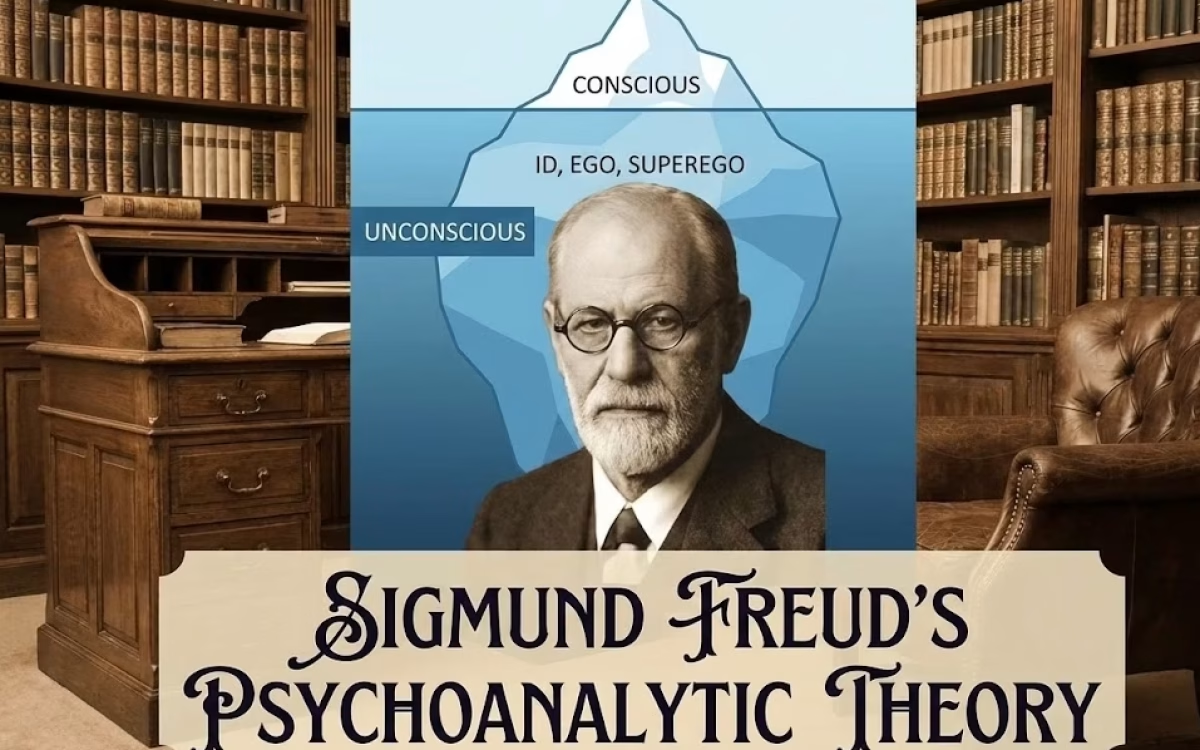
A composite feature image for a blog post titled SIGMUND FREUD'S PSYCHOANALYTIC THEORY displayed on a banner at the bottom. The central part of the image contains a portrait of Sigmund Freud superimposed over an iceberg diagram. The top of the iceberg above the water is labeled "CONSCIOUS", while the submerged, larger portion is labeled "UNCONSCIOUS" and also "ID, EGO, SUPEREGO". This central graphic is set against a backdrop of a vintage, wood-paneled study filled with tall bookshelves, a roll-top desk, and a leather armchair, creating an academic and historical feel.

January 2, 2026/

Introduction Sigmund Freud’s Psychoanalytic Theory helps us understand why characters in literature often behave irrationally. Why does Hamlet hesitate endlessly while Macbeth rushes into murder? Freud’s answer lies in the unconscious mind—a hidden space where suppressed emotions, desires, and fears shape human actions. Developed in the late 19th and early 20th centuries, Freud’s ideas forever changed the way we see the human psyche. He suggested that our conscious thoughts are only a small part...
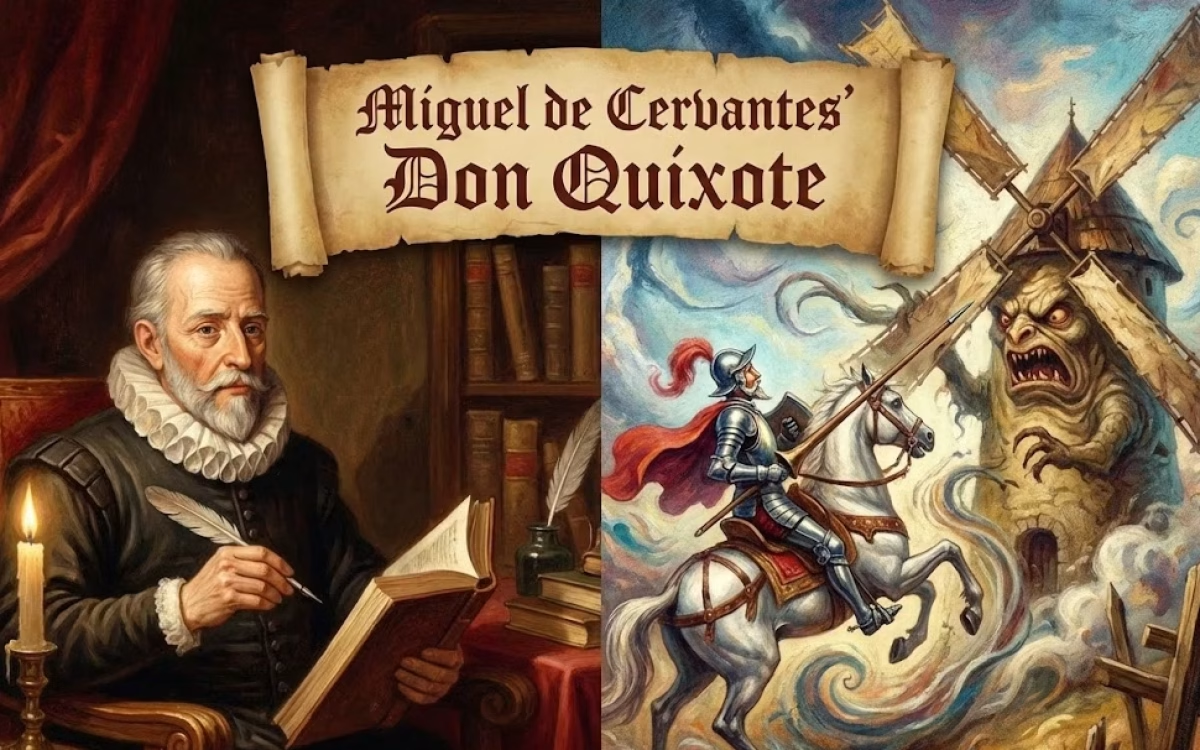
A feature image for a blog post titled Miguel de Cervantes’ Don Quixote. The illustration captures the iconic imagery of the Spanish Golden Age, depicting the silhouette of the knight Don Quixote on his horse, lance in hand, facing giant windmills in the distance. The background features a warm, sunset-hued Spanish landscape, and the title text is displayed in a classic, adventurous serif typeface.

December 19, 2025/

Introduction Miguel de Cervantes’ Don Quixote stands as a towering achievement in world literature. It has inspired generations of readers, writers, and thinkers across continents and centuries. For students, scholars, and literature lovers in India and beyond, the story of the delusional knight remains timeless. His quest to tilt at windmills is as relevant today as it was in the early 1600s. At its heart, Don Quixote is more than a tale of madness and adventure....

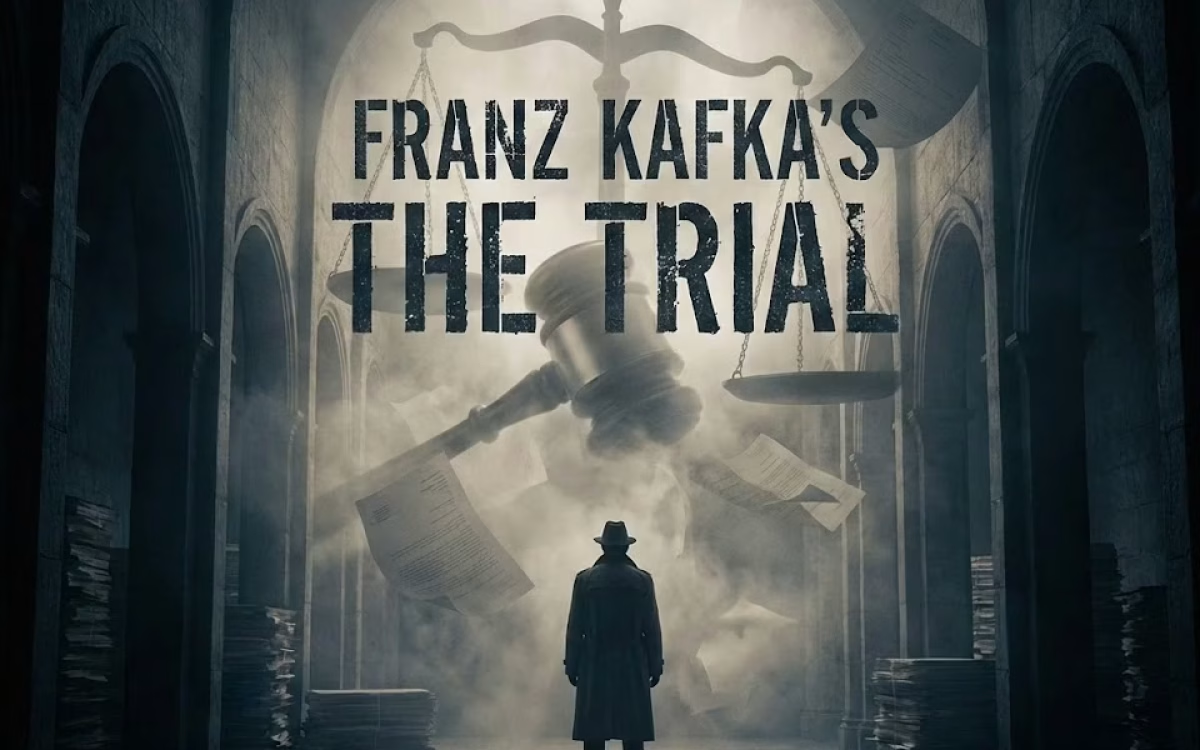
A promotional image for Franz Kafka's The Trial, featuring a man in a trench coat standing in a dimly lit, arch-lined hallway filled with stacks of papers, with a large gavel and scales of justice hanging overhead.

December 16, 2025/

Introduction Franz Kafka’s The Trial stands as one of the most haunting and influential novels of the 20th century. From its very first line—Kafka pulls readers into a world where logic falters and justice becomes a shadowy, unreachable concept. This opening immediately sets the tone for a narrative that is both deeply unsettling and profoundly relevant. At its heart, The Trial is not just a story about a man caught in a legal nightmare. It...

A dramatic feature image for a blog post titled "Sophocles’ Antigone." The illustration depicts a solemn scene evocative of Greek tragedy, featuring a female figure in ancient robes standing defiantly or mourning near stone ruins. The background includes classical Greek architecture, such as columns, set against a moody atmosphere. The text "Sophocles’ Antigone" is prominently displayed in a stylized, ancient Greek-inspired font.

December 15, 2025/

Introduction Sophocles’ Antigone offers one of the most compelling journeys through Greek tragedy, where private conscience collides head‑on with public law. In this powerful play, the city of Thebes becomes a testing ground for questions that still trouble modern societies. For example, how far should citizens obey the state? Additionally, when, if ever, does an inner moral law override an official decree? Also, the readers who search for Sophocles’ Antigone seek a...

A feature image for a blog post titled Seneca's De Otio (On Leisure). The illustration features a classical Roman aesthetic, centering on a contemplative marble bust of the philosopher Seneca. He is set against a peaceful backdrop, such as a quiet garden or a study filled with scrolls, symbolizing the Stoic concept of productive leisure. The title text is displayed prominently in an elegant, Roman-style typeface.

December 12, 2025/

Introduction Seneca’s De Otio, usually translated as On Leisure, is a brief but provocative Stoic dialogue. It asks a very modern question: what should a wise person do with spare time in a noisy and demanding world? Written in first-century Rome, probably around the early 60s CE, the text survives in fragmentary form. Yet it still speaks powerfully to anyone caught between public responsibilities and the desire for a more reflective life....

A feature image for a blog post titled Lionel Trilling’s Freud and Literature. The illustration creates a thematic bridge between psychology and art, featuring a stylized portrait of Sigmund Freud alongside literary elements like an open book or a quill. The background has a vintage, intellectual aesthetic, and the title is displayed in a classic, serif typeface.

December 11, 2025/

Introduction Lionel Trilling’s “Freud and Literature” is a landmark essay. It shapes how we think about psychology and art. Written by the influential American critic, the essay offers a nuanced look at how Freud’s psychoanalytic theories intersect with literary creation and criticism. For students, teachers, and readers interested in literary theory, Trilling’s analysis is accessible yet profound. It opens the door to the complex world of Freudian thought and its lasting impact...

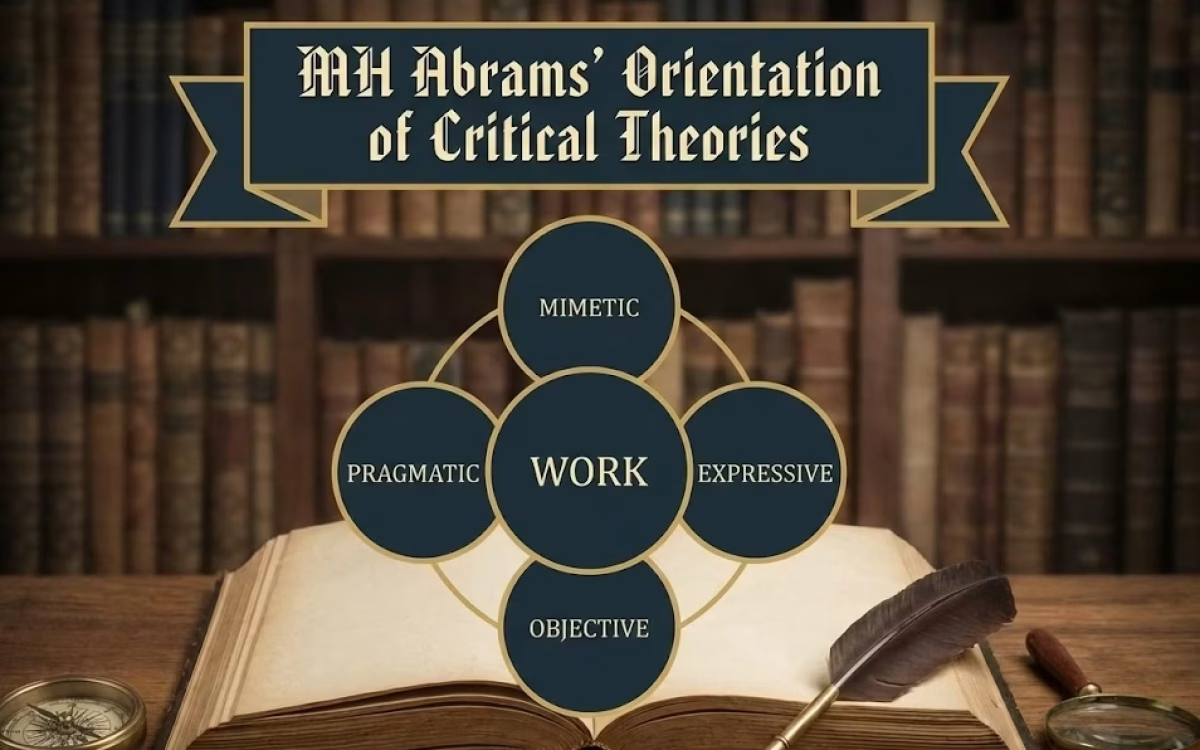
A feature image for a blog post displaying the title MH Abrams’ Orientation of Critical Theories in prominent, scholarly typography. The background incorporates a diagrammatic illustration of the four coordinates of art criticism—the Artist, the Universe, the Audience, and the Work—often arranged in a triangular schema, set against a textured, academic-style backdrop.

December 10, 2025/

Introduction Abrams’ Orientation of Critical Theories is a foundational text that has shaped how generations of students and scholars approach literature. At its core, Abrams’ framework offers a simple yet powerful way to understand the diverse landscape of literary theory by mapping it onto four fundamental elements: the universe (the world), the work (the text), the artist (the author), and the audience (the reader).​ This approach is more than just a clever...

Classical illustration featuring ancient scrolls and elegant typography with the title Longinus’ On the Sublime prominently displayed, set against a warm, muted background.

December 5, 2025/

Introduction Longinus’ On the Sublime stands as one of the most influential works in the history of literary criticism. It offers a timeless exploration of what makes certain passages of literature truly unforgettable. At its heart, the treatise asks a simple yet profound question: why do some words, lines, and speeches have the power to lift us out of our ordinary selves, stir our souls, and leave us in awe? For students, teachers, and...

An artistic illustration blending classical Renaissance elements like books, a quill, and a globe with abstract, dynamic lines representing renewal and evolution. The title George Parfitt’s Renaissance' is displayed in elegant typography.

December 4, 2025/

Introduction George Parfitt’s Renaissance challenges the traditional classroom narrative. The Renaissance is not simply a golden age of rebirth. It is not just about Europe rediscovering classical learning after medieval darkness. Parfitt urges readers to see the term differently. He sees it not as a fixed period. Instead, it is a dynamic, recurring tendency. This tendency shapes—and is shaped by—our cultural anxieties and aspirations.​ Parfitt’s approach is refreshing and necessary. It is...

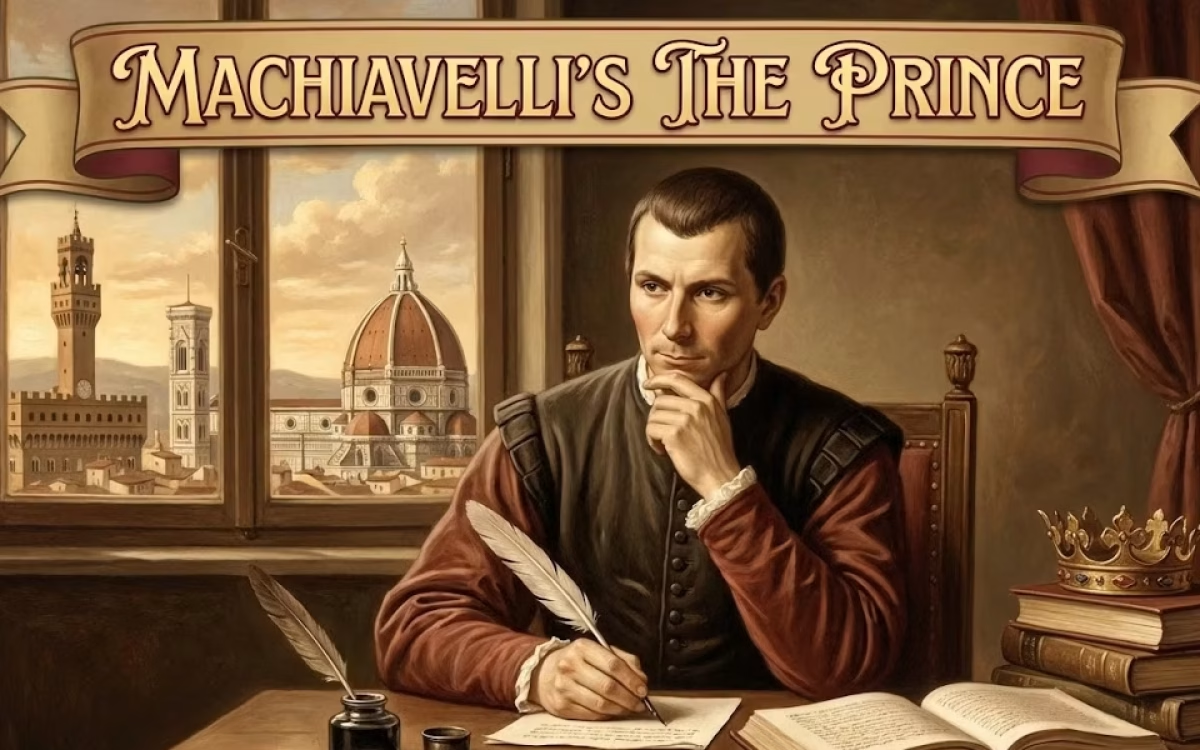
A painting shows Niccolò Machiavelli seated at a wooden desk, holding a quill pen over a piece of paper, looking thoughtfully to the side. He wears a black and dark red doublet. On the desk are an inkwell, an open book, a stack of books, and a crown. Through a window behind him is a view of the city of Florence, with its prominent cathedral dome and the Palazzo Vecchio tower. Above his head, a banner reads Machiavelli's The Prince in gold capital letters. The room has a warm, historical feel with a red curtain partially visible.

December 2, 2025/

Introduction Few political texts have sparked as much debate, controversy and enduring fascination as Niccolò Machiavelli’s The Prince. Written in 1513, Machiavelli’s The Prince broke away from the idealistic traditions of political philosophy. It offered a starkly realistic guide for rulers seeking to acquire and maintain power. The printed version did not appear until 1532, five years after Machiavelli’s death. He was a diplomat and political theorist from Florence. He drew on his own...

About Me

Hello, I'm Bangera Rupinder Kaur

It is a space where readers can find insightful articles, thoughtful analyses, and engaging discussions on various literary topics.

Popular Posts

  • All Post
  • American Literature
  • Blog
  • English Literature
  • Indian Writings in English
  • Literary Trivia
  • World Literature
    •   Back
    • UGC NET ENGLISH

Featured Posts

  • All Post
  • American Literature
  • Blog
  • English Literature
  • Indian Writings in English
  • Literary Trivia
  • World Literature
    •   Back
    • UGC NET ENGLISH

Categories

Tags

Edit Template

© 2025 a2zliterature.com | All Rights Reserved